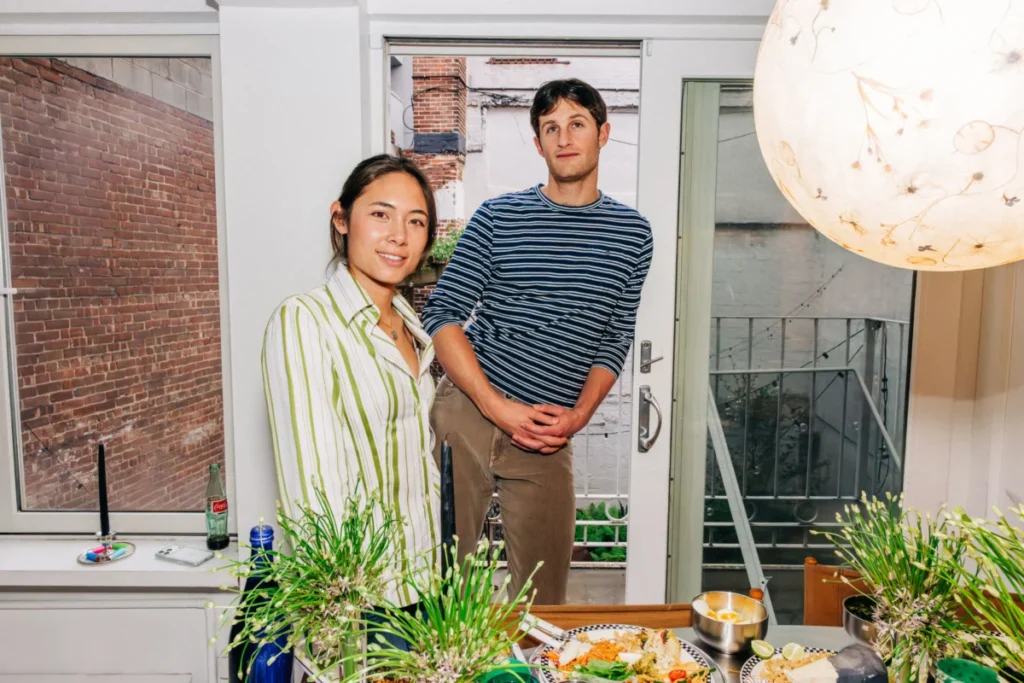

The traditional boundaries of formal entertaining are being redefined in the heart of Brooklyn, as evidenced by a recent collaboration between interior designer Noah Ruttenberg and Phantila Phataraprasit, the founder of the sustainable furniture brand Sabai. As part of Architectural Digest’s "Table Mates" series, which explores the synergy between creative partners in the art of hosting, the duo executed a dinner party that serves as a case study for the "quintessential New York" hosting style. This approach prioritizes a high-design aesthetic and curated atmosphere over the labor-intensive demands of home cooking, utilizing the city’s vast culinary resources to create an experience that is both sophisticated and approachable.

The event took place within the lofted kitchen of the Sabai showroom, a space that reflects the brand’s commitment to sustainable, modern design. Central to the evening’s visual identity was a custom-designed, eye-shaped stainless steel table, a signature piece by Ruttenberg. The tablescape was a deliberate juxtaposition of high-end artistry and vintage finds, featuring modern Murano glassware, antique German flatware, and checkerboard diner plates. The presence of a large, hand-carved wooden duck decoy as the centerpiece underscored Ruttenberg’s design philosophy: every room requires an unexpected, "out of place" element to spark conversation and provide a sense of character.
Profiles in Design: Ruttenberg and Phataraprasit
The collaboration brings together two distinct voices in the contemporary American design landscape. Noah Ruttenberg, recognized as one of Architectural Digest’s "New American Voices," is known for an interior design style that blends traditional "New England prep" with bold, modern interventions. His work often emphasizes the collection of unique objects—such as his self-described obsession with duck decoys—to create spaces that feel lived-in yet meticulously edited.

Phantila Phataraprasit represents the entrepreneurial side of the Brooklyn design scene. As the founder of Sabai, she has positioned her brand at the intersection of environmental consciousness and accessible luxury. Sabai’s furniture is notable for using recycled and natural materials, offering a closed-loop system that allows customers to repair or trade in old pieces. For Phataraprasit, the dinner party was not just a social gathering but an extension of her brand’s ethos: creating a space where people feel comfortable and connected.
The Chronology of a Curated Evening
The evening followed a structured yet relaxed timeline, designed to transition guests from the workday into a communal social space. The event began in the lofted kitchen of the Sabai showroom, where the hosts prepared the setting. While both Ruttenberg and Phataraprasit expressed a love for cooking—often gravitating toward Thai recipes as a nod to Phataraprasit’s heritage—they opted for a "curated takeout" strategy for this specific gathering.

- The Preparation Phase: The duo focused their energy on the "tablescape," a term that has seen a 40% increase in search interest over the last three years according to retail trend reports. By outsourcing the food, the hosts were able to dedicate hours to the arrangement of D. Porthault linens, Match 1995 silver chargers, and floral glassware from Laguna~B.
- The Arrival and Beverage Service: Guests were greeted with a selection of beer and wine. Ruttenberg noted a preference for Red Stripe, citing a personal affinity for the bottle’s iconic stripes, which aligned with the evening’s subtle nautical and coastal motifs.
- The Main Event: The meal consisted of dishes from Pranakhon, a celebrated Thai restaurant in New York City. The food was served family-style on vintage pewter platters and Bordallo Pinheiro fish plates, allowing the culinary offerings to become a visual part of the table’s design.
- Transition to Dessert: Phataraprasit emphasized the importance of a tea service to mark the end of the main course. This transition period allowed for a shift in energy before the evening moved into its final phase.
- The After-Party: The night concluded with competitive games, specifically a "Post-it forehead" name-guessing game. The choice of entertainment reflected a desire for low-tech, high-engagement social interaction.
Supporting Data: The Rise of the "Tablescape" Economy
The decision to pair high-end design with takeout food is not merely a personal preference but reflects a broader shift in consumer behavior within the $300 billion global home decor market. Data from market research firms indicate that "millennial and Gen Z hosts" are increasingly spending a higher percentage of their entertaining budget on durable goods—such as designer glassware and artisanal ceramics—rather than on expensive ingredients or catering services.
- Glassware Trends: The inclusion of Murano glassware in the Ruttenberg-Phataraprasit party aligns with a resurgence in the Italian glass market. Sales of artisanal European glassware have grown by an estimated 12% annually as consumers seek "investment pieces" for their homes.
- The "Takeout Transformation": A survey by the National Restaurant Association found that 60% of consumers in major urban centers like New York believe that ordering takeout for a dinner party is more socially acceptable now than it was five years ago. This trend is driven by the "premiumization" of delivery services, where high-end restaurants now offer packaging designed for home presentation.
- Sustainable Furniture Growth: Sabai’s success mirrors a 15% year-over-year increase in the "sustainable furniture" segment. Consumers are increasingly looking for brands that offer transparency in their supply chains, a factor that Phataraprasit has leveraged to build a loyal following in Brooklyn and beyond.
Design Details and Sourcing
The visual success of the event relied on a specific list of curated items, ranging from accessible kitchenware to high-end collectibles. Notable pieces included:

- Fishes Eddy Checkerboard Plates: A staple of New York design, these plates provided a graphic, diner-style contrast to the more ornate elements.
- Gohar World Lemon Squeezer: A fish-shaped pewter tool that served as both a functional object and a sculptural detail.
- Eichenlaub Flatware: German-made cutlery with black acrylic handles, sourced from the Roman and Williams Guild.
- Antique Salt and Pepper Shakers: Repurposed by the hosts to serve as miniature vases for allium arrangements.
Ruttenberg’s insistence on the "unexpected" was personified by the vintage hand-carved folk art duck decoy. Stylist Marshall Neve sourced the piece, which Ruttenberg credited with providing the "right dose of New England prep" to an otherwise modern, industrial setting.
Official Responses and Hosting Philosophy
In statements regarding their hosting style, both Ruttenberg and Phataraprasit emphasized the psychological impact of the environment. Ruttenberg argued that a dinner table should always feature something that feels slightly "out of place" to prevent the setting from feeling too precious or staged. "I have a bit of an obsession with ducks," Ruttenberg stated, "and I think every room benefits from a great decoy."

Phataraprasit focused on the social dynamics of the guest list. She advocated for smaller groups—six to eight people—to prevent "conversation clustering." This philosophy is backed by social science research suggesting that group sizes of six to eight are optimal for maintaining a single, inclusive conversation thread, which fosters a greater sense of community among guests.
Broader Impact and Implications
The Ruttenberg-Phataraprasit dinner party illustrates a significant evolution in the concept of "The New York Host." Historically, the city’s elite hosting was defined by white-glove service and professional catering. The new paradigm, however, is defined by "The Curator." In this model, the host’s value is found in their ability to select and arrange objects, music (in this case, a playlist featuring The Smiths), and food in a way that reflects a specific, personal narrative.

This shift has implications for the retail and hospitality industries. As more individuals adopt the "Table Mates" ethos, there is a growing demand for multi-functional showroom spaces that can double as event venues, as well as for home goods that carry a "story" or an artisanal pedigree. Furthermore, the success of this model suggests that the future of home entertaining may lie in the "DIY mentality"—not in the sense of making everything from scratch, but in the sense of personally directing every aesthetic detail of the guest experience.
By blending the industrial coldness of a stainless steel table with the warmth of vintage folk art and the spice of New York Thai cuisine, Ruttenberg and Phataraprasit have mapped out a blueprint for modern hospitality. It is a style that acknowledges the constraints of urban living while celebrating the boundless creative opportunities found in a well-set table.