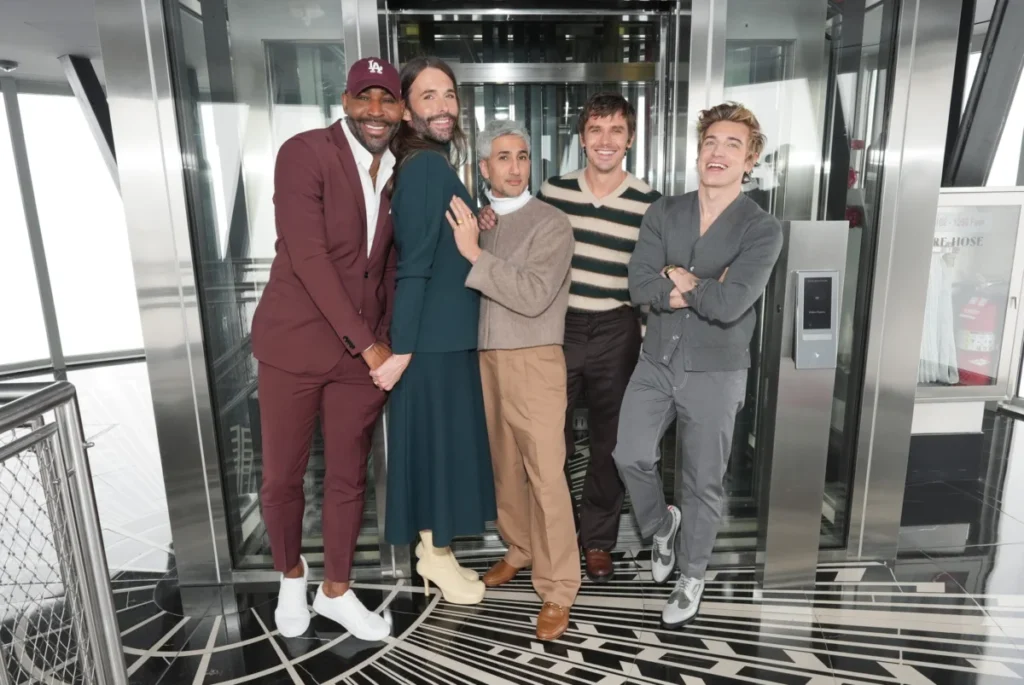

A veteran television producer, a driving force behind groundbreaking series like Queer Eye for the Straight Guy and Legendary, has issued a comprehensive warning regarding a concerning trend in the entertainment industry: a quiet but discernible retreat from LGBTQIA+ inclusive storytelling. Drawing on 25 years of experience building successful franchises that centered diverse voices, the producer highlights how a shift towards risk-averse commissioning and consolidation among streaming platforms is sidelining narratives that once proved globally resonant and commercially viable. This analysis underscores a critical juncture for Hollywood, where the pursuit of "safe" global hits threatens to reverse significant progress in representation and empathy.
The Genesis of a Cultural Phenomenon: Queer Eye‘s Enduring Legacy
Twenty-five years ago, the concept of a television show built around five openly gay men offering lifestyle transformations was widely perceived as a niche idea. In 2003, when Queer Eye for the Straight Guy premiered on Bravo, the television landscape for LGBTQIA+ representation was markedly different. While shows like Will & Grace had paved the way for gay characters in sitcoms, a reality format directly engaging with gay men as experts and guides was largely unprecedented. The show, however, defied expectations, evolving from a "niche" concept into a global phenomenon. Its success, as articulated by its co-creator, was not merely about "gay television" but about a universal craving for humanity, laughter, transformation, hope, empathy, and connection.
The show tapped into a fundamental human desire to believe that individuals who may look, love, or live differently still share common aspirations for belonging and understanding. This underlying message resonated deeply with audiences, transcending demographic boundaries. The original Queer Eye for the Straight Guy ran for five successful seasons on Bravo, fundamentally altering perceptions. It showcased gay men not as caricatures or secondary characters, but as multifaceted individuals — experts in their fields, compassionate caregivers, approachable neighbors, and loyal friends. Its impact extended beyond mere entertainment, sparking crucial conversations in homes across America and significantly contributing to the normalization of LGBTQIA+ lives.
The enduring appeal of the format was reaffirmed with its critically acclaimed revival on Netflix in 2018, simply titled Queer Eye. This iteration has continued its mission for ten additional seasons, bringing the total episode count well over 200. The Netflix version, with its diverse Fab Five, further amplified the show’s global reach, demonstrating that authentic, human-centered storytelling with LGBTQIA+ individuals at its core possesses immense commercial and cultural power. Market analysts often point to Queer Eye‘s sustained success as a testament to audience appetite for diverse narratives that prioritize emotional depth and positive social impact.
Expanding the Narrative: Scout Productions’ Commitment to Inclusivity
Beyond Queer Eye, Scout Productions, the company co-founded by the producer, has consistently championed series that further this mission of inclusive storytelling. Over the last quarter-century, the company has cultivated a portfolio of shows that, while diverse in genre, share a common thread of celebrating marginalized communities and broadening perspectives.
One of the most significant endeavors was Legendary, a groundbreaking series that introduced the vibrant and historically rich ballroom scene to a global audience. For many viewers, Legendary offered their first exposure to this competitive performance culture, meticulously built over decades by Black and Latino LGBTQIA+ communities. Ballroom, with its chosen "houses" competing through voguing, fashion, and sheer presence, is far more than just entertainment; it is a cultural movement born out of necessity. Marginalized individuals, denied traditional family structures by societal prejudices, forged their own families and communities within ballroom, creating spaces of belonging, self-expression, and resilience. Legendary provided an unprecedented platform for these performers to receive the recognition and respect they deserved, showcasing their artistry, history, and profound cultural impact. Its critical reception and audience engagement highlighted a significant hunger for authentic stories from underrepresented communities.
Scout Productions also developed other notable series that subtly yet powerfully centered diverse experiences:
- The Gentle Art of Swedish Death Cleaning: This series quietly highlighted a gay man whose profound compassion became the emotional core of the show, offering a unique lens on themes of grief, legacy, and human connection.
- The Hype: A streetwear design competition, this show celebrated a fashion culture deeply influenced by creators from communities often overlooked or uncredited by mainstream industries, featuring influential figures like Dapper Dan.
- OMG Fashun: Pairing the iconic Law Roach with Julia Fox, this series championed creativity that intentionally defies conventional boundaries, reinforcing the idea that authentic expression should not be confined to predefined boxes.
The common thread uniting these productions is their ability to entertain wide audiences while being "unapologetically inclusive." These were not merely "gay shows" but "great shows" that found success because they resonated with a broad spectrum of viewers. Industry analysis confirms that while representation may open the door for new audiences, it is compelling storytelling that ultimately compels them to stay. By featuring LGBTQIA+ lives authentically and empathetically, these series played a crucial role in normalizing these experiences for millions, fostering empathy where there was once distance and curiosity where there was discomfort. Studies, including those cited by The New York Times and various academic essays, have consistently documented a significant increase in public acceptance of LGBTQIA+ individuals coinciding with increased media representation, underscoring the profound societal impact of such programming.
A Troubling Shift: The Erosion of Opportunities for Diverse Narratives
Despite the demonstrable success and societal benefits of inclusive programming, a troubling trend has emerged in Hollywood. The veteran producer warns that opportunities for LGBTQIA+ stories are "quietly slipping off our screens." This decline is not attributed to audience rejection or commercial failure; in many instances, these shows have achieved significant success. Instead, the shift is rooted in evolving industry dynamics.
As streaming services consolidate their operations and intensify their pursuit of "global hits," the landscape of content commissioning has become increasingly risk-averse. Fewer buyers are in the market, and there is a diminished appetite for anything that might be labeled a "risk." Decisions that once primarily hinged on a show’s creative merit are now frequently dictated by considerations of "safety," "frictionlessness," and ease of global distribution. Stories deeply rooted in specific communities, particularly those from marginalized groups, are often the first to be deemed "too narrow" for a global audience, even when past successes like Queer Eye and Legendary have proven their capacity to travel furthest and resonate universally.
Evidence of this contraction is increasingly apparent across the industry. Fewer original LGBTQIA+-centered series are being commissioned, and diversity initiatives, once celebrated for expanding the range of voices within Hollywood, have been scaled back or entirely eliminated by various studios and production companies. The most recent "Where We Are On TV" study by GLAAD provides concrete data, revealing a significant 23% decline in the number of LGBTQ+ characters across all television and streaming platforms since 2022. This regression underscores a broader industry pivot, where projects once evaluated on their creative potential now face an additional, often unspoken, hurdle: "Is this worth the risk?" This climate of fear, rarely explicitly articulated, manifests itself most clearly in the stories that quietly cease to be made.
Ironically, this cautious approach overlooks a fundamental truth of storytelling: the most universal narratives are often the most specific. When Queer Eye first launched, critics questioned America’s readiness; America’s enthusiastic reception proved them wrong. Similarly, Legendary captivated audiences unfamiliar with ballroom culture, demonstrating that excellence, regardless of its origin, is undeniably contagious. The power of television, at its best, lies in its ability to introduce viewers to individuals who initially seem like strangers, only for them to discover profound reflections of themselves.
The Legendary Paradox: A Case Study in Cultural Erasure
One of the most poignant examples of this industry shift is the fate of Legendary. The series was not only one of the highest-rated competition shows of its kind but also a pioneering mainstream platform that celebrated ballroom culture with unparalleled respect, spectacle, and authenticity. Crucially, it was a project that empowered the very community that created ballroom, handing the microphone directly to its originators rather than simply borrowing from it.
However, when HBO Max (now Max) underwent a restructuring of its content library, all three seasons of Legendary were unceremoniously pulled from the platform. This move resulted in an "extraordinary cultural document" quietly disappearing from public view. Today, the thirty original episodes are virtually impossible for audiences to access, existing only in fragmented clips and memes that continue to circulate and dominate the zeitgeist. The irony is stark: the series that meticulously documented, elevated, and celebrated ballroom culture has vanished, even as the culture itself has never been more influential.
A quick glance at contemporary popular culture reveals ballroom’s pervasive influence. Lady Gaga and Doechii, among countless other artists, openly draw from this rich creative lineage. Broadway productions are increasingly incorporating ballroom aesthetics in innovative ways. The distinct language, movement, style, and inherent confidence born within these ballrooms continue to ripple through mainstream culture, often without wider audiences even realizing their origins. The zeitgeist has unequivocally caught up to what Legendary was celebrating years ago, yet the very series that served as its most prominent and respectful chronicler remains inaccessible. This situation is, as the producer aptly describes, "backwards."
The Enduring Imperative for Inclusive Storytelling
Some argue that the urgent need for such stories has diminished due to the "enormous progress" made over the past twenty-five years in LGBTQIA+ acceptance. While acknowledging this extraordinary progress – millions have indeed been introduced to LGBTQIA+ lives through media in ways unimaginable two decades ago – the producer firmly contends that this does not signify a reduced need for stories celebrating communities living on the margins. On the contrary, more such stories are needed now than ever before.
History consistently demonstrates that "the margins are where culture begins." This principle extends beyond LGBTQIA+ representation to encompass the broader spectrum of human experience. When television, and indeed all forms of media, ceases to reflect the full tapestry of humanity, everyone suffers. Young queer individuals lose the invaluable opportunity to see themselves authentically represented, impacting their sense of identity and belonging. Straight audiences are deprived of the chance to understand lives beyond their own, hindering the development of empathy and broader societal understanding. Culture as a whole loses a vital source of empathy and innovation, and the entertainment industry itself forfeits its courage and one of its greatest strengths: the ability to introduce audiences to worlds they never knew they needed.
The producer’s career has been guided by a profound belief in entertainment’s capacity to "change hearts faster than arguments ever will." A well-placed laugh can dismantle prejudice. A seemingly simple makeover can serve as a powerful metaphor for dignity and self-worth. A ballroom competition can transform into a profound lesson in the creation of chosen families. A conversation about decluttering a home can evolve into a meditation on grief, legacy, and the enduring power of love. This is the inherent magic of storytelling, a responsibility Hollywood should embrace, not retreat from. The audience’s desire for authentic stories remains undiminished, as does the wellspring of creative talent.
The Evolving Landscape and Hollywood’s Future Challenge
What has undeniably changed is the manner in which audiences discover these stories. Culture no longer resides exclusively within the confines of traditional television networks or streaming platforms. It flows dynamically through diverse digital channels: YouTube, TikTok, podcasts, independent creators, and countless online communities that did not even exist when Queer Eye first premiered. The opportunity for connection and impact has not disappeared; it has merely evolved.
Hollywood’s contemporary challenge is less about finding audiences and more about remembering how to recognize burgeoning cultural movements before they become ubiquitous. The producer’s lifelong commitment to centering LGBTQIA+ voices stems from a simple, yet profound, insight: "queer isn’t just an identity. It’s a perspective. It’s a willingness to see the world differently." The goal has never been to create "gay television" but to craft "unforgettable television" that evokes laughter, tears, critical thought, and a deep sense of rooting for characters audiences never imagined they would identify with.
This philosophy has been the bedrock of Scout Productions’ work, from Queer Eye to Legendary, The Gentle Art of Swedish Death Cleaning, The Hype, and OMG Fashun. These projects have consistently aimed not to tell "gay stories," but to tell deeply human stories through voices that have historically been overlooked. By expanding who gets to tell the story, the industry inherently expands what all of humanity is capable of seeing and understanding in one another.
Audiences today are more than ready for the next generation of diverse storytellers to illuminate the world through fresh lenses. The critical task for Hollywood now is simply to hand them the camera and trust in the power of their unique, authentic narratives.