

The 2026 Busan One Asia Festival (BOAF), one of South Korea’s most prominent cultural showcases, has become the center of a burgeoning controversy following a performance by SM Entertainment’s newest rookie girl group, Hearts2Hearts. During their highly anticipated stage for the track "Lemon Tang," a technical slip-up involving member Stella led to allegations of lip-syncing, igniting a widespread debate across online communities and social media platforms regarding the standards of live performance in the fifth generation of K-pop. While the group has previously earned accolades for their vocal stability and training, this recent incident has prompted fans and critics alike to scrutinize the industry’s reliance on pre-recorded vocals during major televised events.
The Incident at the 2026 Busan One Asia Festival
The Busan One Asia Festival is an annual event designed to celebrate Hallyu culture, drawing thousands of international fans and featuring a lineup of top-tier and rising musical talent. Hearts2Hearts, as a rookie group under the powerhouse label SM Entertainment, was positioned as a highlight of the 2026 lineup. The group performed "Lemon Tang," a high-energy track known for its intricate choreography and demanding vocal range.
The controversy began during the middle of the performance, specifically at the 1:51 mark. According to footage that has since gone viral on platforms like YouTube and various K-pop forums, member Stella failed to bring her handheld microphone to her mouth in time for her designated line. Despite the microphone being held at her side, her vocal track continued to play clearly through the venue’s sound system with no change in volume or tone. The visible delay between the audio and the artist’s physical movement lasted for several seconds, after which Stella appeared visibly flustered, though she quickly regained her composure to finish the choreography.

Analysis of Fan and Public Reaction
The reaction to the performance was immediate and polarized. An original post on a popular online community, authored by a self-identified "SM fan," expressed a sense of deep disappointment. The fan noted that while Hearts2Hearts has already "proved themselves" in previous content and behind-the-scenes vocal practices, the decision to use a heavy backtrack or a full "Live All Recorded" (LAR) track while holding handheld microphones felt deceptive.
"I’m an SM fan who watches all of Hearts2Hearts’ stages and content, and I know they are good at live performances, but I don’t understand why they lip-synced with handheld mics in Busan today," the user wrote. The sentiment echoed by many is that handheld microphones are traditionally viewed as a symbol of live vocal commitment in K-pop. When an artist uses a handheld mic but does not actually sing live, audiences often perceive it as an attempt to project an authenticity that isn’t present in the moment.
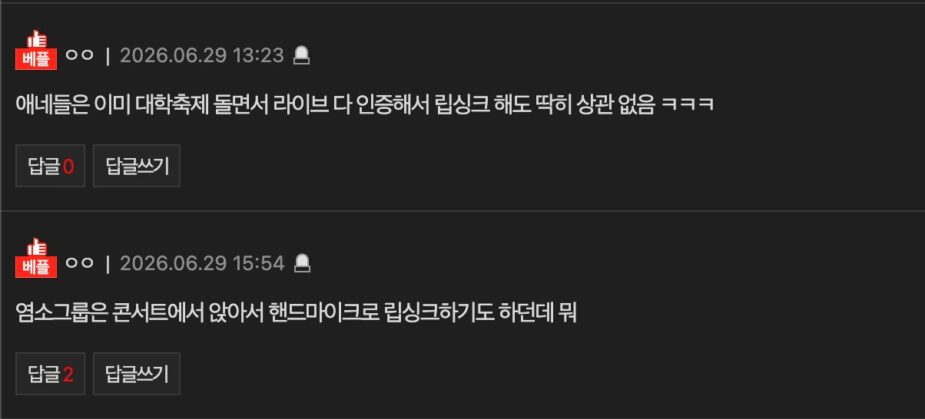
On the Korean forum theqoo, netizens were divided into two main camps. One side argued that lip-syncing is a standard industry practice, especially at large-scale festivals where audio engineering can be unpredictable or where the physical exertion of the dance makes a perfect live vocal impossible. The opposing side argued that SM Entertainment, a company long-renowned for its rigorous vocal training and "vocal powerhouse" reputation, should hold its artists to a higher standard, especially when they are marketed as a group with elite singing capabilities.
The Evolution of Live Performance Standards in K-pop
To understand the weight of this debate, one must look at the historical context of SM Entertainment’s branding. From the debut of TVXQ and Girls’ Generation to modern leaders like Red Velvet and aespa, the label has consistently emphasized vocal prowess. In the "fifth generation" of K-pop, which began roughly around 2023-2024, the industry has seen a resurgence in the demand for "raw" live vocals, fueled by the popularity of "Encore" stages on music shows where idols sing without any backing tracks.

The use of LAR (Live All Recorded) tracks—studio recordings that include breath sounds and slight imperfections to mimic a live performance—has become a sophisticated tool for entertainment agencies. Critics argue that these tracks are used to "trick" the audience into believing a performance is live. In the case of Hearts2Hearts at BOAF 2026, the audio was reportedly so "polished" that it lacked the natural acoustics of a stadium environment, which was the first red flag for attentive listeners even before Stella’s mic mishap.
Technical Factors and Production Decisions
In professional broadcast environments like the Busan One Asia Festival, the decision to lip-sync is not always made by the artists themselves. Management companies and broadcast directors often weigh several factors:
- Audio Consistency: For televised festivals, producers prioritize a clean audio feed for the broadcast version. If a venue has poor acoustics, they may insist on a pre-recorded track.
- Choreographic Intensity: "Lemon Tang" features high-impact movements that require significant cardiovascular endurance. Agencies often choose to preserve the visual "perfection" of the dance at the expense of live vocals.
- Health and Condition: Rookie groups often face grueling schedules. If a member is experiencing vocal strain or illness, an agency may opt for lip-syncing to protect the artist’s long-term vocal health.
However, the specific choice to use handheld microphones instead of headset microphones has been a focal point of the criticism. Headset mics allow for full range of motion and are generally accepted as a sign that the performance will rely heavily on a backtrack. Handheld mics, conversely, are harder to dance with and are usually reserved for moments where the artist intends to showcase their live voice. By using handhelds for a lip-synced stage, SM Entertainment has been accused of "performative authenticity."
Timeline of Hearts2Hearts’ Rise and Vocal Reputation
Hearts2Hearts debuted in late 2025 to significant fanfare, marketed as the "next evolution" of the SM girl group lineage. Their debut single and subsequent variety show appearances focused heavily on their training periods, which reportedly lasted between four to seven years for each member.

- November 2025: Hearts2Hearts debuts; their first "MR Removed" (Music Recording removed) videos go viral, earning them praise for their stability.
- January 2026: The group wins several "Rookie of the Year" awards, with critics highlighting their ability to balance complex performance with clear vocals.
- March 2026: A series of radio appearances further solidifies their reputation as "vocal queens."
- June 30, 2026: The Busan One Asia Festival performance takes place, leading to the current lip-syncing controversy.
This timeline illustrates why the BOAF incident was so jarring for the fanbase. The group had built a brand based on being "different" from other performance-heavy groups that rely on backing tracks. The sudden shift at a major festival has left many wondering if their previous live performances were also supplemented by sophisticated LAR technology.
Broader Implications for SM Entertainment
This incident comes at a time when SM Entertainment is navigating a transitional period in its corporate history. With new management and a shifting creative direction, the "SM 3.0" era has focused on global expansion and high-frequency content production. Some analysts suggest that the pressure to maintain a perfect image on a global stage like BOAF leads to risk-averse decisions, such as the use of full lip-sync tracks.
The controversy also touches upon a growing divide in the K-pop consumer base. Younger, international fans often prioritize the "visual spectacle" and the "perfection" of the idol as a product. In contrast, domestic Korean fans and long-time K-pop enthusiasts often place a higher premium on the "artist" aspect, where live singing is considered the bare minimum requirement for a professional singer.
Official Responses and Future Outlook
As of the time of reporting, SM Entertainment has not issued a formal statement regarding the BOAF performance. Historically, the agency tends to remain silent on lip-syncing allegations, preferring to let the controversy subside as the group moves on to their next promotional cycle. However, insiders suggest that the group may look to redeem their image through "raw" content, such as unedited practice room vocals or acoustic live sessions, to regain the trust of their core audience.
The "Hearts2Hearts debate" serves as a microcosm of the larger tensions within the modern music industry. As technology makes it easier to mask imperfections, the value of a truly live, "unfiltered" moment increases. Whether this incident will be a minor hiccup in an otherwise stellar career or a defining moment that shifts the group’s trajectory remains to be seen. For now, the members of Hearts2Hearts find themselves at the center of a conversation that is less about their talent and more about the industry’s transparency with its audience.
In the coming weeks, the group is scheduled to appear at several other summer festivals. Fans will undoubtedly be watching closely to see if the handheld mics return and, more importantly, if the voices coming through the speakers match the effort on the stage. The 2026 Busan One Asia Festival may be over, but its impact on the discourse of K-pop authenticity is only just beginning.