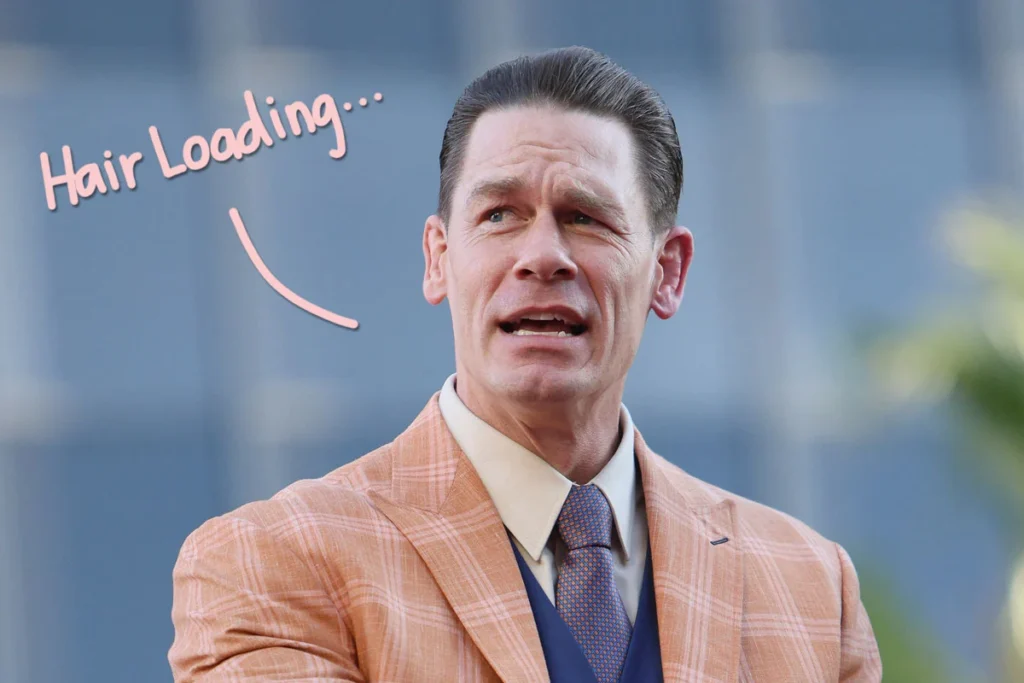

John Cena, the highly recognizable figure who transitioned from a legendary WWE career to a successful Hollywood acting career, has unveiled a dramatically different appearance, sporting a completely bald head. This bold transformation, announced by Cena himself via a post on X (formerly Twitter) on Monday, June 29, 2026, is a direct result of undergoing a second round of Follicular Unit Extraction (FUE) treatment, a procedure aimed at hair restoration. Cena’s transparency regarding his ongoing journey to address hair thinning marks a significant moment, shedding light on a common concern often discussed with discretion.
The actor and former professional wrestler explicitly stated his commitment to achieving "best possible results," indicating that the decision to shave his head entirely was a strategic move for the efficacy of the treatment. In his post, he extended gratitude to Dr. Ken Anderson and the staff at the Anderson Center for Hair, acknowledging their role in his restoration process. This public disclosure follows an earlier admission where Cena revealed he had already undergone a hair transplant, partly influenced by public commentary and "bullying" regarding his thinning crown. His willingness to openly discuss such a personal matter underscores a growing trend among public figures to destigmatize cosmetic procedures and embrace vulnerability.
Understanding Follicular Unit Extraction (FUE): A Detailed Look at the Procedure
Follicular Unit Extraction (FUE) is a sophisticated and increasingly popular method of hair transplantation that involves harvesting individual hair follicles from a donor area, typically the back or sides of the head, and implanting them into areas experiencing hair loss, such as the crown or hairline. Unlike its predecessor, Follicular Unit Transplantation (FUT), which involves removing a strip of skin, FUE extracts follicles one by one, leading to less invasive surgery, quicker recovery times, and no linear scarring. This makes it a preferred choice for individuals who wear their hair short or desire minimal visible evidence of the procedure.
The FUE procedure typically begins with the preparation of the donor area. This often involves shaving the head to allow the surgeon precise access to the individual follicular units. The shaving facilitates the accurate extraction of healthy hair follicles using a micro-punch tool, usually ranging from 0.7mm to 1.0mm in diameter. Each extracted unit, containing one to four hairs, is carefully collected and preserved in a specialized solution while the recipient sites are prepared.
Preparation of the recipient area involves creating tiny incisions, meticulously planned by the surgeon to mimic natural hair growth patterns, density, and direction. This phase is crucial for achieving a natural-looking result. Once the recipient sites are ready, the harvested follicular units are delicately implanted into these incisions. The entire process can take several hours, depending on the number of grafts required, and may necessitate multiple sessions or "rounds" to achieve the desired density and coverage.
Post-procedure care is vital for successful graft survival and optimal results. Patients are typically advised to avoid strenuous activities, direct sun exposure, and specific hair products for a period. The transplanted hairs will typically shed within a few weeks, which is a normal part of the process, followed by new hair growth commencing around three to four months later. Full results usually become evident between 12 to 18 months after the procedure. Cena’s decision to go "all in" by shaving his head completely for "Round 2" aligns with best practices for FUE, as it optimizes visibility for both extraction and implantation, contributing to what he hopes will be the "best possible results."
John Cena’s Journey to Hair Restoration: A Public Timeline
John Cena’s path to hair restoration has been notably public, beginning well before his recent announcement. For years, eagle-eyed fans and media outlets had observed a gradual thinning of his hair, particularly around his crown, a common pattern of male androgenetic alopecia. While many celebrities choose to address such personal matters privately, Cena, known for his candidness, eventually opened up about his experience.
The turning point in his public narrative came last year when he appeared on The Pat McAfee Show. During the interview, Cena directly addressed the fan commentary surrounding his thinning hair, revealing that he had already undergone a hair transplant. His remarks highlighted the pressure public figures face regarding their appearance and the often-unspoken psychological toll it can take. "You guys ripped me to shreds for a genetic problem that I can’t control," Cena stated, referencing the online scrutiny. "‘Hey dude, you don’t look good enough out there.’ This isn’t cool. You guys aren’t cool to me… I’m in the Rumble trying to win, you’re like, ‘Man has a bald spot.’ That’s not fair. I can’t control that. It happens to seven out of 10 dudes." This statement not only confirmed his initial procedure but also underscored the emotional impact of public judgment on personal physical attributes.
His recent announcement on June 29, 2026, marks "Round 2" of his FUE treatment, signifying a continued commitment to his hair restoration journey. The decision to shave his head completely for this second phase suggests a comprehensive approach, aiming for maximum effectiveness. This chronological progression, from initial observation by fans, to his public admission and first treatment, and now to a second, more intensive phase, illustrates a gradual and deliberate process. Cena’s transparency throughout this timeline serves to normalize conversations around male hair loss and the proactive steps individuals can take to address it.
The Stigma of Hair Loss and Celebrity Transparency
Male pattern baldness, or androgenetic alopecia, is an incredibly common condition, affecting approximately 50% of men by the age of 50. Studies show that by age 35, two-thirds of American men will experience some degree of appreciable hair loss, and by age 50, approximately 85% of men will have significantly thinning hair. Despite its widespread prevalence, hair loss has historically carried a significant social stigma, often associated with aging, diminished virility, and a perceived loss of attractiveness. This societal perception can lead to considerable psychological distress, including reduced self-esteem, anxiety, and even depression, for those experiencing it.
For public figures like John Cena, whose image is central to their professional brand, the pressure to maintain a certain appearance can be immense. The "bullying" Cena described encountering from fans highlights the harsh reality of public scrutiny. However, Cena’s decision to openly discuss his hair restoration journey, rather than attempting to conceal it, represents a powerful move towards destigmatizing hair loss and its treatments. This transparency aligns with a broader cultural shift where celebrities are increasingly willing to share personal health and cosmetic decisions, from plastic surgery to mental health struggles, fostering a more open and accepting dialogue.
This evolving discourse is crucial. When prominent figures like Cena, known for their strength and confidence, reveal their vulnerabilities and proactive steps to address them, it empowers others to do the same. It sends a message that seeking treatment for hair loss is a valid form of self-care, not something to be ashamed of. This shift is not merely about cosmetic enhancement; it’s about addressing a condition that can profoundly impact an individual’s self-perception and quality of life.
The Business of Hair Transplants: A Growing Industry
The increasing acceptance and demand for hair restoration procedures have fueled significant growth in the global hair transplant market. Valued at approximately $8.2 billion in 2022, the market is projected to reach over $30 billion by 2032, demonstrating a robust compound annual growth rate (CAGR) of nearly 14%. This expansion is driven by several factors, including rising disposable incomes, increased awareness of aesthetic procedures, advancements in medical technology, and the aforementioned reduction in social stigma.
Technological innovations, particularly in FUE techniques and robotic-assisted hair transplantation, have made procedures more precise, less invasive, and more successful, attracting a wider demographic of patients. Clinics worldwide are investing in state-of-the-art equipment and specialized training for their medical professionals to meet this surging demand. The Anderson Center for Hair, where John Cena received his treatment from Dr. Ken Anderson, is an example of a specialized clinic operating within this burgeoning industry, emphasizing expertise in hair restoration. Dr. Anderson himself is recognized in the field for his contributions and focus on advanced techniques.
The proliferation of hair transplant clinics, however, also underscores the importance of patient due diligence. The industry, while growing, requires careful selection of accredited and reputable clinics with board-certified surgeons to ensure safety, efficacy, and ethical practices. The choice of a high-profile individual like John Cena to publicly endorse his chosen clinic and doctor provides a form of visibility and implicit trust, which can further influence market trends and consumer choices. As the market continues to expand, it is likely that accessibility and affordability of these procedures will also increase, making hair restoration an option for an even broader segment of the population.
Impact on John Cena’s Public Image and Career
John Cena’s evolving physical appearance, particularly his hair, has always been a part of his public persona. From his early days in WWE with a distinctive buzz cut, through periods of slightly longer hair, and then the thinning hair that prompted his treatments, his look has often been discussed. His current bald appearance, albeit temporary, adds another chapter to this evolution.
For an actor, a significant change in appearance, such as shaving one’s head, can have immediate implications for ongoing or upcoming roles. While the bald look is temporary for Cena as he awaits new growth, it may influence casting decisions for a period, potentially opening doors for certain character types while temporarily limiting others that require a full head of hair. However, given Cena’s established versatility in Hollywood, ranging from action blockbusters like the Fast & Furious franchise and Peacemaker to comedic roles, his ability to adapt his appearance for a role is well-documented. His willingness to undergo such a visible transformation for personal reasons also speaks to an authenticity that can resonate positively with audiences and industry professionals.
Beyond specific roles, Cena’s candidness about his hair restoration journey reinforces his image as a relatable and honest public figure. This aligns with his broader brand, which has increasingly emphasized vulnerability and self-improvement, moving beyond the invincible "superhero" persona of his wrestling days. By addressing a common human concern like hair loss so openly, he strengthens his connection with fans, demonstrating that even global superstars face and proactively address personal challenges. This transparency can enhance his appeal, showcasing a level of confidence and self-acceptance that is admirable and inspiring.
Social Media’s Role in Personal Revelations
John Cena’s use of X (formerly Twitter) to announce his second hair restoration treatment exemplifies the powerful and immediate role social media platforms play in celebrity communication and personal revelations today. In an era where celebrities often seek to control their narratives, platforms like X offer a direct channel to their audience, bypassing traditional media filters. This allows for instant dissemination of information and direct engagement with fans.
Cena’s post, complete with a photo of him shaking hands with Dr. Anderson, was not just an announcement but a personal endorsement and a public thank you. This level of detail and personalization is characteristic of how social media empowers public figures to share intimate details of their lives, from health journeys to daily routines. The immediate nature of platforms like X also allows for real-time reactions from fans, fostering a sense of community and shared experience. While the initial "bullying" he mentioned occurred on various platforms, his current use of X is a proactive step to frame his narrative positively and informatively. This direct communication can help manage public perception, turning what might otherwise be a subject of speculation into a transparent and educational moment.
Conclusion: A Bold New Chapter
John Cena’s decision to openly embrace his bald look as part of his second FUE hair restoration treatment marks a significant moment in his public journey and contributes to a broader cultural shift. His transparency not only demystifies the process of hair transplantation but also actively works to dismantle the lingering stigma associated with male hair loss and cosmetic procedures. By sharing his personal experience, from acknowledging fan "bullying" to detailing his commitment to "best possible results," Cena provides a relatable perspective on a common male concern.
This candid approach underscores a growing trend among public figures to use their platforms to foster authenticity and normalize discussions around personal well-being. As the hair restoration industry continues to advance and grow, driven by technological innovation and increasing social acceptance, Cena’s public narrative serves as a powerful testament to self-care and the evolving perceptions of male image. His bold new look, temporary though it may be, represents more than just a physical transformation; it symbolizes a confident step forward in embracing one’s personal journey, inspiring countless others to consider their own paths with greater openness and self-acceptance.