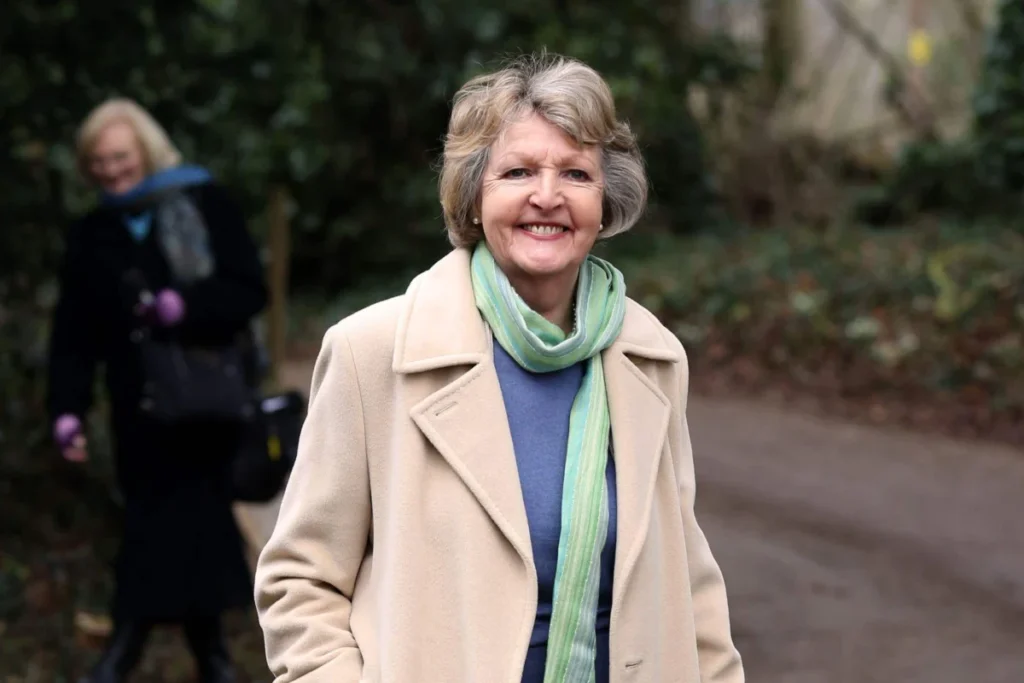

Dame Penelope Keith, the esteemed actress celebrated for her quintessential portrayals of formidable yet endearing aristocratic and socially ambitious characters, has passed away at the age of 86 following a battle with cancer. Her family announced that she died peacefully at her long-time home in Surrey, where she had resided for over five decades. The news has prompted an outpouring of sorrow across the British entertainment industry and among generations of fans who cherished her iconic contributions to television and theatre.
In a statement released to The Standard, her family conveyed their profound sadness: "We are deeply saddened to announce that Dame Penelope Keith died peacefully whilst living with cancer at her home in Surrey where she had lived for more than 50 years. The family is grateful for the care and support she received throughout her treatments, and ask that their privacy be respected at this time." The quiet dignity of her passing reflects the private nature she maintained despite her widespread fame, leaving behind a legacy woven into the fabric of British popular culture.
An Early Life Rooted in Performance and Dedication
Born Penelope Anne Constance Keith on April 2, 1940, in Sutton, Surrey, her path to acting was marked by an early and profound dedication to the craft. From a young age, Keith displayed a keen interest in performance, a passion that would eventually lead her to formal training at the Webber Douglas Academy of Dramatic Art. This rigorous theatrical education provided her with the foundational skills and discipline that would define her illustrious career, honing her distinctive voice, impeccable timing, and commanding stage presence.
Her professional journey began in the vibrant world of repertory theatre in the 1960s, a crucial training ground for many British actors of her generation. It was on the stage that Keith truly cut her teeth, performing in a diverse array of productions that showcased her versatility and growing talent. Her early theatrical work, though less public than her later television roles, was instrumental in shaping her into the accomplished performer she became. She garnered significant critical acclaim for her stage work, culminating in an Olivier Award in 1976 for Best Actress in a New Play for her outstanding performance in Michael Frayn’s celebrated comedy, ‘Donkeys’ Years.’ This prestigious award not only cemented her reputation as a formidable theatrical talent but also foreshadowed her imminent ascendancy to national prominence.

The Quintessential Margo Leadbetter: A Cultural Phenomenon
The mid-1970s marked a pivotal turning point in Penelope Keith’s career as she transitioned from the theatre to the burgeoning medium of television, where she would quickly become a household name. Her breakout role came in 1975 with the BBC sitcom ‘The Good Life,’ a series that would redefine British comedy and etch her character, Margo Leadbetter, into the annals of television history.
‘The Good Life’ presented a charming and often hilarious premise: Tom and Barbara Good (played by Richard Briers and Felicity Kendal), a middle-class couple, decide to abandon the rat race and become self-sufficient in their suburban Surbiton home. This unconventional lifestyle choice frequently brought them into conflict, and often comical juxtaposition, with their next-door neighbours, Jerry and Margo Leadbetter (played by Paul Eddington and Penelope Keith).
Keith’s portrayal of Margo Leadbetter was a masterclass in comedic characterisation. Margo was the epitome of suburban snobbery and social ambition, meticulously upholding appearances and deeply disapproving of the Goods’ bohemian antics. Her character was sharply dressed, impeccably spoken, and perpetually exasperated by the perceived eccentricities of her neighbours. Yet, beneath Margo’s frosty exterior, Keith imbued her with a surprising vulnerability and a genuine, albeit often hidden, affection for the Goods. This nuanced performance allowed Margo to be both a figure of ridicule and, at times, an object of empathy, making her one of the most beloved and enduring characters in British sitcom history.
The series was an immediate and colossal success, regularly drawing millions of viewers and becoming a critical darling. Its gentle humour, witty dialogue, and the brilliant chemistry between its four lead actors ensured its place as a classic. For her unforgettable performance as Margo, Penelope Keith was awarded the British Academy Television Award (BAFTA) for Best Comedy Performer in 1977, a testament to her profound impact on the show’s success and her burgeoning status as a leading comedic actress. ‘The Good Life’ ran for four series and two specials until 1978, leaving an indelible mark on British culture and establishing Keith as a comedic force.
Expanding Her Range: From Stage to Screen Acclaim

Following the immense success of ‘The Good Life,’ Penelope Keith continued to demonstrate her extraordinary versatility. In 1978, she secured her second BAFTA award, this time for her role in ‘The Norman Conquests,’ a televised version of Alan Ayckbourn’s acclaimed trilogy of plays. Having previously graced the stage in the theatrical production, Keith effortlessly transitioned her performance to the screen, earning further critical praise and solidifying her reputation as an actress equally adept in both comedic and dramatic roles, across various mediums. This period showcased her ability to move seamlessly between the intimate demands of stage acting and the broader reach of television, always delivering performances of exceptional quality.
The Reign of Audrey fforbes-Hamilton: ‘To The Manor Born’
Hardly missing a beat after ‘The Good Life’ concluded, Penelope Keith quickly cemented her status as a television legend with another immensely popular BBC comedy, ‘To The Manor Born.’ Premiering in 1979, the series saw Keith take on the lead role of Audrey fforbes-Hamilton, a widowed aristocrat who, after her husband’s death, is forced to sell her beloved ancestral home, Grantleigh Manor, due to his crippling debts.
The comedic premise revolved around Audrey’s determination to maintain her social standing and connection to the estate, even as she is relegated to living in the much smaller, on-site lodge. The manor itself is purchased by Richard DeVere (played by the equally brilliant Peter Bowles), a self-made, charmingly astute Czech millionaire. The series brilliantly explored the clash of cultures and classes between the tradition-bound Audrey and the modern, pragmatic Richard.
Keith’s portrayal of Audrey fforbes-Hamilton was another triumph. Audrey was a character of immense dignity and unwavering adherence to social protocols, often hilariously at odds with her diminished circumstances. Her interactions with Richard DeVere, initially marked by mutual suspicion and aristocratic disdain on her part, gradually evolved into a deep affection, forming the emotional core of the series. The sparring, witty banter, and undeniable chemistry between Keith and Bowles were key to the show’s phenomenal success. ‘To The Manor Born’ quickly became a ratings juggernaut, with its debut episode reportedly attracting over 23 million viewers, making it one of the most-watched British sitcoms of all time.
The series ran for three highly successful seasons until 1981, concluding with Audrey and Richard finally marrying, a resolution that satisfied millions of loyal viewers. The enduring popularity of ‘To The Manor Born’ led to its revival for a one-off Christmas special in 2007, 26 years after its last episode, and a further reunion for a Christmas special in 2012, both featuring Keith and Bowles reprising their beloved roles.

Reflecting on her time on ‘To The Manor Born,’ Keith once told The Guardian in 2013: "I loved it because we had to do all our own stunts. I am a country girl at heart, and I got to ride horses again, to learn about bee keeping, to drive a two-tonne Rolls-Royce with impossible gears; I scaled a five-bar gate with a picnic hamper to flee a bull." This anecdote underscores her adventurous spirit and dedication to her craft, even when it involved physically demanding scenes.
A Prolific and Varied Television Career
Beyond her two most famous roles, Penelope Keith maintained a consistently active and successful career in television throughout the 1980s, 1990s, and into the new millennium. She starred in several other popular sitcoms, showcasing her continued ability to captivate audiences with her distinctive style. These included ‘Sweet Sixteen,’ where she played a woman navigating life after divorce; ‘Moving,’ about a woman whose life is uprooted by her husband’s new job; ‘Executive Stress,’ a comedy about women in high-powered jobs; ‘No Job for a Lady,’ where she portrayed a female MP; ‘Law and Disorder’; and ‘Next of Kin.’
Her talents were not limited to acting; she also lent her distinctive, authoritative voice to narration, notably as the main narrator for ‘Morecambe and Wise in Pieces: The Sketches,’ a tribute to the legendary comedy duo. Her consistent presence on screen ensured she remained a cherished figure in British households, demonstrating a remarkable longevity and adaptability in a constantly evolving entertainment landscape.
A Life of Love, Family, and Philanthropy
While her professional life was lived largely in the public eye, Penelope Keith maintained a deeply private personal life. She met her husband, Rodney Timpson, in 1976 under rather unique circumstances. At the time, Timpson was a police officer carrying out security checks for a play Keith was performing in Chichester. Their meeting blossomed into romance, and they married just six months later, in 1978. Timpson, who had been twice-divorced, later transitioned from his career in law enforcement to become Keith’s manager, a partnership that evidently thrived both personally and professionally.

The couple made their home in the picturesque 17th-century Mousehill Manor in Milford, Surrey, where Keith had resided for over 50 years. They expanded their family by adopting two young brothers, a decision she embraced wholeheartedly. Of her enduring marriage to Timpson, she once remarked in 2010: "We’ve been married 33 years, and they all said we wouldn’t last. He likes looking after me and I enjoy that." This quote offers a glimpse into the warmth and stability of her long-lasting partnership.
Beyond her acting career, Dame Penelope Keith was a tireless advocate for charitable causes, particularly those close to her heart within the arts community. For an impressive 30 years, she served as the President of the Actors’ Benevolent Fund, a charity dedicated to assisting actors and stage managers experiencing hardship. She took on this significant role after the death of the legendary Sir Laurence Olivier in 1989, a testament to her standing within the profession and her commitment to supporting her peers. Her dedication to the Fund involved countless hours of work, fundraising, and advocacy, providing crucial support to those in need within the acting world.
She was also a dedicated trustee of the Brooklands motor and aviation museum for several years, reflecting her broader interests beyond the performing arts. Her commitment to charity was formally recognised in 2014 when she was appointed a Dame Commander of the Order of the British Empire (DBE) for her exceptional services to the arts and to charity. This prestigious honour, one of the highest a civilian can receive in the UK, underscored her profound and multifaceted contributions to British society.
Legacy and Tributes: A National Treasure Remembered
Dame Penelope Keith leaves behind an unparalleled legacy as one of Britain’s most cherished and respected actresses. Her unique acting style, characterised by her regal bearing, precise diction, and impeccable comedic timing, allowed her to create characters that were both grand and intimately human. She had an extraordinary ability to imbue even the most outwardly formidable characters with layers of wit, warmth, and relatable vulnerability, making them enduringly popular with audiences.
Her contributions to British television comedy are immeasurable. ‘The Good Life’ and ‘To The Manor Born’ remain beloved classics, frequently re-aired and enjoyed by new generations, a testament to their timeless appeal and the brilliance of her performances. She defined an era of sophisticated, character-driven comedy that continues to influence performers and writers today.

The news of Dame Penelope Keith’s passing is expected to elicit a wave of heartfelt tributes from across the entertainment industry. Colleagues, directors, writers, and fellow actors will undoubtedly remember her not only for her immense talent and professionalism but also for her warmth, generosity, and unwavering dedication to her craft and to the welfare of others. The BBC, which provided the platform for many of her most iconic roles, is likely to issue a statement acknowledging her significant contributions.
Her status as a "national treasure" was well-earned, reflecting not just her widespread popularity but also the deep affection and respect she commanded from the British public. She embodied a certain elegance and comedic grace that is rare, and her absence will be keenly felt. Her charitable work through the Actors’ Benevolent Fund will continue to impact countless lives, a living legacy of her compassionate spirit.
Dame Penelope Keith’s life was a testament to dedication, talent, and generosity. While she may have departed, the laughter she brought to millions, the iconic characters she immortalised, and the charitable work she championed will ensure her memory endures for generations to come. She was, quite simply, one of a kind.