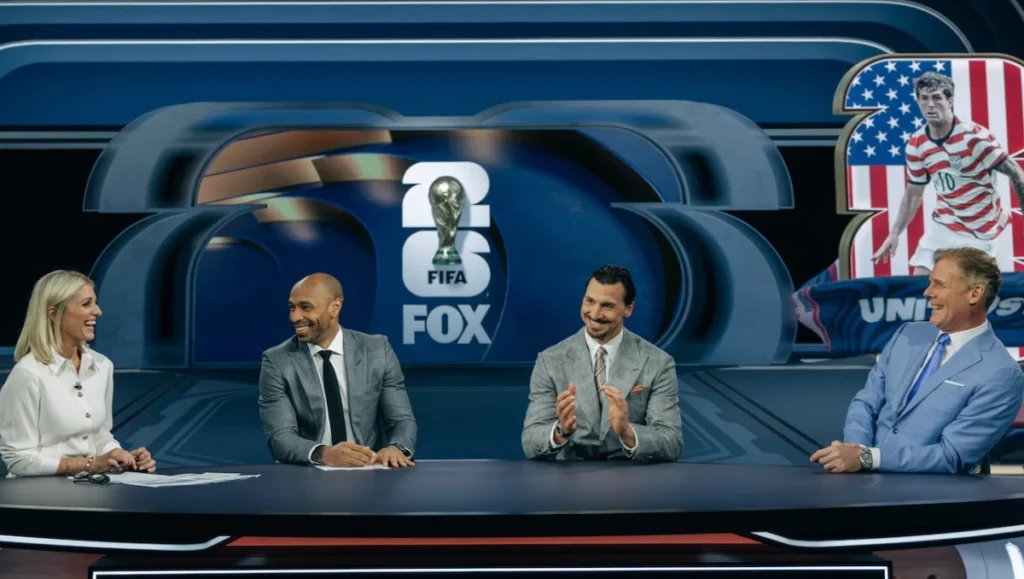

The significant audience engagement for the 2026 Men’s World Cup extends far beyond the matches themselves, with Fox Sports reporting unprecedented viewership figures for both its live game coverage and the surrounding programming. Nielsen data for the initial 12 days of the tournament, covering the first two legs of the group stage through June 23, reveals a dramatic surge in interest, particularly for the pregame show, which has more than doubled its audience compared to the 2022 World Cup. This remarkable increase underscores the profound impact of the tournament’s return to a North American setting and its traditional summer calendar slot, factors that have collectively propelled soccer viewership into new territory for the U.S. market.
Record-Breaking Audiences Signal a New Era for Soccer in the U.S.
Fox’s pregame show has emerged as a standout performer, averaging just over 2.4 million viewers through June 23, a staggering 117 percent improvement over the 1.11 million viewers recorded at the corresponding point during the 2022 World Cup in Qatar. This growth rate for the ancillary programming even slightly outpaces that of the live match coverage itself. The first two legs of the group stage, broadcast across Fox, FS1, and the streaming platform Tubi, garnered an average of 5.62 million viewers. This figure represents a robust 113 percent increase from the 2.64 million viewers who tuned in for the equivalent group stage period in 2022. The cumulative effect of these impressive numbers positions the 2026 World Cup as a watershed moment for soccer broadcasting in the United States, indicating a burgeoning national enthusiasm for the sport. When combined with Spanish-language broadcasts on Telemundo and Peacock, the total viewership across all U.S. platforms has consistently surpassed 10 million viewers per match, highlighting the widespread appeal and diverse audience base for the global spectacle.
A Return to Form: Geographic and Calendar Advantages
The primary drivers behind this viewership explosion are multifaceted, rooted deeply in the logistical advantages of the 2026 tournament compared to its immediate predecessor. The co-hosting arrangement between the United States, Mexico, and Canada has eliminated the formidable time zone challenges that plagued the 2022 Qatar World Cup. In 2022, U.S. viewers faced an eight- to eleven-hour time difference, necessitating early morning tune-ins for many matches, often as early as 5:00 AM ET. This significantly curtailed live viewership, pushing many to delayed broadcasts or highlights. For 2026, matches are unfolding in highly favorable windows, with pregame shows beginning in the late morning or midday ET, seamlessly transitioning into afternoon and early evening kick-offs. This accessibility allows a far broader segment of the population to engage with the live broadcasts without disrupting work or school schedules, thereby maximizing viewership potential.
Equally crucial is the tournament’s reinstatement to its traditional summer slot on the global sports calendar. The 2022 World Cup was controversially moved to the fall to circumvent Qatar’s extreme summer heat, placing it in direct competition with an already saturated U.S. sports landscape. During that period, the National Football League (NFL) was in full swing, college football dominated weekend programming, and the National Basketball Association (NBA) and National Hockey League (NHL) seasons were commencing. This crowded environment fragmented the sports audience, making it challenging for the World Cup to capture undivided attention. The 2026 tournament, by contrast, occupies a relatively clear summer schedule, allowing it to become a focal point for sports enthusiasts and casual viewers alike. This strategic timing, coupled with the domestic hosting advantage, creates a potent synergy that amplifies public interest and television engagement. Furthermore, the extensive local marketing and promotional campaigns facilitated by a North American host further immerse potential viewers, fostering a sense of national ownership and excitement that transcends typical sports fandom.
The Power of the Pregame: Studio Show Dynamics and Scrutiny
Fox’s investment in its studio talent has also played a role in attracting and retaining viewers, albeit sometimes through a lens of considerable scrutiny. The primary Fox studio team features veteran host Rebecca Lowe, on loan from NBC where she expertly fronts Premier League coverage, alongside a high-profile panel of analysts: French legend Thierry Henry, Swedish icon Zlatan Ibrahimović, and former U.S. national team player Alexi Lalas. Henry and Ibrahimović, widely regarded as two of the greatest players of the last three decades, bring unparalleled on-field experience and star power to the desk. Lalas, a familiar face to Fox audiences since 2015, offers a distinct American perspective and has a reputation for forthright commentary.
Early in the tournament, this diverse panel generated significant discussion and, at times, criticism regarding their on-air chemistry. Observers frequently perceived a "frosty relationship" or an awkward dynamic, particularly between the European luminaries and Lalas. Some commentators speculated that the contrasting personalities and playing philosophies contributed to a palpable tension, while others suggested a culture clash between European football royalty and the American soccer pundit. Despite this perceived friction, or perhaps because of it, the pregame show’s viewership figures suggest that this dynamic has not deterred audiences; in fact, it may have inadvertently contributed to its appeal, drawing viewers curious to witness the interactions. Rebecca Lowe’s seasoned professionalism in navigating and moderating this high-profile and sometimes contentious panel has been crucial in maintaining the broadcast’s flow and credibility, ensuring that analytical insights remain at the forefront. The strong viewership indicates that, regardless of the critical reception of the panel’s chemistry, the content and the gravitas of the analysts are resonating deeply with the audience.
Beyond Fox: The Broader World Cup Phenomenon
The success of the 2026 World Cup broadcasts is not confined to Fox Sports alone. Telemundo and Peacock, holding the Spanish-language broadcast rights in the United States, have also experienced robust viewership, contributing significantly to the overall impressive figures. The combined audience across both English and Spanish-language platforms underscores the widespread, diverse appeal of soccer in the U.S., particularly within the rapidly growing Hispanic demographic, where soccer holds deep cultural significance. This dual-language success paints a comprehensive picture of a nation fully embracing the global tournament, demonstrating that soccer’s reach transcends linguistic and cultural boundaries. The strong performance on both networks validates the substantial investments made by broadcasters in securing World Cup rights, signaling a lucrative return on investment for all involved parties.
Commercial Ramifications and Future Outlook
The record-breaking viewership for the early stages of the 2026 World Cup carries significant commercial implications for Fox Sports, Telemundo, and the broader sports media industry. Such robust audience numbers translate directly into increased advertising revenue, higher sponsorship valuations, and enhanced leverage for future broadcast rights negotiations. Advertisers are naturally drawn to programming that delivers millions of engaged viewers, especially during prime time slots. The extended viewership for pregame shows also provides additional valuable inventory for commercials and branded content, further boosting revenue streams. This early success serves as a powerful testament to the commercial viability of soccer in the U.S. market, potentially attracting more corporate investment into the sport across various platforms.
Looking ahead, the strong foundation laid by the group stage bodes exceptionally well for the knockout rounds. As the tournament progresses and stakes intensify, historical trends suggest that viewership will only climb higher, culminating in potentially unprecedented numbers for the quarter-finals, semi-finals, and the final match. Should the U.S. Men’s National Team advance deep into the tournament, a further surge in patriotic viewership is virtually guaranteed, amplifying the spectacle and solidifying the 2026 World Cup’s place in American sports history. Full ratings for the entire group stage, which concluded on Saturday, are anticipated in the coming days, and all indications point towards further confirmation of this remarkable growth trend.
A Strategic Victory for Soccer in North America
Beyond the immediate financial gains for broadcasters, the overwhelming success of the 2026 World Cup’s early viewership marks a strategic victory for the sport of soccer in North America. Hosting the world’s most popular sporting event on home soil, coupled with highly accessible broadcast times, provides an unparalleled opportunity to deepen soccer’s roots and expand its fanbase. This visibility can inspire a new generation of players, increase participation in youth leagues, and further bolster the popularity of Major League Soccer (MLS) and other professional leagues within the region. The positive momentum generated by this World Cup is expected to have a lasting impact, cementing soccer’s status as a mainstream sport alongside traditional American giants like football, basketball, and baseball. For FIFA, the global governing body, the strong U.S. viewership validates their decision to award the tournament to North America, reinforcing the region’s immense potential for commercial growth and fan engagement. The 2026 World Cup is not merely a sporting event; it is a cultural phenomenon that is demonstrably capturing the imagination of millions across the United States, promising a transformative chapter for the beautiful game.
Anticipation Builds for Knockout Stages
As the group stage draws to a close and teams prepare for the high-stakes knockout rounds, the anticipation among fans and broadcasters alike is palpable. The remarkable viewership figures from the initial phases have set an extremely high bar, creating significant expectations for the remainder of the tournament. The narrative of captivating matches, coupled with the engaging, albeit sometimes scrutinized, studio analysis, has successfully captured the attention of the American public. This momentum is poised to carry through the duration of the competition, ensuring that the 2026 Men’s World Cup will be remembered not only for its on-field drama but also for its groundbreaking impact on sports broadcasting and the burgeoning popularity of soccer in the United States.