
The United Kingdom experienced its hottest June day on record as temperatures soared to a staggering 35.8 degrees Celsius, a heatwave that underscored the urgency of climate action discussions taking place at a high-profile reception hosted by King Charles at St. James’s Palace. The stark juxtaposition of extreme weather and vital environmental discourse provided a potent, if uncomfortable, backdrop for discussions on tackling climate change and reducing harmful super-pollutants.
The unprecedented heatwave, which saw the mercury climb to levels unseen for June since records began in the 1950s, gripped the nation. The provisional figure of 35.8C, recorded on the day of the climate reception, shattered the previous June record of 35.6C set in 1976 during another significant heatwave. This intense heat left much of the country sweltering, with public health warnings issued and advice given to vulnerable populations to stay indoors and hydrated. The heat also placed a considerable strain on infrastructure, with reports of minor railway line buckling and increased demand on energy grids for cooling.
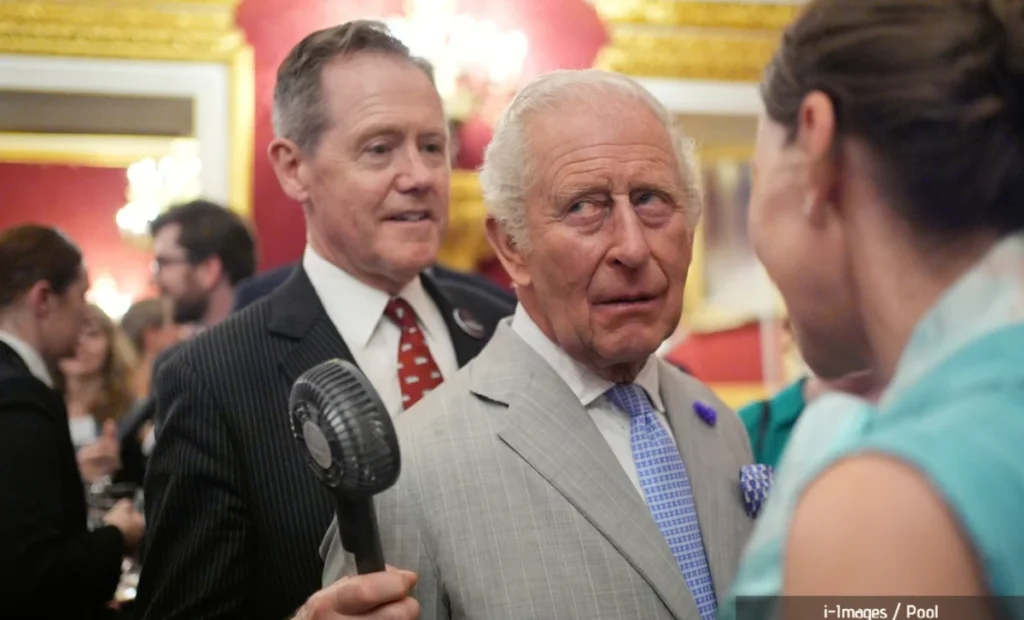
Within the historic walls of St. James’s Palace, designed and built long before the advent of modern climate control systems, the oppressive heat was palpable. Organizers of the climate reception, held as part of London Climate Action Week, deployed large portable fans in an attempt to circulate the stifling air. Guests, including politicians, scientists, and business leaders, were provided with traditional paper fans, a poignant symbol of the era’s struggle to adapt to rising temperatures. Many attendees were observed fanning themselves and dabbing sweat from their brows, a visual testament to the challenging conditions.
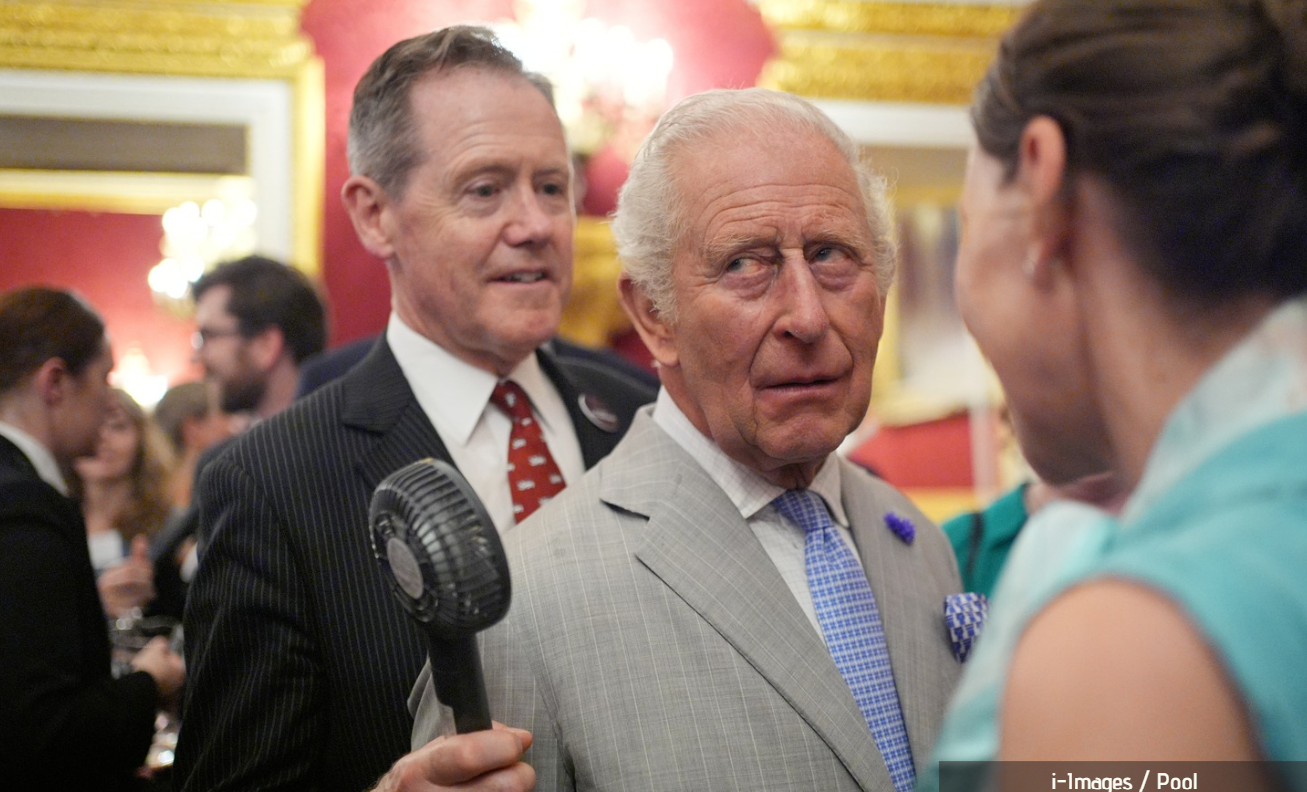
It was in this environment that a candid moment, captured by photographers, highlighted the reality of the situation for the King. As King Charles engaged in conversation with guests, Vice Admiral Sir Tony Johnstone-Burt, the Master of the Household, discreetly stepped in with a small battery-powered fan, holding it near the monarch to offer a measure of relief. This seemingly minor act resonated widely, appearing to encapsulate the collective experience of a nation grappling with record-breaking heat. The image served as a powerful, albeit unintentional, visual metaphor for the discomfort caused by the climate crisis, even as the very issue was being discussed at the highest levels.
A Climate Forum Under Unprecedented Skies
The reception itself was meticulously planned to address critical environmental challenges. King Charles, a long-standing advocate for environmental causes, was hosting a gathering focused on the imperative to tackle climate change and, specifically, to reduce harmful super-pollutants. These pollutants, including methane and black carbon, are potent drivers of global warming, often having a more immediate and significant impact than carbon dioxide.
The event brought together a diverse group of stakeholders, including policymakers, leading climate scientists, innovators, and representatives from influential environmental organizations. The aim was to foster collaboration and accelerate action on emissions that contribute disproportionately to the planet’s warming. Attendees were given the opportunity to tour exhibits showcasing cutting-edge work in emissions reduction. King Charles took a keen interest, engaging with representatives from bodies such as the Clean Air Task Force, the Clean Air Fund, and the Wellcome Trust, learning about their efforts to mitigate the impact of these super-pollutants.
Official Recognition of the "New Normal"
The extraordinary weather was not lost on the event’s speakers. Ed Miliband, the UK’s Energy Secretary at the time of the 1976 heatwave and a prominent voice on climate issues, opened the reception by acknowledging the unprecedented temperatures. His remarks underscored the gravity of the situation, noting the presence of medical staff on standby should any attendees fall ill due to the heat.
"The very fact that we have to do that here in the UK in June says quite a lot about the circumstances that we are in," Miliband stated, directly linking the extreme weather event to the broader climate crisis. He later elaborated on this point, describing the soaring temperatures as "the new normal." This stark assessment served as a warning that Britain could anticipate even hotter summers in the coming years if decisive action is not taken to address climate change. His comments reflected a growing consensus among climate scientists that such extreme weather events are becoming more frequent and intense due to anthropogenic global warming.
Context: London Climate Action Week and Super-Pollutants
The reception at St. James’s Palace was a significant component of London Climate Action Week, an annual series of events designed to bring together policymakers, businesses, and civil society to discuss and advance climate solutions. This year’s week of activities was particularly poignant, occurring against a backdrop of escalating climate impacts globally, from wildfires and floods to record-breaking temperatures.
The focus on super-pollutants was also highly relevant. While carbon dioxide remains the primary long-term driver of climate change, methane and black carbon have a much more potent warming effect over shorter timescales. Reducing these emissions can offer more immediate benefits in terms of slowing the rate of warming. Methane, for instance, is over 80 times more powerful than carbon dioxide in the short term, and its reduction is seen as a critical lever for achieving near-term climate goals. Black carbon, a component of soot, not only contributes to warming but also has significant negative impacts on air quality and human health. Initiatives aimed at reducing emissions from sources such as agriculture, fossil fuel combustion, and waste burning are therefore crucial.
Historical Perspective: The 1976 Heatwave and Present-Day Parallels
The reference to the 1976 heatwave is particularly significant. That summer saw prolonged periods of intense heat and drought across the UK, leading to widespread water shortages and significant disruption. The scientific understanding of climate change was less developed then, and the event was largely viewed as an anomaly. Today, however, with decades of scientific research and mounting evidence, such events are increasingly understood as symptomatic of a changing climate.
The fact that the record set in 1976 has now been broken underscores the accelerating pace of climate change. While natural climate variability always plays a role, the frequency and intensity of extreme heat events are unequivocally linked to rising global temperatures caused by human activities. The contrast between the two heatwaves lies not only in the temperature figures but also in our understanding and response to the underlying causes.
Supporting Data and Scientific Consensus
The Intergovernmental Panel on Climate Change (IPCC), the leading international body for assessing the science related to climate change, has repeatedly highlighted the increasing frequency and intensity of heatwaves globally. Their reports, based on the work of thousands of scientists, provide robust evidence that human influence has warmed the atmosphere, ocean, and land. The current heatwave in the UK aligns with these projections, demonstrating that the predicted impacts of climate change are already being felt.
Data from the Met Office, the UK’s national meteorological service, shows a clear warming trend in the UK’s climate. Average temperatures have risen by more than 1°C since the mid-20th century, and the likelihood of extreme heat events has increased significantly. Projections indicate that by the 2050s, temperatures in the UK could regularly exceed 30°C, with even higher temperatures becoming more frequent.
Broader Implications and Future Outlook
The juxtaposition of extreme heat and climate discussions at St. James’s Palace served as a potent reminder of the immediate and tangible impacts of climate change. The event highlighted the critical need for accelerated action, not just in terms of long-term decarbonization but also in addressing short-lived climate pollutants that can offer quicker climate benefits.
The challenges faced within the historic palace, despite its grandeur, are symbolic of the broader societal challenge of adapting to a changing climate. The reliance on portable fans and paper fans underscores the limitations of existing infrastructure in the face of extreme weather. This points to the need for significant investment in climate resilience, including the retrofitting of buildings and the development of more sustainable cooling solutions.
The frank acknowledgment by Energy Secretary Ed Miliband of the "new normal" suggests a shift in official discourse towards a more urgent and realistic appraisal of the climate crisis. This recognition is crucial for driving policy change and mobilizing resources towards mitigation and adaptation efforts. The continued engagement of figures like King Charles is also vital in raising public awareness and fostering a sense of collective responsibility.
The reception, therefore, was more than just a formal gathering; it was a powerful statement about the interconnectedness of human activities, environmental conditions, and societal well-being. As Britain and the world continue to grapple with rising temperatures, the lessons learned from this record-breaking June heatwave and the discussions held within the hallowed halls of St. James’s Palace will undoubtedly shape the urgency and direction of future climate action. The image of the King being fanned, while seemingly mundane, captured a profound truth: the climate crisis is no longer a distant threat, but a present reality demanding immediate and comprehensive solutions.