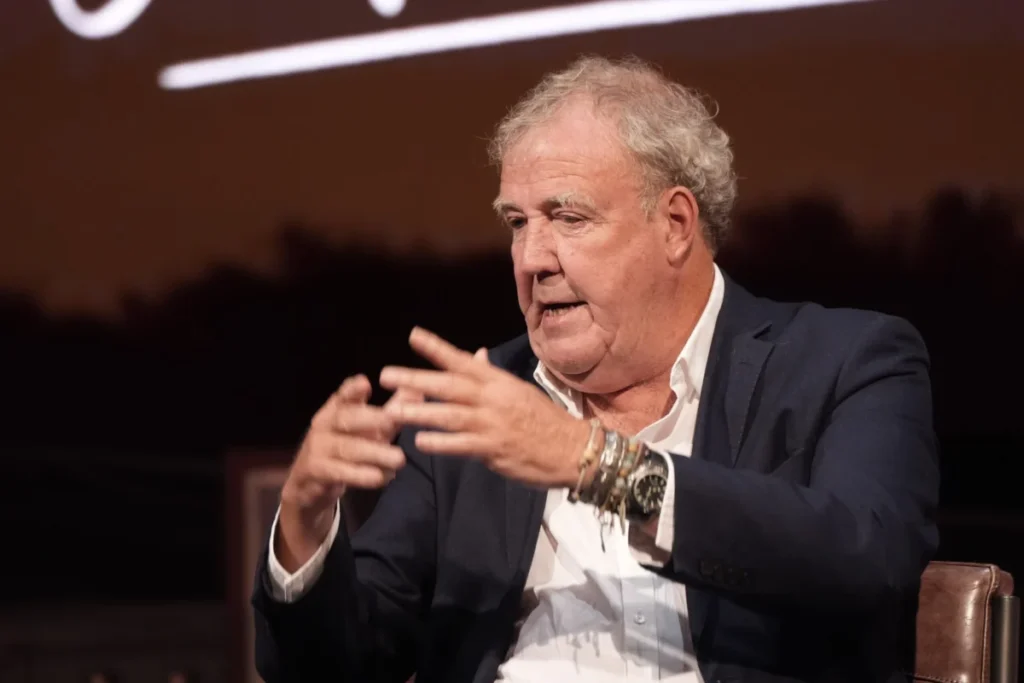

The recent disclosure by television personality Jeremy Clarkson regarding his diagnosis of aggressive prostate cancer has catalyzed an extraordinary public health response, leading to a massive increase in engagement with prostate cancer awareness initiatives. Data released by Prostate Cancer UK indicates an unprecedented 640 per cent surge in completions of its online risk checker in the week following Clarkson’s revelation, marking the highest weekly figure recorded since February 2025. This surge surpassed even the week following former Prime Minister Lord Cameron’s diagnosis, underscoring the profound impact of high-profile personal stories on public health engagement and the crucial role they play in galvanizing public action.
Clarkson, 66, revealed his diagnosis of "aggressive" prostate cancer, fortunately discovered early, during recent episodes of his popular reality series, Clarkson’s Farm. The announcement, delivered within the context of a widely watched entertainment programme, proved to be an exceptionally potent vehicle for disseminating critical health information to a broad and diverse audience. Further confirming the gravity and subsequent positive outcome of his journey, Clarkson later informed The Sunday Times that a Prostate-Specific Antigen (PSA) test two months prior had shown no indication of cancer, and he was now, thankfully, in remission. This personal detail highlighted the complexities and occasional limitations of current diagnostic methods, even as it delivered a message of hope.
The immediate ripple effect of Clarkson’s candidness was also evident on the charity’s main website, prostatecanceruk.org, which recorded 170,813 users in the subsequent week. This figure represents a substantial 74 per cent increase compared to an average week, demonstrating a significant and immediate public drive for information and understanding regarding the disease. The sheer volume of traffic and risk checker completions points to a critical moment in public health awareness, leveraging the reach and relatability of a beloved public figure to encourage proactive health-seeking behaviour among men who might otherwise delay or ignore potential symptoms.
The Catalyst: Jeremy Clarkson’s Revelation and Its Broad Reach
Jeremy Clarkson’s decision to share his personal health battle on Clarkson’s Farm, a show renowned for its candid portrayal of rural life and its star’s often-humorous struggles, provided a unique and highly effective platform for a serious health message. Clarkson’s Farm, streaming globally on Amazon Prime Video, commands a significant and diverse viewership, far exceeding the typical reach of traditional health campaigns. The very nature of reality television, which often blurs the lines between entertainment and personal narrative, allowed Clarkson’s disclosure to resonate deeply with an audience that might not actively seek out health information through conventional channels. His matter-of-fact yet vulnerable delivery likely demystified the disease for many, helping to reduce the pervasive stigma often associated with male health issues, particularly those affecting the prostate.
The timing of the revelation, embedded within a widely anticipated series, ensured maximum visibility and sustained discussion. Clarkson’s subsequent interview with The Sunday Times provided a crucial follow-up, transforming an initial moment of concern into a powerful message of hope and the critical importance of early detection. His personal account, detailing how an earlier PSA test had offered no warning, subtly educated the public about the nuances and sometimes limitations of current diagnostic methods, while simultaneously emphasizing the importance of continued vigilance and understanding one’s individual risk factors. This multi-platform communication strategy, spanning popular entertainment and established news media, amplified the message significantly, reaching millions and prompting a tangible response.
A Surge in Awareness: Unpacking the Data and Impact
The statistical impact of Clarkson’s announcement is compelling and provides a clear quantitative measure of its success in driving public engagement. The 640 per cent increase in completions of Prostate Cancer UK’s online risk checker translates into tens of thousands of men actively assessing their personal risk factors. Specifically, over 50,000 people completed the award-winning online tool within that single week, representing the biggest weekly spike for a year and a half. This particular metric is vital, as it indicates not just passive consumption of information but active participation in a health-seeking process. The risk checker, designed to help men understand their individual risk based on factors such as age, ethnicity, and family history, serves as a crucial first step towards potential early diagnosis and intervention.
The broader website traffic figures further support this trend of heightened public interest and engagement. The 74 per cent increase in users on prostatecanceruk.org, equating to over 170,000 visits, demonstrates a widespread public hunger for reliable information. This traffic surge likely encompassed a diverse range of individuals, including men seeking to understand their symptoms, family members researching on behalf of loved ones, and individuals simply wanting to learn more about a disease thrust into the national conversation. The fact that these figures surpassed the impact seen after former Prime Minister Lord Cameron’s diagnosis is particularly noteworthy, suggesting that Clarkson’s unique public persona and the context of his revelation fostered an even greater degree of public resonance and direct action. While Lord Cameron’s announcement would have undoubtedly garnered significant media attention, Clarkson’s story, interwoven with his popular television series, may have reached a different, perhaps broader and less health-literate, demographic, thus achieving a wider societal impact.
Understanding Prostate Cancer: A Pressing Public Health Imperative
Prostate cancer remains the most common cancer among men in the UK, with alarmingly high statistics underscoring its prevalence and the ongoing public health challenge it presents. One in eight men will be diagnosed with prostate cancer in their lifetime, a figure that rises significantly to one in four for Black men, highlighting persistent health inequalities and the urgent need for targeted and culturally sensitive awareness campaigns. The disease primarily affects men over 50, with risk increasing steadily with age, and a family history of prostate cancer also significantly elevates an individual’s risk profile.
Despite its widespread occurrence, prostate cancer presents unique challenges in diagnosis. As Chiara De Biase, Prostate Cancer UK’s fundraising and health strategy director, noted, "All too often men find out by complete chance, too late." Unlike some other cancers, prostate cancer typically starts to grow on the outer part of the prostate gland. This anatomical characteristic means it usually does not press on the urethra – the tube carrying urine from the bladder to the penis – in its early stages. Consequently, many men experience no noticeable symptoms until the cancer has grown considerably or has begun to spread to other parts of the body.
When symptoms do eventually appear, they can often be subtle and easily mistaken for other, less serious conditions commonly associated with ageing, such as benign prostatic hyperplasia (BPH) or an overactive bladder. Common urinary symptoms that might indicate prostate problems, though not exclusively cancer, include:
- Difficulty starting to urinate
- A weak or interrupted flow of urine
- Frequent urination, especially at night (nocturia)
- An urgent need to urinate
- Straining or taking a long time to urinate
- A feeling that the bladder has not emptied fully
Less common but more concerning symptoms, particularly if the cancer has advanced or spread, might include: - Pain or burning during urination
- Blood in the urine or semen
- Pain in the back, hips, or pelvis that doesn’t go away
- Painful ejaculation
- Erectile dysfunction
- Unexplained weight loss
- Fatigue
The insidious nature of the disease, often remaining asymptomatic until advanced stages, makes early detection critically challenging. De Biase further emphasized this grim reality: "Over 10,000 dads, brothers, sons and friends are diagnosed too late for a cure every year." This sobering statistic underscores the profound human cost of delayed diagnosis and the urgent necessity of developing more effective and accessible screening strategies.
The Personal and the Public: Clarkson’s Journey and its Lessons
Jeremy Clarkson’s personal narrative provides a poignant and instructive illustration of the complexities surrounding prostate cancer diagnosis. His revelation that a PSA test two months prior to his diagnosis showed no indication of cancer highlights a crucial public health message: PSA tests are not infallible and should not be relied upon as a definitive screening tool in isolation. While a raised PSA level can indicate prostate problems, including cancer, it can also be elevated by benign conditions like an enlarged prostate or infection. Conversely, as Clarkson’s case exemplifies, a ‘normal’ PSA level does not guarantee the absence of cancer, particularly an aggressive form. This nuance is vital for public understanding, as it encourages men to consider their overall risk profile, discuss concerns with their doctor, and explore further diagnostic options rather than relying solely on a single test result. It underscores the need for a comprehensive assessment rather than a singular diagnostic marker.

Clarkson’s journey from diagnosis to remission also provides a powerful message of hope and the potential for positive outcomes when the disease is caught early. His public sharing of this timeline, from initial concern to successful treatment, can significantly reduce the fear and anxiety among men contemplating checks or facing a similar diagnosis. It humanizes a potentially terrifying medical condition, demonstrating that it is manageable and often curable, especially when detected in its nascent stages. This personal testimony acts as a far more effective motivator than abstract health warnings, making the threat feel real yet conquerable, fostering a sense of agency and optimism.
Expert Commentary: A Resounding Call to Action
Chiara De Biase’s statements provide critical context and reinforce Prostate Cancer UK’s ongoing mission and strategic objectives. She articulated profound gratitude to Clarkson, acknowledging the immense power of his story: "There’s little doubt that Jeremy’s story has struck a chord and we thank him once again for sharing his story last week." Her emphasis on the "one in eight men" statistic and the tragic reality of late diagnoses highlights the core challenge facing public health advocates and the urgent need for systemic change.
De Biase’s most pointed observation, however, concerns the systemic gap in prostate cancer care: "the fact that the responsibility to know if you’re at higher risk of prostate cancer and to act on it still rest entirely on men’s shoulders simply has to change." This statement is a direct appeal for a more robust public health framework, one that actively supports and facilitates early detection rather than solely relying on individual initiative. It subtly critiques the current system, where prostate cancer, despite being the most common male cancer, notably lacks a national screening programme, unlike breast or cervical cancer, which benefit from established population-wide screening initiatives.
Prostate Cancer UK is actively working to address this critical gap through pioneering initiatives like its Transform trial, which aims to find "the safest and most effective way to screen all men for prostate cancer." This research is crucial, as any national screening programme would need to be highly accurate to minimize false positives (leading to unnecessary anxiety and biopsies) and false negatives (missing actual cancers), and to avoid unnecessary biopsies and treatments for slow-growing, non-aggressive cancers that might never cause harm. The charity’s unwavering commitment to this cutting-edge research underscores the complexity of developing an effective screening method that judiciously balances the benefits of early detection with minimizing overdiagnosis and overtreatment.
The overwhelming public response to Clarkson’s story provides a tangible demonstration of the public’s readiness to engage with this issue. De Biase celebrated the "incredible" figures, noting that "this all adds up to men taking crucial action, which could save their lives." This positive feedback loop—where a celebrity revelation leads to widespread public action, which in turn validates the importance of such disclosures—is a powerful mechanism for driving and sustaining meaningful public health change.
The Road Ahead: Screening, Research, and Policy Implications
The substantial increase in awareness and proactive health engagement following Jeremy Clarkson’s revelation brings into sharp focus the ongoing debate surrounding a national prostate cancer screening programme. Currently, there is no routine national screening programme for prostate cancer in the UK, primarily due to the limitations of existing tests, particularly the PSA test. The challenges include the risk of overdiagnosis (detecting slow-growing cancers that may never cause harm, leading to unnecessary anxiety and invasive treatment side effects) and the potential for false negatives, as seen in Clarkson’s own experience.
However, the surge in men actively using risk checkers and visiting charity websites demonstrates a clear public appetite for greater access to information and early detection methods. This public pressure could potentially reignite discussions among policymakers and health authorities about accelerating research into more reliable screening tools. The Transform trial, mentioned by Prostate Cancer UK, is a prime example of the kind of innovative research needed to overcome these obstacles. Such trials are exploring new biomarkers, advanced imaging techniques like multiparametric MRI (mpMRI), and refined risk stratification models to identify men most likely to benefit from further investigation without exposing a wider population to unnecessary procedures or anxiety.
Beyond screening, the increased awareness can also lead to broader improvements in prostate cancer care across the board. Greater public understanding of symptoms and risk factors can empower men to initiate crucial conversations with their General Practitioners earlier, leading to timelier diagnoses and ultimately, better patient outcomes. It also places a constructive pressure on healthcare providers and systems to ensure they are adequately equipped to handle a potential increase in enquiries and referrals, potentially driving much-needed investment in diagnostic services, specialist care pathways, and public health infrastructure.
Furthermore, the "one in eight" statistic, and the even higher risk for Black men, necessitates the development and implementation of culturally sensitive and targeted health campaigns. Clarkson’s story, while universal in its broad appeal, can serve as a powerful springboard for more specific outreach efforts, ensuring that all demographic groups are acutely aware of their particular risks and actively encouraged to take appropriate action. Addressing these disparities is a critical component of achieving equitable health outcomes for all men.
Conclusion: Sustaining the Momentum for Lifesaving Action
Jeremy Clarkson’s candid sharing of his prostate cancer journey has undeniably created a pivotal moment for men’s health awareness. The astonishing statistics from Prostate Cancer UK – a 640 per cent increase in risk checker completions and a 74 per cent rise in website traffic – are not merely abstract numbers; they represent thousands of men actively engaging with their health and potentially taking life-saving action. This event powerfully underscores the unparalleled ability of prominent public figures to transcend traditional health campaigns and connect directly with a broad and engaged audience, effectively transforming a personal health crisis into a potent catalyst for collective public health action.
The challenge now lies in sustaining this vital momentum. While high-profile stories are "incredibly impactful," as De Biase highlighted, the long-term goal is to embed proactive health-seeking behaviours into the fabric of society and to implement systemic changes that remove the burden of responsibility solely from individual men. This comprehensive approach includes continued and robust investment in research for effective and accessible screening programmes, enhanced public health education initiatives, and policy reforms that prioritize early detection, equitable access to care, and the overall well-being of men.
Prostate Cancer UK’s ambitious vision—"a world where no man dies from prostate cancer – and every man gets the personalised care he needs to live a long, full life"—feels more attainable in the wake of such a powerful public response. Thanks to Jeremy Clarkson’s courageous openness and the dedicated, tireless work of charities like Prostate Cancer UK and their supporters, significant positive steps are indeed being made in this crucial quest, offering tangible hope for a future where aggressive prostate cancer is identified early, treated effectively, and ultimately, defeated. The ripples from one man’s story have demonstrably become waves of awareness, setting a new and inspiring benchmark for public health engagement and advocacy.