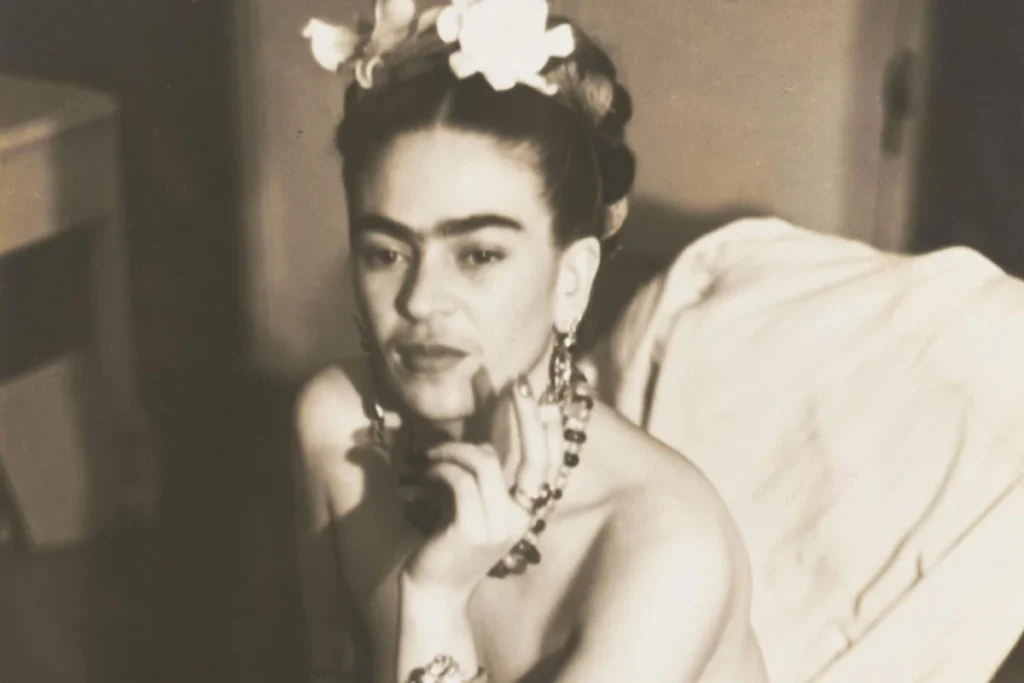

London’s Tate Modern is set to challenge perceptions and provoke discourse with its groundbreaking new exhibition, "Frida: The Making of an Icon," opening its doors on Thursday, June 25, and running until January 3. This ambitious retrospective delves beyond the celebrated artistic output of Frida Kahlo, the revered Mexican painter, to meticulously examine the multifaceted phenomenon of her "extreme commodification." The exhibition promises an unprecedented exploration into how Kahlo, decades after her death, transformed from a formidable artist into a pervasive cultural icon and an internationally recognized commercial brand, a phenomenon curators have termed "Fridamania."
The gallery’s curatorial statement highlights the exhibition’s intent to narrate the "extraordinary story" of Kahlo’s ascent to becoming "one of the most influential artists of all time." This journey, it suggests, is not merely about her canvases but also about the indelible mark she has left on global popular culture, transcending the traditional boundaries of the art world.
Deconstructing "Fridamania": A Curatorial Perspective
Bea Garcia-Velasco, the exhibition’s lead curator, articulated the critical intent behind "Frida: The Making of an Icon," describing it as the "first to really historically and critically think about the Frida phenomenon." Speaking to the Press Association, Garcia-Velasco candidly addressed the inescapable truth of Kahlo’s image: "We can’t really shy away from the truth that her image has been hyper commercialised, and it’s been used for many different products."
The exhibition itself will feature an extensive collection of over 200 commercial objects that reflect Kahlo’s pervasive presence across diverse markets. These range from mass-produced items such as dolls bearing her distinctive likeness to more esoteric "folk or devotional objects that include Frida as a saint or ancestor that people venerate." This deliberate inclusion of commercial artifacts alongside her seminal artworks is central to the exhibition’s thesis.

Garcia-Velasco elaborated on the curatorial challenge: "For us, it’s important to complicate this idea of the extreme commodification of Frida, which can take away from her work, and there’s also something to be said of this idea of democratic ownership and how everyone has been able to tap into Frida into different reasons – for political reasons, for cultural reasons, for personal reasons." The exhibition seeks to navigate the complex interplay between the potential trivialization of her art through commercialization and the powerful democratic reclamation of her image by diverse communities worldwide. "It’s just a reality of our contemporary society that her image and her work has been circulated so widely. It’s been interesting to categorise that and see the many ways she’s been reclaimed in a non-visual arts context," she added, emphasizing the exhibition’s role in mapping this expansive cultural diffusion.
An Unprecedented Display: Art, Artifacts, and Influence
Beyond the commercial objects, "Frida: The Making of an Icon" offers a rich artistic tapestry, showcasing more than 30 of Kahlo’s most iconic paintings. These works are complemented by a carefully curated selection of her personal effects, including garments, jewellery, and photographs, which collectively offer an intimate glimpse into the artist’s life and persona. The exhibition further contextualizes Kahlo’s enduring legacy by presenting over 200 works by her contemporaries and artists from subsequent generations whom she inspired, illustrating the profound ripple effect of her creative vision.
The curator shared her personal connection to this aspect of the exhibition, finding it "personally really moving" to witness how different generations of artists across the globe continue to draw inspiration from Kahlo’s legacy. She passionately described Kahlo as a "powerful icon of female resilience and strength and talent," a sentiment that resonates deeply with audiences worldwide and underpins much of her posthumous appeal.
Frida Kahlo: A Life of Art, Pain, and Defiance
To understand the magnitude of Kahlo’s transformation into a global icon, it is essential to revisit her extraordinary life and artistic output. Born Magdalena Carmen Frieda Kahlo y Calderón in Coyoacán, Mexico City, on July 6, 1907, Kahlo’s life was marked by profound physical and emotional suffering, which she unflinchingly channelled into her art. At the age of six, she contracted polio, leaving her with a permanently damaged leg. However, the most traumatic event occurred in 1925 when a bus accident left her with severe injuries, including a broken spinal column, pelvis, and multiple fractures. This catastrophic event condemned her to a life of chronic pain, numerous surgeries, and periods of prolonged convalescence, often confined to bed.

It was during these periods of enforced immobility that Kahlo began to paint, using a specially designed easel that allowed her to work while lying down. Her early works, particularly her self-portraits, became a raw and visceral exploration of her physical and psychological torment. Of the approximately 200 pieces she produced throughout her life, a remarkable 55 were self-portraits, a testament to her introspective nature and her body’s central role in her artistic narrative.
The Tate exhibition features several of these pivotal self-portraits, offering visitors a chronological journey through her artistic development. Among them is her very first self-portrait, "Self-Portrait (in a Velvet Dress)" from 1926, a work that predates her mature style but hints at the introspective intensity to come. Other significant inclusions are "The Frame" (1938), "Memory (The Heart)" (1937), and the haunting "Untitled (Self-portrait with thorn necklace and hummingbird)" (1940), each a powerful testament to her unique blend of surrealism, indigenous Mexican folk art, and deeply personal symbolism.
Kahlo’s art was not merely an expression of pain; it was also a vibrant celebration of her Mexican heritage, her political convictions, and her complex identity. She proudly embraced her indigenous roots, often adorning herself in traditional Tehuana dresses, which became an integral part of her public persona and artistic imagery. A fervent communist, she was actively involved in political movements, her beliefs often intertwining with her artistic expression and her tumultuous relationship with the renowned muralist Diego Rivera, whom she married twice. Their passionate, often volatile, union was a defining feature of her life, marked by infidelities, artistic collaborations, and shared political ideals.
The Posthumous Ascent: From Rivera’s Shadow to Global Stardom
Remarkably, despite her profound artistic contributions, Kahlo remained relatively unknown beyond a select circle during her lifetime, often living "slightly under the shadow" of her more famous husband, Diego Rivera. Her international recognition began to blossom decades after her death in 1954, a phenomenon attributed to a confluence of cultural and political shifts.
A critical catalyst in the resurrection of Kahlo’s legacy was the Chicano movement of the 1960s and 1970s in the United States. This civil rights campaign, waged by Mexican Americans, sought to combat institutional racism, demand political representation, and celebrate a distinct cultural identity. Activists within the movement found a powerful resonance in Kahlo’s art and persona. Her fierce independence, her embrace of Mexican culture, her defiance of adversity, and her political convictions made her an undeniable symbol of strength and resistance. Through their advocacy, exhibitions, and academic interest, the Chicano movement played a crucial role in reintroducing Kahlo to a wider audience, positioning her as an icon for cultural pride and social justice.

Concurrently, the burgeoning feminist art movement of the late 20th century further propelled Kahlo into the global spotlight. Her uncompromising portrayal of female experience – including themes of miscarriage, abortion, sexuality, and chronic illness – resonated deeply with feminist scholars and artists who saw in her work a pioneering voice for women’s autonomy and the subversion of patriarchal norms in art. Her bold self-portraits, which challenged conventional notions of beauty and identity, made her an enduring symbol of female empowerment and self-expression.
The Art Market and the Rarity of Genius
The growing cultural veneration of Frida Kahlo has, inevitably, translated into an exponential increase in the market value of her works. As Garcia-Velasco noted, "Frida didn’t paint that much. I mean, I think it’s over 200 works that exist today, so her works are rare." This scarcity, coupled with her iconic status and the deeply personal nature of her art, has driven prices to unprecedented levels.
Last year, her self-portrait "Diego y yo" (Diego and I) from 1949, not "El sueno (La cama)" as initially mentioned, became the most expensive work by a female artist ever sold at auction, fetching a staggering $34.9 million (approximately £26.4 million at the time) at Sotheby’s in New York. This record-breaking sale underscored the intense interest from collectors and institutions alike, solidifying her position as a blue-chip artist. The curator explained this phenomenon further: "I think her work also speaks to very personal subject matter. She was really a pioneer in opening herself up and exposing issues that were previously regarded taboo." This pioneering spirit, combined with her global appeal, has undeniably fed into the escalating value of her limited oeuvre.
The Enduring Power of a Persona
Garcia-Velasco further reflected on Kahlo’s "very challenging life story" and its lasting impact. "The way that she spoke about her suffering and portrayed it in her work… her very bold way speaking about topics like disability and reproductive issues… she was one of the first artists to open up herself in that way and tackle very taboo subjects in her work." This candidness, particularly in an era where such topics were rarely discussed publicly, let alone in art, forged a profound connection with audiences.

Her self-portraits, in particular, possess an "enigmatic" quality, creating an almost intimate dialogue with the viewer. "They almost feel like you’re meeting an old friend and she’s telling you her secrets," Garcia-Velasco mused. This unique blend of vulnerability and strength, authenticity and carefully constructed imagery, allowed Kahlo to transcend her personal narrative and become a universal figure. "I think the power of her work and the persona she constructed for herself… it speaks to many different people."
Broader Implications: Art, Commerce, and Cultural Ownership
"Frida: The Making of an Icon" is more than just an exhibition about one artist; it is a profound commentary on the nature of celebrity, cultural appropriation, and the complex relationship between art and commerce in the 21st century. The concept of "democratic ownership" championed by the curator raises pertinent questions: Does widespread commercialization democratize art by making it accessible, albeit in diluted forms, or does it risk commodifying and ultimately diminishing the artistic and intellectual integrity of the original creator?
In an age dominated by social media and rapid image dissemination, the speed and scale of "icon-making" have accelerated dramatically. Kahlo’s image, characterized by her unibrow, traditional attire, and stoic gaze, is instantly recognizable, making her a prime candidate for meme culture, fashion statements, and political symbols. The exhibition prompts viewers to consider their own participation in this "Fridamania" and the implications of consuming art as a brand.
The Tate Modern, by presenting this critical examination, implicitly engages in a dialogue about its own role as a cultural institution in navigating such phenomena. By displaying both her masterpieces and the commercial spin-offs, it invites a nuanced understanding of how an artist’s legacy evolves beyond their control, shaped by public perception, market forces, and the ever-shifting landscape of cultural identity.
As visitors walk through the galleries, they will not only encounter the genius of Frida Kahlo’s paintings but also confront the pervasive reach of her image in contemporary society. The exhibition serves as a powerful reminder that while art endures, its meaning and interpretation are constantly being re-negotiated, re-packaged, and re-claimed, making "Frida: The Making of an Icon" a timely and essential contribution to the ongoing conversation about cultural heritage and its commercial destiny.