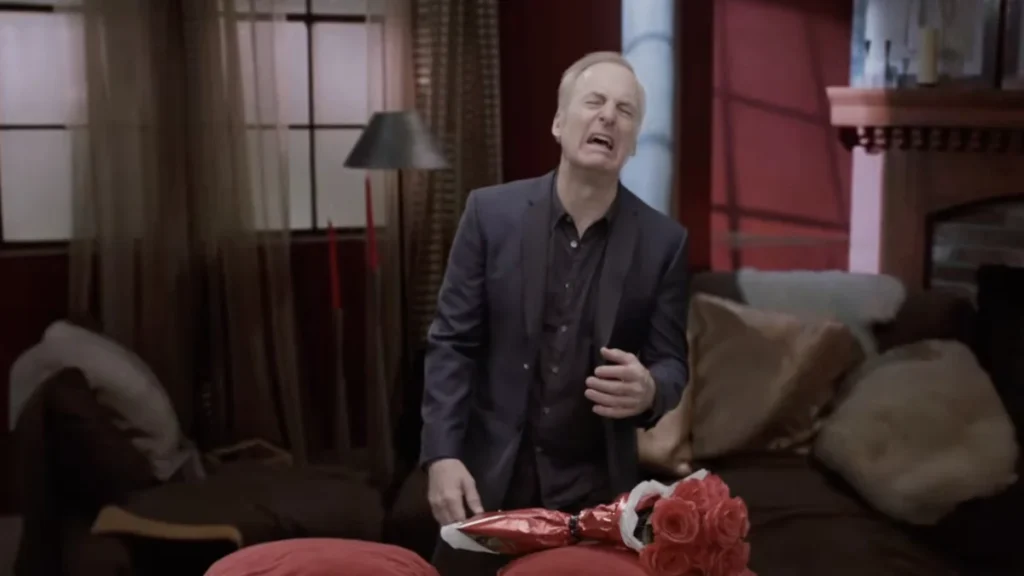

The highly anticipated reimagining of the cinematic cult classic, The Room, titled The Room Returns and starring Emmy-nominated actor Bob Odenkirk, is slated for its Los Angeles premiere on June 26th at the iconic Hollywood Forever Cemetery. Following a series of sold-out engagements in both Chicago and New York, the Los Angeles event marks a significant milestone for the project, which has captivated online communities and film enthusiasts since its confirmation in 2023. This special screening is not merely an entertainment spectacle; it also serves a philanthropic purpose, with proceeds benefiting amfAR, The Foundation for AIDS Research, and Blue Collaborative, an organization dedicated to supporting independent artists, facilitated by the all-volunteer charity, Acting For a Cause. Tickets for this unique cinematic event are available through Ticketweb, inviting fans to witness what director Brando Crawford describes as a transformation of "cinematic disaster into unpredictable spectacle."
The Enduring Legacy of the Original "The Room"
To fully appreciate the cultural weight and audacious premise of The Room Returns, one must first understand the indelible mark left by its predecessor. The original The Room, released in 2003, was an independent drama written, directed, produced by, and starring the enigmatic Tommy Wiseau. Shot on a budget reported to be around $6 million, the film was intended as a serious drama, a searing indictment of betrayal and friendship. However, due to its unconventional narrative structure, bewildering dialogue, erratic acting, and numerous technical eccentricities, it quickly garnered a reputation as one of the "worst" films ever made. Paradoxically, this perceived lack of conventional quality became its greatest asset, propelling it into the realm of a beloved cult classic.
Initial theatrical runs were disastrous, often playing to empty houses for brief periods. Yet, through word-of-mouth, midnight screenings, and the burgeoning internet culture of the mid-2000s, The Room began to attract a dedicated following. Audiences reveled in its unintentional humor, participating actively by quoting lines ("Oh, hi Mark!"), throwing plastic spoons at the screen (a nod to the inexplicable framed spoon pictures in Johnny’s apartment), and dressing up as characters. This interactive experience transformed viewing The Room from a passive activity into a communal, almost ritualistic event. Its themes of friendship, betrayal, and the absurdity of human relationships, filtered through Wiseau’s unique artistic lens, resonated with a niche but passionate audience who found genuine enjoyment in its profound strangeness. Critics and scholars have since explored The Room‘s unique position in film history, often categorizing it alongside other "so bad it’s good" films like Ed Wood’s Plan 9 from Outer Space, yet acknowledging Wiseau’s singular, unreplicable vision.
From Cult Phenomenon to Mainstream Recognition: "The Disaster Artist"
The cult status of The Room received a significant boost with the release of Greg Sestero and Tom Bissell’s 2013 book, The Disaster Artist: My Life Inside The Room, The Greatest Bad Movie Ever Made. Sestero, who played Mark in the original film and was a close friend of Wiseau, provided an intimate, often bewildering, account of the film’s chaotic production, Wiseau’s eccentric personality, and the journey of the film from obscure failure to cult phenomenon. The book became a New York Times bestseller and further cemented The Room‘s place in popular culture.
The narrative of The Disaster Artist was then adapted into a critically acclaimed film of the same name in 2017, directed by and starring James Franco as Tommy Wiseau, with Dave Franco portraying Greg Sestero. The film offered a poignant, humorous, and at times unsettling portrayal of Wiseau’s ambition and the struggles inherent in independent filmmaking. It achieved widespread critical success, earning Franco a Golden Globe for Best Actor and an Academy Award nomination for Best Adapted Screenplay. The Disaster Artist brought the story of The Room to a much broader, mainstream audience, introducing millions to the peculiar charm of Wiseau’s creation and solidifying its status as a cultural touchstone. The film served as an anthropological study of a unique cinematic endeavor, exploring themes of ambition, friendship, and the subjective nature of artistic success.
The Genesis of "The Room Returns"
The idea of remaking The Room had circulated in online forums and fan communities for several years, often debated with a mix of excitement and trepidation. The challenge lay in how one could "remake" a film whose appeal stemmed almost entirely from its unintentional flaws and amateurish execution. The announcement of The Room Returns in 2023, confirmed by Bob Odenkirk himself, sent ripples of anticipation through the internet. Odenkirk, known for his nuanced performances in critically acclaimed series such as Breaking Bad and Better Call Saul, and more recently for his action roles in films like Nobody, seemed an unlikely, yet intriguing, choice to lead such a project. His involvement immediately signaled that this would be no ordinary remake but rather a deliberate artistic experiment, designed to pay homage to the original while exploring new dimensions of its unique appeal.
The project is spearheaded by Brando Crawford, who not only directs but also stars in the remake. Crawford, alongside Jarad Schwartz, serves as a producer, with renowned horror director Mike Flanagan (known for The Haunting of Hill House, Doctor Sleep) acting as executive producer. This combination of talent, ranging from cult film connoisseurs to mainstream critically acclaimed figures, underscored the serious, albeit unconventional, artistic intentions behind The Room Returns. Alex Mansour, known for his evocative compositions, has crafted the score, further elevating the production’s artistic credentials.
A Unique Production Methodology: Embracing Intentional Chaos
One of the most striking aspects of The Room Returns is its unconventional production methodology, meticulously designed to mirror, and perhaps even amplify, the accidental genius of the original. Director Brando Crawford revealed that the film was shot entirely in front of a green screen, a choice that could serve multiple purposes. It might be a direct nod to the original’s sometimes jarring and inconsistent background plates, or it could be a deliberate artistic decision to create a surreal, detached aesthetic, allowing for abstract or minimalist set pieces that highlight the performances.
Crucially, Crawford also stated that the cast operated "with no rehearsal and only teleprompters to guide them." This approach is a direct, ingenious echo of Tommy Wiseau’s notoriously chaotic and often baffling directorial style, where actors were frequently given lines moments before shooting, leading to stilted deliveries and bewildered expressions that became hallmarks of the original. By intentionally adopting this method, The Room Returns aims to capture the raw, unpolished energy that made the 2003 film so compelling, transforming what was once accidental into a deliberate artistic choice. Crawford’s statement, "the cast embraced the chaos with Shakespearean gravity, transforming cinematic disaster into unpredictable spectacle," perfectly encapsulates this philosophy. It suggests a meta-commentary on the nature of performance and the fine line between amateurism and avant-garde art. This approach challenges conventional notions of filmmaking, prompting audiences to reconsider what constitutes "good" or "bad" cinema, and how context and intent can redefine artistic value.
The Ensemble Cast: Blending Legacy and New Interpretations
The casting of The Room Returns is a deliberate blend of continuity and fresh perspectives, ensuring both a respectful nod to the original and a compelling new interpretation. Bob Odenkirk takes on the lead role of Johnny, the character originally portrayed by Tommy Wiseau. Odenkirk’s ability to oscillate between intense dramatic gravitas and comedic timing makes him an inspired choice to embody Johnny’s complex, often nonsensical, emotional arc. His portrayal is expected to offer a new dimension to a character already ingrained in pop culture, potentially revealing layers of vulnerability or absurdity that were previously only perceived through Wiseau’s unique delivery.
Crucially, Greg Sestero, the original Mark, returns to the universe of The Room, albeit in a new capacity or role. His involvement provides an invaluable link to the source material, bringing an authentic understanding of the film’s peculiar world. Sestero’s insights and personal history with The Room add an extra layer of meta-narrative to the remake, making it more than just a simple re-telling. The ensemble also features Bella Heathcote (The Man in the High Castle), Kate Siegel (The Haunting of Hill House, Midnight Mass), and Brando Crawford himself. Siegel’s presence, given her frequent collaborations with executive producer Mike Flanagan, further strengthens the project’s artistic credibility. This diverse cast is tasked with navigating the intentionally chaotic production environment, promising performances that are both homage and reinvention.
Philanthropy at the Forefront: Acting For a Cause
Beyond its artistic ambitions, The Room Returns is deeply committed to charitable giving. The Los Angeles premiere, like its predecessors in Chicago and New York, is presented by Acting For a Cause, an all-volunteer charity organization. Founded with the mission of leveraging the power of performance for social good, Acting For a Cause orchestrates events where actors and artists donate their time and talent to raise funds and awareness for various causes. Their involvement ensures that the cultural phenomenon surrounding The Room is channeled into meaningful societal impact.
The proceeds from the Los Angeles screening will be directed to two vital organizations. The first is amfAR, The Foundation for AIDS Research. For over 35 years, amfAR has been a global leader in AIDS research, dedicating itself to supporting groundbreaking studies aimed at finding a cure for HIV/AIDS and developing effective treatments. Their work has been instrumental in advancing medical understanding and improving the lives of millions affected by the epidemic. The second beneficiary, Blue Collaborative, is an organization focused on supporting independent artists. In an increasingly challenging landscape for creatives, Blue Collaborative provides resources, funding, and platforms to help emerging and established independent artists realize their visions and sustain their careers. The choice of these beneficiaries reflects a dual commitment: addressing critical health challenges and fostering the very artistic community from which The Room Returns itself emerged. This philanthropic dimension elevates the event beyond mere entertainment, imbuing it with a sense of purpose and community responsibility.
A Chronology of a Cult Classic’s Rebirth
- 2003: The original The Room premieres, initially to minimal commercial success and bewildered critical reception.
- Mid-2000s: The film gradually gains a cult following through word-of-mouth and midnight screenings, particularly in Los Angeles and other major cities.
- 2010: Tommy Wiseau and Greg Sestero begin touring with the film, fostering its interactive cult status.
- 2013: Greg Sestero and Tom Bissell release The Disaster Artist: My Life Inside The Room, The Greatest Bad Movie Ever Made, detailing the chaotic production.
- 2017: James Franco directs and stars in The Disaster Artist film adaptation, bringing The Room‘s story to a wider, mainstream audience and receiving critical acclaim.
- Early 2020s: Rumors and discussions about a potential remake or reinterpretation of The Room begin circulating in fan communities.
- 2023: Bob Odenkirk confirms his involvement in The Room Returns, igniting widespread interest and anticipation.
- Late 2023 / Early 2024: Production for The Room Returns commences, employing its unique green screen and "no rehearsal" methodology.
- Spring 2024: Sold-out screenings of The Room Returns are held in Chicago and New York, generating significant buzz.
- June 26th (Upcoming): The Room Returns holds its Los Angeles premiere at the Hollywood Forever Cemetery, with proceeds benefiting amfAR and Blue Collaborative.
Previous Triumphs: Sold-Out Screenings and Audience Reception
The journey of The Room Returns to Los Angeles has been paved with success. Its initial sold-out screenings in Chicago and New York served as a litmus test for audience reception, demonstrating a robust appetite for this audacious remake. While detailed critical reviews from these preliminary showings are still emerging, the fact that tickets sold out quickly suggests immense fan excitement and curiosity. Audiences in these cities, likely a mix of long-time devotees of the original The Room and newcomers intrigued by Odenkirk’s involvement, were reportedly captivated by the film’s unique approach. The "no rehearsal" and green screen elements, rather than detracting from the experience, appear to have enhanced the meta-cinematic quality, turning the viewing into an event that celebrates the original’s accidental artistry through intentional design. The positive response from these earlier screenings bodes well for the Los Angeles premiere, indicating that The Room Returns has successfully navigated the delicate balance of homage and reinvention.
The Los Angeles Premiere: A Symbolic Venue
The choice of Hollywood Forever Cemetery for the Los Angeles premiere is particularly resonant. More than just a historic landmark, the cemetery is a cultural institution renowned for its outdoor film screenings, concerts, and events. Nestled amidst the graves of Hollywood legends like Rudolph Valentino, Douglas Fairbanks, and Cecil B. DeMille, it offers a uniquely atmospheric and reverent setting for cinematic experiences. For The Room Returns, screening in such a venue adds layers of symbolic meaning. It positions the remake within the broader tapestry of film history, inviting contemplation on legacies, interpretations, and the enduring power of storytelling, however unconventional. The juxtaposition of a film celebrating "cinematic disaster" with a venue honoring cinematic greats creates a compelling dialogue about the diverse forms of artistic expression and their place in cultural memory. This setting further underscores the event’s significance, transforming a film screening into a unique cultural happening.
Broader Implications: The Art of Intentional "Bad" Cinema
The Room Returns represents more than just a remake; it is a significant cultural statement on the evolving perception of "bad" cinema and the boundaries of artistic intent. By deliberately replicating and reinterpreting the accidental flaws of the original, the remake engages in a sophisticated form of meta-commentary. It asks fundamental questions about what makes a film compelling, whether "quality" is solely defined by technical proficiency and conventional narrative, or if there is inherent value in genuine, if clumsy, artistic expression.
Bob Odenkirk’s participation, alongside other reputable actors and producers like Mike Flanagan, lends considerable gravitas to this endeavor. It suggests a growing appreciation within the industry for the unique cultural footprint left by films like The Room. For Odenkirk, this role is another testament to his incredibly diverse career, moving seamlessly from dramatic intensity to action heroics, and now to a project that blurs the lines between homage, parody, and experimental theater. His willingness to embrace the absurdity inherent in the project further elevates its profile and challenges expectations.
The success of The Room Returns could pave the way for other similar projects, prompting a re-evaluation of cult films that were once dismissed as failures. It highlights a shift in audience and critical perspectives, where authenticity, even if expressed through unconventional means, can be celebrated. The remake demonstrates that the legacy of a film is not always defined by its initial critical reception or box office performance, but by its enduring cultural impact and its capacity to inspire new artistic interpretations. It is a testament to the idea that even in "cinematic disaster," there can be profound and unpredictable spectacle.
As The Room Returns prepares for its Los Angeles debut, it stands as a fascinating example of how popular culture continually reinvents itself, finding new meaning and appreciation in unexpected places. The event promises to be a memorable night, not only for its unique cinematic offering but also for its commitment to making a tangible difference through charitable contributions. It is an invitation to celebrate the strange, the unconventional, and the enduring power of a film that truly defied all expectations.