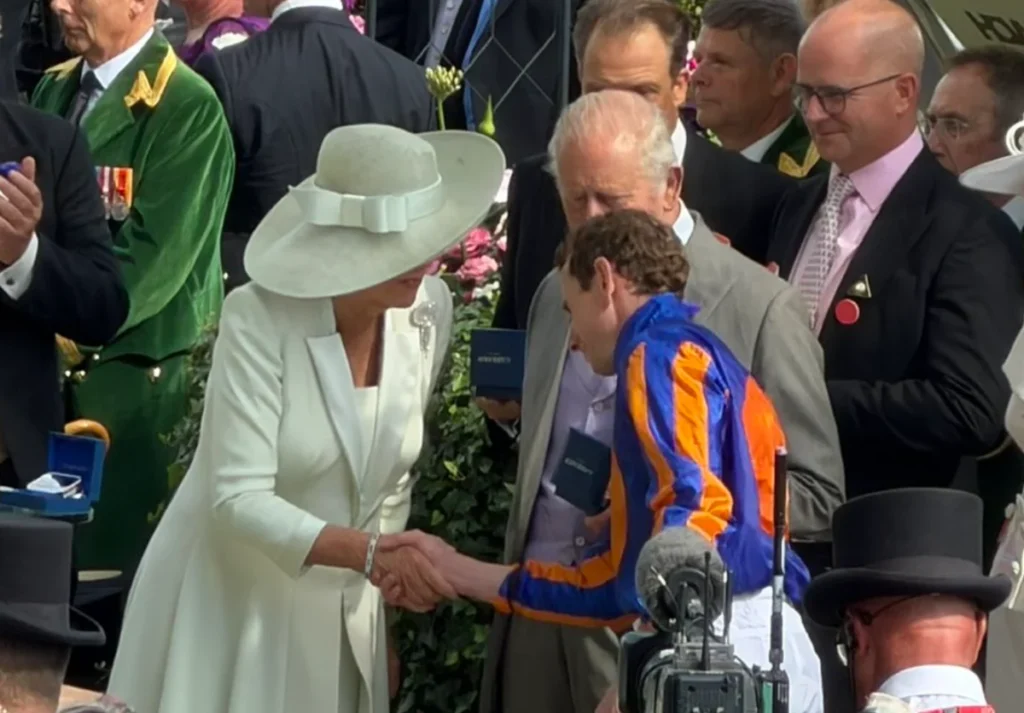

The King and Queen graced Royal Ascot on Thursday afternoon, taking centre stage to present the coveted Gold Cup to the connections of Scandinavia following a renewal of the prestigious race that will undoubtedly be remembered as one of the most dramatic in recent history. Their Majesties arrived in the parade ring to a wave of enthusiastic applause, having witnessed a truly pulsating finish to the meeting’s undisputed showpiece event. The four-year-old, trained by the legendary Aidan O’Brien, ultimately prevailed by a mere head, narrowly defeating the formidable defending champion, Trawlerman.
This thrilling encounter has already been widely hailed as a contender for the race of the season, a testament to the sheer grit and determination displayed by both Scandinavia and Trawlerman. As the field approached the iconic Ascot straight, these two titans of the turf drew clear of their rivals, engaging in a stirring battle that captivated the thousands gathered. In a display of masterful horsemanship and strategic brilliance, jockey Ryan Moore, riding Scandinavia, produced the decisive surge in the closing strides, expertly snatching victory from the jaws of defeat. The collective roar of the crowd that greeted the winner as it returned to the winner’s enclosure underscored the electrifying nature of the contest.
Upon entering the hallowed ground of the winner’s enclosure, King Charles III and Queen Camilla extended their warmest congratulations to the triumphant connections of Scandinavia. The presentation of the historic Gold Cup, a symbol of enduring equestrian excellence, was a moment of profound significance, amplified by the thrilling drama of the race itself. Ryan Moore MBE, renowned for his exceptional talent in the saddle, accepted the coveted prize from Their Majesties. His victory also marked a significant milestone for his trainer, Aidan O’Brien, who celebrated not only his remarkable tenth success in the Gold Cup but also an astonishing century of winners across the entire Royal Ascot meeting.
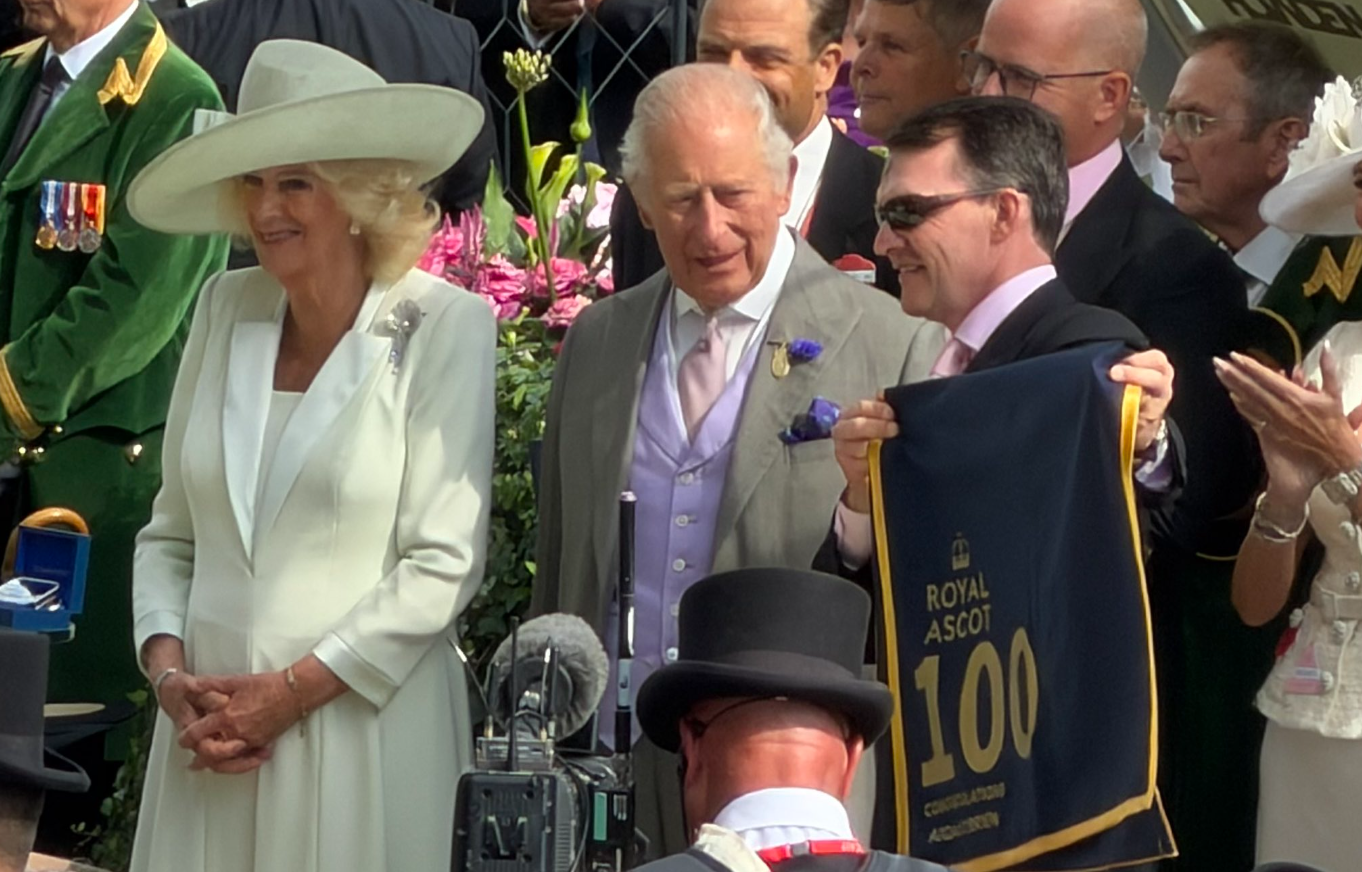
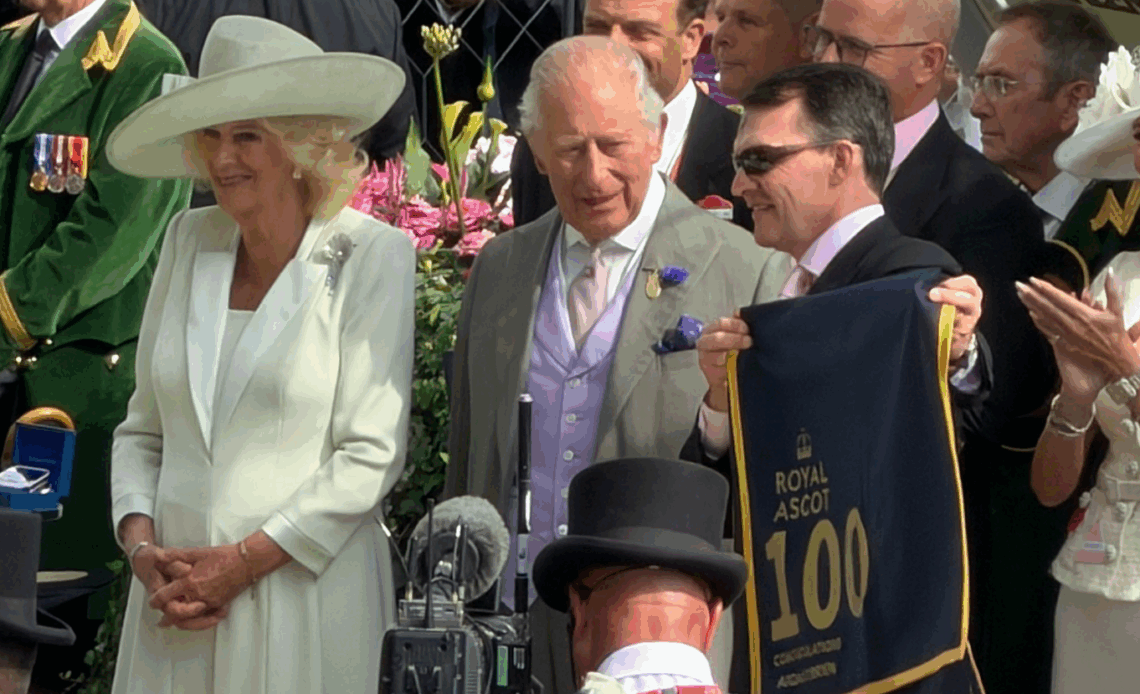
The King and Queen, keen observers of sporting achievement, personally recognised O’Brien’s extraordinary accomplishment. They presented the esteemed trainer with a commemorative saddlecloth, emblazoned with the number “100,” a tangible tribute to his historic milestone at the Berkshire track. This honour served as a fitting acknowledgement of the enduring legacy of the master of Ballydoyle, whose unparalleled association with Royal Ascot now spans nearly three decades. O’Brien’s continued dominance at the prestigious meeting demonstrates a remarkable consistency and an unwavering commitment to excellence, showing no signs of waning.
Scandinavia’s triumph etched a new name onto the illustrious Gold Cup roll of honour, a testament to its burgeoning talent and remarkable performance. The victory, however, came at the expense of last year’s champion, Trawlerman, who was denied a second consecutive triumph in a heart-stopping finish. For the thousands of racing enthusiasts packed into Ascot’s grandstands, the race provided an unforgettable spectacle, a masterclass in equine athleticism and human strategy. Trawlerman, the long-time leader, had appeared poised to retain its crown, demonstrating immense stamina and resilience. Yet, the younger challenger, Scandinavia, ridden with supreme confidence and precision by Moore, mounted a relentless challenge in the dying strides, surging alongside the leader in a breathtaking display of competitive spirit.
The two horses crossed the finishing line in virtual unison, a tableau of intense competition. After two and a half miles of racing that showcased the pinnacle of equine endurance and speed, Scandinavia emerged victorious by the narrowest of margins – a single head. This dramatic conclusion solidified the race’s status as a modern classic, a testament to the unpredictable and exhilarating nature of thoroughbred racing. The sheer speed and stamina required for the Gold Cup, a gruelling test of nerve and physical prowess, make it one of the most challenging races in the flat racing calendar.
The Enduring Prestige of Royal Ascot
Royal Ascot, an event steeped in over 300 years of tradition, is more than just a horseracing meeting; it is a quintessentially British social occasion, a vibrant tapestry of fashion, sport, and societal interaction. Founded by Queen Anne in 1711, the event has evolved from a simple race meeting into a global phenomenon, attracting royalty, celebrities, and racing aficionados from around the world. The strict dress code, the ceremonial arrival of the Royal Procession, and the unparalleled quality of the racing combine to create an atmosphere of unique grandeur. The Gold Cup, run over a demanding two and a half miles, is the undisputed highlight of the week, a race that tests a horse’s stamina, courage, and class to its absolute limit. Its historical significance is immense, with past winners forming a pantheon of racing legends.
A Tale of Two Horses: Scandinavia vs. Trawlerman
The narrative of this year’s Gold Cup was dominated by the captivating duel between Scandinavia and Trawlerman. Scandinavia, a four-year-old colt, represented the new guard, a horse with immense potential and a burgeoning reputation. Its victory was a testament to the meticulous training of Aidan O’Brien and the inspired riding of Ryan Moore. Trawlerman, the defending champion, embodied experience and proven class. Its valiant effort to retain its title, pushing Scandinavia to the very brink, underscored its own exceptional qualities and the skill of its connections. The race highlighted the recurring theme at Royal Ascot: the clash between established champions and ambitious challengers, a dynamic that fuels the excitement and unpredictability of the sport.
Aidan O’Brien’s Unprecedented Century at Royal Ascot
Aidan O’Brien’s achievement of 100 Royal Ascot winners is a monumental feat that speaks volumes about his unparalleled success as a trainer. His Ballydoyle stable has been a powerhouse of European racing for decades, consistently producing top-class performers capable of excelling on the biggest stages. O’Brien’s Gold Cup record, in particular, is extraordinary. His tenth victory in the race solidifies his position as the most dominant trainer in its history. This remarkable century of wins is not merely a statistical anomaly; it reflects a deep understanding of equine physiology, a keen eye for talent, and a relentless pursuit of perfection. His strategies, often involving carefully timed campaigns and precise preparation, have consistently paid dividends at Royal Ascot, a track that demands both speed and stamina.
Ryan Moore’s Masterclass in the Saddle
Ryan Moore, a multiple-time champion jockey, further cemented his reputation with his inspired ride aboard Scandinavia. Known for his cool demeanor, tactical acumen, and ability to extract the very best from his mounts, Moore’s performance in the Gold Cup was a masterclass. His timing of the challenge, allowing Scandinavia to unleash its final burst of speed in the crucial moments, was impeccable. In a race where fractions of a second can determine victory, Moore’s ability to judge the pace and position his horse perfectly was instrumental. His partnership with Aidan O’Brien has been one of the most successful in modern racing, a testament to their mutual respect and shared ambition. Moore’s MBE, awarded for his services to racing, is a fitting recognition of a jockey who consistently performs at the highest level.
Supporting Data and Analysis
The Gold Cup is run over a distance of 2 miles and 4 furlongs (approximately 4,023 meters). The official time for Scandinavia’s victory was not immediately available in the provided text, but typical winning times for the Gold Cup are in the region of 4 minutes and 8 seconds. The prize money for the Gold Cup is substantial, often exceeding £400,000 for the winner, further underscoring the competitive nature of the event. Scandinavia, as a four-year-old, demonstrated remarkable maturity and stamina to overcome older, more experienced rivals. Its pedigree, likely a key factor in its ability to perform over such a demanding distance, would be a subject of intense interest among breeding enthusiasts. The performance of Trawlerman, despite being beaten, further highlights the high quality of the competition.
Broader Implications and Future Prospects
Scandinavia’s victory opens up exciting new avenues for the horse, potentially including lucrative campaigns in major staying races across Europe and beyond. For Aidan O’Brien, the 100th Royal Ascot winner is a significant milestone that will likely spur him and his team to continue their pursuit of excellence. The race also serves as a reminder of the enduring appeal of traditional racing events and the thrill of witnessing sporting narratives unfold in real-time. The annual spectacle of Royal Ascot, with its blend of tradition, fashion, and world-class racing, continues to capture the public imagination, reinforcing its status as a premier event on the international sporting calendar. The drama of this year’s Gold Cup will undoubtedly be recounted for years to come, a testament to the enduring power of sport to inspire, entertain, and unite. The connections of Scandinavia will undoubtedly be celebrating a victory that has etched their horse’s name into racing folklore, while the competitive spirit of Trawlerman promises further thrilling encounters in future races.