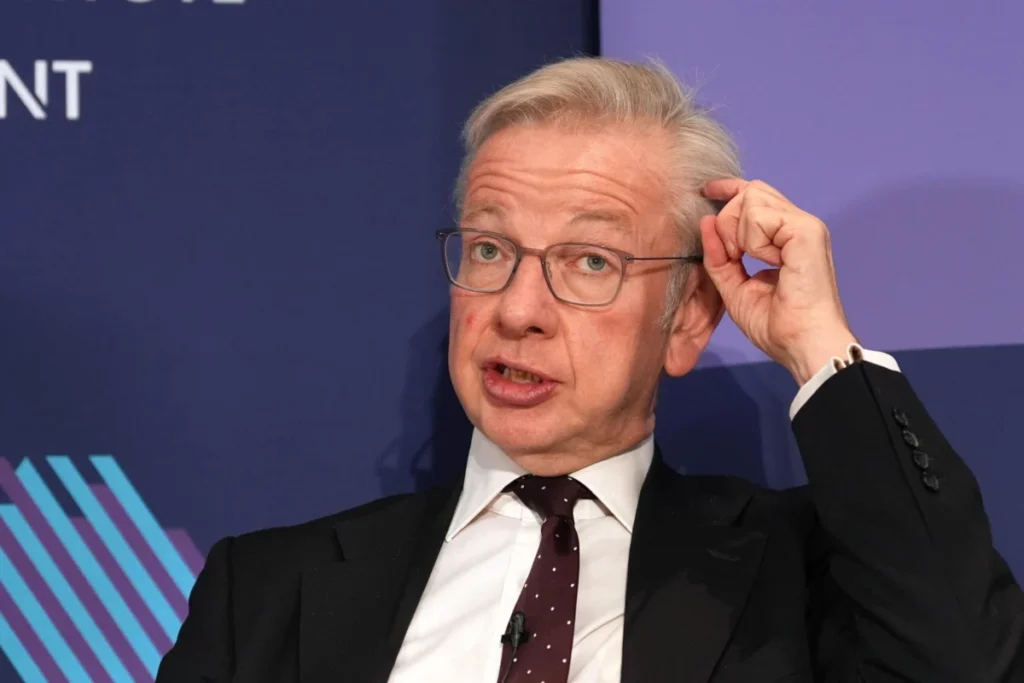

Sky TV is set to launch a compelling new four-part series titled "The Wargame" this September, thrusting a fictional cross-party cabinet, helmed by former Conservative MP Michael Gove as Prime Minister, into the harrowing scenario of navigating a war with Russia following an attack on UK soil. Produced by The Garden, an ITV Studios company, the series expands upon the success of Sky News’s original podcast of the same name, promising a visceral and timely exploration of the complex, high-pressure decisions faced by national leaders during a profound crisis. The show’s unique casting of prominent political figures and national security experts from across the political spectrum aims to lend an unparalleled sense of realism and gravitas to the dramatized proceedings, taking viewers deep inside simulated Cobra-style meetings as the UK grapples with existential threats.
The Premise: A Nation Under Siege
"The Wargame" is designed to offer an unprecedented look into the inner workings of a government confronting a major international conflict. The central narrative revolves around a fictional Russian attack on British territory, forcing the newly assembled, cross-party emergency cabinet to make critical strategic and tactical decisions under immense pressure. The series will recreate the intense atmosphere of COBRA (Cabinet Office Briefing Room A) meetings, the UK government’s top-level emergency committee, where real-world crises are managed. This format, known for its rapid-fire decision-making and high stakes, provides a potent backdrop for the simulated conflict. The show’s producers emphasize its relevance in a world facing increasing geopolitical instability, aiming to shed light on the intricate web of political, military, and intelligence considerations that shape a nation’s response to war.
A Cabinet of Political Heavyweights and Security Experts
The show’s most striking feature is its extraordinary cast, comprising a mix of seasoned politicians, former diplomats, military leaders, and intelligence professionals. This assembly of real-world experience is intended to elevate the authenticity of the simulation, offering viewers a glimpse into how such individuals might genuinely react in a crisis.
Leading this fictional cabinet as Prime Minister is Michael Gove, the former Conservative MP who held numerous senior cabinet positions, including Secretary of State for Levelling Up, Housing and Communities, and Secretary of State for Environment, Food and Rural Affairs, demonstrating significant experience in government operations and crisis management. His role as the nation’s leader in a simulated war scenario will test his strategic acumen and ability to forge consensus.
The critical role of Deputy Prime Minister will be played by Nicola Sturgeon, the former First Minister of Scotland and leader of the Scottish National Party. Sturgeon’s extensive tenure as head of a devolved government and her experience on the national and international stage bring a unique perspective to the deputy role, particularly in managing domestic implications of a conflict.
The Defence Secretary will be portrayed by Dame Penny Mordaunt, a former Conservative MP who has served as Leader of the House of Commons and Secretary of State for Defence in real life, making her an exceptionally fitting choice for this pivotal role. Her actual experience at the helm of the Ministry of Defence will undoubtedly inform her portrayal of the difficult choices inherent in wartime defence strategy.

Labour’s Baroness Harriet Harman, a long-serving MP and former Deputy Leader of the Labour Party, will take on the role of Home Secretary. Her distinguished career, including stints as Solicitor General and various shadow cabinet positions, equips her with a deep understanding of domestic security, law enforcement, and civil liberties issues crucial during a national emergency.
Jim Murphy, another former Labour MP and Secretary of State for Scotland, will serve as the fictional Foreign Secretary. His background in international affairs and government communication will be vital in navigating the diplomatic complexities and global alliances required during a conflict.
Rounding out the core cabinet roles are Baroness Sayeeda Warsi, a former Conservative MP and Cabinet Minister, as Attorney General, bringing legal expertise to the difficult decisions. Baroness Ayesha Hazarika, a Labour peer and director of communications, will play the critical role of Director of Communications, managing public messaging and international perception during the crisis.
Beyond the politicians, the series integrates a cohort of genuine security and military experts:
- Sir Richard Barrons, a retired British Army general and former Commander Joint Forces Command, will act as Chief of Defence Staff, providing an authentic military perspective on strategic planning and operational execution.
- Lord Kim Darroch, a former diplomat who served as British Ambassador to the United States and National Security Adviser, will bring his extensive experience in international relations and strategic advice to the role of National Security Adviser.
- Christopher Steele, a former MI6 intelligence officer known for his work on the Trump-Russia dossier, will serve as Intelligence Chief, offering insights into the shadowy world of espionage and intelligence gathering.
These figures will face opposition and analysis from a team of Russia experts led by British writer Keir Giles, a senior consulting fellow at Chatham House and a recognized authority on Russian security and military policy.
The international dimension of the conflict will be brought to life by Anthony Scaramucci, former White House Communications Director, playing the US Secretary of State, highlighting the crucial role of American support and diplomacy. Lord George Robertson, former Secretary General of NATO and a former UK Defence Secretary, will portray the NATO Secretary General, underscoring the collective security framework that would be activated in such a scenario. This diverse and experienced cast promises a nuanced and authentic portrayal of a global crisis.
From Podcast to Prime Time: The Evolution of The Wargame
"The Wargame" television series is a direct adaptation of the critically acclaimed Sky News podcast of the same name. Launched approximately a year prior to the TV series announcement, the podcast captivated listeners by exploring the hypothetical choices leaders would face under escalating military threats. The success of the audio format demonstrated a significant public appetite for in-depth, realistic simulations of national security challenges.

Phil Edgar-Jones, Executive Director of Unscripted Originals at Sky, articulated the rationale behind this expansion: "A year ago, Sky News’ groundbreaking original podcast The Wargame captivated listeners, shedding light on the impossible choices our country’s leaders face under escalating military threat. Now working with the talented team at The Garden we’re bringing The Wargame to new audiences in a visceral new TV format, which will challenge some of the most experienced political and military minds in the country to imagine how they might respond under threat of war." The transition to a visual medium, with the immersive recreation of COBRA meetings and the direct portrayal by real-world figures, is expected to amplify the impact and reach of the concept, drawing a broader audience into these complex discussions. The production by The Garden, a company known for its high-quality documentary and factual entertainment series, ensures a polished and engaging presentation.
Geopolitical Tensions: The Real-World Echoes
While "The Wargame" is a fictional drama, its premise resonates deeply with contemporary geopolitical realities. The notion of a "fictional Russian attack on UK soil" is not plucked from thin air but reflects heightened anxieties and a significant deterioration in relations between Russia and Western nations, particularly since the full-scale invasion of Ukraine in February 2022.
The UK has been a staunch supporter of Ukraine, providing substantial military and financial aid, and has played a leading role in imposing sanctions on Russia. This firm stance has led to Moscow designating the UK as an "unfriendly country." Prior to the Ukraine war, incidents like the 2018 Salisbury nerve agent attack, attributed by the UK government to Russian military intelligence, already underscored the potential for direct hostile actions on British soil. Cyberattacks, disinformation campaigns, and espionage activities attributed to state actors, including Russia, have also become persistent concerns, contributing to a sense of vulnerability and the need for robust national security preparedness.
The series’ focus on a direct attack, while dramatized, taps into these real-world concerns about hybrid warfare, conventional military threats, and the potential for rapid escalation. It serves as a stark reminder of the "increasing threats from all sides" that Edgar-Jones referenced, making the series’ exploration of crisis management profoundly timely and relevant to current global affairs.
Behind the Scenes: Production and Purpose
The production team, The Garden, part of ITV Studios, brings a wealth of experience in creating impactful factual and documentary series. Their expertise will be crucial in balancing the dramatic elements of the simulation with the need for accuracy and gravitas. The show’s format, recreating COBRA-style meetings, is inherently dynamic, showcasing real-time reactions, debates, and the high-stakes negotiations that define national security crises. This unscripted or semi-scripted approach, where participants react to evolving scenarios, is what distinguishes "The Wargame" from traditional political dramas.
The stated purpose of the series, as articulated by Sky executives, extends beyond mere entertainment. It aims to challenge and inform, providing a platform for some of the country’s most experienced political and military minds to engage with a hypothetical, yet plausible, worst-case scenario. This process offers a unique educational opportunity for viewers to understand the intricate decision-making processes, the ethical dilemmas, and the immense pressure under which leaders operate when national security is at stake. The series encourages public discourse on preparedness, deterrence, and the complex calculus of international relations in an era of heightened global tensions.
Broader Implications and Public Discourse
The launch of "The Wargame" carries several significant implications, both for public understanding and for the intersection of media and politics.

Enhanced Public Understanding: By dramatizing a complex national security crisis with credible figures, the series has the potential to demystify government decision-making during wartime. It can help the public grasp the multifaceted challenges involved, from military responses and intelligence assessments to diplomatic efforts and domestic stability. This level of insight is rarely available outside classified government circles, making the show a valuable tool for civic education.
The Role of Former Leaders in Media: The participation of high-profile former politicians like Michael Gove, Nicola Sturgeon, and Dame Penny Mordaunt raises interesting questions about the evolving roles of public figures post-politics. While not entirely new for politicians to appear in media, their involvement in a direct simulation of their former professional domain lends an unusual blend of entertainment and authenticity. It could be seen as a way for them to continue contributing to public discourse and preparedness, or potentially as blurring the lines between their public service and media careers.
Timeliness and Relevance: The series arrives at a moment when global security concerns are paramount. The ongoing war in Ukraine, tensions in the Middle East, and increasing cyber threats mean that discussions about national defence and international conflict are no longer abstract. "The Wargame" capitalizes on this zeitgeist, offering a platform to explore these critical issues in a tangible, albeit fictional, setting. Its ability to spark conversations about the UK’s readiness and strategic posture will be a key measure of its impact.
Potential for Scrutiny: While the show aims for realism, its dramatized nature means it will inevitably face scrutiny. Critics might question the extent of its accuracy, the biases inherent in any simulation, or whether such serious topics should be "gamed" for television. However, the involvement of genuine experts and the cross-party nature of the cabinet are likely designed to preempt some of these criticisms, emphasizing the show’s intent to be a serious thought experiment rather than mere entertainment.
Ultimately, "The Wargame" represents an ambitious venture by Sky to leverage the power of television to explore one of the most pressing issues of our time: national security in an unpredictable world. By bringing together a remarkable ensemble of political and military minds, and by simulating a crisis with chilling realism, the series aims not just to entertain, but to inform, provoke thought, and perhaps even contribute to a deeper public understanding of the immense responsibilities borne by those who lead a nation through its darkest hours. As the September premiere approaches, anticipation will undoubtedly build for this unique and impactful exploration of the unthinkable.