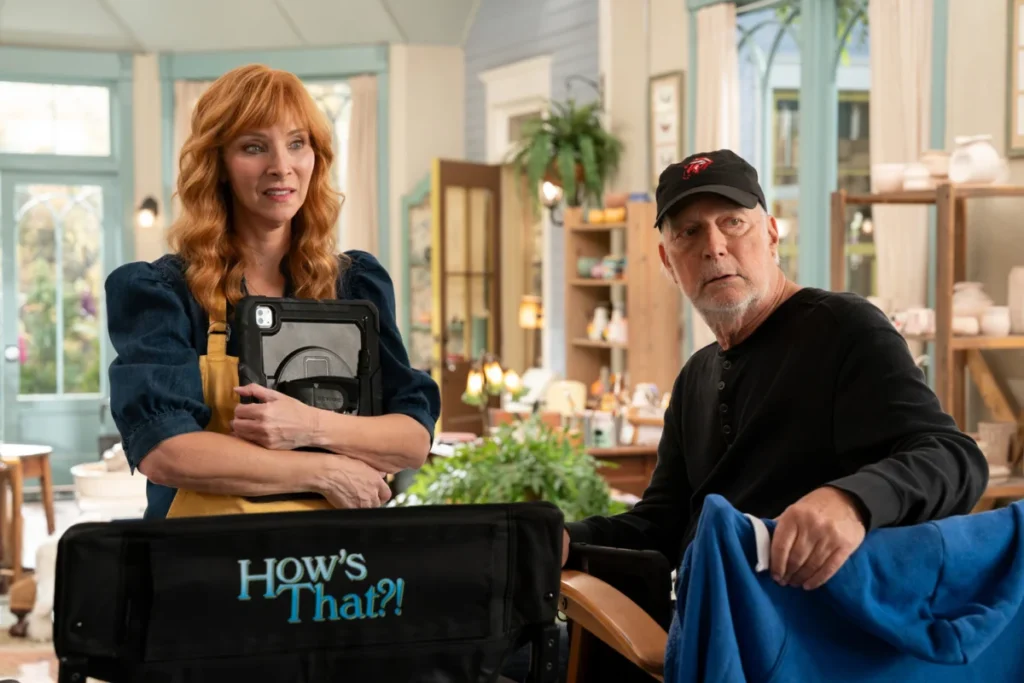

The television landscape mourns the loss of an unparalleled architect of comedy, James Burrows, who passed away on Friday at the age of 85. A towering figure behind the camera, Burrows’s directorial vision shaped the look, feel, tone, and rhythms of television comedy for half a century, leaving an indelible mark on some of the most beloved and influential sitcoms in history. His passing prompts a vital re-evaluation of the director’s often-understated role in television, a medium too frequently perceived as solely the domain of writers, producers, and stars.
The Overlooked Auteurs of Television
While French film critics famously championed the "auteur theory," celebrating the director as the primary creative force in cinema, television has historically relegated its directors to a secondary position. The narrative often emphasizes the contributions of writers and producers—from early pioneers like Gertrude Berg and Lucy & Desi, to the narrative maestros of later eras such as Rod Serling, Norman Lear, David Chase, Matthew Weiner (both of whom notably directed episodes of their own shows), and Aaron Sorkin. This skewed perception, however, overlooks the profound impact of directors, cinematographers, and other technical craftspeople who have meticulously developed and reshaped television’s aesthetic over its remarkable 80-plus year history. Such a reductive approach to the collaborative art of filmmaking, and by extension television, marginalizes countless influential figures whose innovations were critical to the medium’s evolution.
Pioneers of the Small Screen’s Visual Language
The very foundation of television’s visual language owes a profound debt to directorial and cinematographic ingenuity. One cannot speak of early television without acknowledging Karl Freund, the legendary German cinematographer whose filmography includes masterpieces like Fritz Lang’s Metropolis and Tod Browning’s Dracula. Recruited by Desi Arnaz for I Love Lucy, Freund was instrumental in translating cinematic polish to the small screen. He brought with him the meticulous black-and-white photography that defined television’s first Golden Age and was a pioneer in advancing and perfecting the multi-camera setup, a technique that would become synonymous with live studio audience comedies. His work on I Love Lucy didn’t just capture performances; it established a visual grammar for sitcoms, influencing generations of directors who followed.
The Anthology Era and the Genesis of American Indie Cinema
The 1950s and early 1960s marked a pivotal period with the rise of anthology dramas like Playhouse 90. These weekly installments, often broadcast live or "live-to-tape," demanded a new breed of director capable of working at an astonishing pace while maintaining high artistic standards. These directors, operating under immense pressure, created a sophisticated look and feel for television at a time when "prestige TV" would have been considered an oxymoron. Their efforts demonstrated that television could deliver compelling, high-quality drama, often tackling complex social issues with a depth previously associated only with film.
The influence of this era extended far beyond television itself, significantly impacting cinema. Many of these fast-working, performance-focused directors transitioned to film, laying crucial groundwork for the American independent film movement of the 1960s and 1970s. Luminaries such as John Frankenheimer (The Manchurian Candidate, Seven Days in May), Sidney Lumet (12 Angry Men, Network), George Roy Hill (Butch Cassidy and the Sundance Kid, The Sting), and Arthur Penn (Bonnie and Clyde, Alice’s Restaurant) honed their craft in the demanding environment of live television, learning to prioritize authentic performances and efficient storytelling. Their experiences proved invaluable, enriching the cinematic landscape with a raw, immediate quality that challenged traditional Hollywood filmmaking.
Redefining Realism and Dynamic Storytelling
As television evolved, so too did the directorial approach, pushing against the limitations of its early, often static compositions. Robert Butler’s direction of the Hill Street Blues pilot in 1981 was revolutionary, introducing a gritty realism and a documentary-style aesthetic that the small screen had largely lacked. His use of handheld cameras, overlapping dialogue, and a chaotic, immersive atmosphere broke from conventional television cinematography, creating a template for dramatic realism that would inspire countless shows.
Later, directors like Rod Holcomb, Mimi Leder, and Thomas Schlamme further propelled this aesthetic evolution. Their work on groundbreaking dramas such as ER and The West Wing in the 1990s moved television decisively away from its often "boxy" and "overly contained" visual language. Leder’s kinetic, high-energy direction on ER, characterized by its fluid camera movements and intense pacing, immersed viewers directly into the chaotic world of an emergency room. Schlamme’s signature "walk and talk" sequences on The West Wing not only became an iconic visual motif but also allowed for rapid-fire dialogue and dynamic character interactions, transforming political drama into a visually engaging experience. These innovations laid a critical foundation for television’s more recent Golden Age, demonstrating the medium’s capacity for sophisticated visual storytelling that rivaled, and sometimes surpassed, film.
James Burrows: A Titan’s Legacy in Numbers and Influence
It is upon the shoulders of these giants that James Burrows built his own monumental legacy. While Lear and Lorne Michaels, both celebrated for their writing-producing lineage, might offer competing claims, it is arguably Burrows who, in the past 50 years, was most singularly responsible for defining the look, feel, tone, and rhythms of television comedy. His career, spanning from the mid-1970s until his final project this year, is a testament to his enduring influence and unparalleled mastery of the multi-camera sitcom.
A Career Measured in Milestones: Quantitative Impact
Burrows’s importance can be measured in purely mathematical terms, revealing a career of extraordinary productivity and sustained excellence. Beginning in 1974 with his first of four episodes for The Mary Tyler Moore Show, his career trajectory ascended rapidly. Over five decades, he amassed an astonishing record: 11 Primetime Emmy Awards and five Directors Guild of America (DGA) Awards, testaments to his consistent critical acclaim. He directed more than 50 comedy pilots, many of which launched long-running, iconic series.
His episode count is staggering: 237 episodes of Cheers, the show he co-created with Glen and Les Charles; 75 episodes of Taxi; dozens of episodes for both Frasier and Friends; and a significant number for Mike & Molly. Perhaps most notably, he directed every single episode of Will & Grace across its original run and its critically acclaimed revival. Some 50 years after his initial stints behind the camera, and nearly a decade after NBC hosted a well-deserved primetime tribute in his honor, Burrows directed all 10 episodes of Hulu’s Mid-Century Modern, which now stands as his final helming credit. His 2016 NBC special was notably timed to celebrate his 1,000th episode as a television director, achieved with an episode of NBC’s Crowded—a deep cut for the most dedicated bar trivia enthusiasts. This sheer volume of work, sustained over decades, underscores his consistent presence and central role in the television industry.
Shaping the Sitcom Landscape: Qualitative Impact
Beyond the impressive statistics, Burrows’s true genius is best understood through the qualitative impact of his work. The list of titles he directed reads like a syllabus for the history of television comedy, shows that not only entertained millions but also shaped the trajectory of the medium for decades. His directorial hand guided countless individual acting performances to Emmy wins and other accolades across these iconic series.
Cheers, which Burrows co-created, along with Taxi, represents a pinnacle of the workplace sitcom. The familiar settings—a Boston bar and a Manhattan taxi garage—served as perfectly contained "Petri dishes" for eccentric characters, wacky situations, and perfectly calibrated performances. Burrows’s direction ensured that the delicate balance of these ensemble casts, each character distinct yet interdependent, bent but never broke the precarious format. He understood how to maximize comedic timing, spatial relationships within the set, and the subtle interplay between actors to create a truly lived-in world.
Similarly, Friends and Will & Grace elevated the "hangout comedy" to an art form. While they spawned countless imitators, few have ever matched their enduring popularity and influence. The DNA of Norman Lear’s groundbreaking shows and The Mary Tyler Moore Show can clearly be traced in Taxi and Cheers. In turn, the stylistic and narrative blueprints established by Taxi and Cheers are discernible in virtually every multi-camera sitcom that followed, even during periods when the format periodically fell out of favor. Burrows’s directorial choices—from camera blocking to performance guidance—became the standard against which others were measured.
Behind the Scenes: Craft and Innovation
Burrows’s genius often lay in the details, in the subtle yet profound decisions that enhanced the viewer’s experience, often without them consciously realizing it. Stories abound within the industry, too numerous for a simple tribute, detailing his meticulous contributions to various shows. Consider the specific shape and placement of the bar in Cheers, designed not just for aesthetics but to facilitate optimal camera angles and character interactions. Or the iconic pillar in Monica’s apartment on Friends, an intentional structural element that, under Burrows’s direction, became a natural focal point for character entrances, exits, and reactions.
Perhaps even more significantly, Burrows deserves immense credit for his progressive depiction of gay intimacy on Will & Grace. At a time when network television often shied away from such portrayals, Burrows directed with a sensitivity and naturalism that normalized same-sex relationships for a mainstream audience, contributing significantly to cultural acceptance. While viewers consciously appreciated the humor and characters in his shows, Burrows’s most impactful contributions often stemmed from the things they didn’t notice—the seamless flow, the perfect timing, the subtle emotional cues—all orchestrated by his masterful hand.
Industry Recognition and Cultural Resonance
The industry’s awareness of Burrows’s immense importance and influence is palpable. While Emmy nominations for the upcoming season are still weeks away, it would be a fitting tribute if Burrows were to receive one, not for his directorial work, but for his memorable performance as himself. His cameo as "James Burrows, television comedy icon" in HBO’s critically acclaimed meta-comedy The Comeback proved to be a worthy career capper.
As explored in numerous reviews, The Comeback, starring Lisa Kudrow as a fading sitcom actress, was always a poignant commentary on an entertainment industry under siege—facing encroachment from cable, streaming, reality programming, and even the looming threat of artificial intelligence. Its defiant message was "We’re still here and we still matter!" In their brilliant casting, creators Michael Patrick King and Lisa Kudrow brought in Burrows as the most believable embodiment of an industry stalwart, a bulwark against unworthy encroachers and invaders. Burrows portrayed himself as intelligent, empathetic, and even a touch crotchety, yet crucially, despite generations of experience, entirely forward-looking. His performance was the ultimate compliment to The Comeback‘s ensemble and its incisive approach, and his presence was the ultimate compliment paid to Burrows himself, recognizing him as the living embodiment of television’s enduring comedic legacy.
Defending the Multi-Cam: A Legacy of Craftsmanship
There remains a tendency among some "snobbier" viewers to denigrate the multi-camera comedy, dismissing it as ugly, old-fashioned, or lazy. While it is true that some examples might fit this description, such accusations ring hollow when leveled against an episode of Taxi or Cheers. These shows, meticulously crafted under Burrows’s direction, play as well today as they did upon their premieres, a testament to their timeless quality. The common refrain that the studio audience, or even a laugh track, does all the work, profoundly misunderstands the intricate craft involved.
On the contrary, it was James Burrows and his exceptional collaborators, building upon a tradition that stretches back to early pioneers like Gertrude Berg and Karl Freund, who did the real work. They orchestrated every detail—from blocking and camera movements to performance nuances and comedic timing—transforming what might appear simple into complex, engaging, and enduring art. Their meticulous efforts ensured that every joke landed, every character beat resonated, and every scene contributed to a cohesive, satisfying whole.
Broader Impact and Implications
James Burrows’s passing marks the end of an era, but his influence is immortal. He didn’t just direct episodes; he defined genres, nurtured talent, and established a visual and narrative grammar for television comedy that continues to resonate. His work underscores the critical, often unacknowledged, role of the director in shaping television’s aesthetic and emotional impact. His legacy demands that we recognize and celebrate the directorial vision that has been as crucial to the small screen’s evolution as any writer’s pen or producer’s ledger. There was, truly, nobody like him.