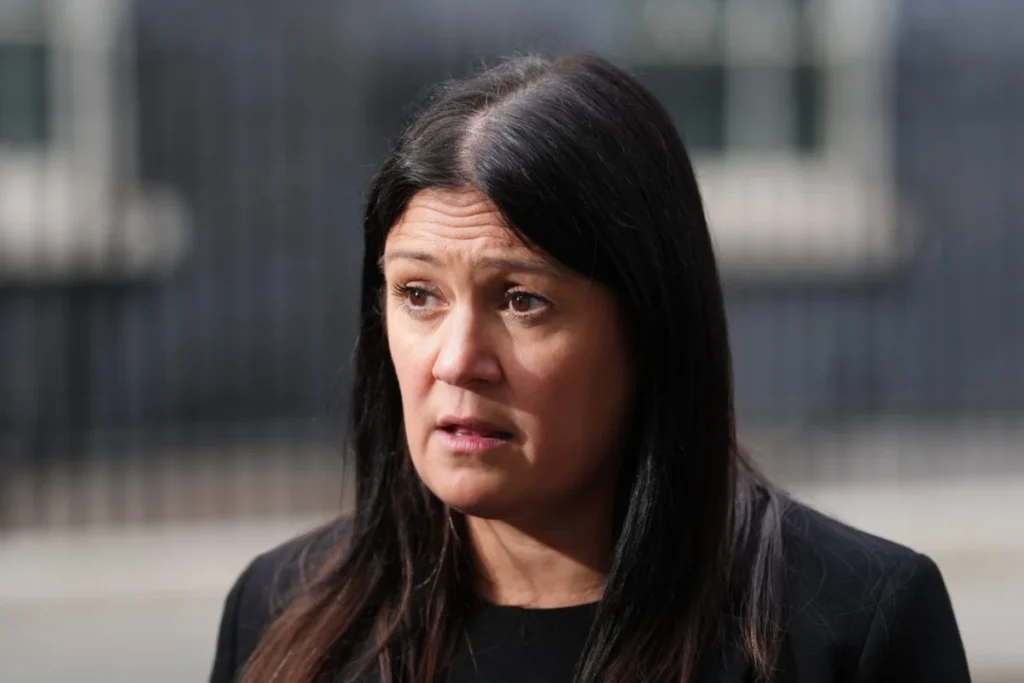

Culture Secretary Lisa Nandy has publicly declared her dissatisfaction with Channel 4’s response to serious allegations of rape and sexual assault made by women who participated in the reality television series Married At First Sight UK. Speaking in the House of Commons, Ms. Nandy conveyed a sense of alarm and demanded further engagement with the broadcaster in the coming week, underscoring the government’s commitment to participant safety within the burgeoning television industry. The controversy, which has cast a significant shadow over the popular reality format, centers on claims made by former participant Shona Manderson, who accused her on-screen partner of sexual misconduct, alongside two other anonymous women who alleged they were raped by their on-screen husbands during their involvement in the show. All three men implicated in these grave allegations have vehemently denied the accusations.
The allegations initially came to widespread public attention following a BBC Panorama documentary, which delved into the welfare protocols and experiences of participants on the show. The programme highlighted a "toxic" culture within the production, as described by a former employee of CPL, the independent production company behind Married At First Sight UK. These revelations have triggered a profound discussion about the duty of care owed to individuals participating in reality television, prompting a government review and significant commercial repercussions, including the withdrawal of a major sponsor.
The Genesis of the Crisis: Allegations and Public Disclosure
The heart of the controversy lies in the harrowing accounts of several women who took part in Married At First Sight UK, a show premise that sees relationship experts match single individuals who then meet and marry for the first time on their wedding day. Shona Manderson, a known participant from a recent season, publicly accused her assigned husband of sexual misconduct during their time on the programme. Her allegations, detailed in various media reports and the BBC Panorama investigation, painted a troubling picture of her experience.
Compounding these claims were the even more severe allegations from two other women, who chose to remain anonymous but shared their stories of alleged rape by their respective on-screen husbands. These anonymous testimonies significantly escalated the gravity of the situation, shifting the discourse from general misconduct to serious criminal allegations. The BBC Panorama documentary served as a critical platform for these women, providing a comprehensive exposé that brought the issue to the forefront of national conversation and government scrutiny. The meticulous reporting and participant interviews within the documentary played a pivotal role in galvanizing official responses and public outrage, forcing Channel 4 and CPL to address the claims head-on.
Government Intervention and Ministerial Scrutiny
In response to the escalating concerns, Culture Secretary Lisa Nandy addressed the House of Commons, expressing the government’s grave concern. "I know members across this House will be horrified and disgusted at the serious allegations of abuse against women in the TV industry that have emerged recently," Ms. Nandy stated, emphasizing the universal right to safety and dignity. She revealed that her honorable friend had already met with Channel 4 regarding the Married At First Sight allegations. However, the outcome of that meeting was deemed insufficient. "We are not satisfied as a Government with the response that we have received, and I will be discussing this further with Channel 4 in the coming week," she affirmed, signaling a clear intention for more decisive action and accountability from the broadcaster.
The government’s position was further reinforced by a No 10 spokeswoman, who conveyed Prime Minister Sir Keir Starmer’s absolute agreement with Ms. Nandy’s sentiments. The spokeswoman articulated the seriousness of the allegations, stating, "These allegations are concerning and serious, and it’s right that Channel 4 has commissioned an external review, and that allegations are referred to the appropriate authorities and investigated with full co-operation of those involved, and where wrongdoing or criminality is found, there must be consequences and appropriate action taken to ensure it can never happen again." This statement underscored the government’s expectation for a thorough, independent investigation and, crucially, for accountability and preventative measures to avert future incidents. The reference to "appropriate authorities" strongly implied potential police involvement where criminal acts are alleged, highlighting the legal dimensions of the unfolding crisis.

Channel 4 and CPL’s Official Responses and Actions
Following the public outcry and government pressure, Channel 4 and CPL Productions have taken steps to address the controversy, though these have been met with criticism regarding their sufficiency. Channel 4 chief executive Priya Dogra issued an apology, stating she was "deeply sorry" in the wake of the allegations brought forth by the BBC Panorama documentary. Dogra emphasized the broadcaster’s commitment to participant welfare, asserting, "Welfare across all our programmes is hugely important to us, and is a primary concern."
In a significant move, all previous seasons of Married At First Sight UK were promptly removed from Channel 4’s streaming platforms. While this action demonstrated a recognition of the seriousness of the situation, it also raised questions about the historical oversight of participant welfare in previous iterations of the show. The removal of content can be interpreted as a precautionary measure, allowing for a comprehensive review without potentially exposing viewers to programmes featuring individuals against whom serious allegations have been made.
CPL Productions, the independent company responsible for producing the show, has also issued statements addressing the allegations. They specifically denied claims that contestants were pressured to have sex, a point raised by former employee Soraya Spiers, who alleged a "toxic" culture within the show’s production. In their statement, CPL asserted, "Contributors are not pressured in any way or expected to be intimate. Contributors are clearly informed there is no expectation to share a bed and alternative solo sleeping arrangements have always been available throughout the process." This defense attempts to counter the narrative of forced intimacy, emphasizing the provision of choice and alternative arrangements for participants. However, the contrast between these stated protocols and the experiences detailed by the accusers highlights a potential disconnect between policy and practice, or a failure in enforcement.
The Broader Context: Reality TV Welfare and Regulatory Landscape
The Married At First Sight UK scandal is not an isolated incident but rather the latest in a series of controversies surrounding participant welfare in reality television. Over the past decade, shows like Love Island and The Jeremy Kyle Show have faced intense scrutiny over their duty of care towards contestants, particularly concerning mental health support and protection from exploitation. The tragic deaths of former participants on some reality shows have led to increased public and regulatory demands for stricter guidelines.
Ofcom, the UK’s communications regulator, has a framework in place for protecting participants in television and radio programmes. Their guidelines emphasize the need for broadcasters to ensure that participants are not "unjustly or unfairly treated" and that "adequate care" is taken over their welfare. This includes providing appropriate psychological support, ensuring informed consent, and protecting participants from harm arising directly from their participation. However, the effectiveness of these guidelines often hinges on interpretation and enforcement, particularly when independent production companies are involved. Broadcasters like Channel 4 ultimately hold the license and responsibility, but the day-to-day welfare provision often falls to the production houses they commission.
The BBC Panorama documentary’s focus on a "toxic" culture within CPL’s production environment directly challenges the efficacy of existing welfare protocols. Such allegations suggest that even with policies in place, the pressures of production, coupled with the unique psychological dynamics of a show like Married At First Sight, can create environments where participants feel vulnerable or exploited. The current situation thus prompts a re-evaluation of how "duty of care" is not just defined on paper, but actively implemented, monitored, and enforced throughout the entire production lifecycle, from casting to post-broadcast support.
Commercial Repercussions and Public Trust

Beyond the immediate government scrutiny and internal reviews, the allegations have already triggered significant commercial consequences. Tui Group, a major travel company, swiftly announced the termination of its sponsorship with Married At First Sight UK and its Australian spin-off. This decision underscores the severe reputational risk associated with being linked to a programme embroiled in such serious allegations. Sponsors are increasingly sensitive to public perception and ethical concerns, and the withdrawal of Tui serves as a stark warning to broadcasters and production companies about the commercial ramifications of failing to uphold participant safety and ethical standards.
The long-term impact on advertising revenue and brand partnerships for Channel 4 and the Married At First Sight franchise remains to be seen, but it is likely to be substantial. Advertisers are increasingly discerning, aligning their brands with content that reflects positive values. Allegations of sexual assault and a "toxic" culture run contrary to such principles, making association with the show undesirable.
Public trust in reality television, already fragile, has undoubtedly been further eroded. The genre thrives on audience engagement and the perceived authenticity of its narratives. When the safety and well-being of participants are called into question, the very foundation of this trust is undermined. Viewers may become more critical, less engaged, and more likely to advocate for stricter regulations or boycott programmes perceived as exploitative.
Legal, Ethical, and Future Implications
The allegations of rape and sexual assault also carry profound legal implications. While the men accused deny the claims, the government’s call for "allegations to be referred to the appropriate authorities" suggests that criminal investigations could follow. The legal process for such sensitive and complex cases, particularly those occurring within a reality television environment, can be challenging but is crucial for justice.
Ethically, the situation raises fundamental questions about the balance between entertainment value and human dignity. The premise of Married At First Sight inherently involves placing individuals in emotionally charged and often vulnerable situations. The ethical responsibility of producers and broadcasters extends beyond legal compliance to ensuring that the pursuit of compelling television does not come at the expense of participant welfare. This includes robust psychological screening, ongoing support, clear boundaries regarding intimacy, and effective mechanisms for reporting and addressing misconduct.
Looking ahead, this scandal is likely to serve as a catalyst for a broader re-evaluation of reality TV production practices across the UK. It could lead to:
- Stricter Regulatory Oversight: Ofcom may introduce more stringent guidelines or increase its enforcement powers regarding participant welfare.
- Enhanced Industry Standards: Broadcasters and production companies may collaborate to develop and implement industry-wide best practices for duty of care, potentially including independent welfare officers and clearer reporting mechanisms.
- Increased Transparency: There may be greater demand for transparency in welfare protocols and for independent audits of production environments.
- Impact on Formats: The future of "social experiment" reality shows, particularly those involving intimate relationships, may be re-examined to ensure they are ethically sound and participant-centric.
The coming weeks will be crucial as Culture Secretary Lisa Nandy engages further with Channel 4. The outcome of these discussions, alongside the external review commissioned by the broadcaster and any potential legal proceedings, will shape the future landscape of reality television in the UK, hopefully ushering in an era of greater accountability, protection, and ethical production practices. The priority remains ensuring that all individuals who step into the spotlight of reality television are afforded the safety, dignity, and support they deserve.