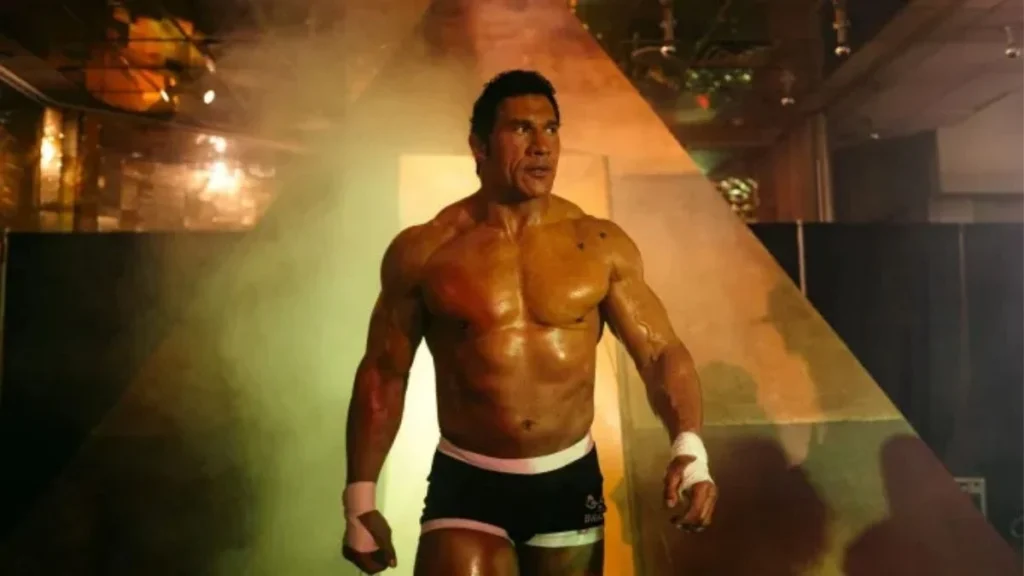

Dwayne Johnson, the global superstar whose career has long been defined by high-octane action and record-breaking box office returns, recently addressed his exclusion from the Academy Award nominations for his performance in the biographical drama The Smashing Machine. In a candid reflection on his career trajectory and the shifting perceptions of his craft, Johnson revealed that while he had hoped for a nod from the Academy, the absence of a nomination has served as a catalyst for his future endeavors rather than a source of discouragement. The actor’s performance as former mixed martial arts (MMA) champion Mark Kerr was widely regarded as a watershed moment in his professional life, signaling a departure from the "The Rock" persona and an immersion into the gritty, psychological realism of prestige cinema.
The Smashing Machine, directed by Benny Safdie and produced by A24, presented a stark contrast to the family-friendly blockbusters and superhero spectacles that have populated Johnson’s filmography for the last two decades. The film focuses on the tumultuous life of Mark Kerr, a legendary figure in the early days of the Ultimate Fighting Championship (UFC) and PRIDE Fighting Championships. It explores not only Kerr’s dominance in the ring but also his harrowing struggles with opioid addiction, the physical toll of his profession, and the complexities of his personal relationships. Critics lauded Johnson for his physical and emotional transformation, noting that he effectively shed his characteristic bravado to portray a man grappling with vulnerability and despair.
The Shift from Blockbuster Spectacle to Prestige Drama
For much of his career, Dwayne Johnson has been the quintessential "bankable" star. His involvement in franchises such as Fast & Furious, Jumanji, and Moana has collectively generated billions of dollars in global box office revenue. However, industry analysts have noted that the "Rock" brand, while commercially invincible, often prioritized charisma over character depth. The Smashing Machine represented a strategic pivot intended to challenge these perceptions.
The collaboration with Benny Safdie, one half of the acclaimed Safdie Brothers duo behind Uncut Gems and Good Time, was seen as a deliberate move into the "auteur" space. Safdie’s signature style—characterized by high-tension narratives, claustrophobic cinematography, and raw, naturalistic performances—provided the ideal environment for Johnson to redefine his acting range. In preparation for the role, Johnson underwent significant physical changes, utilizing prosthetics to more closely resemble Kerr and engaging in rigorous MMA training to replicate the fighter’s explosive style.
The critical reception was overwhelmingly positive. On the review aggregator Rotten Tomatoes, the film currently maintains a 71% critics score, with many reviewers highlighting Johnson’s performance as the film’s emotional anchor. While the audience score sits at a comparable 72%, the discourse surrounding the film was primarily focused on whether Johnson could successfully navigate the transition from action hero to dramatic heavyweight.
The Awards Circuit and the Oscar Snub
The awards season for The Smashing Machine began with significant momentum. Johnson earned his first-ever Golden Globe nomination for Best Actor in a Motion Picture – Drama, a milestone that many viewed as a precursor to an Academy Award nomination. The Golden Globes often serve as a bellwether for the Oscars, and the recognition of Johnson’s dramatic turn suggested that the industry was ready to embrace him in a new capacity.
Despite the critical acclaim and the Golden Globe nod, the Academy of Motion Picture Arts and Sciences did not include Johnson in its final list of nominees for Best Actor. In a recent interview with Esquire, Johnson was forthright about his reaction to the snub. He admitted that the prospect of an Oscar nomination was deeply meaningful to him, stating, “It would have been incredible to get nominated for an Oscar.” He dismissed the notion that awards are secondary to commercial success, acknowledging that the recognition of his peers remains a significant professional goal.
Rather than expressing bitterness, Johnson framed the experience as a motivational turning point. He noted that the disappointment has “lit a fire” in him, suggesting that his commitment to dramatic roles is not a one-time experiment but a long-term shift in his career philosophy. This sentiment echoes the trajectories of other actors who successfully transitioned from comedy or action to drama, such as Matthew McConaughey during his "McConaissance" or Adam Sandler’s acclaimed turn in Safdie’s previous work, Uncut Gems.
The Life of Mark Kerr: Providing Context to the Performance
To understand the weight of Johnson’s performance, one must look at the real-life history of Mark Kerr. Known as "The Smashing Machine" during his peak in the late 1990s, Kerr was a two-time UFC Heavyweight Tournament Champion and a dominant force in the PRIDE organization in Japan. However, his rise coincided with a period in MMA history that lacked the regulation and medical oversight present in the modern era.
Kerr’s story was previously chronicled in the 2002 HBO documentary, also titled The Smashing Machine. That film provided a raw look at his addiction to painkillers, a result of the extreme physical trauma he endured during his fights. By stepping into this role, Johnson took on the responsibility of portraying a living legend whose life story is a cautionary tale of the costs of athletic greatness.
The biographical nature of the film added a layer of scrutiny to Johnson’s acting. He was tasked with capturing the essence of a man who was both a physical specimen of unmatched power and a human being crumbling under the weight of his own internal demons. The 6.3/10 rating on IMDb suggests a divide between critics who appreciated the artistic nuance and some audience members who may have expected a more traditional, triumphant sports narrative.
Industry Reactions and Safdie’s Endorsement
The collaboration between Safdie and Johnson was initially met with skepticism by some industry insiders who questioned whether an actor of Johnson’s stature could disappear into a role. However, Safdie has been vocal in his praise for Johnson’s dedication to the craft. Safdie remarked on Johnson’s intuitive understanding of the cinematic process, stating, “I realized I could ask Dwayne to do anything.”
This endorsement from a respected director in the independent film community carries significant weight. It suggests that Johnson’s professional reputation is evolving from that of a "producer-actor" who manages his own brand to a "director’s actor" who is willing to take risks and follow a creative vision. This shift is essential for any actor seeking longevity in the prestige film circuit, where the director-actor relationship is paramount.
Chronology of Dwayne Johnson’s Dramatic Transition
The path to The Smashing Machine and its subsequent awards season run can be traced through several key milestones:
- December 2019: Dwayne Johnson first expresses interest in portraying Mark Kerr, citing a deep personal connection to the world of combat sports and the complexities of Kerr’s life.
- 2023: A24 officially boards the project, with Benny Safdie confirmed to write and direct. This marks Safdie’s first solo directorial effort following his partnership with his brother, Josh Safdie.
- Early 2024: Production begins, with images of Johnson’s transformation circulating online, generating significant buzz regarding his departure from his usual aesthetic.
- Late 2024: The Smashing Machine premieres at major film festivals, receiving strong reviews for its uncompromising look at the dark side of professional fighting.
- January 2025: Johnson receives a Golden Globe nomination for Best Actor, solidifying his status as a serious contender in the awards race.
- February 2025: The Academy Award nominations are announced, and Johnson is notably absent from the Best Actor category.
- Early 2026: Johnson’s interview with Esquire is published, where he reflects on the snub and outlines his future plans for dramatic cinema.
Future Implications: A New Chapter in Hollywood
The "fire" lit by the Oscar snub appears to be manifesting in an ambitious upcoming slate of projects. Johnson has signaled that he is moving away from the safety of sequels and franchise reboots to work with some of the most respected names in contemporary filmmaking.
Reports indicate that Johnson is in active development on projects with legendary directors Martin Scorsese and Darren Aronofsky. A collaboration with Scorsese, a director known for exploring themes of guilt, masculinity, and redemption, would represent the ultimate validation for Johnson’s dramatic aspirations. Similarly, Aronofsky, whose filmography includes character studies like The Wrestler and Black Swan, is uniquely suited to utilize Johnson’s physicality in a dramatic context.
This pivot suggests a broader trend in Hollywood where established stars seek to diversify their portfolios in an increasingly volatile theatrical market. As the traditional "star-driven" blockbuster faces challenges from streaming and franchise fatigue, actors are finding that prestige dramas offer a different kind of currency: critical respect and awards longevity.
Fact-Based Analysis: The Impact on the "Rock" Brand
While Johnson’s dramatic turn has been a critical success, it remains to be seen how this will impact his commercial brand in the long term. Historically, Johnson has been a master of social media and marketing, maintaining a persona that is accessible, optimistic, and "larger than life." The Smashing Machine required him to be the opposite: small, broken, and flawed.
The financial performance of A24 films is typically measured on a different scale than Disney or Universal blockbusters. However, the prestige garnered from these roles can increase an actor’s leverage in the industry, allowing them to produce and star in a wider variety of content. For Johnson, the goal appears to be the attainment of a "dual-threat" status—someone who can command a $200 million action film on a Friday and deliver an Oscar-caliber performance on a Sunday.
The disappointment of the Oscar snub for The Smashing Machine may eventually be viewed as the catalyst for the most significant era of Dwayne Johnson’s career. By acknowledging his desire for the nomination and his commitment to the craft, Johnson has moved beyond the "Rock" persona and entered the ranks of serious dramatic actors. As he prepares to work with Safdie again, alongside titans like Scorsese and Aronofsky, the industry will be watching to see if this newfound fire results in the Academy recognition he now openly seeks.