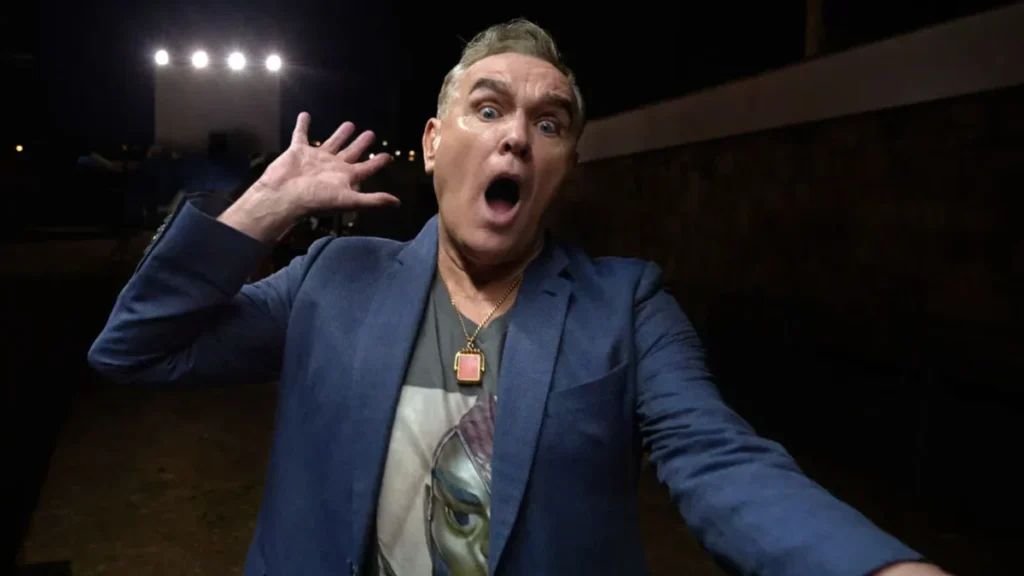

The distinctive voice of The Smiths, Morrissey, has once again found himself at the nexus of public perception and online content control, as his management team reportedly compelled the removal of a satirical Instagram post. The incident, brought to light by reports from Stereogum, involves a popular fan account known as MozPosting, which specializes in Morrissey-themed memes and parodies. The post in question, which humorously listed a sprawling array of "malefactors" supposedly targeted by the singer, was reportedly flagged for "copyright infringement and impersonation" by Morrissey’s representatives. This action signals a potentially intensified effort by the artist’s camp to police his online image and brand identity, coming just days after a broader statement issued on Morrissey’s official website regarding a proliferation of online impersonators.
The satirical post, crafted by the MozPosting account, meticulously mimicked the aesthetic and layout of Morrissey’s official website, Morrissey Central. Titled "The Malefactors," the list presented a comically extensive and absurd roster of individuals and fictional characters purportedly considered enemies by the iconic singer. Among the fictional adversaries were Edward Cullen, the brooding vampire from the Twilight saga, and Ulfric Stormcloak, a prominent character from the popular video game Skyrim. The list further veered into the surreal with the inclusion of Popeye the Sailor Man. Interspersed with these fantastical figures were real-world celebrities whose connection to Morrissey as "malefactors" was equally outlandish, such as the rapper 50 Cent, acclaimed actress Meryl Streep, and celebrity chef Gordon Ramsey. The punchline, however, resonated with long-time followers of Morrissey’s career: Johnny Marr, his former bandmate and co-songwriter from The Smiths, appeared on the list not once, but three times. This triple inclusion served as a pointed, albeit satirical, nod to the well-documented and often contentious relationship between Morrissey and Marr, a narrative that has unfolded publicly for decades. The humor derived from the post lay in its juxtaposition of Morrissey’s famously melancholic and often combative public persona with a hilariously disproportionate and eclectic collection of imagined foes.
Upon receiving the takedown request, MozPosting, which has garnered a significant following for its clever and often affectionate parodies of the singer, promptly complied. The account subsequently shared a series of Instagram stories detailing the situation and expressing the creator’s dismay. "This account is and has always been intended as satire, and the post was a parody, but I don’t want to create any unnecessary issues," MozPosting stated, clarifying the artistic intent behind the content. The creator further conveyed a sense of genuine disappointment and heartbreak: "To everyone messaging asking if my previous story is a joke… unfortunately, it isn’t. I’m genuinely devastated. I’m a huge fan of the man’s music, and this whole situation has been incredibly disheartening." Emphasizing the positive motivation behind the account, MozPosting added, "I created this page out of appreciation and to share a few laughs in difficult times, because goodness knows we could all use them. It was never intended to cause harm." This sentiment highlights the complex relationship between celebrity, fandom, and the evolving landscape of online satirical expression.
Contextualizing the Controversy: A Pattern of Image Control
The demand for the takedown of the MozPosting satire did not occur in isolation but followed a significant public statement issued by Morrissey’s team on his official website, Morrissey Central, just a few days prior. Titled "What Happened Next," the statement on June 16th, 2026, revealed that Morrissey’s team had "discovered nine online impersonators" who were allegedly operating with "political agendas." The statement further claimed that one of these impersonators was linked to a website in the United States that was "generally unsupportive" of the singer, and another was connected to a "former band member of The Smiths." While MozPosting was not explicitly named in this broader warning, the timing of the takedown request suggests a more aggressive stance by Morrissey’s camp against any online content perceived as misrepresenting or infringing upon his image. The inclusion of "political agendas" in the official statement points to Morrissey’s long-standing sensitivity to political interpretations of his views, which have often been a source of public debate and controversy throughout his career.
Morrissey, born Steven Patrick Morrissey, has cultivated a distinctive public persona since his rise to fame in the 1980s as the frontman of The Smiths. Known for his melancholic lyrics, dramatic stage presence, and often provocative interviews, he has consistently maintained a contentious relationship with the media and, at times, with segments of his fanbase. His outspoken nature on various social and political issues has frequently placed him in the spotlight, often leading to both fervent support and strong criticism. This history of controversy provides essential context for understanding the current incident. For instance, his well-documented and often acrimonious relationship with Johnny Marr, which began after The Smiths’ disbandment in 1987, has been a recurring theme in music journalism and fan discourse. The satirical inclusion of Marr three times on "The Malefactors" list, while humorous to many, likely touched a raw nerve for Morrissey’s team, especially in the context of their recent efforts to control online narratives.
Moreover, Morrissey has previously engaged in legal disputes or expressed public displeasure regarding unauthorized use of his likeness or intellectual property. In 2017, for example, he criticized The Simpsons for what he perceived as a "hateful" and "racist" portrayal of him in an episode, though no legal action was ultimately taken. These past instances illustrate a consistent pattern of Morrissey and his representatives being highly protective of his image and how he is presented to the public. The digital age, with its proliferation of fan-created content, memes, and parody accounts, presents new challenges for celebrities seeking to maintain strict control over their public image, blurring the lines between homage, satire, and perceived misrepresentation.
The Legal and Ethical Landscape of Online Satire and Impersonation
The grounds cited for the takedown — "copyright infringement and impersonation" — highlight the complex legal and ethical considerations surrounding fan-created content in the digital realm. In many jurisdictions, including the United States, parody is generally protected under "fair use" principles within copyright law. This allows for limited use of copyrighted material for purposes such as commentary, criticism, news reporting, teaching, scholarship, or research, including parody. However, the protection afforded to parody is not absolute and often depends on several factors, including whether the new work transforms the original material, the amount and substantiality of the portion used, and the effect of the use upon the potential market for or value of the copyrighted work.
In the case of MozPosting, the claim of "copyright infringement" might relate to the exact replication of Morrissey Central’s visual design. While the text was satirical, the visual "look and feel" of a website can be subject to copyright protection as a creative work. By mimicking the official site’s template, fonts, and layout, MozPosting could arguably have infringed on the design elements owned by Morrissey’s team. The more contentious claim, however, is often "impersonation." Legally, impersonation typically involves an intent to deceive or mislead the public into believing that the content originates from or is endorsed by the actual person or entity. While MozPosting explicitly stated its intent as satire and parody, the close visual resemblance to the official site could potentially be argued as misleading by those unfamiliar with the account’s satirical nature, especially in the context of Morrissey’s team’s heightened alert regarding "impersonators."
The timing of the takedown, coming after the Morrissey Central statement about "nine online impersonators with political agendas," suggests that Morrissey’s team is viewing any content that closely mimics official channels with increased scrutiny. This indicates a proactive and perhaps aggressive strategy to safeguard Morrissey’s intellectual property and brand against what they perceive as unauthorized or potentially damaging representations. The "political agendas" aspect is particularly relevant, given Morrissey’s history of controversial political statements, which have sometimes led to accusations of racism or xenophobia, criticisms he has consistently denied. Any content, even satirical, that could be misconstrued as an official political statement from him might be seen as a significant threat to his carefully managed image.
Broader Implications for Fan Culture and Celebrity Interaction
This incident carries broader implications for the evolving relationship between celebrities and their fan bases in the digital age. Fan accounts, memes, and satirical content are integral components of contemporary online culture, serving as expressions of appreciation, community building, and sometimes, critical commentary. The swift action taken against MozPosting, despite its stated intent of harmless satire and appreciation, could have a "chilling effect" on other fan creators. It might discourage individuals from producing creative content related to their idols for fear of legal repercussions or official reprimand. This could stifle a vibrant aspect of modern fandom, where interaction and interpretation often occur through shared humor and creative expression.
Furthermore, the episode underscores the ongoing challenge celebrities face in controlling their public narrative in an era of pervasive social media. While artists like Morrissey seek to manage their brand and intellectual property, fans often interpret and repurpose their idols’ personas in ways that can be both unexpected and beyond direct control. The line between respectful homage, humorous parody, and perceived misrepresentation is constantly being redrawn, often leading to friction. For a figure as famously enigmatic and often perceived as sensitive as Morrissey, such online skirmishes can further shape public perception, reinforcing existing narratives about his temperament and his relationship with his audience.
Morrissey’s Enduring Artistic Output and Upcoming Engagements
Despite the online controversies, Morrissey’s artistic career continues unabated. He is currently gearing up for a busy period of releases and performances. On June 19th, 2026, he is scheduled to release the Deluxe Notre-Dame EP, which is already available for pre-order. This new offering follows closely on the heels of his latest studio album, Make-Up Is a Lie, which was released in March 2026. The album’s release and the subsequent EP demonstrate his continued commitment to producing new music for his dedicated fanbase.
In support of his recent musical endeavors, Morrissey is set to embark on an extensive tour throughout Europe and the United States in the coming months. The tour will commence in Europe in late June, bringing his distinctive live performance to a diverse array of venues. Following his European leg, he will cross the Atlantic for a series of highly anticipated concerts across North America during the summer and fall. These live dates provide fans with direct opportunities to experience his artistry, separate from the ongoing discussions surrounding his online presence and public image. His enduring appeal is further underscored by his inclusion in Consequence‘s prestigious "100 Best Vocalists of All Time" list, acknowledging his significant contribution to music history.
The scheduled 2026 tour dates are as follows:
06/27 – Lillestrøm, NO @ Nova Spektrum
07/01 – Rättvik, SE @ Dalhalla
07/04 – Gothenburg, SE @ Partille Arena
07/07 – Berlin, DE @ Zitadelle Spandau
07/09 – Warsaw, PL @ Letnia Scena Progresji
07/12 – Budapest, HU @ Barba Negra Red Stage
07/15 – Ljubljana, SI @ Križanke
07/19 – Lake Como, IT @ Lake Sound Park
07/21 – Asti, IT @ Asti Musica
07/25 – Barcelona, ES @ Poble Espanyol
07/29 – Madrid, ES @ Movistar Arena
08/01 – Porto, PT @ Super Bock Arena
08/14 – Las Vegas, NV @ Wynn Las Vegas / Encore Theater
08/15 – Las Vegas, NV @ Wynn Las Vegas / Encore Theater
08/18 – Las Vegas, NV @ Wynn Las Vegas / Encore Theater
08/19 – Las Vegas, NV @ Wynn Las Vegas / Encore Theater
09/22 – Buffalo, NY @ Shea’s Performing Arts Center
09/26 – Brooklyn, NY @ CBGB Festival
09/30 – Lowell, MA @ Lowell Memorial Auditorium
10/15 – Washington, DC @ The Anthem
10/18 – Greensboro, NC @ Steven Tanger Center for the Performing Arts
10/21 – Louisville, KY @ Louisville Palace
10/25 – Nashville, TN @ The Pinnacle
10/29 – Fort Worth, TX @ Dickies Arena
11/01 – Houston, TX @ 713 Music Hall
11/06 – El Paso, TX @ Don Haskins Center
11/10 – Tempe, AZ @ Mullett Arena at Arizona State University
11/14 – Huntington Beach, CA @ Darker Waves Festival
12/31 – Brussels, BE @ Forest National
The incident with MozPosting serves as a stark reminder of the complexities inherent in managing a public persona in the digital age, particularly for an artist as iconic and often controversial as Morrissey. While his team asserts their right to protect his intellectual property and prevent impersonation, the episode also highlights the delicate balance between safeguarding an artist’s brand and fostering the vibrant, often humorous, expressions of fandom that define contemporary celebrity culture. As Morrissey continues his prolific career, the ongoing dialogue between his official channels and the vast landscape of fan-generated content will undoubtedly remain a dynamic and intriguing aspect of his public narrative.