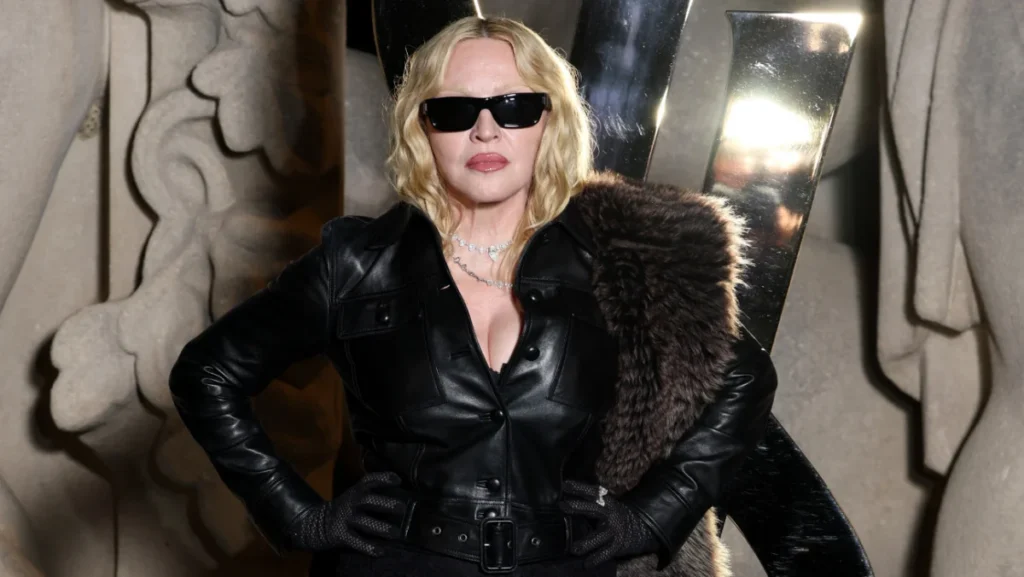

New York City witnessed a captivating convergence of music, film, and celebrity as Madonna, the undisputed Queen of Pop, premiered her highly anticipated Confessions II visual album at the Tribeca Festival. The event, held on a Friday night to a theater filled with fervent fans, offered an early glimpse into Madonna’s latest artistic endeavor, a cinematic companion to the first six tracks of her upcoming album. Among the myriad of famous faces making cameo appearances, Julia Garner, the actress long rumored to portray Madonna in a long-gestating biopic, made a notable, albeit brief, appearance, stirring renewed interest in their professional connection and the future of the biographical film project.
The Genesis of Confessions II: A Multilayered Artistic Statement
The Confessions II visual album, a more than ten-minute short film, marks a significant return for Madonna to the realm of conceptual visual storytelling, a medium she has famously redefined throughout her four-decade career. Set to the evocative soundscape of the initial six songs from her forthcoming Confessions II album, the film presents a narrative that is both introspective and confrontational. Directed by the acclaimed duo David Toro and Solomon Chase, known collectively as TORSO, the visual album plunges viewers into a surreal odyssey where Madonna finds herself relentlessly pursued by a "SWAT team of robot-like women carrying cameras." This imagery, as Madonna herself hinted, serves as a poignant commentary on surveillance, public scrutiny, and the relentless gaze that has defined much of her iconic existence.
The narrative arc of the film sees the pop icon traverse various symbolic landscapes. It opens with Madonna "hiding in the shadows" within an apartment, a visual metaphor that aligns with lyrics from the track "I Feel So Free," suggesting a search for sanctuary amidst external pressures. This urban confinement soon gives way to an ethereal forest, where Madonna engages in an interpretive dance with a diverse ensemble of "scantily clad women and men." This scene is underscored by a striking visual effect: "lasers coming out of every orifice," thin green lights emanating from between their legs, a provocative artistic choice that sparked amusement and discussion during the post-screening Q&A. From the wilderness, the journey transitions to Madonna driving a car, a symbol of control and agency, before culminating in a vibrant nightclub and a bustling, crowded bathroom. It is in this final, most intimate setting that Madonna orchestrates a dance party, surrounded by a constellation of celebrity friends, a moment she playfully described as laden with "Easter egg-like cameos." The film then concludes with the celebration being brought home, hinting at a return to a personal space after a tumultuous public journey.
Madonna revealed that the inception of the Confessions II album itself was a creative pivot. She began working on the record, which she has been developing for approximately a year and a half, during a period of uncertainty surrounding her much-anticipated biopic. Initially conceived as a "dance record" to occupy her time, the project evolved into a multimedia experience at the suggestion of her long-time manager, Guy Oseary. Madonna, a self-proclaimed cinephile, articulated her preference for the "film" format over a mere "video," stating that film has "inspired [her] life" and that a "video" "seems cheap." She fondly recalled a time when "it was just me and MTV," lamenting the current landscape where visual content often feels diminished.
A Constellation of Stars: The Cameo Extravaganza
True to Madonna’s penchant for collaborative artistry and cultural commentary, the Confessions II visual album boasts an impressive roster of celebrity cameos, each adding layers of intrigue and recognition for keen-eyed viewers. Beyond Julia Garner’s brief but significant appearance in the club scene, the film features a who’s who of talent from various entertainment spheres. Benedict Cumberbatch, known for his dramatic prowess, lends his gravitas, while supermodel Kate Moss brings her iconic presence. Rising star Odessa A’zion, veteran actress Debi Mazar (a long-time friend and collaborator of Madonna), the commanding Gwendoline Christie, esteemed British actor Richard E. Grant, and Archie Madekwe all contribute to the film’s rich tapestry. Pop sensation Sabrina Carpenter, who recently collaborated with Madonna on the "Bring Your Love" duet, also makes an appearance, further solidifying the contemporary relevance of the project.
The final celebrity cameo provides a familial touch, with Madonna’s daughter, Lourdes Leon, delivering the film’s concluding line, "Cut, bitch." This moment not only serves as a playful and irreverent end to the visual narrative but also highlights the deepening creative partnership between mother and daughter. Madonna later disclosed that she and Leon co-wrote a song featured on the new Confessions II album, underscoring the artistic bond within her family. The deliberate inclusion of such a diverse and high-profile cast reinforces Madonna’s enduring influence and her ability to draw together talent from across generations and genres, creating a cultural event that transcends a simple music release.
The Biopic Enigma: Julia Garner’s Role and the Path Ahead
The appearance of Julia Garner in the Confessions II visual album carries particular weight, given her long-standing association with the stalled Madonna biopic. For years, Garner, celebrated for her roles in Ozark and The Americans, was widely considered the frontrunner, and at one point, officially cast, to portray the legendary artist in a Universal Pictures biographical film. The project, which Madonna herself insisted on co-writing and directing, has faced a tumultuous development timeline, becoming a saga almost as dramatic as the life it intended to depict.
A chronological overview of the biopic’s status reveals its unpredictable trajectory:
- Early 2020s: News emerges of Madonna actively developing a biopic about her life, with Universal Pictures securing the rights. Madonna expresses her intent to direct and co-write the screenplay, emphasizing her desire to control her own narrative.
- Mid-2022: Julia Garner is reportedly chosen for the coveted role after an extensive and rigorous audition process, which Garner later described as involving intense dance and vocal training. Garner publicly confirms the film is "supposed to still happen" in a summer 2023 interview.
- Early 2023: Universal Pictures reportedly shelves the biopic indefinitely. Reports suggest creative differences and Madonna’s focus on her "Celebration Tour" contributed to the decision.
- Mid-2024: Madonna confirms she is "working on the script again," reigniting hopes among fans and industry observers that the project may yet see the light of day, albeit perhaps in a different form or with a different studio. Concurrently, it was announced that Madonna had teamed up with director-producer Shawn Levy on a separate limited series project for Netflix, indicating a continued interest in bringing her life story to the screen through various avenues.
Garner’s cameo in Confessions II, therefore, is more than just a fleeting appearance; it serves as a symbolic bridge, maintaining a visible connection between the actress and the icon amidst the biopic’s uncertain future. It suggests a continued professional rapport and perhaps a mutual desire to collaborate, even if the grand cinematic vision remains in flux. The visual album could be interpreted as a stop-gap creative outlet for Madonna, a means to express autobiographical themes and explore her narrative through a medium she fully controls, while the larger biopic project slowly re-gains momentum.
Behind the Scenes: Creative Collaboration and Madonna’s Philosophy
The Q&A session following the premiere offered valuable insights into the creative process behind Confessions II and Madonna’s artistic philosophy. Moderated by Anderson Cooper, who stepped in for the originally announced Jimmy Fallon, the discussion highlighted the collaborative dynamic between Madonna and TORSO. The directors shared that their initial creative process involved listening intently to the lyrics and visualizing what they "saw when they closed their eyes." Their first meeting with Madonna, famously commencing around midnight, delved into her current feelings and the emotional landscapes she wished to evoke. While Madonna reportedly "didn’t say no to anything they pitched," the directors noted she was initially "suspicious" about certain concepts, a testament to her meticulous involvement and strong artistic vision.
One of the most memorable anecdotes from the Q&A involved the strategically placed lasers in the forest scene. Madonna humorously recounted, "I never would’ve imagined lasers coming out of girls’ pussies," crediting TORSO with the audacious idea. She then quipped about wanting to try it herself, only to be deterred by the practical concern that "apparently they get quite hot." This exchange underscored Madonna’s enduring commitment to pushing boundaries and her willingness to embrace provocative imagery, even when it originates from her collaborators.
Beyond the film’s specifics, Madonna used the platform to express her broader views on technology and human connection. Attendees at the Tribeca event were required to place their phones and electronic devices in Yondr pouches, a practice Madonna wholeheartedly endorsed. She insisted that "cellphones come between people," arguing that individuals are "too busy capturing what they’re doing" rather than truly experiencing it. "I came to Earth to be a doer not a watcher," she declared, recalling her discomfort during a recent Coachella performance with Sabrina Carpenter, where she was met with a "sea of cellphones" and felt unable to make genuine eye contact with her audience. This critique resonates with her long-held artistic stance against passive consumption, advocating instead for active engagement and presence.
A Week of Spectacle: Times Square to Tribeca
The Tribeca Festival premiere capped a week of high-profile activity for Madonna, further cementing her status as an omnipresent cultural force. Just days prior, she had orchestrated a surprise concert in Times Square, drawing an estimated crowd of 50,000 people. This impromptu performance, followed by the release of her new single "Love Sensation," served as a powerful prelude to the visual album’s debut. During the Q&A, Anderson Cooper inquired whether this flurry of activity signaled a supporting tour for Confessions II. Madonna, ever elusive, offered a non-committal response, characteristic of her career-long strategy of keeping audiences guessing.
She mused about future performance possibilities, expressing her desire to "never want to repeat [her]self." Ideas ranged from emerging from a cube in a warehouse for a rave, to a suggestion for a residency at the Sphere in Las Vegas. The latter, however, she quickly dismissed, stating she had no desire to "wake up to Las Vegas every day," a comment that playfully highlighted her preference for dynamic, unpredictable engagements over static residencies. The Times Square performance held particular significance for Madonna, representing a "full circle moment." She recounted arriving in New York as a young artist, asking a cab driver to take her to the "center of everything," only to be dropped in Times Square. Performing there decades later, she reflected, "I’ve made it," a powerful affirmation of her journey and enduring impact.
As for what lies immediately ahead, Madonna shared a tender, personal plan: following the Tribeca panel, she would be driving to the Hamptons to celebrate her 95-year-old father’s birthday. This brief glimpse into her private life provided a grounding contrast to the whirlwind of her public persona, reminding attendees of the individual behind the icon.
Broader Implications and Madonna’s Enduring Legacy
The Confessions II visual album is more than just a collection of music videos; it is a meticulously crafted artistic statement that reinforces Madonna’s position as a pioneering multimedia artist. In an era dominated by short-form digital content, her commitment to a cohesive, ten-minute-plus short film demonstrates a profound belief in the power of sustained visual narrative. This approach harks back to her groundbreaking work in the late 1980s and early 1990s, where she consistently elevated the music video format to an art form, using it to explore themes of religion, sexuality, identity, and social commentary. Confessions II continues this tradition, utilizing contemporary visual language and a compelling narrative to engage with modern anxieties and personal introspection.
Her choice of TORSO, known for their avant-garde aesthetic, further underscores her commitment to innovation and artistic risk-taking. By collaborating with directors who push visual boundaries, Madonna ensures her work remains at the forefront of cultural discourse. The thematic elements of surveillance and the search for freedom resonate deeply in today’s hyper-connected world, reflecting a maturity in her artistry that still retains its rebellious edge.
Furthermore, the strategic use of celebrity cameos is a masterclass in leveraging cultural capital. By weaving in appearances from established stars like Benedict Cumberbatch and Kate Moss alongside rising talents like Sabrina Carpenter and her own daughter, Madonna creates a cross-generational appeal and generates significant media buzz. This tactic not only broadens the reach of her new music but also positions the visual album as a significant cultural event in its own right, transcending the typical music release cycle.
Madonna’s unwavering stance on phone usage and the importance of present-moment experience also speaks to a larger societal critique. Her decision to implement Yondr pouches at the premiere is a bold statement against the pervasive digital distraction, advocating for a return to genuine human connection and immersive artistic engagement. This philosophical underpinning elevates the event beyond mere entertainment, transforming it into a commentary on modern life and the value of undistracted presence.
The Confessions II visual album is slated to premiere globally on YouTube on Monday, June 8, at 11 a.m. ET/8 a.m. PT, making it accessible to her vast international fanbase. The full Confessions II album itself will follow on July 3. As Madonna continues to navigate the complexities of her legacy, her new visual album serves as a potent reminder of her relentless creativity, her unparalleled ability to reinvent herself, and her enduring power to shape and reflect popular culture. Whether through music, film, or philosophical pronouncements, the Queen of Pop remains an undeniable force, constantly challenging perceptions and cementing her place as an icon for the ages.