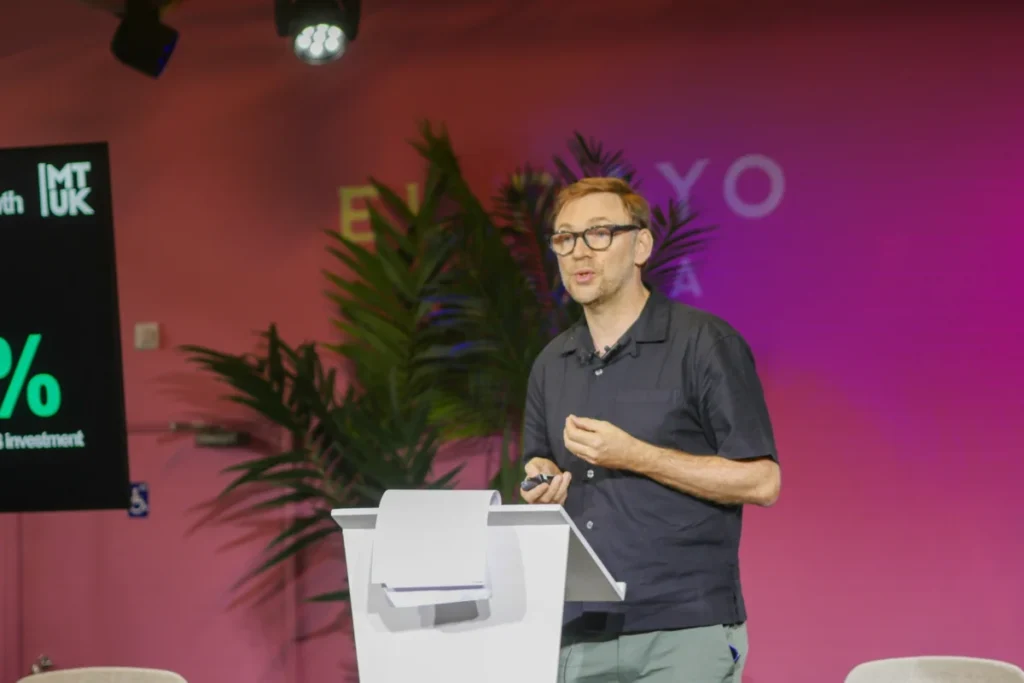

The United Kingdom’s burgeoning music technology sector is urgently seeking greater recognition and strategic investment, as highlighted by the release of a pivotal new report at SXSW London 2026. The trade association Music Technology UK (MTUK) unveiled its "Sound Investment" report on Monday, June 1st, during the influential conference, which runs until June 6th. The report and accompanying panels underscore a critical bottleneck in the industry: while music tech startups successfully attract early-stage seed funding, a significant drop-off occurs when these companies aim to scale, leading to a concerning lag behind international competitors.
A Deep Dive into the "Sound Investment" Report
The "Sound Investment" report reveals a stark decline in growth-stage funding for UK music technology companies. Between 2020 and 2025, investment in these crucial scaling phases plummeted by an alarming 90%, from £101 million (approximately $138 million USD) to a mere £10 million (approximately $13.7 million USD). This dramatic reduction paints a worrying picture for the future of UK innovation in a sector that MTUK defines as companies whose primary revenue stems from the development, production, and exploitation of technology, rather than the direct commercial exploitation of music assets like compositions, master recordings, live performances, or artist brands, nor from analog product manufacturing.
This funding gap has had a tangible impact on the UK’s global standing. In 2020, UK music tech companies attracted investment levels comparable to 76% of funding seen in the United States. By 2025, this figure had collapsed to just 21%. While the formation of new UK music tech companies remained relatively stable through 2023, with 66 new entities established, this number saw a significant decline to only 28 new companies in 2025.
Geographical Disparities and the Call for Broader Investment
Beyond the overall investment figures, the "Sound Investment" report also exposes a significant geographical concentration of music tech companies within the UK. London and the surrounding southeast region account for a substantial 64% of these businesses. Conversely, regions such as Wales, the North East, and Northern Ireland have experienced little to no investment in their music tech sectors since 2020, indicating a potential for untapped innovation and economic growth outside of the capital.

The Challenge of Recognition and Sector Definition
Matt Cartmell, CEO of MTUK, articulated the core issue to Billboard UK: "There’s a problem with recognition of this as being an actual sector. First of all, we’ve got to get back to brass tacks and recognize the fact that this is a sector that deserves funding. The way we look at it is that music tech is the infrastructure layer for the music industry and the global music economy."
Cartmell argues that a clearer narrative and enhanced understanding of the music technology sector’s role are essential to attract investors. He points to the UK government’s "Creative Industries Sector Plan" released in 2025. While this plan included provisions for the music industry, focusing on areas like grassroots music venues and combating ticket touting, it notably omitted any specific mention or support for the music technology sector. Cartmell attributes this oversight to a fundamental lack of comprehension regarding the vital functions these companies perform.
The Importance of Music Technology as an Infrastructure Layer
The argument for music tech as a foundational infrastructure for the broader music ecosystem is a central theme for MTUK. "There needs to be more recognition of the value that music tech brings," Cartmell emphasized. "It’s not a beneficiary of the music industry; it’s actively responsible as a part of its success."
This perspective draws parallels with other established creative industries. Cartmell highlighted the film, television, and video game industries, which have benefited significantly from tailored tax reliefs and investment programs, largely due to their recognition as distinct and valuable sectors to the UK economy. "A number of years ago, those industries were properly recognized as distinct sectors," he stated. "Once that happens, you can start to align specific investment vehicles, create tax incentives for investment and support the sector because you recognize the value of them to the U.K. economy."
Navigating Political Uncertainty and AI Legislation
Adding to the challenges faced by the music tech sector is the prevailing political instability in the UK and the government’s perceived indecisiveness on crucial legislation, particularly concerning Artificial Intelligence (AI). The government’s shifting stance on AI, including its abandonment of an "opt-out" model for rightsholders in March, has created an environment of uncertainty for investors. This pivot followed significant pressure from prominent figures in the music industry, including Sir Paul McCartney and Sir Elton John, who, along with other industry leaders, advocated for stronger creator protections.

"The government needs to make some kind of decision [on A.I.]," Cartmell urged. "Things will start becoming a bit more fluid as a result. There’s not enough fluidity in the sector at the moment, there’s not enough money moving around, and I think the government’s lack of response to A.I. is a big element to this." The lack of clear regulatory frameworks around AI poses significant questions for music technology companies developing AI-driven tools for music creation, distribution, and monetization.
UK Music Tech: A Global Leader in Specific Niches
Despite these challenges, the UK’s music technology sector continues to hold a strong global position in specific areas. Cartmell pointed to the nation’s leadership in "data collection and royalty infrastructure" and the "financial services sector" as key strengths.
Examples of resilience and innovation within the UK music tech landscape include Yoto, an award-winning screen-free audio player for children. This UK startup secured $22 million in funding in 2024, with notable investors including Sir Paul McCartney and Mark Zuckerberg. Another enduring success story is Focusrite, an audio equipment manufacturer founded in High Wycombe in 1981, which remains a global leader in its field.
SXSW London 2026: A Platform for Dialogue and Action
The MTUK’s multiday showcase and conference at SXSW London 2026 served as a crucial platform for dialogue and engagement. The event attracted representatives from the UK government, including Ian Murray from the Department for Culture, Media and Sport, alongside international attendees from Europe and Asia. The aim, as Cartmell stated, was to "get fresh perspectives and get something done."
The conference provided an opportunity to present the findings of the "Sound Investment" report directly to policymakers and industry stakeholders, fostering a deeper understanding of the music technology sector’s economic contributions and its potential for future growth. The discussions held at SXSW London are expected to inform future policy decisions and investment strategies, with the hope of reversing the current trend of declining growth-stage funding.

Expert Perspectives on Growth Stage Investment
Patrick Molyneux, head of venture fundraising advisory at financial giant KPMG, echoed the sentiments of MTUK, emphasizing the need for more than just capital. "The U.K. has a strong pipeline of music innovation, but scaling globally requires more than capital," Molyneux stated. "It needs earlier access to the right commercial guidance and networks to help level the playing field and translate innovation into growth." This suggests that a more holistic approach, encompassing mentorship, strategic partnerships, and access to global markets, is vital for the sustained success of UK music tech companies.
The implications of this funding shortfall extend beyond the immediate financial concerns. A thriving music technology sector is crucial for the continued evolution of the music industry, driving innovation in areas such as immersive audio experiences, AI-powered music creation tools, sophisticated data analytics for artists and labels, and more efficient royalty distribution mechanisms. Failure to adequately support this sector risks the UK falling behind in the global race for technological advancement within the creative industries.
The "Sound Investment" report and the discussions at SXSW London 2026 represent a critical juncture for the UK’s music technology sector. The call for greater recognition and targeted investment is not merely a plea for financial support; it is a strategic imperative to ensure the sector’s continued innovation, global competitiveness, and its vital role in shaping the future of music. The coming months and years will be crucial in determining whether these calls translate into concrete policy changes and investment strategies that can foster sustainable growth and secure the UK’s position as a world leader in music technology.