
While the history of mid-century Hollywood is often written through the lens of box-office receipts and red-carpet glamour, few figures embody the era’s complex intersection of public image and private longing as vividly as Doris Day. Known to millions as the "girl next door" with a golden voice and a penchant for romantic comedies, Day was, at her peak, the most successful female film star in the world. However, beneath the veneer of her cinematic success lay a woman whose professional ambitions were frequently at odds with her personal desires. Throughout her life, Day maintained that her true calling was not the stage or the screen, but the domestic sphere, famously remarking that if her entertainment career ever faltered, she would have pivoted to a life as an interior decorator. This revelation, documented in her 1975 autobiography and echoed in recent retrospectives, offers a nuanced look at a woman who conquered Hollywood while dreaming of a quiet life at home.

The Professional Zenith: A Career of Unparalleled Scope
Doris Day’s career trajectory is a testament to versatility. Born Doris Mary Anne Kappelhoff in Cincinnati, Ohio, in 1922, she began her journey as a big-band singer. Her 1945 hit "Sentimental Journey" became an anthem for returning World War II veterans, cementing her voice in the American consciousness before she ever stepped foot on a film set. Between 1948 and 1968, Day appeared in 39 feature films, ranging from dramatic musicals like Love Me or Leave Me (1955) to the suspenseful Hitchcock thriller The Man Who Knew Too Much (1956).

It was, however, the "sex comedies" of the late 1950s and early 1960s that defined her legacy. Her partnership with Rock Hudson in Pillow Talk (1959) earned her an Academy Award nomination for Best Actress. In a meta-commentary on her own interests, Day played Jan Morrow, a successful and fiercely independent interior decorator. The role required her to balance professional sophistication with a vibrant, mid-century aesthetic—a persona that closely mirrored her real-life fascinations.

The Aesthetic Vision: Interior Decoration as a Second Act
Day’s interest in interior design was not merely a casual hobby; it was a deeply ingrained passion that she viewed as a viable alternative to the volatility of show business. "If I ever give up on performing, I’ll be an interior decorator," she once stated, highlighting a backup plan that reflected her desire for control and creativity within the home. This interest was rooted in her appreciation for "California Cool" and the warm, inviting spaces that defined the postwar American dream.

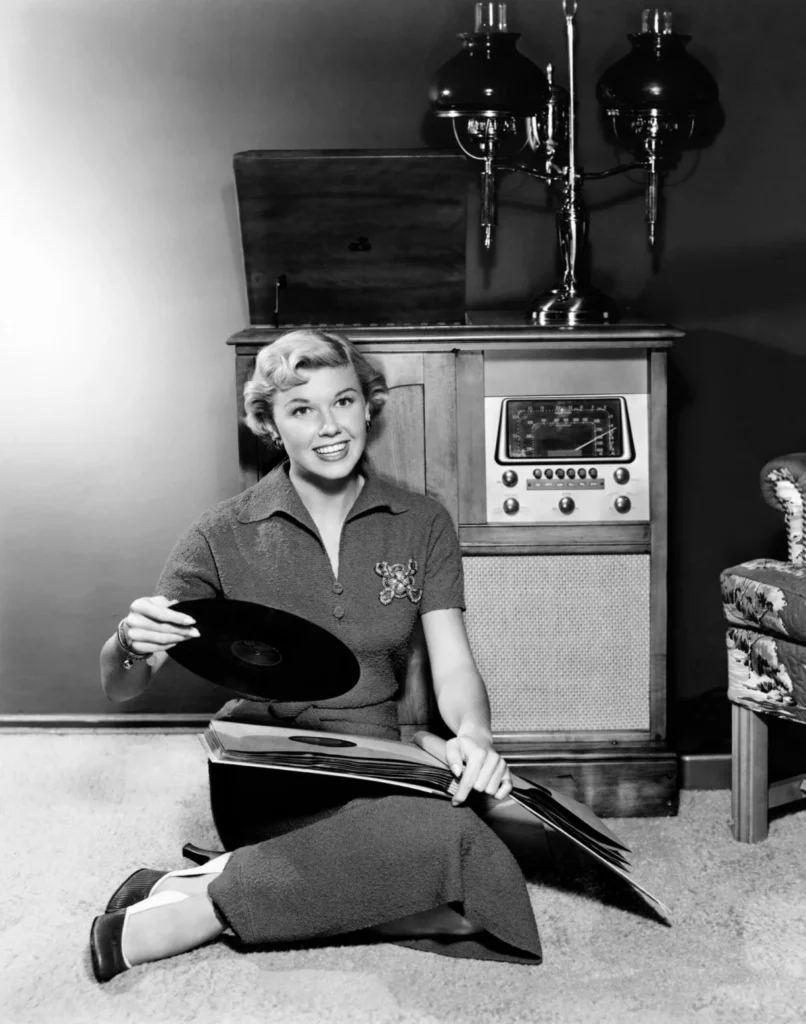
Her homes in Southern California and later in Carmel Valley were often described as reflections of her personality: bright, comfortable, and meticulously organized. Unlike many of her contemporaries who favored the opulence of Old Hollywood Regency, Day’s style was characterized by sun-drenched rooms, floral patterns, and a seamless integration of indoor and outdoor living. Her record collection, captured in candid photographs from the 1950s, was often housed in rooms she had personally curated, showing a woman who found as much joy in the arrangement of a living space as she did in the recording of a chart-topping album.

A Chronology of an American Legend
To understand Day’s devotion to the home, one must look at the timeline of her life, which shifted from the frantic pace of production schedules to the intentionality of her later years:

- 1922–1939: Early life in Cincinnati; her initial dream of being a dancer is cut short by a car accident, leading her to discover her vocal talents.
- 1940–1947: The Big Band Era; she achieves national fame with Les Brown and His Band of Renown.
- 1948: Film Debut; stars in Romance on the High Seas after being discovered by director Michael Curtiz.
- 1959: Pillow Talk; the peak of her film career and her introduction to the world as a cinematic interior designer.
- 1968–1973: The Doris Day Show; transition to television, which she reportedly entered to pay off debts left by her late third husband, Marty Melcher.
- 1975: Publication of Doris Day: Her Own Story; she shatters her "virginal" image by detailing the hardships of her personal life and her true desire for domesticity.
- 1978: Founding of the Doris Day Animal Foundation; her focus shifts entirely toward philanthropy and her home life in Carmel.
- 2004: Awarded the Presidential Medal of Freedom.
- 2019: Passes away at age 97 in Carmel Valley, California.
The Domestic Ambition: Reality vs. Persona
In her collaborative autobiography with A.E. Hotchner, Day provided a stark contrast to her public image. "From the time I was a little girl, my only true ambition in life was to get married and tend house and have a family," she wrote. This sentiment suggests that her immense success was, in many ways, an accidental detour from her primary goal. She described singing and acting as "something to do until that time came," portraying her career as a professional necessity rather than a personal obsession.

Analysis of this statement reveals a complex psychological profile. Despite her desire for a stable domestic life, Day’s personal history was marked by four marriages, several of which were characterized by financial betrayal and emotional turmoil. Her yearning for "home" may have been a response to the instability of her professional life and the disappointments of her romantic endeavors. Interior decoration, then, represented more than just an aesthetic pursuit; it was an attempt to create the sanctuary she felt she had been denied in her youth.

Supporting Data: The Impact of the Doris Day Brand
The scale of Day’s influence is best understood through the data of her career achievements:

- Box Office Dominance: Between 1960 and 1964, Day was the number-one box office star in the United States for four out of five years—a feat rarely matched by any actor, male or female.
- Musical Success: She recorded over 650 songs and 29 studio albums. Her song "Que Sera, Sera (Whatever Will Be, Will Be)" won the Academy Award for Best Original Song and became a global standard.
- Real Estate and Design: Her longtime home in Carmel Valley, which she occupied for decades, recently hit the market for several million dollars. The property, spanning nearly nine acres, serves as a physical manifestation of her design philosophy, featuring a "pet-friendly" layout that accommodated her dozens of rescued animals.
- Philanthropy: Since its inception, the Doris Day Animal Foundation has distributed millions of dollars in grants, continuing her legacy of care for "four-legged friends" long after her retirement from the screen.
Industry Reactions and the Documentary Revival
The 2023 release of the documentary With Love, Doris! sparked a renewed interest in the star’s private life. Film historians and former colleagues have noted that Day’s "backup career" in interior design was not a sign of a lack of talent, but rather a sign of her grounded nature. "Doris never believed her own hype," noted one contemporary critic. "She saw herself as a worker, and her work just happened to be in front of a camera. Her heart was always in the garden or the living room."

The documentary highlights previously unseen footage of Day at her Carmel estate, showing her deeply involved in the day-to-day management of her property. These images have resonated with a new generation of fans who value authenticity and the "slow living" movement. Industry experts suggest that Day’s ability to remain relevant today stems from her relatability; she was a woman who, despite reaching the heights of fame, prioritized the same things many people do: a comfortable home, a sense of purpose, and the company of loved ones.

Broader Implications and Cultural Legacy
Doris Day’s life offers a compelling case study in the evolution of the female professional in the 20th century. While she was often pigeonholed into the "wholesome" archetype, her business acumen and her clear-eyed assessment of her own desires suggest a woman who was very much in control of her destiny. Her admission that she would have preferred a career in interior design challenges the traditional narrative that Hollywood stardom is the ultimate achievement for every performer.

For Day, the "American Dream" was not about the bright lights of a movie premiere; it was about the light hitting the right corner of a breakfast nook. Her legacy is one of dualities: she was the independent career woman of Pillow Talk and the devoted homemaker of her own dreams. By embracing her passion for design and domesticity, she provided a blueprint for how to navigate a high-pressure career while maintaining a connection to one’s true self.

Ultimately, Doris Day’s "backup career" informs our understanding of her entire body of work. Every performance was infused with a sense of warmth and "home" because that was where her heart truly resided. As fans continue to explore her life through new documentaries and the preservation of her Carmel estate, the image of Day as an interior decorator—crafting a life of beauty and peace—remains as enduring as her most famous songs. Whether through the lyrics of a ballad or the layout of a room, Doris Day’s mission was always the same: to create a space where everyone felt welcome.