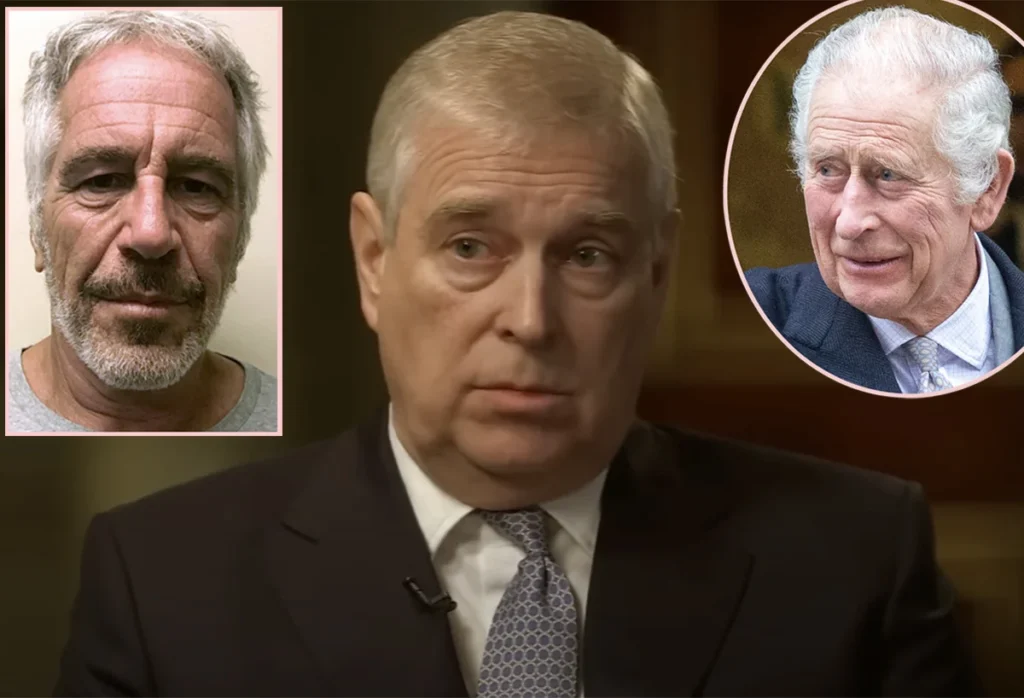

A new "bombshell" report from BBC News has cast a long shadow over Buckingham Palace, suggesting that senior royal officials were allegedly privy to potentially incriminating evidence concerning Andrew Mountbatten Windsor years before his recent arrest on suspicion of misconduct in public office. The revelation intensifies the ongoing scrutiny surrounding the Duke of York and raises profound questions about the internal mechanisms of accountability within the British monarchy.
The Heart of the Allegations: Confidential Information and Prior Knowledge
The BBC News report, published over the past weekend, asserts that evidence implying Andrew Mountbatten Windsor had been sharing confidential government information during his tenure as a UK trade envoy was presented to Buckingham Palace as early as 2020. This alleged evidence, reportedly comprising approximately 30,000 emails, was said to have been delivered to the Lord Chamberlain, the most senior administrative officer in the Royal Household. These emails, purportedly obtained from one of Mountbatten Windsor’s personal business associates, allegedly detailed his handling of "protected materials" and "confidential trade documents." The crux of the controversy lies in the timing: if palace officials were indeed made aware of such serious allegations four years ago, critics are now demanding to know why no substantive action appeared to follow, especially in light of Mountbatten Windsor’s recent arrest.
Andrew Mountbatten Windsor’s Public Service and Controversies
To understand the gravity of these new allegations, it is essential to contextualize Andrew Mountbatten Windsor’s career and the controversies that have plagued him. Born Prince Andrew, Duke of York, he served in the Royal Navy for 22 years, including active service during the Falklands War, before retiring in 2001. Following his military career, he assumed the role of the UK Special Representative for International Trade and Investment (SRITI), a position he held from 2001 until 2011. In this capacity, he traveled extensively, meeting with foreign dignitaries and business leaders to promote British trade interests. This role inherently involved access to sensitive government and commercial information, making any alleged mishandling of such data a matter of national security and public trust.
His association with the convicted sex offender Jeffrey Epstein first came under public scrutiny in the late 2000s and intensified significantly following Epstein’s second arrest and subsequent death in 2019. Mountbatten Windsor consistently denied any wrongdoing in relation to Epstein, particularly concerning allegations made by Virginia Giuffre, who claimed she was trafficked to him as a minor. His infamous 2019 interview with BBC Newsnight was widely regarded as a public relations disaster, leading to his withdrawal from public duties and, subsequently, the relinquishing of his military titles and HRH style in 2022, following a civil lawsuit filed by Giuffre, which was ultimately settled out of court.
A Chronology of Mounting Allegations and Palace Involvement
The unfolding narrative surrounding Andrew Mountbatten Windsor is complex, punctuated by key events that underscore the increasing pressure on both him and the institution of the monarchy.
- 2001-2011: Andrew serves as the UK Special Representative for International Trade and Investment, a role that brought him into contact with sensitive government and trade information.
- Late 2000s – Early 2010s: His friendship with Jeffrey Epstein becomes publicly known, drawing initial criticism.
- 2011: Mountbatten Windsor steps down from his trade envoy role amidst growing public concern over his association with Epstein.
- August 2019: Jeffrey Epstein is arrested on new sex trafficking charges and subsequently dies in custody. This re-ignites intense scrutiny on Mountbatten Windsor’s past ties.
- November 2019: Mountbatten Windsor gives a disastrous interview to BBC Newsnight, attempting to defend his friendship with Epstein and deny Giuffre’s allegations. The public backlash is immediate and severe, leading to his effective retirement from public life.
- 2020: According to the BBC News report, approximately 30,000 emails, allegedly containing details of Mountbatten Windsor’s handling of protected materials, are delivered to the Lord Chamberlain’s office at Buckingham Palace. This marks a critical juncture, as it suggests the Palace was made aware of specific, potentially criminal, misconduct allegations.
- August 2021: Virginia Giuffre files a civil lawsuit against Mountbatten Windsor in a New York court, alleging sexual abuse.
- January 2022: Amid escalating legal pressure, Queen Elizabeth II strips Mountbatten Windsor of his military titles and royal patronages, and he ceases to use his HRH style in a public capacity.
- February 2022: Mountbatten Windsor settles the civil lawsuit with Giuffre out of court for an undisclosed sum, without admitting guilt.
- Earlier This Year (2024): Andrew Mountbatten Windsor is arrested on suspicion of misconduct in public office. The allegations reportedly relate to his alleged forwarding of confidential trade documents to Jeffrey Epstein, leveraging his former role as a trade envoy. Mountbatten Windsor has consistently denied any wrongdoing.
- Past Weekend: The BBC News report emerges, alleging the Palace’s prior knowledge of the email evidence since 2020.
The Role of the Royal Household and the Lord Chamberlain
The allegation that 30,000 emails were delivered to the Lord Chamberlain’s office is particularly significant. The Lord Chamberlain is the most senior officer of the Royal Household, responsible for organizing ceremonial events, liaising between the monarch and Parliament, and overseeing the operational aspects of the palaces. This individual typically holds a prominent public or military background and serves as a key advisor to the sovereign. For such a substantial volume of potentially incriminating evidence to reach this office implies that the concerns were deemed serious enough to warrant direct attention from the highest levels of royal administration.
The chain of command within the Royal Household would typically dictate that information of this nature would be reviewed by legal teams and senior private secretaries before being presented to the reigning monarch, who at the time was Queen Elizabeth II. The question now becomes: what actions, if any, were taken after these emails were received? Was an internal investigation launched? Was legal counsel sought? And crucially, were law enforcement authorities informed, given the potential criminal implications? The absence of visible "meaningful action" following this alleged receipt of evidence forms the core of the current public debate and the accusations leveled against the Palace.
Statements, Reactions, and Broader Implications
The new report has provoked strong reactions from those closely connected to the Epstein scandal. Jess Michaels, an alleged victim of Jeffrey Epstein and a vocal advocate for survivors, publicly criticized the Palace’s alleged inaction. Speaking to The Telegraph, Michaels stated, "Six years ago, the Palace knew Andrew wasn’t just a problem; he could face a criminal investigation. And they sat on it." Her statement implies an even earlier awareness, pushing the timeline back to around 2018, potentially coinciding with the resurgence of public scrutiny on Epstein.
Michaels also drew an emotional connection to Virginia Giuffre, whose persistent allegations against both Epstein and Mountbatten Windsor played a pivotal role in keeping the controversy in the public eye. Michaels lamented the perceived institutional loyalty that, she argued, came at a devastating cost. "Protecting him meant doubting her. Virginia Roberts Giuffre was telling the truth, and she didn’t live to see them admit it. That breaks my heart and it should break everyone’s. This is what institutions do. They protect powerful men and leave the people they harmed to carry it," Michaels passionately conveyed. Her words underscore a deep-seated frustration among victims and their advocates regarding the perceived prioritization of institutional reputation over justice.
In response to the BBC report, Buckingham Palace issued a concise statement, reiterating its standard position on ongoing investigations: "Since there is an ongoing police enquiry concerning Mr Mountbatten-Windsor, it is not possible to provide any comment on these matters." This official stance, while legally prudent for not prejudicing an active investigation, often fuels public speculation and can be perceived as a lack of transparency or accountability.
Following Mountbatten Windsor’s arrest earlier this year, King Charles III had publicly expressed concern, emphasizing that the matter should be handled through "proper legal channels." This measured response aimed to distance the monarchy from the individual actions of a family member while upholding the principle of the rule of law. However, the new allegations of prior Palace knowledge now place an additional layer of scrutiny on the King and the Royal Household, questioning whether the institution adequately addressed concerns when they first arose.
The implications of these allegations are far-reaching. Legally, if proven true, the alleged sharing of confidential government information could constitute serious offenses, potentially including breaches of the Official Secrets Act, depending on the nature and sensitivity of the data. Misconduct in public office is itself a grave charge, carrying significant penalties. Ethically, the accusations raise fundamental questions about institutional responsibility, transparency, and the protection of victims.
For the monarchy, already navigating a period of transition under King Charles III, this latest development presents a considerable challenge. The King has reportedly sought to streamline the monarchy and project an image of modernization and accountability. Allegations of a cover-up or inaction on such serious matters could undermine public trust and fuel republican sentiment. It also highlights the inherent difficulties in separating the actions of individual royals from the institution they represent, especially when those actions allegedly occurred during official duties.
The ongoing police inquiry, which is understood to be comprehensive and complex, is now under even greater pressure to deliver clear answers. Whether these new allegations will lead to further arrests, additional charges, or simply intensify the existing investigation remains to be seen. However, one undeniable certainty is that the questions surrounding accountability within Buckingham Palace, and the conduct of Andrew Mountbatten Windsor, are far from resolved and will continue to dominate headlines for the foreseeable future. The public, and indeed the world, awaits clarity on what the Palace knew, and why, if the allegations are true, decisive action was seemingly delayed.