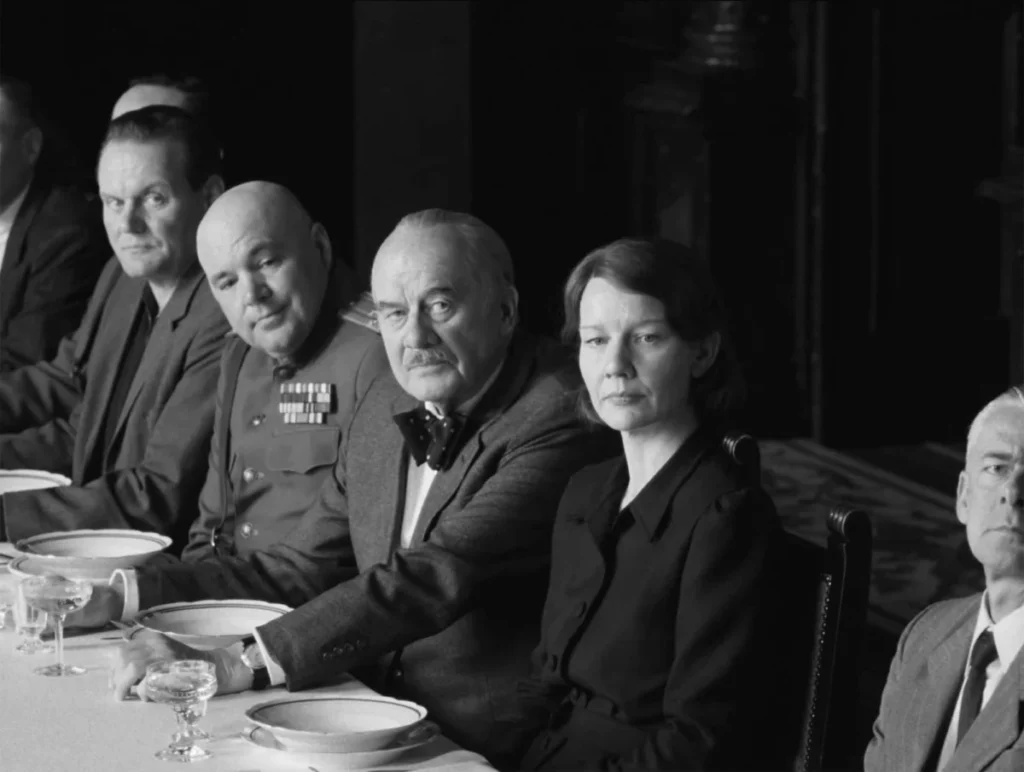

Mubi has unveiled the official trailer for Paweł Pawlikowski’s highly anticipated film, Fatherland, a cinematic exploration of familial discord and national division set against the scarred landscape of post-World War II Germany. The film, which premiered to critical acclaim at the 2026 Cannes Film Festival, secured a prestigious Best Director award for Pawlikowski, shared with another acclaimed filmmaker, underscoring its significant artistic merit. Critics have lauded Fatherland as a profound reflection of our times, with early reviews suggesting it stands as one of the standout entries in this year’s festival circuit.
The narrative centers on the complex relationship between the Nobel Prize-winning writer Thomas Mann, portrayed by Hanns Zischler, and his daughter Erika, brought to life by Sandra Hüller. Erika is depicted as a multifaceted individual – an actress, writer, and rally driver – whose own journey is intertwined with her father’s return from sixteen years of exile in the United States. Their story unfolds during the summer of 1949, a period marked by the escalating Cold War and a Germany physically and ideologically fractured.
A Journey Through a Divided Nation
The core of the film’s plot revolves around a road trip undertaken by Thomas and Erika Mann. Their journey, in a stark black Buick cruiser, traverses a Germany still reeling from the devastation of war. The route takes them from the American-occupied sector of Frankfurt to Weimar, a city situated within the Soviet zone of influence. This physical passage across a divided nation mirrors the deeper internal schisms that Thomas Mann must confront, both within the broader "fatherland" and within the confines of his own family.

Pawlikowski, renowned for his evocative and distilled storytelling in critically lauded films like Ida and Cold War, delves into familiar thematic territory: identity, familial bonds, love, and guilt. These universal themes are amplified by the backdrop of post-war European turmoil, a period of profound confusion and moral ambiguity. The film promises to explore these complexities through Pawlikowski’s signature elliptic and deeply resonant style.
Artistic Pedigree and Critical Reception
The ensemble cast of Fatherland boasts impressive talent. Alongside Sandra Hüller and Hanns Zischler in the central roles, the film features performances from August Diehl, Devid Striesow, and Anna Madeley. The cinematography is helmed by Lukasz Zal, the celebrated Polish Director of Photography whose work has previously graced Pawlikowski’s Ida and Cold War, contributing significantly to their distinctive visual identities.
The film’s premiere at the 2026 Cannes Film Festival placed it in direct competition with other major international productions. The Best Director award, a significant achievement in itself, signals the jury’s recognition of Pawlikowski’s masterful direction. Early critical assessments have been overwhelmingly positive. One critic described Fatherland as "a mirror to our own morally bankrupt era," a sentiment that suggests the film’s themes resonate beyond its historical setting. This interpretation, published in the immediate aftermath of the festival, positions Fatherland as a film with contemporary relevance, offering a lens through which to examine current societal and ethical challenges.
Historical Context and Thematic Resonance
The summer of 1949 was a pivotal moment in post-war Germany. The country was formally divided into two states the following year: the Federal Republic of Germany (West Germany), aligned with the Western Allies, and the German Democratic Republic (East Germany), under Soviet influence. This division was not merely political but deeply social and psychological, impacting every aspect of German life.

Thomas Mann, a towering figure of German literature, had been an outspoken critic of the Nazi regime and chose exile in the United States. His return to Germany after the war was a significant event, and his personal experiences, coupled with the nation’s fractured state, provide fertile ground for cinematic exploration. The film’s title, Fatherland, carries a potent double meaning: the literal homeland and the paternal figure, both of whom are presented as divided and complex entities.
The inclusion of Erika Mann as a co-protagonist is particularly noteworthy. Erika was a prominent figure in her own right, known for her activism, writing, and daring spirit. Her relationship with her famous father, often characterized by intellectual engagement and personal complexities, offers a unique perspective on the era and the pressures faced by intellectuals and artists in a world reshaped by conflict. The trailer’s opening line, "Mr. Mann, which side are you on? Stalin or Mickey Mouse?", encapsulates the stark ideological choices and pressures faced by individuals during this period, hinting at the film’s exploration of allegiance and compromise.
Release Strategy and Future Outlook
Following its successful premiere at Cannes, Mubi is set to distribute Fatherland to art-house theaters in the fall of 2026. This release strategy aligns with the film’s artistic ambition and its target audience, which typically favors auteur-driven cinema. The film is also expected to screen at additional festivals prior to its theatrical debut, further building anticipation and providing opportunities for broader critical engagement.
The release of the official trailer provides a tantalizing glimpse into the film’s visual style and thematic depth. The trailer, praised for its "gorgeous" aesthetic, suggests Pawlikowski has once again crafted a visually arresting and emotionally resonant cinematic experience. The cinematography by Lukasz Zal is expected to be a key element, capturing the desolation of war-torn Germany and the internal landscapes of its characters with stark beauty.

The film’s production team includes experienced producers such as Edward Berger, Lorenzo Gangarossa, Mario Gianani, Lorenzo Mieli, Ewa Puszczynska, Dimitri Rassam, and Jeanne Tremsal, indicating a robust backing for Pawlikowski’s vision. The screenplay, co-written by Pawlikowski and Henk Handloegten, further suggests a collaborative approach aimed at delivering a compelling narrative.
Broader Impact and Anticipation
The release of Fatherland arrives at a time when discussions about national identity, historical memory, and the impact of geopolitical divisions remain highly relevant. Pawlikowski’s ability to imbue his films with a profound sense of place and historical context, while simultaneously exploring intimate human dramas, has earned him a dedicated following and critical acclaim.
The film’s success at Cannes and the positive reception of its trailer suggest that Fatherland has the potential to be a significant cultural event. Its exploration of the Mann family, a dynasty deeply embedded in German intellectual and cultural history, adds another layer of interest. The film is not just a historical drama but a character study set against a backdrop of monumental global shifts.
As Fatherland prepares for its theatrical release, audiences can anticipate a film that is both visually stunning and intellectually stimulating. It promises to offer a nuanced portrayal of a critical period in history and the enduring complexities of family relationships, all filtered through the distinctive artistic vision of one of contemporary cinema’s most respected filmmakers. The anticipation for this release, particularly among cinephiles and those interested in historical dramas, is palpable, with many eager to experience Pawlikowski’s latest offering on the big screen. The film’s critical reception and its powerful thematic underpinnings suggest it will be a significant entry in the 2026 film landscape.