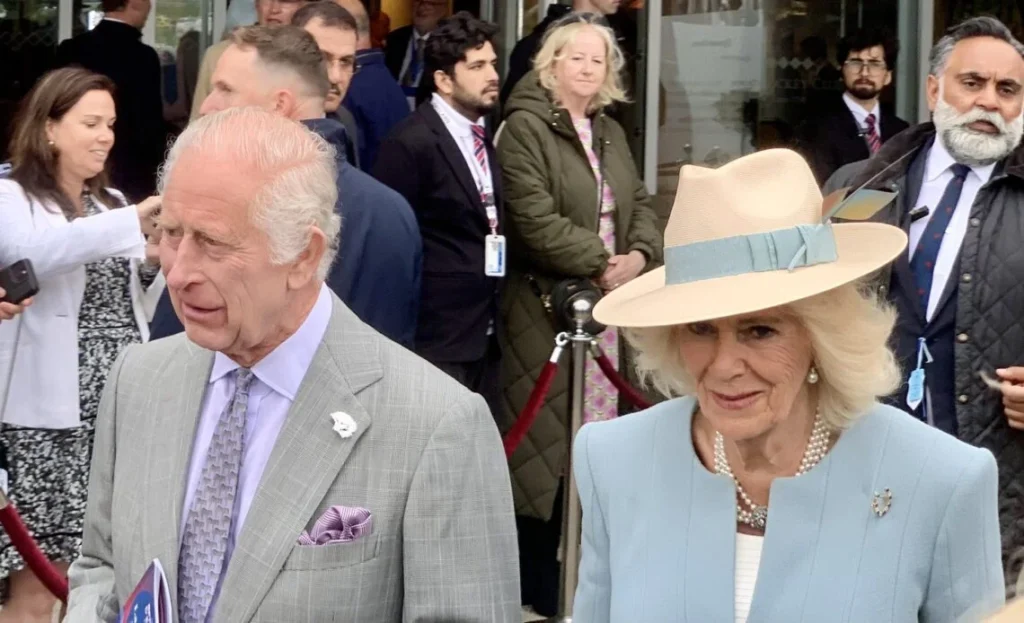

King Charles III and Queen Camilla are set to uphold a cherished royal tradition next week with their confirmed attendance at the prestigious Betfred Derby at Epsom Downs. The Jockey Club, the governing body for British horseracing, officially announced on Thursday that Their Majesties will grace Derby Day, Saturday, June 6th, to witness one of the most revered events in the global horseracing calendar. This marks a significant moment, underscoring the enduring and deeply intertwined relationship between the British monarchy and the sport of kings.
A Royal Seal of Approval on a Historic Occasion
The presence of King Charles and Queen Camilla at Epsom Downs is more than just a high-profile appearance; it is a tangible continuation of a lineage of royal patronage that has spanned centuries. As the newly appointed joint patrons of the Jockey Club in 2024, Their Majesties step into a role previously held by the late Queen Elizabeth II for an extraordinary 68 years. Their attendance at the 247th running of the Derby, a race first established in 1780, signifies their commitment to the sport and its rich heritage. The Derby, widely acclaimed as the ultimate test for three-year-old thoroughbreds, holds a special place in British sporting culture, and its association with the Crown adds another layer of historical gravitas.
Queen Elizabeth II’s devotion to horseracing was legendary. Throughout her remarkable 70-year reign, she was a near-constant fixture at Derby Day, missing the iconic race on only two occasions. The first was in 1956 during a state visit to Sweden, and the second in 1984, when she attended commemorations for the 40th anniversary of D-Day in France. Her passion was not merely observational; she was also a highly successful racehorse owner, with her silks a familiar sight in winner’s enclosures across the country. While the Derby itself remained the one British Classic that eluded her as an owner – her closest attempt being Aureole’s second-place finish in 1953, the year of her Coronation – her unwavering support for the sport was undeniable.
The appointment of King Charles and Queen Camilla as joint patrons of the Jockey Club following Queen Elizabeth II’s passing in September 2022, was a natural progression, reflecting their own deep-seated affection for horseracing. This handover of patronage ensures that the close bond between the monarchy and the sport remains robust and continues to inspire.
The Derby: A Pinnacle of British Sport and Culture
The Betfred Derby is not just a horse race; it is a cultural phenomenon and a cornerstone of the British sporting calendar. Often referred to as the "blue riband" event of racing, it is the richest race run in Britain, sharing this distinction with a substantial prize fund of £2 million this year. This significant financial incentive attracts the finest three-year-old colts and fillies from around the globe, creating a fiercely competitive and thrilling spectacle.
The history of the Derby is intrinsically linked with the aristocracy and, by extension, the monarchy. First run in 1780, it was conceived by the 12th Earl of Derby, Sir Charles Bunbury, and Admiral Charles Palliser. The intention was to create a prestigious race that would showcase the prowess of young thoroughbreds, and it quickly became a race of international renown. The Derby is one of five "Classic" races in Britain, a series that also includes the 2,000 Guineas, the 1,000 Guineas, the Oaks (for fillies at Epsom), and the St Leger. Winning a Classic race is the ultimate ambition for any owner and trainer, and the Derby stands at the apex of these achievements.
Only one reigning British monarch has ever had the honour of owning a Derby winner: King Edward VII, whose colt Minoru triumphed in 1909. This historical rarity further elevates the significance of any royal involvement in the race, making the King and Queen’s attendance particularly poignant.
Royal Enthusiasm and Enduring Connections
The King and Queen’s personal passion for horseracing is well-documented and stretches back decades. King Charles was appointed an honorary member of the Jockey Club in 1980, a testament to his long-standing engagement with equestrian pursuits, which have included amateur riding and polo. Queen Camilla, who became an honorary member in 2015, has also cultivated strong ties to the sport, serving as patron of the National Stud since 2018.
Together, they have continued the celebrated racing operation inherited from Queen Elizabeth II. Their own racing successes have already brought moments of joy, most notably a memorable victory at Royal Ascot in 2023 when their horse Desert Hero won the King George V Stakes. This success underscored their active participation and genuine enjoyment of the sport, both as owners and enthusiasts.
Jim Allen, General Manager of Epsom Downs Racecourse, expressed the immense pride and delight felt by all associated with the venue. "We are honoured and thrilled that The King and Queen will be joining us at Epsom Downs on Derby Day," he stated. "Their Majesties show great enthusiasm, interest and support for horseracing in the UK and their attendance next week will be a proud moment for all of the team here and everyone connected with the racecourse."
Allen further elaborated on the deep-seated connection between royal attendance and the Derby’s identity: "Derby Day provides joy and entertainment to millions of people around the world as one of Britain’s most famous and iconic events, and Royal attendance has been synonymous with the meeting for generations." This sentiment highlights how the presence of the monarch has become an integral part of the Derby’s fabric, a tradition that resonates with both racing aficionados and the wider public.
Supporting Data and Broader Context
The Jockey Club, as the entity responsible for organizing and promoting horseracing in Britain, plays a pivotal role in safeguarding the sport’s future. Its role as patron is not merely symbolic; it involves active engagement in the development and welfare of racing. The King and Queen’s patronage signifies a continued commitment to these efforts.
The economic impact of horseracing on the UK is substantial. The industry contributes billions of pounds to the economy annually, supporting tens of thousands of jobs across various sectors, including breeding, training, veterinary care, and hospitality. Major events like the Derby attract significant domestic and international tourism, further bolstering the economy. The royal family’s endorsement of such events naturally amplifies their profile and appeal.
The Derby’s status as a "Classic" race means it is a key indicator of breeding quality and a benchmark for young thoroughbreds. The results of the Derby often influence breeding decisions and the global market for bloodstock for years to come. The presence of the King and Queen adds a layer of prestige that can only enhance the race’s standing on the international stage.
Implications and Future Outlook
The King and Queen’s attendance at the Betfred Derby is more than just a social engagement; it is a clear signal of the monarchy’s enduring commitment to British heritage and sporting excellence. In a period of transition for the monarchy, their active participation in such historic events reinforces continuity and tradition, providing a sense of stability and connection to the past.
For the horseracing industry, the royal endorsement is invaluable. It helps to maintain public interest, attract sponsorship, and promote the sport to a broader audience. The passion and knowledge demonstrated by both King Charles and Queen Camilla offer a contemporary and relatable face to a sport that sometimes faces criticism regarding animal welfare. Their active involvement, particularly in ensuring the welfare of their own horses, can serve as a positive example.
The 2024 Betfred Derby promises to be a spectacle of both sporting prowess and royal tradition. As the thoroughbreds thunder down the Epsom Downs track, the presence of the King and Queen will undoubtedly add an extra layer of significance to an already momentous occasion, further cementing the 247-year-old race’s place in British history and the global sporting consciousness. The event serves as a powerful reminder of the symbiotic relationship between the Crown and a sport that has captivated the nation for centuries.