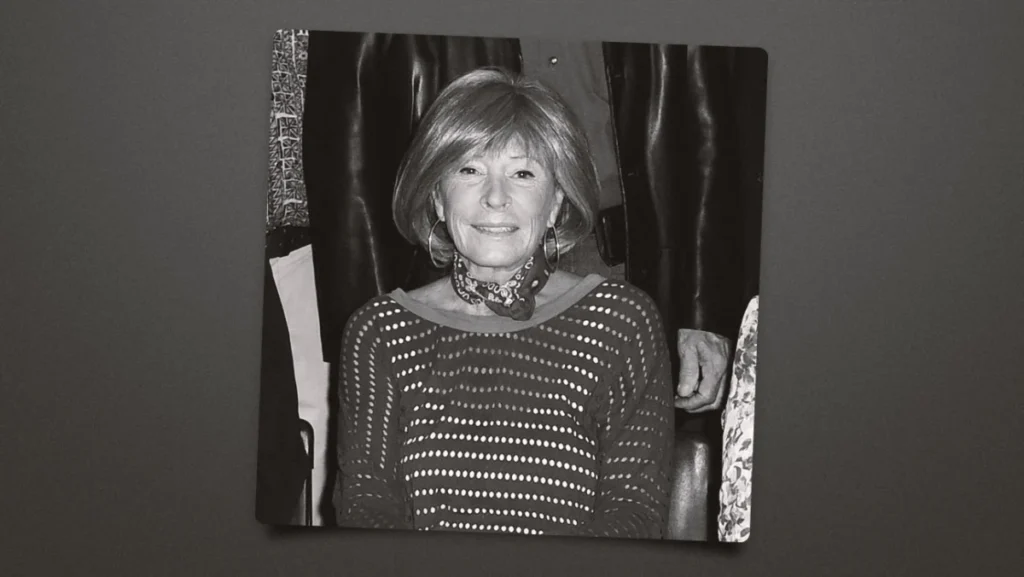

Marcia Lucas, the revered Oscar-winning film editor whose masterful work indelibly shaped cinematic classics such as Star Wars and American Graffiti, and former spouse of director George Lucas, has passed away at the age of 80. Lucas died on Wednesday in Rancho Mirage, California, following a battle with cancer, leaving behind a legacy that profoundly influenced modern filmmaking and paved the way for future generations of editors.
Her family released a poignant statement acknowledging her multifaceted impact: “Marcia will be remembered as a brilliant storyteller, a trailblazer for women in film, a loving mother and grandmother, a generous host, and a loyal friend whose humor and sparkle filled every room she entered. Her influence on film is indelible, but those who knew her best will remember the way she made life feel more vivid, more beautiful, more fun, and more full of love.” This tribute encapsulates not only her professional prowess but also the vibrant personal spirit that endeared her to many.
Early Life and Entry into the Film Industry
Born Marcia Griffin in Modesto, California, in 1945, Lucas’s journey into the intricate world of film began through the Motion Picture Editors Guild apprenticeship program. This structured entry point was a traditional pathway for aspiring editors in Hollywood, offering hands-on experience and a foundational understanding of the craft. The apprenticeship system, then a cornerstone of industry training, provided a crucial stepping stone for individuals to learn from seasoned professionals, mastering the technical nuances and artistic sensibilities required for successful film editing. Her dedication and innate talent quickly became apparent, setting her on a trajectory toward becoming one of the most respected figures in her field.
Her career was significantly shaped by her mentorship under the legendary Verna Fields, an iconic female film editor known for her groundbreaking work on blockbusters like Steven Spielberg’s Jaws (1975) and Peter Bogdanovich’s Paper Moon (1973). Fields, herself a trailblazer, was instrumental in developing modern editing techniques, particularly in action and suspense genres. Working as Fields’s assistant provided Lucas with invaluable insights into pacing, narrative construction, and the psychological impact of cuts—lessons that would become hallmarks of her own distinctive style. This period was not merely about learning technical skills but about absorbing a philosophy of storytelling through montage and rhythm, a crucial foundation for the cinematic epics she would later help define.
Collaborative Beginnings with George Lucas and American Graffiti
Marcia Lucas’s professional and personal life intertwined with George Lucas, whom she married in 1969. Their early collaborations were formative for both their careers. She served as an assistant editor on George’s feature directorial debut, THX 1138 (1971), a dystopian science fiction film. While THX 1138 was not a commercial success, it showcased George Lucas’s experimental vision and provided Marcia with early experience in shaping a complex narrative, particularly one with a distinct artistic sensibility. The film’s unconventional structure and sparse dialogue demanded an editor capable of conveying mood and character through visual rhythm and sound design, skills Marcia was already honing.
Her breakthrough came with George Lucas’s next project, American Graffiti (1973), a nostalgic coming-of-age story set against the backdrop of 1962 hot rod culture. Working alongside Verna Fields, Marcia Lucas was credited as co-editor. The film, which cost a modest $777,000 to produce, became a phenomenal box office success, grossing over $115 million domestically and cementing its place as a cultural touchstone. Its innovative use of a continuous rock and roll soundtrack and multiple, intersecting storylines presented a significant editing challenge. Marcia and Fields skillfully wove together these disparate threads, maintaining a lively, kinetic pace that perfectly captured the exuberance and melancholia of adolescence. Their work on American Graffiti earned Marcia her first Academy Award nomination for Best Film Editing in 1974. Although William Reynolds ultimately took home the Oscar that year for his work on The Sting, the nomination firmly established Lucas as a rising star in the editing community, recognized for her ability to infuse energy and emotional depth into diverse narratives. The film’s critical acclaim and commercial triumph underscored the power of its editing, proving that a well-crafted narrative could resonate deeply with audiences.
Shaping a Galaxy Far, Far Away: The Star Wars Phenomenon
Marcia Lucas’s most celebrated achievement came with her pivotal role in the creation of Star Wars: A New Hope (1977), a film that would revolutionize the science fiction genre and popular culture. George Lucas’s initial cut of Star Wars was famously described as disjointed and difficult to follow, prompting concerns from studio executives and even his closest collaborators. It was during this critical period that Marcia Lucas, alongside co-editors Paul Hirsch and Richard Chew, embarked on the arduous task of re-editing the sprawling space opera, transforming it into the tightly paced, emotionally resonant epic audiences would embrace.
Her contribution to Star Wars is widely considered to be indispensable. Author Dale Pollock, in his biography Skywalking: The Life and Films of George Lucas, famously described Marcia as her husband’s "secret weapon," a sentiment echoed by many who witnessed the demanding post-production process. Marcia was instrumental in shaping the film’s narrative arc, particularly in crafting the emotional beats that resonated with millions. She re-edited key sequences, including the iconic Death Star trench run, injecting suspense and urgency that were reportedly absent in earlier versions. Her meticulous attention to rhythm and timing ensured that the audience was emotionally invested in the characters’ journey, from Luke Skywalker’s longing on Tatooine to the climactic battle for the galaxy.
Beyond pacing, Marcia Lucas’s influence extended to critical story decisions. It has been widely reported that she championed the idea of Obi-Wan Kenobi sacrificing himself to Darth Vader, a moment that provides a powerful emotional turning point for Luke and reinforces the mythical underpinnings of the saga. Her insistence on clarity and emotional impact guided the editing process, ensuring that the complex mythology and groundbreaking special effects served the story, rather than overwhelming it. The result was a film that grossed over $775 million worldwide in its initial run, becoming the highest-grossing film of its time and establishing a multi-billion-dollar franchise. In 1977, Marcia Lucas, alongside Paul Hirsch and Richard Chew, accepted the Academy Award for Best Film Editing for Star Wars, a testament to their collective achievement in crafting one of Hollywood’s most beloved and enduring cinematic masterpieces. The award was not merely an acknowledgment of technical skill but of artistic vision that elevated the entire production.
Continued Success and Diverse Collaborations
Following the monumental success of Star Wars, Marcia Lucas continued her work on the burgeoning saga, contributing her editing expertise to Return of the Jedi (1983), the concluding chapter of the original trilogy. Her involvement ensured a consistent narrative flow and emotional resonance that audiences had come to expect from the franchise.
However, her talents were not confined to the galaxy far, far away. Marcia Lucas also forged significant collaborations with another titan of American cinema, Martin Scorsese. She edited his acclaimed film Alice Doesn’t Live Here Anymore (1974), a drama that earned Ellen Burstyn an Academy Award for Best Actress. Her work on this film demonstrated her versatility, moving seamlessly from science fiction epic to intimate character study, showcasing her ability to capture the raw emotions and complex relationships inherent in the human experience. Furthermore, she contributed to two of Scorsese’s most iconic films, Taxi Driver (1976) and New York, New York (1977), as an uncredited editor on the former and an associate editor on the latter. Her contributions to Taxi Driver, a gritty psychological thriller, are particularly noteworthy, as the film’s intense atmosphere and Travis Bickle’s descent into madness relied heavily on precise editing to convey his fractured mental state. These collaborations underscore her reputation as a highly sought-after editor capable of working across diverse genres and with visionary directors.
Personal Life and Enduring Legacy
Marcia Lucas and George Lucas divorced in 1983, marking the end of a pivotal personal and professional partnership. She later married and divorced artist Tom Rodrigues. She is survived by her daughters, Amanda Lucas and Amy Soper, and her beloved grandchildren.
Marcia Lucas’s impact on film extends far beyond her individual credits. She was a true pioneer, especially for women in a male-dominated industry. Historically, women played significant roles in film editing during the silent and early sound eras, often considered a "feminine" task akin to sewing. However, as filmmaking became more industrialized and prestigious, men gradually took over these roles. Marcia Lucas’s prominence, culminating in an Academy Award for one of the biggest films of all time, helped to re-assert the critical importance and artistic legitimacy of women in technical and creative roles within Hollywood. Her success served as an inspiration, demonstrating that talent and vision transcend gender.
Her legacy is one of unparalleled storytelling prowess, marked by an acute understanding of pacing, emotional resonance, and narrative structure. Film critics and historians have increasingly acknowledged her profound influence, particularly in shaping the final, beloved version of Star Wars. Her work is a powerful reminder that film is a collaborative art form, and that the editor, often working behind the scenes, plays a crucial role in bringing a director’s vision to life, sometimes even rescuing and redefining it. The "secret weapon" epithet was not merely anecdotal; it reflected a widely held belief within the industry regarding her exceptional ability to transform raw footage into compelling cinema. Her contributions helped solidify the modern role of the film editor as a creative force, not just a technician, capable of making significant artistic decisions that directly influence a film’s success and enduring appeal.
In an era where the auteur theory often credits directors as the sole creative visionaries, Marcia Lucas stood as a testament to the collaborative nature of filmmaking. Her skill in weaving together complex narratives, her keen sense of rhythm, and her unwavering commitment to emotional authenticity left an indelible mark on cinematic history. As the film community mourns her passing, her extraordinary body of work will continue to educate, entertain, and inspire, reminding us of the profound power of a brilliantly told story, meticulously crafted one cut at a time. Her contributions will forever be celebrated as integral to some of the most iconic films ever made, solidifying her place as one of the most influential film editors of her generation.