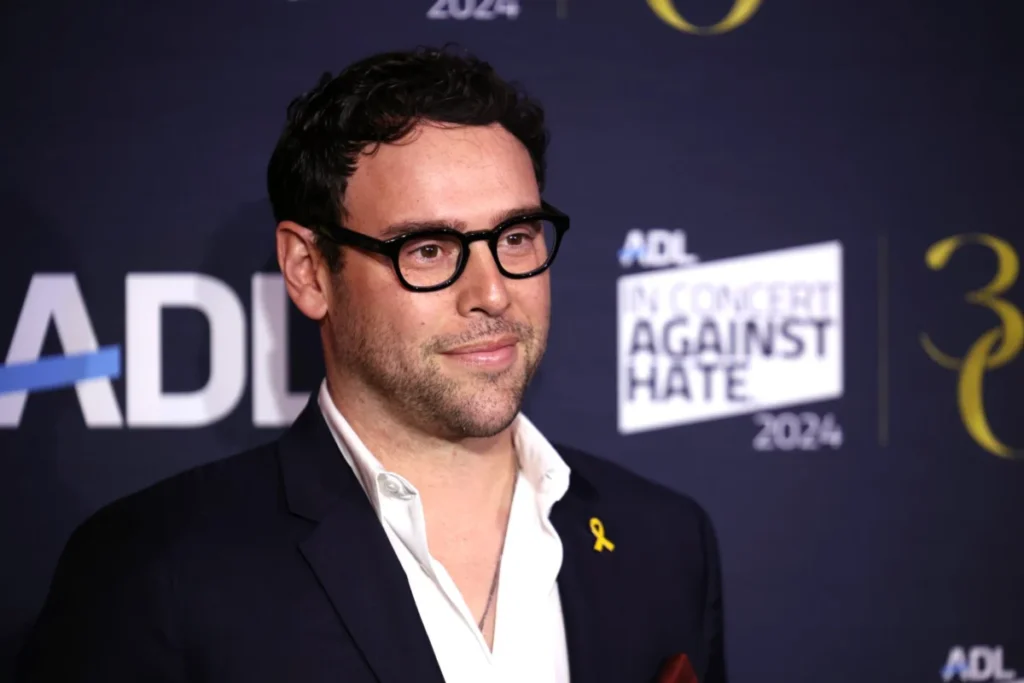

In a candid conversation on the latest episode of the Second Thought With Suzy Weiss podcast, music mogul Scooter Braun offered a fresh perspective on his highly publicized feud with global superstar Taylor Swift, revealing his profound surprise at the intensity of the public reaction and asserting that his personal interactions with Swift have been remarkably limited. Braun, who has navigated the often-turbulent waters of the music industry for years, described the aftermath of the acquisition of Big Machine Label Group as a jarring transformation from a respected figure to what he characterized as "a villain the next night."
The public dispute, which ignited in 2019, centers on Braun’s purchase of Swift’s first six studio albums’ masters for an estimated $300 million. This acquisition, part of his broader takeover of Big Machine Label Group, was met with fierce opposition from Swift, who publicly decried the deal as having "stripped me of my life’s work." The fallout was swift and significant, drawing widespread media attention and dividing fans. Braun’s recent statements on the podcast aim to clarify his side of a narrative that has largely painted him as an antagonist.
The Genesis of a Public Dispute
The roots of the conflict trace back to June 2019, when Ithaca Holdings, Scooter Braun’s investment firm, announced the acquisition of Scott Borchetta’s Big Machine Label Group. This deal included the lucrative catalog of Taylor Swift’s first six albums: Taylor Swift (2006), Fearless (2008), Speak Now (2010), Red (2012), 1989 (2014), and Reputation (2017). At the time of the sale, Swift’s contract with Big Machine had expired, and she was in the process of signing a new record-breaking deal with Republic Records, an imprint of Universal Music Group.
Swift’s immediate reaction was one of profound disappointment and anger. In a lengthy Tumblr post, she detailed her alleged attempts to buy her masters, claiming she was given "an opportunity to purchase my music from Big Machine Records, no real science behind it, just another offer in response to my lawyers’ letters." She further stated that she was instead presented with a "take it or leave it" offer, which she declined. Her post detailed her perception of Braun as a bully, citing his past public clashes with artists like Kanye West and Justin Bieber, and expressed her dismay that her life’s work would now be owned by someone she felt had "actively and maliciously bullied me for years."
The public’s response was largely sympathetic to Swift, a move that Braun suggests fundamentally altered his public image. He explained on the podcast, "I was loved and appreciated for over a decade to literally a villain the next night." This rapid shift in public perception, he indicated, was difficult to reconcile with his understanding of the situation.
Braun’s Surprising Claim: A Limited Personal Connection
Perhaps the most striking revelation from Braun’s interview is his assertion that his personal relationship with Taylor Swift is far more distant than commonly believed. He stated, "I don’t know Taylor Swift. I think I’ve met her in my life three times. I have never had a substantial conversation with her in my life." This claim directly contradicts the public narrative that often portrays them as having a more direct, albeit adversarial, relationship.
Braun elaborated on these limited encounters. He recalled being invited to a private party hosted by Swift, during which he felt she expressed "the utmost respect" for him, a sentiment he reciprocated. He also highlighted the inherent contradiction in the situation: "You don’t spend $300 million buying a label that she’s on unless you’re excited at the opportunity to work with her." He admitted to being perpetually confused by the extent of the feud, stating, "I will never truly understand that situation, to this day. I wish her nothing but the best."
He further emphasized the lack of prolonged interaction, stating, "I think I met her three times in my life, and I think I spoke to her really once for like more than two minutes. But it was a very nice conversation. And beyond that, nothing ever." He also noted a significant period of no contact prior to the acquisition: "the three years prior to us buying Big Machine, she and I had no contact. I think it was two years." This detailed account aims to dismantle the perception of a deeply personal animosity between the two figures, suggesting the conflict was primarily business-driven and amplified by public perception.
The Re-Recording Era and Swift’s Reclamation of Her Work
Following the acquisition, Taylor Swift embarked on an unprecedented project: re-recording her first six albums. This strategic move was designed to undermine the value of the masters owned by Braun and to regain control over her artistic legacy. The "Taylor’s Version" re-recordings, starting with Fearless (Taylor’s Version) in April 2021, have been met with immense critical and commercial success, demonstrating Swift’s enduring popularity and her fans’ unwavering support.
- Fearless (Taylor’s Version) (2021)
- Red (Taylor’s Version) (2021)
- Speak Now (Taylor’s Version) (2023)
- 1989 (Taylor’s Version) (2023)
These re-recorded albums not only allowed Swift to reclaim ownership of her music but also provided an opportunity to release "from the vault" tracks, offering fans new material and deeper insights into her creative process. This undertaking has been widely hailed as a masterclass in artist empowerment and a significant victory in her battle for ownership.
In a significant development announced in May 2024, Swift was able to buy back the masters to her first six albums. This was achieved through a deal with Shamrock Capital, a private equity firm that had purchased the masters from Braun in 2020. While the exact financial details were not disclosed, the move marked a crucial step in Swift’s long-term goal of full control over her extensive catalog. Braun’s sale of the masters to Shamrock Capital had been a point of contention, as Swift had expressed her desire to purchase them directly from him.
Braun’s Lessons Learned and Evolving Perspective
Braun described the entire ordeal as a profound learning experience. "I learned a tremendous amount from it," he stated. "I chose to grow from it. I’m grateful for it at this point in my life." He reiterated his surprise at the public’s assumption of a close, personal relationship, noting, "people are usually shocked to find out that I legitimately don’t know her and didn’t have many interactions with her and never really knew her."
His narrative suggests a desire to move past the controversy and focus on his current endeavors. Braun has since shifted his focus from artist management to broader music industry investments and strategic partnerships. His firm, HYBE America, acquired Braun’s Ithaca Holdings in early 2021, positioning him for a new phase of his career.
Broader Implications and Industry Context
The Scooter Braun-Taylor Swift saga has had significant implications for the music industry, highlighting critical issues surrounding artist rights, master recordings, and the power dynamics between artists and music executives. Swift’s re-recording project has inspired other artists to advocate for greater control over their work and has spurred conversations about more equitable contractual agreements.
The case also underscores the evolving landscape of music ownership. With the rise of streaming and the increased value of back catalogs, the control of master recordings has become a paramount concern for artists. Swift’s proactive approach has set a precedent, demonstrating that artists can, with strategic planning and strong fan support, regain ownership and reshape their legacies.
Braun’s interview, while offering his perspective, also serves as a reminder of the complex interplay of business, public relations, and personal relationships in the entertainment world. The narrative of the feud, as presented by both parties, has been shaped by public interpretation, media coverage, and the strategic communication efforts of each side. Braun’s latest statements aim to reframe that narrative, emphasizing his limited personal involvement and his growth from the challenging experience.
The full interview on Second Thought With Suzy Weiss offers a deeper dive into Braun’s reflections, providing a platform for him to articulate his side of a story that has captivated and divided music fans for years. As the industry continues to grapple with issues of artist ownership and control, the lessons learned from this high-profile dispute will likely continue to resonate.