
The glittering history of the British Royal Family is inextricably linked with a dazzling array of precious jewels, each with its own story of acquisition, adaptation, and enduring significance. Among these treasures, one particular piece stands out for its remarkable journey through royal hands and its recent reemergence on the world stage: a magnificent emerald and diamond choker necklace, once a favourite of Queen Mary and now a signature piece for Catherine, the Princess of Wales. This article delves into the captivating provenance of this iconic jewel, tracing its evolution from a royal gift to a symbol of contemporary style and commitment to sustainability.
A Legacy Forged by Queen Mary
The story of the celebrated emerald and diamond choker begins over a century ago with Queen Mary, a monarch renowned for her profound appreciation and discerning taste for fine jewellery. A significant portion of the Royal Family’s current collection owes its existence to her acquisitive spirit and her innate understanding of how to enhance and adapt precious stones. Among the many exquisite pieces bestowed upon her, one emerald and diamond necklace, initially designed as a more flowing adornment, would come to hold a special place in her collection.
Queen Mary received this striking necklace as a gift during her momentous visit to India. This was an era when the British Empire’s reach extended across the globe, and such royal tours were occasions of immense diplomatic and cultural significance, often marked by the exchange of lavish gifts. The intricate craftsmanship and the sheer beauty of the emeralds were undoubtedly a testament to the artistry of Indian jewellers and the wealth of the subcontinent.
However, Queen Mary, a figure of considerable personal style and a keen innovator when it came to her jewellery, recognized the potential to transform this beautiful necklace into something even more striking and suited to her personal aesthetic. She was known for her preference for wearing multiple pieces of jewellery stacked together, a trend that created a magnificent cascade of sparkle. To complement this layered look, she commissioned Garrard, the esteemed royal jewellers, to reconfigure the original necklace. The result was a sophisticated choker, designed to sit snugly against the neckline, adding a focal point of intense green brilliance to her already elaborate ensembles. This adaptation not only showcased the queen’s personal flair but also demonstrated a forward-thinking approach to jewellery design, anticipating a trend that would gain further traction in the decades to come.
The Cambridge Emeralds: A Complicated Inheritance
The narrative of Queen Mary’s emerald choker is further enriched by its association with another set of historically significant emeralds – the Cambridge emeralds. While the choker itself was gifted to Queen Mary in India, her collection was notably augmented by these other celebrated stones. The provenance of the Cambridge emeralds is a fascinating tale of inheritance, chance, and royal prerogative.
The emeralds originally belonged to Augusta, the grandmother of Queen Mary. Augusta acquired these magnificent gems through a rather unconventional means: she won them in a lottery. This stroke of luck then saw the emeralds passed down to her daughter, Mary Adelaide, who was Queen Mary’s mother. Tragically, Mary Adelaide’s son, Queen Mary’s brother, who inherited the jewels, subsequently left them to his mistress. This rather scandalous turn of events led to a significant financial entanglement. In 1910, Queen Mary, recognizing the historical and sentimental value of these family heirlooms, made the decisive move to repurchase the Cambridge emeralds for a considerable sum of £10,000.

The following year, in 1911, Queen Mary engaged Garrard once more to incorporate these newly reacquired emeralds into several new pieces of jewellery. While the Cambridge emeralds were used in various creations, it is important to distinguish them from the stones that comprise the choker gifted in India. The choker, as it exists today, primarily features emeralds from the Indian gift, though its design was later influenced by the Art Deco movement.
The Art Deco Transformation
The year 1927 marked another pivotal moment in the choker’s evolution. Queen Mary, always attuned to the prevailing styles, decided that the choker’s original design, while elegant, could be modernized to reflect the fashionable Art Deco aesthetic that was sweeping through the world of art, architecture, and fashion in the 1920s. This era was characterized by geometric shapes, bold lines, and a sense of streamlined modernity. Garrard was once again entrusted with the task of reinterpreting the necklace. They skillfully redesigned it, transforming it into a piece that embodied the distinctive glamour and sophistication of the Art Deco period, making it a truly contemporary statement piece for its time. This reimagining cemented its status as a jewel that was both historically significant and fashion-forward.
A Royal Succession: From Queen Elizabeth II to Diana, Princess of Wales
Upon Queen Mary’s passing, the emerald and diamond choker, now a refined Art Deco creation, passed into the possession of her granddaughter, Queen Elizabeth II. While Queen Elizabeth II was the custodian of an unparalleled collection of royal jewels, she was rarely, if ever, seen wearing this particular choker in public. This might be attributed to a variety of reasons, perhaps its specific style not aligning with her public engagements, or simply a matter of personal preference.
However, Queen Elizabeth II’s decision regarding the choker’s future placement within the family was significant. In 1981, in anticipation of her son, Prince Charles’s, marriage to Lady Diana Spencer, the Queen presented the choker to her future daughter-in-law. This act was a symbolic gesture, bestowing a significant piece of royal heritage upon the new Princess of Wales.
Diana, Princess of Wales, embraced the choker with her characteristic flair and individuality. She wore the piece frequently, and it quickly became one of her most recognizable and admired jewels. Diana, renowned for her innovative approach to fashion, often pushed the boundaries of traditional royal attire. In a particularly memorable instance in 1984, during a visit to Australia, she famously reimagined the choker’s function. Instead of wearing it as a necklace, she styled it as a striking bandeau, a bold sash worn across her forehead. This audacious and stylish presentation created one of the most iconic and enduring images of the Princess, showcasing her ability to blend regal elegance with contemporary chic. This particular styling transformed the jewel into a symbol of her unique personal brand and her willingness to experiment with fashion.
A Period of Dormancy and a Triumphant Return
Following Diana’s tragic death in 1997, the emerald and diamond choker returned to the Royal Family’s jewellery vault. For over two decades, the magnificent piece remained largely unseen, a silent testament to its storied past. The vastness of the Royal Family’s jewellery collection means that many pieces are kept in reserve, awaiting the right moment or the right wearer.
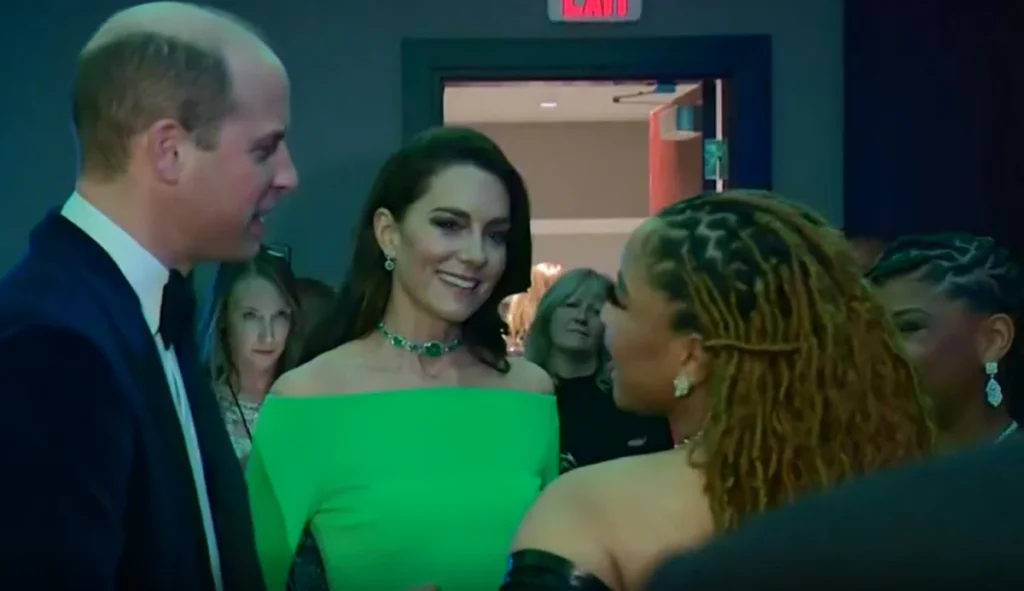
Then, in 2022, the world witnessed the triumphant return of the emerald and diamond choker, adorning the neck of Catherine, the new Princess of Wales. Catherine chose this historically significant jewel for a major public appearance at the Earthshot Awards, an event dedicated to promoting innovative solutions for environmental challenges. Her choice for this occasion was particularly poignant. The ceremony was held on a "green carpet," emphasizing the event’s sustainability theme. Catherine masterfully complemented this ethos by pairing the choker with a rented gown, a deliberate choice that underscored her commitment to eco-conscious fashion and her support for the Earthshot initiative.
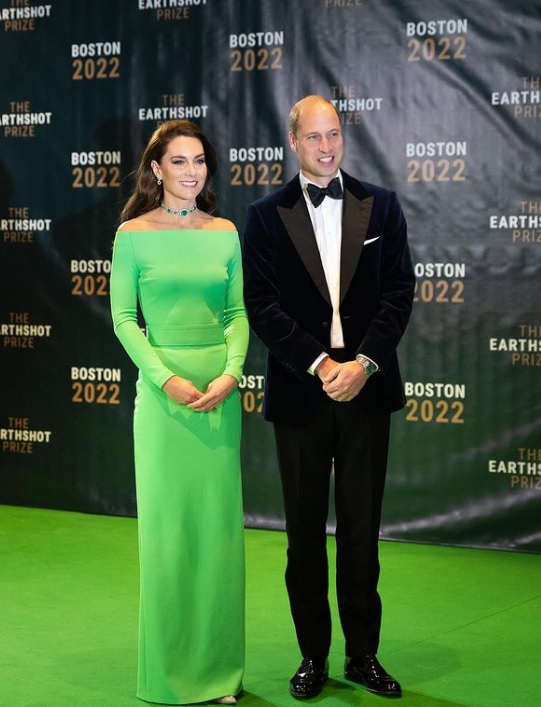
Her decision to wear the choker was not only a nod to its royal lineage but also a subtle statement about the enduring relevance of heritage pieces in a modern context. By selecting a jewel with such a rich history, and styling it with a contemporary, sustainable outfit, she demonstrated a thoughtful approach to her public image, connecting the past with the present and future. This reappearance marked a significant moment, reintroducing the choker to a new generation and highlighting its continued status as a jewel of exceptional beauty and historical importance.
Enduring Significance and Future Implications
The journey of the emerald and diamond choker is more than just a chronicle of a beautiful object. It is a narrative that reflects the evolving role of the monarchy, the changing landscape of fashion, and the enduring power of heritage. Queen Mary’s astute adaptations, Queen Elizabeth II’s careful stewardship, Diana’s daring reinvention, and Catherine’s contemporary styling all contribute to the jewel’s multifaceted legacy.
The choker’s reappearance at a high-profile, environmentally conscious event signifies its continued relevance. It demonstrates how historical pieces can be recontextualized to convey contemporary messages. Catherine’s choice suggests a potential future where royal jewellery is not merely displayed but actively integrated into discussions about sustainability, ethical consumption, and personal expression.
The implications of the Princess of Wales’s choice are far-reaching. It encourages a broader appreciation for the stories behind royal jewels, moving beyond their monetary value to understand their historical and cultural significance. Furthermore, it sets a precedent for how younger royals might engage with their inherited treasures, potentially inspiring a more conscious and creative approach to accessorizing on the global stage.
As the emerald and diamond choker continues its reign, it remains one of the most captivating and celebrated pieces of royal jewellery. Its story is a testament to the enduring allure of precious gems and the remarkable ability of certain objects to transcend time, carrying with them the echoes of queens and princesses, and now, looking towards a future shaped by new values and perspectives. The choker, with its deep green stones and glittering diamonds, is not just a relic of the past but a vibrant symbol of continuity, adaptability, and enduring royal elegance.