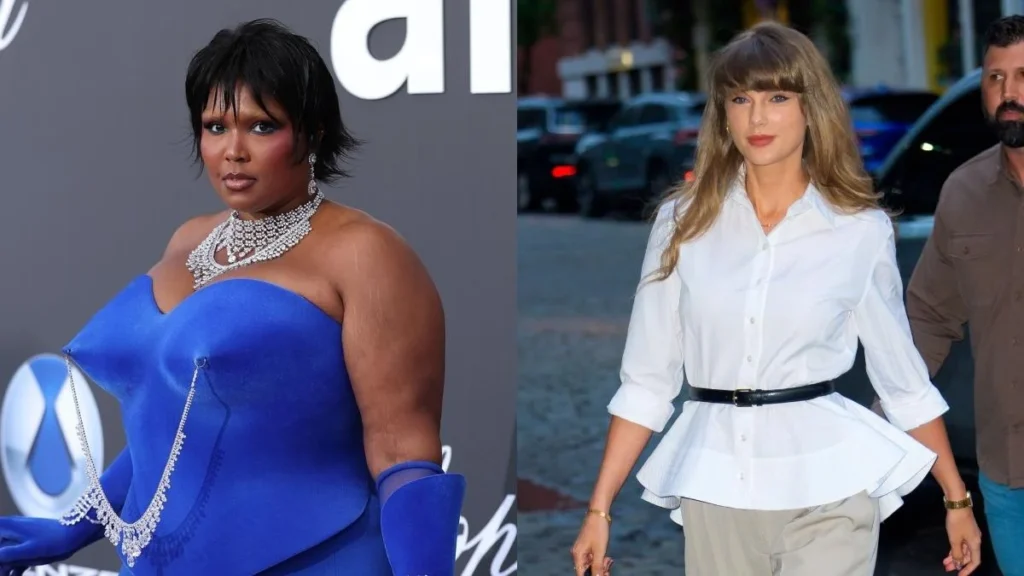

The multi-platinum artist Lizzo has moved to decisively end online speculation regarding her relationship with Taylor Swift after a social media interaction sparked accusations of professional jealousy and "badmouthing." The exchange, which unfolded on the social media platform X, formerly known as Twitter, saw Lizzo defending her character and her history of supporting fellow female artists in the music industry. The incident occurred amidst a period of heightened scrutiny for the rapper and singer, who has recently been vocal about her frustrations with industry dynamics and label promotion strategies.
The controversy began on May 22, 2026, when Lizzo reshared a post from an online user that presented a comparative set of data regarding recent musical releases. The original post featured the caption: “The Life Of A Showgirl + MY FACE HURTS FROM SMILING — 4.005M. ICEMAN + MAID OF HONOUR + HABIBTI — 683k.” Attached to the post was the music video for Lizzo’s single “STFU,” which features Lil Jon and is a standout track from her mixtape, "My Face Still Hurts from Smiling."
Lizzo, seemingly confused by the juxtaposition of these figures and titles, reshared the post with the inquiry, “Can someone explain what this means?” While many users responded by clarifying that the tweet was a comparison of sales and streaming metrics between her recent work and that of Taylor Swift—specifically referencing Swift’s project "The Life of a Showgirl"—one critic took the opportunity to level a personal accusation against the "About Damn Time" singer. The critic responded by stating, “It means all that s*** talking you did about Tay finally caught up to you.”
Lizzo’s Public Rebuttal and Defense of Artistic Integrity
Lizzo did not allow the accusation to go unanswered. On May 23, the artist issued a firm rebuttal, dismissing the claim that she had ever spoken negatively about Swift. “Are you well?” Lizzo began her response. “First of all I have never talked s about Taylor Swift—also while we on the subject I’ve never talked s about any artist. Just because I mention an artist by name does not mean I’m talking s***—grow tf up pls.”
The response quickly went viral, garnering over a million views within hours of its posting. Lizzo’s insistence on her professional conduct highlights a recurring theme in her public life: a commitment to "lifting as she climbs" and a refusal to engage in the "diva rivalries" often manufactured by social media fan bases. The critic who initiated the exchange did not provide any specific evidence or previous instances where Lizzo had allegedly disparaged Swift, leaving the claim unsubstantiated.
A History of Mutual Respect and Public Support
Contrary to the claims made by the critic, the historical record of Lizzo’s public statements reveals a consistent pattern of admiration for Taylor Swift. Industry analysts and fans have noted that Lizzo has frequently utilized her platform to praise Swift’s songwriting and career longevity.
In a notable appearance on the "Genius Verified" series, Lizzo discussed the intricacies of her own creative process and explicitly cited Swift as a point of comparison for high-level artistry. Similarly, during an interview on the nationally syndicated radio show "The Breakfast Club," Lizzo spoke about the work ethic required to maintain a career at the pinnacle of the music industry, again referencing Swift as a standard-bearer for the modern pop era.
Furthermore, Lizzo has been seen publicly enjoying Swift’s work, including attending performances of the "Eras Tour." These instances of public support have long been viewed as evidence of a healthy professional rapport between the two stars, both of whom have navigated the complexities of extreme fame and the pressures of the digital age.
The Context of the "My Face Still Hurts from Smiling" Era
The social media friction comes at a pivotal moment for Lizzo’s career. The mixtape mentioned in the viral post, "My Face Still Hurts from Smiling," represents a stylistic pivot for the artist, leaning further into the hip-hop roots that characterized her early career while maintaining the pop sensibilities that made her a household name. The lead single “STFU,” featuring the high-energy contributions of Lil Jon, has been a central focus of her recent promotional efforts.
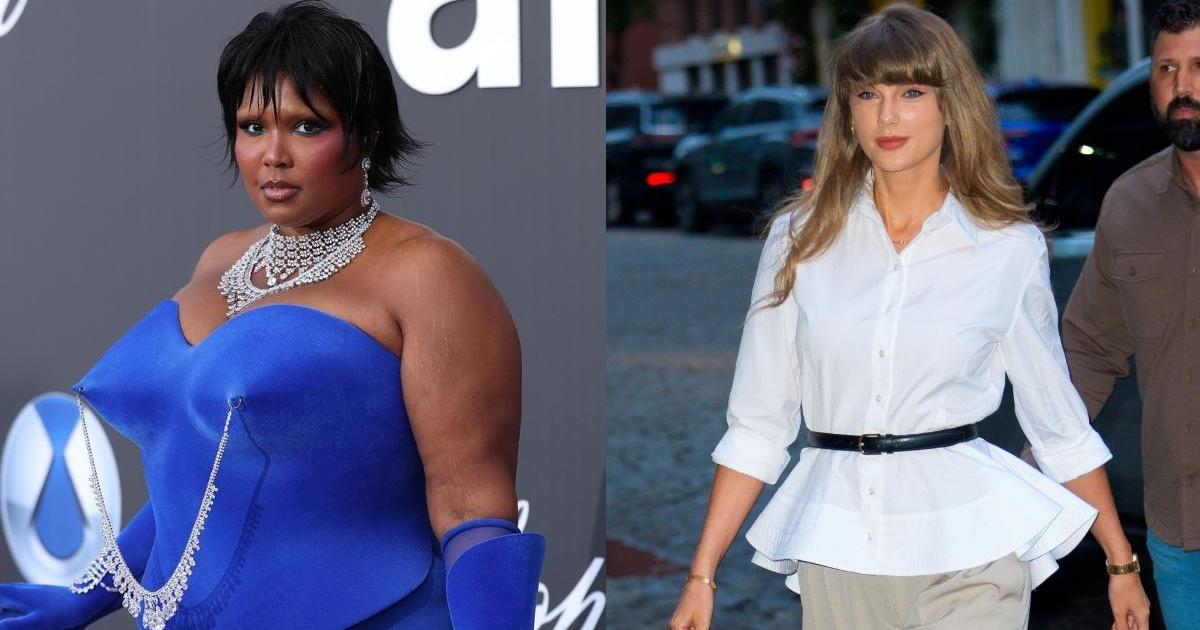
However, these efforts have not been without internal conflict. Recently, Lizzo has been vocal about her dissatisfaction with her label, Atlantic Records. She has publicly criticized the organization for what she perceives as a failure to adequately promote her latest body of work. This internal tension may explain why Lizzo was particularly sensitive to a post comparing her sales figures to those of an industry titan like Taylor Swift. In the current music economy, where chart positions and streaming numbers are often weaponized by "stan" accounts to diminish the achievements of competing artists, Lizzo’s request for clarification was likely an attempt to understand how her work was being framed in the broader cultural conversation.
Chronology of the Social Media Incident
To understand the escalation of this event, a clear timeline of the 48-hour window is essential:
- May 22, Early Afternoon: An X user posts a comparison of streaming/sales data involving "The Life of a Showgirl" (Swift) and "My Face Still Hurts from Smiling" (Lizzo). The post highlights a significant numerical gap (4.005M vs. 683k).
- May 22, Evening: Lizzo reshares the post, asking for an explanation of the context and the data points.
- May 22, Late Evening: The thread becomes a battleground for fans, with one specific user accusing Lizzo of "talking s***" about Swift in the past.
- May 23, Morning: Lizzo issues her definitive statement, denying the claims and asserting that she has never disparaged any fellow artist.
- May 23, Afternoon: Lizzo’s response crosses the one-million-view threshold, sparking a wider discussion about "stan culture" and the misinterpretation of artist interactions.
The Impact of "Stan Culture" on Artist Relations
The incident between Lizzo and the online critic is a microcosm of a larger trend within the music industry: the rise of aggressive fan communities, often referred to as "stans." These groups frequently monitor the social media activity of artists with extreme scrutiny, looking for perceived slights or "shades" that can be used to fuel online narratives of conflict.
In this instance, the mere act of Lizzo asking for clarification on a data-driven post was interpreted as a defensive or aggressive move. This environment creates a challenging landscape for artists who wish to engage directly with their audience. The "Swifties" (Taylor Swift’s fan base) are known for being particularly protective of the singer, and any mention of her name by a peer—regardless of intent—can be treated as a potential provocation.
Lizzo’s plea for the public to "grow up" and understand that "mentioning an artist by name does not mean I’m talking s***" addresses the erosion of nuance in digital discourse. For artists, the inability to speak about their peers or the industry at large without being accused of starting a "feud" can be stifling and detrimental to genuine professional community-building.
Broader Implications for the Music Industry
This social media exchange also highlights the ongoing debate regarding how success is measured in the modern era. The comparison of 4.005 million units to 683,000 units serves as a reminder of the vast disparity in commercial reach between the industry’s most established "juggernauts" and other successful, yet differently positioned, artists.
For Lizzo, the focus remains on the quality of the output and the integrity of her brand. By shutting down the rumors of a rift with Swift, she has attempted to refocus the narrative on her music rather than manufactured drama. However, the incident also underscores the vulnerability of artists who are currently at odds with their record labels. Without the protective shield of a unified promotional machine, artists like Lizzo often find themselves on the front lines of social media defense, managing their own public relations in real-time.
As of this writing, representatives for Taylor Swift have not commented on the exchange. It is common for Swift to remain silent on social media "dust-ups" involving her name, preferring to let her work and her fan base speak for her. Lizzo’s proactive approach, while riskier in terms of potential blowback, aligns with her long-standing persona of transparency and direct communication.
The fallout from this interaction is expected to be minimal in the long term, but it serves as a cautionary tale for how quickly data points can be transformed into personal attacks in the digital age. For now, Lizzo has made her position clear: she is a supporter of her peers, a student of the industry, and an artist who refuses to be cast in a narrative of her own making.