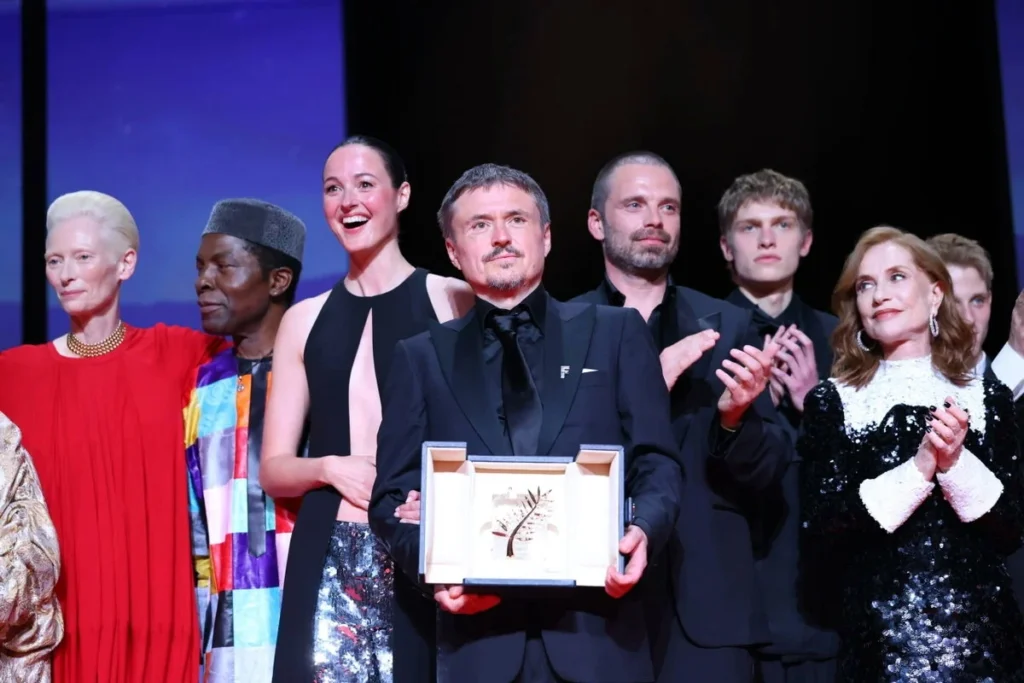

The 79th annual Festival de Cannes concluded this past weekend with its prestigious awards ceremony, crowning Cristian Mungiu’s Norwegian-set drama "Fjord" with the coveted Palme d’Or. This marks Mungiu’s second win of the festival’s highest honor, his first being for "4 Months, 3 Weeks and 2 Days" in 2007, a remarkable achievement that underscores his consistent impact on the international cinematic landscape. The announcement, made during a glittering gala event in Cannes, France, brought to a close two weeks of intense film screenings, critical debates, and industry buzz, revealing a slate of winners that, as is often the case at Cannes, sparked considerable discussion and a spectrum of reactions.
The festival, a cornerstone of the global film calendar since its inception in 1946, is renowned for its discerning jury and its ability to launch films and careers onto the world stage. Each year, filmmakers, actors, critics, and industry professionals converge on the French Riviera, transforming the city into a vibrant hub of cinematic celebration and commerce. The 2026 edition, presided over by acclaimed South Korean director Park Chan-wook, featured a jury comprised of notable figures including Demi Moore, Ruth Negga, Chloë Zhao, and Stellan Skarsgård, tasked with navigating a competitive selection of over 2,000 submitted films. This year’s lineup, as highlighted by the awards, presented a compelling, albeit sometimes divisive, showcase of global filmmaking talent.
Palme d’Or Winner: A Contentious Choice
Cristian Mungiu’s "Fjord," a film reportedly set against the stark and dramatic landscapes of Norway, emerged as the surprise, and for some, controversial, winner of the Palme d’Or. Mungiu, a filmmaker known for his unflinching examinations of complex societal issues and human morality, has once again captured the attention of the festival’s highest jury. His previous Palme d’Or win for "4 Months, 3 Weeks and 2 Days" solidified his reputation as a master storyteller, and the awarding of his second Palme d’Or for "Fjord" positions him among an elite group of directors to achieve such a feat.

The critical reception of "Fjord" appears to be a significant factor in the ensuing debate. While some critics have lauded the film for its artistic merit and thematic depth, others have expressed reservations, leading to a palpable division in opinion. Reports suggest that the film delves into intricate political and social commentary, a characteristic of Mungiu’s work, and the jury’s decision to award him the Palme d’Or has amplified discussions surrounding the film’s message and its potential interpretations. This division, however, is not uncommon at Cannes, where films that provoke strong reactions often garner significant attention. The Palme d’Or, awarded annually to the best film in the main competition, is widely considered one of the most prestigious awards in cinema, carrying substantial weight in terms of international distribution and critical acclaim.
Major Awards Reflecting Diverse Cinematic Voices
Beyond the Palme d’Or, the 2026 Cannes Film Festival recognized a range of cinematic achievements across its various categories. The Grand Prix, the festival’s second most prestigious award, was presented to Andrey Zvyagintsev for his film "Minotaur." Zvyagintsev, a celebrated Russian filmmaker known for his visually stunning and thematically rich works, has consistently garnered acclaim at Cannes, and this award further solidifies his standing. "Minotaur" was reportedly a strong contender for the Palme d’Or, with many critics and industry insiders having predicted it as a frontrunner.
The acting awards also generated significant buzz. Lukas Dhont’s "Coward" saw its two lead actors, Emmanuel Macchia and Valentin Campagne, jointly awarded Best Performance by an Actor. Dhont, who previously garnered international attention for his film "Girl," appears to have delivered another compelling performance-driven drama. Similarly, Ryūsuke Hamaguchi’s "All of a Sudden" (Soudain) was recognized with both lead actresses, Virginie Efira and Tao Okamoto, sharing the Best Performance by an Actress award. Hamaguchi, a director whose films have consistently impressed audiences and critics alike with their emotional depth and nuanced storytelling, receives a significant accolade for his ensemble’s performance.
Other notable awards included the Jury Prize, which went to Valeska Grisebach for "The Dreamed Adventure" (Das Geträumte Abenteuer). The Best Director award was a tie, with Javier Ambrossi and Javier Calvo receiving the honor for "The Black Ball" (La Bola Negra), and Pawel Pawlikowski recognized for "Fatherland" (Vaterland). Emmanuel Marre was awarded Best Screenplay for "A Man of His Time" (Notre Salut). The Camera d’Or, awarded to the best first-time filmmaker, was presented to Marie-Clémentine Dusabejambo for "Ben’imana."

The Un Certain Regard Section: A Platform for Emerging Talent
The Un Certain Regard section, a vital component of the Cannes Film Festival that showcases a more daring and unconventional selection of films, also announced its winners. Sandra Wollner’s "Everytime" took home the main Un Certain Regard Prize. The Jury Prize in this section was awarded to Abinash Bikram Shah for "Elephants in the Fog," and Louis Clichy received a Special Jury Prize for "Iron Boy." The acting awards in Un Certain Regard recognized Marina de Tavira, Daniela Marín Navarro, and Mariangel Villegas for their performances in "Forever Your Maternal Animal" (Siempre Soy Tu Animal Materno) for Best Actress, and Bradley Fiomona Dembeasset for Best Actor in "Congo Boy."
Historical Context and Festival Significance
The Cannes Film Festival, established in 1946 as a post-war initiative to foster cultural exchange and artistic freedom, has grown to become the most prestigious film festival in the world. Its selection process is highly competitive, with films vying for a spot in the official selection, which includes the main competition, Un Certain Regard, Directors’ Fortnight, and Critics’ Week. The Palme d’Or, first awarded in 1955, has historically recognized films that have gone on to achieve significant critical and commercial success, often shaping the trajectory of international cinema.
The festival serves not only as a platform for artistic expression but also as a crucial marketplace for film distribution and acquisition. Industry professionals from around the globe attend to discover new talent, secure distribution rights, and forge partnerships. The high visibility afforded by a Cannes award can significantly impact a film’s future, influencing its release strategy, critical reception, and potential for awards season success.

Analysis of the 2026 Awards and Broader Implications
The 2026 Cannes awards reflect a festival that, as in previous years, embraced a diverse range of cinematic styles and thematic concerns. The decision to award the Palme d’Or to Cristian Mungiu’s "Fjord," amidst a reportedly divided critical reception, highlights Cannes’ tradition of rewarding films that engage in significant artistic and intellectual discourse, even if they prove polarizing. This choice, for some, signifies a jury that prioritized a director’s established artistic voice and the film’s potential for generating deeper societal conversations.
The strong showing for films like "Minotaur," "Coward," and "All of a Sudden" underscores the continued strength of international cinema and the festival’s commitment to showcasing compelling narratives from around the world. The dual acting awards for "Coward" and "All of a Sudden" are particularly noteworthy, recognizing the power of performance and the collaborative nature of filmmaking.
The awards ceremony at Cannes is more than just an announcement of winners; it is a statement about the current state of global cinema and the values championed by the festival. While the specific choices of any jury will always be subject to debate, the overall impact of the Cannes awards is undeniable. They draw attention to films that might otherwise struggle to find a wide audience, sparking crucial conversations about art, culture, and the human condition. The 2026 edition, with its notable Palme d’Or winner and its recognition of diverse talents, is likely to continue influencing cinematic discourse and industry trends in the year to come, reinforcing Cannes’ enduring legacy as a beacon of cinematic excellence. The continued success of filmmakers like Mungiu and the emergence of new voices within the official selection demonstrate the festival’s ongoing relevance in shaping the future of film.