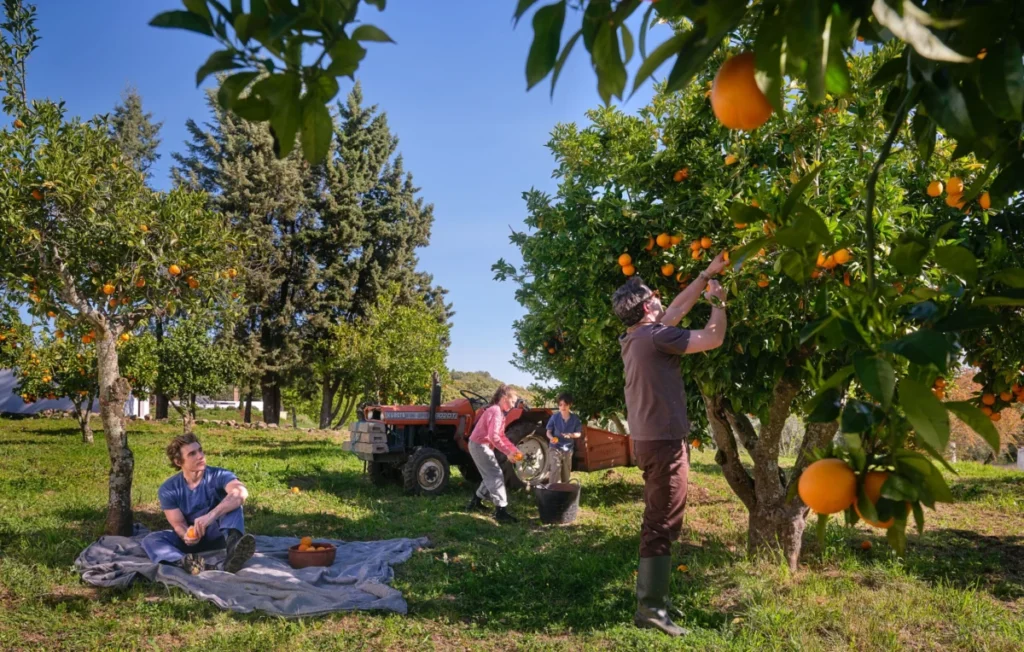

On an expansive 18-acre estate in the Alentejo region of Portugal, the celebrated design duo Nate Berkus and Jeremiah Brent have completed a five-year restoration of a centuries-old farm, marking a significant departure from their high-profile lives in New York City. The property, situated in a remote stretch of rugged landscape less than 30 minutes from the Spanish border, represents a profound shift toward slow living and ancestral reconnection for the AD100 designers. While the couple is synonymous with the polished urban aesthetics of Greenwich Village and the coastal sophistication of Montauk, their Alentejo homestead—a complex of whitewashed ruins, olive groves, and antique aqueducts—is a deeply personal project that prioritizes agricultural stewardship over metropolitan glamour.
The Vision: A Legacy Rooted in Ancestral Heritage
The decision to establish a permanent footprint in Portugal was driven by a combination of familial legacy and the pursuit of a more balanced lifestyle. For Jeremiah Brent, the move was a tribute to his late grandmother, Arline, a Portuguese immigrant who exerted a powerful influence on his upbringing in California’s Central Valley. Brent, who bears a hummingbird tattoo in her honor, describes the project as a fulfillment of a generational dream. His mother, Gwen, a former law enforcement officer and paralegal, had long expressed a desire to retire to her ancestral homeland. This project allowed Brent to facilitate that transition, converting an on-site bakery into a permanent residence for his mother and her husband.
The impetus for the specific location came after a visit to friend and art dealer André Viana, who had relocated to the Alentejo from New York. Observing the sense of equilibrium Viana had found in the rural landscape, the Brent-Berkuses were inspired to seek a similar sanctuary. The Alentejo, often referred to as the "Tuscany of Portugal," is the country’s largest region, characterized by its cork forests, rolling plains, and traditional agricultural practices. It has increasingly become a destination for international figures seeking privacy and a connection to the land, away from the more commercialized coastal regions of the Algarve.
Chronology of Restoration: From Ruins to a Functioning Farm
The timeline of the Alentejo project spans nearly five years, beginning with the acquisition of a neglected estate that once belonged to a prominent family of landowners. The property was accessed via a two-mile entry road leading to a cluster of ruins that functioned as a self-contained village. The site included a crumbling chapel, a traditional bread bakery, and a two-story farmhouse where the original inhabitants lived above the livestock stables.
The renovation process was marked by an initial period of significant challenge. Brent and Berkus have candidly discussed the "naivety" they felt during the first two years of the project. Accustomed to the rapid pace and specific structural standards of American luxury design, they found themselves overwhelmed by the technical complexities of restoring ancient stone structures and managing the estate’s complex water systems.

To overcome these hurdles, the couple intentionally pivoted away from their established design instincts, choosing instead to rely on local expertise. They collaborated with Portuguese architect Cristina Guerra and landscape architect Joana Bizarro, both of whom possess specialized knowledge in regional building methods and Alentejo’s specific environmental conditions. Before interior decoration began, the focus was placed on the infrastructure of the land: repairing antique aqueducts, analyzing soil quality for vegetable cultivation, and learning the nuances of tending sheep and maintaining citrus orchards.
Architectural and Interior Integration
The resulting homestead is a study in "maximalist comfort," blending the couple’s signature curated style with the raw materials of the Alentejo. The primary residence retains much of its original character, with granite fireplaces and whitewashed walls serving as a backdrop for a global collection of art and furniture.
Key design elements include:
- Repurposed Infrastructure: A former water tank was reimagined as a checkerboard marble swimming pool, maintaining the utilitarian history of the site while adding a contemporary luxury element.
- Heritage Furniture: The home features a mix of items inherited with the property, such as kitchen chairs by French modernist Robert Mallet-Stevens and an antique hunting scene tapestry, alongside pieces from European auctions and the couple’s own furniture lines.
- Local Materiality: The use of Portuguese ceramics and regional textiles ensures the home remains grounded in its geographical context.
- The Art Studio: A separate building was restored to serve as a creative space for the family, specifically utilized by their daughter, Poppy, and visiting artists.
The estate is designed to accommodate the family for up to four months of the year, providing a stark contrast to their "go, go, go" lifestyle in New York. The daily routine on the farm involves harvesting Laranja-da-Bahia oranges, tending to French lavender fields, and managing the 18 acres of land from a vintage orange Kubota tractor.
Regional Context: The Rising Appeal of Rural Portugal
The Brent-Berkus project is part of a broader trend of high-net-worth individuals investing in Portugal’s interior regions. According to data from the Portuguese National Statistics Institute (INE), the Alentejo has seen a steady increase in foreign investment over the last decade, driven by the country’s favorable residency programs and the global post-pandemic shift toward "slow living."
Portugal’s appeal to American expatriates and investors has surged, with the U.S. population in Portugal rising by approximately 45% between 2021 and 2022. While Lisbon and Porto remain the primary hubs for relocation, the Alentejo offers a unique value proposition: vast tracts of land and the opportunity for large-scale architectural preservation projects. For figures like Berkus and Brent, whose professional lives are centered on aesthetic perfection and media visibility, the Alentejo provides a rare "private affair" where the focus shifts from being camera-ready to being land-focused.

Broader Implications and Design Philosophy
The completion of this homestead signals a maturation of the Brent-Berkus brand. Nate Berkus, who rose to international fame through his appearances on The Oprah Winfrey Show, and Jeremiah Brent, who recently concluded a tenure on Queer Eye, have built careers on the idea that home should be a reflection of one’s personal journey. By documenting the Alentejo project, they are advocating for a design philosophy that prioritizes history, family legacy, and environmental integration over trend-driven renovation.
Industry analysts suggest that the "homestead" trend among celebrity designers reflects a shift in the luxury market toward "quiet luxury" and sustainability. The emphasis on repairing aqueducts and learning to tend sheep suggests that the value of a property is increasingly tied to its utility and its connection to nature, rather than just its square footage or its zip code.
Writer Michael Hainey, a friend of the family who has visited the estate, noted that the project’s success lies in its ability to bring a sense of "magic" back to a forgotten site. He observed that the restoration has not only preserved the physical structures but has also reinvigorated the local community through the couple’s reliance on village craftsmen and regional architects.
Conclusion: A New Chapter in Alentejo
As Nate Berkus and Jeremiah Brent settle into their Portuguese retreat, the project stands as a testament to the power of ancestral connection and the importance of stepping outside one’s professional comfort zone. For Brent, the farm is a way to honor his grandmother Arline; for Berkus, it is an realization of a lifelong draw to European history. For their children, Oskar and Poppy, it is an 18-acre classroom where the lessons are found in the orange groves, the lavender fields, and the quiet nights under the Alentejo stars.
The project reinforces the idea that the most significant homes are those that demand the most of their owners—not just financially, but emotionally and physically. By choosing to steward a piece of Portuguese history rather than simply building a new villa, Berkus and Brent have created a legacy that transcends their status as design icons, contributing instead to the ongoing story of the Alentejo landscape. As the family prepares to spend their summers and school breaks in the remote hills near the Spanish border, they have successfully transformed a cluster of ruins into a sanctuary that is, in Brent’s words, "the first time I’ve ever felt so protective about a place."