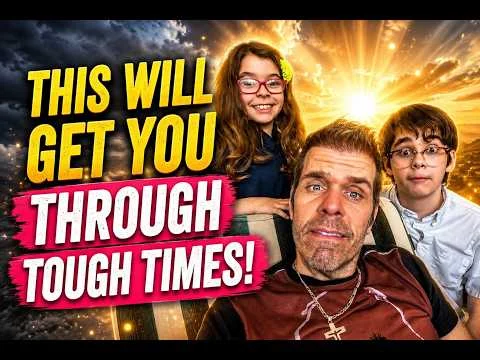

In an unexpected but significant pivot from his long-established persona as a prominent celebrity gossip blogger, Mario Armando Lavandeira Jr., widely known as Perez Hilton, has publicly embarked on a deeply personal spiritual journey, committing to read the Bible from start to finish. This exploration, driven by a quest for hope and meaning, is not a solitary endeavor but one he is actively sharing with his children, marking a profound evolution in his public narrative. The announcement, disseminated via his digital platforms on May 21, 2026, at 15:13 PDT, centers around a YouTube series titled "When Life Gets Hard," where Hilton delves into scriptural teachings, poses questions, and articulates his findings. The core message emanating from this new venture is clear: "Faith will get you through!"
The Evolution of a Digital Icon: From Gossip to Gospel
Perez Hilton rose to prominence in the early 2000s, establishing himself as a formidable, often controversial, voice in the celebrity news landscape. His website, PerezHilton.com, became synonymous with unfiltered commentary, paparazzi photos, and a no-holds-barred approach to Hollywood gossip. Over two decades, his brand became a fixture in pop culture, influencing celebrity narratives and often shaping public opinion. However, like many public figures, Hilton has experienced shifts in his personal life and professional focus. This latest public declaration of faith represents perhaps the most dramatic and introspective redefinition of his public identity to date. It signals a move away from the often-superficial world of celebrity culture towards a more profound engagement with spirituality and existential questions. This shift is not entirely unprecedented; many public figures, after prolonged periods in the public eye, often seek deeper meaning or a more grounded existence, frequently finding solace in faith or philanthropy. For Hilton, whose career was built on observing and critiquing the lives of others, turning the lens inward to explore his own spiritual landscape marks a compelling new chapter.
"When Life Gets Hard": A Public Search for Solace
The cornerstone of Hilton’s new spiritual outreach is his YouTube series, "When Life Gets Hard." The title itself suggests a response to personal or societal challenges, a universal sentiment that resonates deeply with audiences navigating an increasingly complex world. In the series, Hilton is committed to reading the Bible chronologically, a formidable undertaking that promises an in-depth engagement with religious texts. His stated intention to "ask questions, find hope, and share it all with his children" underscores the personal and pedagogical dimensions of this project. This approach transforms what could be a private spiritual quest into an open dialogue, inviting viewers to witness his process of discovery and potentially embark on their own. By involving his children, Hilton also frames this journey as an intergenerational pursuit of values and understanding, a testament to the enduring power of faith in family life. This method allows for a more relatable and less dogmatic presentation of religious material, focusing on the practical application of faith in overcoming adversity rather than purely theological discourse. The series is positioned as a guide for navigating life’s inevitable difficulties, offering a perspective rooted in spiritual resilience.
The Broader Context of Celebrity and Spirituality
Perez Hilton’s public embrace of faith aligns with a broader trend of celebrities and public figures openly discussing their spiritual journeys. In recent years, an increasing number of prominent individuals across various industries, from music and film to sports and business, have shared their experiences with faith, drawing significant public attention. Figures like Justin Bieber, Kanye West, and Chris Pratt have been vocal about their Christian faith, influencing millions of followers. This phenomenon highlights the substantial impact celebrities can have on public discourse, extending beyond entertainment into areas of morality, ethics, and spirituality. According to a 2022 Pew Research Center study, while religious affiliation in the U.S. has seen some decline, a significant portion of the population still identifies with a religious group, and interest in spirituality remains high across demographics. Celebrities, by virtue of their platforms, can either normalize or re-energize discussions around faith, making it accessible to audiences who might not typically engage with traditional religious institutions. Hilton’s initiative, therefore, taps into a pre-existing cultural appetite for authentic spiritual narratives, especially those presented through accessible digital formats.
Digital Platforms as New Arenas for Spiritual Discourse
The choice of YouTube as the primary platform for "When Life Gets Hard" is strategically significant. In an era where traditional religious attendance has faced challenges, digital platforms have emerged as powerful new arenas for spiritual exploration and community building. YouTube, with its vast global reach and interactive features, allows for direct engagement between content creators and their audience, fostering a sense of shared experience. This phenomenon, often termed "digital evangelism" or "online faith communities," has seen exponential growth, particularly accelerated by global events that limited in-person gatherings. Individuals seeking spiritual guidance or community can find it through podcasts, livestreams, and video series, often curated by figures who may not be traditional religious leaders. Hilton’s pivot to this format exemplifies how personal spiritual journeys can be leveraged to connect with a broad audience, offering an alternative or supplementary source of spiritual content. The comments section of such videos often transforms into a forum for discussion, debate, and mutual support, creating a virtual congregation that transcends geographical boundaries and traditional denominational lines.
Inferred Reactions and Potential Impact
The announcement of Perez Hilton’s spiritual journey is likely to elicit a spectrum of reactions from his long-standing audience, new followers, and the broader public. Many loyal fans, particularly those who have followed his personal evolution, may express support and admiration for his authenticity and willingness to explore profound themes. Others, accustomed to his more irreverent style, might express surprise or even skepticism, questioning the sincerity or longevity of this new direction. From religious communities, responses could range from cautious welcome and appreciation for his public endorsement of faith, to critical scrutiny regarding his past public persona. Leaders within the various Christian denominations Hilton lists – Catholic, Baptist, Protestant, Lutheran, Episcopalian, Pentecostal, Anglican, Christian, Presbyterian, Methodist, Eastern Orthodox, and Mormon – might view his engagement as an opportunity to reach a broader, often secular, audience. The inclusion of "Yahweh" and "Yeshua" alongside "God" and "Jesus" also signals an intent for broad appeal and an exploration of theological depth, potentially drawing interest from diverse spiritual seekers. Media analysts will likely observe how this shift impacts his brand, audience engagement, and overall influence. It could potentially alienate some segments of his traditional audience while attracting new demographics interested in spiritual content.
The Enduring Relevance of the Bible and Universal Search for Hope
The Bible, the central text of Christianity, holds unparalleled historical, cultural, and spiritual significance. Translated into more languages than any other book, it has shaped civilizations, inspired countless works of art, literature, and music, and continues to be a source of moral and ethical guidance for billions worldwide. Its narratives of creation, redemption, struggle, and triumph resonate across cultures and generations. Perez Hilton’s decision to undertake a full reading of this complex text highlights its enduring power to attract individuals seeking answers to life’s fundamental questions. The themes he emphasizes – faith, hope, and resilience in the face of hardship – are universal human experiences. In an age marked by uncertainty, social division, and existential anxieties, the search for meaning and solace often leads individuals to spiritual texts and practices. Hilton’s journey, therefore, taps into a collective human yearning for something greater than oneself, a framework for understanding suffering, and a source of strength to navigate life’s challenges. His public exploration serves as a reminder that the quest for spiritual grounding is a deeply personal yet universally shared endeavor.
The Significance of May 21, 2026: A Forward-Looking Perspective
The publication date of May 21, 2026, positions this article as a contemporary report on an ongoing or recently commenced spiritual initiative by Perez Hilton. This date could signify a new phase in his series, a significant milestone, or the official launch of a more formalized spiritual outreach. Given the nature of digital content, it is plausible that this date marks a strategic re-launch or a moment when the project gains significant momentum. It implies that Hilton’s spiritual journey is not a fleeting interest but a sustained commitment, potentially evolving over time with new insights and expanded content. For readers encountering this information, it frames the spiritual journey as a current and evolving narrative, inviting them to engage with his latest contributions to the discussion around faith and personal growth. The forward-looking date adds a layer of anticipation, suggesting that this spiritual chapter in Perez Hilton’s life is unfolding in real-time, offering continuous opportunities for public engagement and reflection.
Broader Implications for Media, Celebrity Culture, and Spirituality
Perez Hilton’s public exploration of faith carries several broader implications. Firstly, it challenges the traditional boundaries between entertainment media and spiritual discourse. By using a platform built on celebrity gossip to discuss deeply personal spiritual matters, he blurs the lines, potentially normalizing such conversations in mainstream contexts. Secondly, it underscores the evolving nature of celebrity influence. Public figures are increasingly seen not just as entertainers but as opinion leaders and cultural commentators, whose personal choices can inspire or provoke wide-ranging discussions. Finally, it highlights the adaptability and resilience of spirituality itself. In a rapidly changing world, faith continues to find new expressions and avenues for dissemination, leveraging modern technologies to reach diverse audiences. Hilton’s journey is a testament to the enduring human need for faith, hope, and community, and his willingness to share this journey openly provides a unique lens through which to observe the intersection of celebrity, media, and the timeless pursuit of spiritual meaning. His project invites both introspection and dialogue, reinforcing the idea that even in the most unexpected corners of the internet, profound personal transformations can inspire collective reflection.