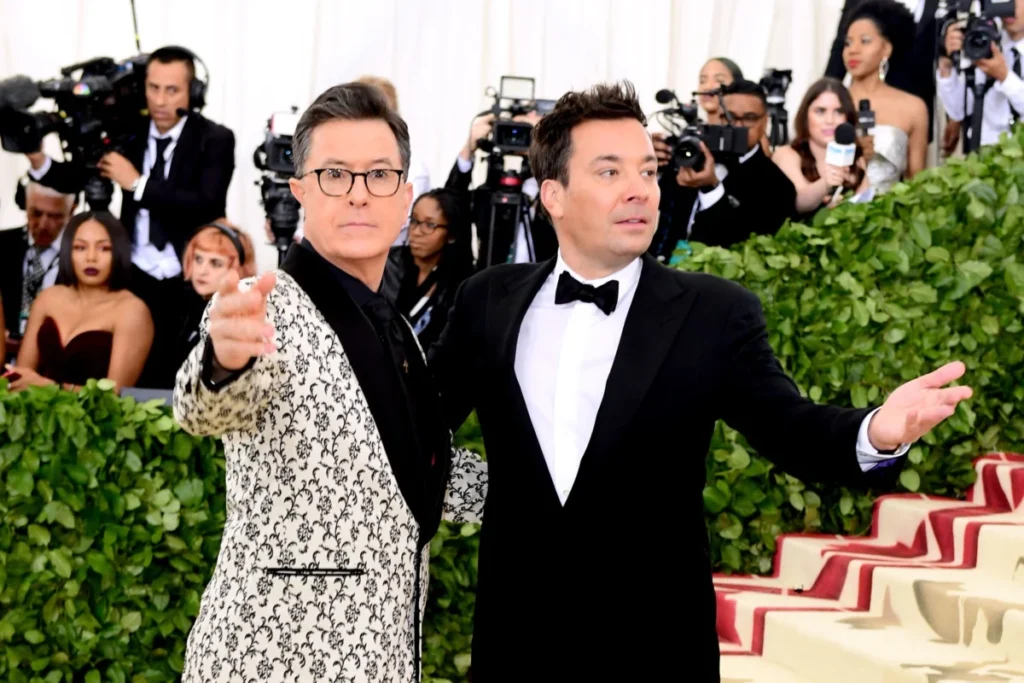

Stephen Colbert bid an emotional farewell to viewers on the final episode of his long-running reign on CBS’s The Late Show, marking the end of an eleven-year era that saw the program transform into a significant voice in American political and cultural discourse. From the historic Ed Sullivan Theatre in New York City, the 62-year-old host characterized his program as a "joy machine," a testament to the resilient spirit of its production and its dedicated audience. The star-studded farewell, culminating in a poignant performance by Sir Paul McCartney, underscored the show’s profound impact and the complex circumstances surrounding its unexpected cancellation.
A Farewell Filled with Joy and Reflection
The finale, broadcast to millions, commenced with Colbert’s heartfelt tribute to his audience and crew. He articulated his philosophy that The Late Show‘s purpose extended beyond merely recapping the news; it was about "feeling the news" alongside its viewers. This collaborative emotional experience, he explained, was central to the show’s identity, even amidst the relentless grind of daily television production. "We call [the show] the joy machine, because to do this many shows, it has to be a machine. But the thing is, if you choose to do it with joy, it doesn’t hurt as much when your fingers get caught in the gears," Colbert remarked, a statement that resonated with the evident camaraderie among his team. He further emphasized the deep bonds forged behind the scenes: "I cannot adequately explain to you what the people who work here have done for each other and how much we mean to each other." This opening sentiment set a reflective yet celebratory tone for the evening, acknowledging the immense effort and personal investment that defined The Late Show‘s run.
Following the initial tribute, the show seamlessly transitioned into its familiar format, delivering a nightly monologue replete with timely jokes that touched on contemporary issues like hantavirus and dancing robots, alongside characteristic self-deprecating humor about his own uncertain professional future. The opening segment was peppered with comedic cameos from notable actors including Paul Rudd, Bryan Cranston of Breaking Bad fame, and Mean Girls actor Tim Meadows. Each humorously "stormed out" upon realizing they were not slated as the evening’s ultimate guest, a running gag that lightened the somber undertones of the finale. Colbert, ever the quick wit, quipped about his post-show plans, "A lot of people have been asking me what I plan to do after tonight, and the answer is drugs." When met with an audible boo from the studio audience, signifying their disappointment over the cancellation, he swiftly added, "No, no, we were lucky enough to be here for the last 11 years. You can’t take this for granted." This exchange perfectly encapsulated Colbert’s ability to blend humor with genuine gratitude, acknowledging the bittersweet nature of the occasion.
Star-Studded Goodbyes and Historic Echoes
The evening’s emotional crescendo arrived with Sir Paul McCartney, the final featured guest. McCartney presented Colbert with a framed photograph of The Beatles, a poignant gift that also served as a bridge to the theatre’s storied past. Reflecting on The Beatles’ iconic 1964 appearances at the very same Ed Sullivan Theatre, McCartney mused on America’s identity during that transformative period: "America was just the land of the free, the greatest democracy. Yes, that was what it was." He then added, with a hopeful yet slightly uncertain tone, "That’s what it still is, hopefully." The legendary musician later returned to the stage, joined by Colbert, former band-leader Jon Batiste, and the entire crew, as they danced through a spirited rendition of The Beatles’ "Hello, Goodbye," transforming the farewell into a joyful, communal celebration. This collaborative performance served as a fitting end, encapsulating the show’s spirit of unity and shared experience. Other notable figures who made appearances throughout the final week and the finale itself included fellow late-night hosts Jimmy Kimmel, Seth Meyers, John Oliver, and Jimmy Fallon – members of the "Strike Force Five" podcast formed during the 2023 Hollywood writers’ strike, symbolizing a unique camaraderie within the competitive late-night landscape. Astrophysicist Neil deGrasse Tyson and Colbert’s mentor, Jon Stewart, also contributed to the celebratory send-off, further highlighting Colbert’s wide-ranging influence and connections.
The End of an Era: Colbert’s Legacy on The Late Show
Stephen Colbert took the reins of The Late Show in 2015, succeeding the iconic David Letterman, who had hosted the program for 22 years. Colbert’s transition from his highly successful, satirical persona on The Colbert Report to a more authentic, yet still politically engaged, version of himself on The Late Show was a significant undertaking. On The Colbert Report (2005-2014), Colbert perfected a character that was a caricature of a conservative pundit, using irony and satire to dissect American politics and media. This critically acclaimed show earned him multiple Emmy Awards and established him as a master of political comedy.
When he moved to The Late Show, the expectations were immense. He faced the challenge of maintaining the prestige of a network flagship program while forging his own distinct identity. Colbert’s tenure coincided with one of the most tumultuous periods in recent American political history, particularly the 2016 presidential election and the subsequent Trump administration. His show quickly became a primary late-night destination for nuanced, often impassioned, political commentary. While maintaining the traditional late-night format of monologues, celebrity interviews, and musical guests, Colbert infused The Late Show with a deeper engagement with current events, often shedding his comedic facade to deliver heartfelt monologues on serious national issues.
His ability to pivot between sharp political satire and genuine emotional resonance distinguished his approach. The Late Show under Colbert saw a regular rotation of high-profile political guests, including sitting presidents Barack Obama and Joe Biden, and even a memorable 2015 appearance by Donald Trump during his initial presidential campaign. This political focus not only resonated with a significant portion of the audience but also frequently placed The Late Show at the forefront of the late-night ratings, often surpassing long-time rivals. For instance, in the 2017-2018 television season, The Late Show with Stephen Colbert consistently led in total viewership, a position it frequently held in subsequent years, drawing an average of over 3 million viewers per night during its peak. This success was a testament to Colbert’s unique blend of wit, sincerity, and timely political engagement. His mentor, Jon Stewart, who appeared on the show in its final week, paid tribute to Colbert’s "epic tenure" with an Instagram throwback, underscoring the profound respect and admiration within the comedy community for his accomplishments.
The Ed Sullivan Theatre: A Historic Stage
The Ed Sullivan Theatre itself played a significant role in The Late Show‘s identity. A venue steeped in entertainment history, it famously hosted The Ed Sullivan Show for decades, becoming synonymous with landmark cultural moments like The Beatles’ aforementioned American debut. The theatre’s grandeur and its legacy lent an added layer of gravitas to Colbert’s program, connecting it to a continuum of American popular culture. This historical backdrop further amplified the significance of McCartney’s presence, bridging eras of entertainment within the same iconic space.

Behind the Curtain: The Financial Realities of Network Television
The announcement of The Late Show‘s cancellation by CBS and its parent company, Paramount, in July 2025, sent shockwaves through the industry. The decision was unequivocally described as "purely financial," citing significant losses of up to $50 million (approximately £37 million). This figure, while substantial for a single program, must be viewed within the broader context of the evolving media landscape. Traditional linear television, including network broadcasting, has been grappling with declining viewership for years, as audiences migrate to streaming platforms and on-demand content. This shift has led to reduced advertising revenues for conventional broadcasters, making high-budget productions like late-night talk shows increasingly difficult to sustain, even popular ones.
Industry analysts noted that while The Late Show performed well in ratings, particularly in its target demographics, the cost of producing a daily, live-to-tape program with a full band, celebrity guests, and an extensive writing and production staff is considerable. The reported $50 million loss likely reflects the cumulative financial strain on Paramount Global, which has been undergoing significant restructuring efforts to adapt to the competitive streaming wars. The company, like many legacy media conglomerates, has invested heavily in its own streaming services (e.g., Paramount+) to compete with giants like Netflix and Disney+, often at the expense of its traditional broadcast divisions. This strategic pivot requires substantial capital, and shows, even successful ones, that don’t directly contribute to streaming subscriber growth or that incur significant losses, become vulnerable.
A Controversial Decision: Merger, Politics, and Public Outcry
The timing of the cancellation announcement sparked immediate and intense backlash from fans and critics alike. Many questioned the "purely financial" explanation, speculating on whether the decision was influenced by other corporate and political considerations. The announcement came just days after Colbert – a frequent and vocal critic of former US President Donald Trump – had publicly criticized Paramount for its $16 million (approximately £11.9 million) settlement with Trump. This settlement stemmed from claims that the CBS news program 60 Minutes deceptively edited a 2024 interview with Vice President Kamala Harris. Colbert’s critique of his parent company on air was seen by some as an act of defiance, leading to speculation that the cancellation might have been, at least in part, a punitive measure or a move to avoid future corporate embarrassment.
Furthermore, the cancellation coincided with Paramount’s active pursuit of regulatory approval from the Federal Communications Commission (FCC) for a proposed merger with Skydance Media. This high-stakes merger, valued at over $8 billion, would significantly reshape Paramount’s future. Critics argued that silencing a prominent voice like Colbert, especially one critical of corporate decisions and politically influential figures, could be perceived as an attempt to smooth over potential regulatory hurdles or avoid any content that might complicate the merger process. A company statement from Paramount, issued to quell these rumors, explicitly stated: "It is not related in any way to the show’s performance, content or other matters happening at Paramount." Despite this assurance, the confluence of events fueled public skepticism, highlighting the intricate web of finance, politics, and content creation in contemporary media. The public outcry also underscored the deep connection viewers felt with Colbert and his show, viewing it as more than just entertainment but as a trusted voice in a turbulent world.
The Broader Landscape of Late-Night Television
The conclusion of The Late Show with Stephen Colbert also prompts a broader reflection on the state and future of late-night television. Once a dominant force in American entertainment and cultural commentary, the genre has faced increasing fragmentation of its audience. The rise of digital platforms means that clips of monologues and interviews often go viral online, but fewer viewers are tuning into the full broadcast at its traditional late-night hour. This shift impacts advertising revenue and the overall viability of the format.
Colbert’s tenure was characterized by a distinct political leaning, a trend common across many late-night shows in recent years. Hosts like Jimmy Kimmel, Seth Meyers, John Oliver, and Trevor Noah (during his time on The Daily Show) have all engaged deeply with politics, often reflecting the progressive viewpoints of their predominantly younger, urban audiences. This has, at times, alienated conservative viewers but solidified a loyal base among others. The camaraderie among these hosts, exemplified by their "Strike Force Five" podcast during the 2023 Hollywood writers’ strike, also highlighted a sense of shared purpose and collective navigation of a challenging industry. The strike itself, which lasted for several months, severely impacted late-night production, revealing the fragility of the live-to-tape model and the essential role of writers in the daily churn of content.
Industry Reactions and Future Implications
The cancellation of The Late Show is likely to have multifaceted implications for CBS and the broader late-night landscape. For CBS, it frees up a prime-time slot and significant budget, which can be reallocated to new programming ventures, potentially with lower production costs or greater synergy with their streaming strategy. The challenge will be to find a replacement that can capture a similar audience share without incurring comparable losses. For the late-night genre, it signals a potential tightening of belts across the board, with networks scrutinizing the financial viability of their flagship programs more closely than ever. It also raises questions about the willingness of media conglomerates to tolerate politically outspoken hosts, particularly when corporate interests, such as mergers, are on the line.
Stephen Colbert’s eleven years on The Late Show cemented his place as one of the most significant voices in late-night history. He navigated political turmoil, corporate pressures, and evolving audience habits with intelligence, wit, and a deeply felt sense of purpose. While the "joy machine" may have powered down, its impact on political discourse, comedic artistry, and the very fabric of American television will undoubtedly endure, leaving a substantial legacy for future generations of hosts and viewers alike. The future of the Ed Sullivan Theatre, and indeed the future of network late-night, remains to be seen, but Colbert’s final bow marks a definitive turning point in this ever-changing media landscape.