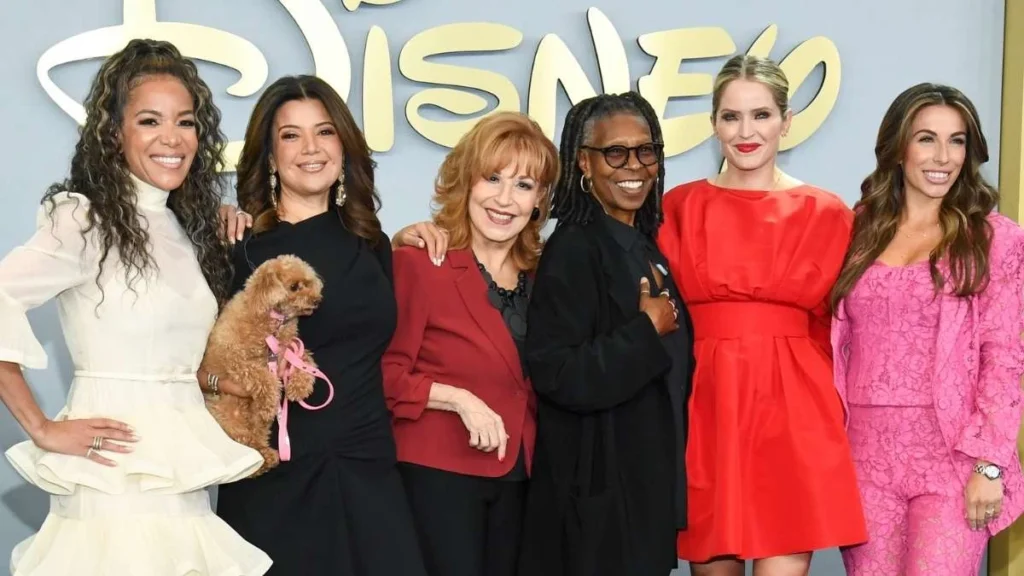

The long-standing tensions surrounding political collaborations and healthcare policy reached a boiling point during the May 19, 2026, broadcast of ABC’s The View, as veteran co-host Joy Behar voiced sharp criticism of businessman Mark Cuban and her own colleagues. The debate centered on TrumpRx, a newly launched digital platform spearheaded by President Donald Trump’s administration that aims to lower the costs of generic medications through strategic partnerships with private-sector entities. While some members of the panel argued for the practical benefits of reduced drug prices, Behar characterized the initiative as a dangerous "mistake" and labeled her co-hosts "naive" for endorsing a program associated with the Trump brand.
The controversy began when Mark Cuban, the billionaire founder of the Cost Plus Drug Company, appeared at the White House to signal his company’s involvement with the TrumpRx initiative. The platform is designed to aggregate various private-sector drug-saving programs into a single, government-endorsed portal, theoretically allowing consumers to bypass traditional pharmacy benefit managers (PBMs) to find the lowest possible prices for essential prescriptions. Despite Cuban’s reputation as a disruptor in the pharmaceutical industry, Behar remained unconvinced of the partnership’s integrity, invoking the old adage, "If you lie down with dogs, you wake up with fleas."
The Debate on The View: A House Divided
The discussion on The View highlighted a significant ideological rift among the co-hosts regarding how to approach policy successes when they are tied to controversial political figures. Behar, 83, did not mince words regarding her distrust of the President’s involvement in healthcare. "I like Mark Cuban. I’ve always liked him, but this is a mistake," Behar stated during the broadcast. Her primary concern appeared to be the branding of the initiative, suggesting that the President’s history with business ventures should serve as a warning. "Once Trump puts his name on prescriptions, we’re all going to die," she added, utilizing her trademark hyperbole to underscore her skepticism.
In a detailed rebuttal, Behar listed a series of the President’s past business endeavors that ended in financial or legal turmoil. She cited the Trump Shuttle, Trump Vodka, Trump University, and several Atlantic City casinos as evidence that any venture bearing the "Trump" name is destined for failure. For Behar, the association with the President outweighed any potential economic relief the program might provide to American families.
However, Alyssa Farah Griffin, the show’s conservative voice and a former political strategist, offered a different perspective based on personal experience and economic data. Griffin argued that the initiative should be judged on its results rather than its namesake. She clarified that the medications offered through the portal are existing, FDA-approved generics and do not bear the President’s name on the packaging. "The drugs don’t actually have his name," Griffin noted. "Existing drugs are involved with it." She further revealed that a medication she currently takes for IVF is available on TrumpRx for a tenth of its typical retail price, illustrating the tangible impact the program could have on household budgets.
The Economic Context of Prescription Drug Costs
The debate on The View reflects a broader national crisis regarding healthcare affordability. According to data from the Kaiser Family Foundation (KFF), approximately one-third of Americans have reported skipping doses, cutting pills in half, or not filling prescriptions due to high costs. Furthermore, a significant percentage of the population reports cutting back on essential needs, such as food and utilities, to afford their medication.
The TrumpRx initiative seeks to capitalize on the "Cost Plus" model popularized by Mark Cuban. Under this model, the price of a drug is determined by the actual cost of manufacturing plus a fixed 15% margin, a small pharmacy fee, and shipping costs. By removing the layers of middlemen—specifically PBMs, who often negotiate rebates that do not reach the consumer—the program aims to slash prices for common generics like Metformin (for diabetes), Lisinopril (for hypertension), and various oncology medications.
Sara Haines joined Griffin in supporting the initiative’s potential, regardless of the political branding. "Bring down the prices, and if you’re going to get results on this, call it Donald Trump Medicine. I don’t care what you call it," Haines remarked. This pragmatic stance drew the sharpest rebuke from Behar, who turned to both Haines and Griffin and said, "You are so naive, the two of you." Sunny Hostin, meanwhile, sided with Behar, expressing concerns about the long-term implications of allowing the executive branch to have such a direct hand in the commercial distribution of pharmaceuticals.
Chronology of the TrumpRx Launch and Mark Cuban’s Involvement
The development of TrumpRx followed a series of legislative hurdles in 2025 regarding the regulation of PBMs. When a bipartisan bill aimed at PBM transparency stalled in the Senate, the administration pivoted toward a private-sector partnership model.
- January 2026: The White House Office of American Innovation announced the "Direct-to-Consumer Generic Initiative."
- March 2026: Mark Cuban’s Cost Plus Drug Company entered formal negotiations to provide the backend infrastructure for a centralized federal drug portal.
- April 2026: TrumpRx was officially unveiled during a Rose Garden ceremony, where the President claimed the site would "end the era of pharmaceutical price gouging."
- May 2026: The website went live, featuring over 1,000 generic medications. Mark Cuban defended his participation, stating that his mission to lower drug prices transcends partisan politics.
Mark Cuban’s involvement is particularly noteworthy given his history of criticizing traditional corporate structures. His Cost Plus Drug Company has already saved consumers millions of dollars since its inception in 2022. By partnering with the administration, Cuban gains a massive platform to scale his "transparent pricing" model, though he has faced backlash from some of his traditional allies who view any cooperation with the current administration as a betrayal of progressive values.
Analysis of Implications: Results vs. Reputation
The clash on The View serves as a microcosm of the current American political landscape, where the merits of a policy are often secondary to the reputation of the person proposing it. From a journalistic perspective, the effectiveness of TrumpRx will ultimately be measured by its ability to maintain low prices and ensure a stable supply chain of generic drugs.
Proponents of the plan argue that by leveraging the "Trump" brand, the administration is forcing transparency on an industry that has long operated in the shadows. They suggest that the visibility of the project makes it harder for pharmaceutical companies to raise prices without public outcry. Conversely, critics like Behar argue that the centralization of drug pricing under a political banner creates a "single point of failure" and opens the door for cronyism, where certain manufacturers might be favored over others based on political loyalty rather than cost-efficiency.
Furthermore, there are concerns regarding the sustainability of the "Cost Plus" model when integrated into federal policy. If the government becomes the primary portal for generic drugs, it could stifle competition among smaller pharmacies that cannot survive on a 15% margin. There is also the question of "brand fatigue"; if the administration faces legal or political scandals, the TrumpRx program could see a decline in user trust, regardless of the actual quality of the medications.
Reactions from the Pharmaceutical and Political Sectors
The pharmaceutical industry has responded to TrumpRx with a mixture of caution and lobbyist-led resistance. The Pharmaceutical Research and Manufacturers of America (PhRMA) issued a statement earlier this month expressing concern that "government-intervened marketplaces could disrupt the delicate ecosystem of drug innovation." Meanwhile, PBMs have argued that they provide a necessary service in negotiating bulk discounts that TrumpRx’s individual-focused model cannot replicate.
On Capitol Hill, the reaction has been split along predictable lines. Many Republicans have hailed the initiative as a "free-market solution to a government-created problem," while several high-ranking Democrats have called for an investigation into the contract between the administration and Mark Cuban’s company, citing potential conflicts of interest.
Despite the political firestorm, early data from the first three weeks of TrumpRx’s operation shows a significant uptick in user registrations. According to preliminary White House figures, over 2 million Americans have accessed the site, with an average reported savings of 40% on generic prescriptions compared to retail prices at national pharmacy chains.
Conclusion: The Future of TrumpRx and Public Perception
As the debate continues to unfold, the exchange on The View highlights the difficulty of separating policy from personality in a polarized era. Joy Behar’s refusal to accept the program based on the President’s past business failures reflects a significant portion of the electorate that remains deeply skeptical of the administration’s motives. On the other hand, the pragmatic defense offered by Alyssa Farah Griffin and Sara Haines suggests that for many Americans—particularly those struggling with the cost of living—the source of financial relief is less important than the relief itself.
The long-term success of TrumpRx will depend on whether it can deliver consistent savings without the "bankruptcies" Behar fears. For Mark Cuban, the partnership represents a high-stakes gamble that his business model can survive the volatility of national politics. For the American consumer, the outcome of this political and economic experiment will be measured not in television ratings or viral clips, but in the monthly cost of their life-saving medications.