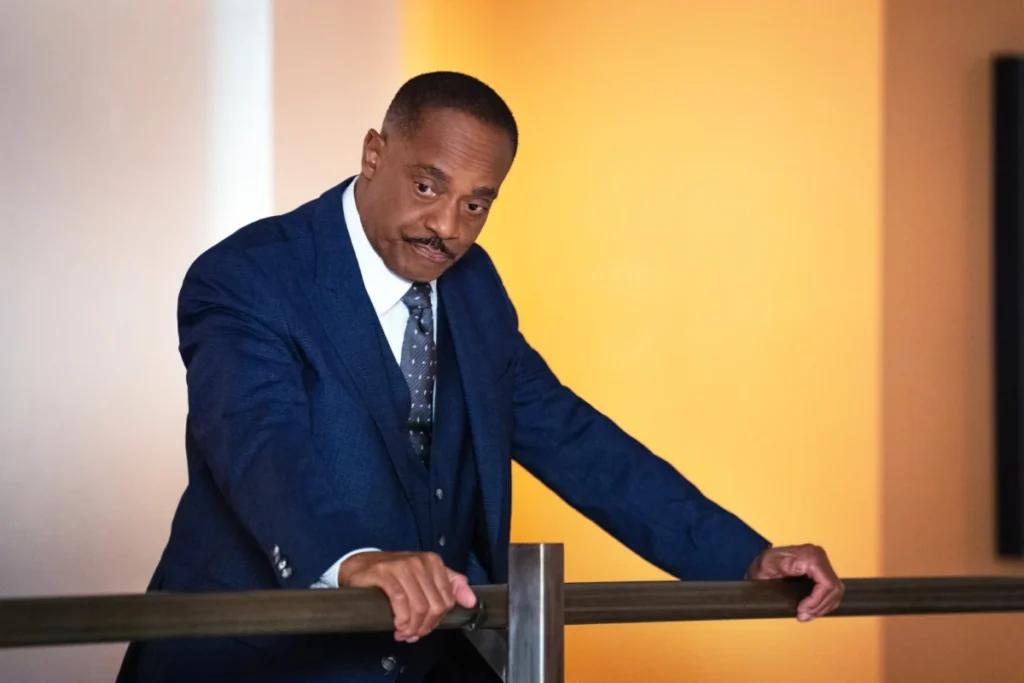

The 500th episode of the long-running CBS procedural NCIS delivered a seismic shockwave to its dedicated fanbase with the unexpected death of Director Leon Vance, portrayed by Rocky Carroll. This pivotal moment, occurring in the milestone 500th installment, left an immediate void at the helm of the Naval Criminal Investigative Service. The subsequent episodes of Season 23 saw an interim director step in, a character who remained largely unseen and largely unaddressed until the season finale, which hinted at a potential contender for the director’s chair.
The season finale offered a significant clue, presenting former deputy director and now U.S. Associate Attorney General, LaRoche (Seamus Dever), casting a pointed gaze towards the director’s office during a conversation with current team leader Alden Parker (Gary Cole). This visual cue has ignited speculation among viewers about LaRoche’s potential ascension to the leadership role, at least on a temporary basis. However, insights from executive producer Steven D. Binder, shared in the wake of the Season 23 conclusion, suggest that a permanent replacement for Director Vance is not currently in the network’s immediate plans.
Binder attributed the longevity of Leon Vance’s tenure, spanning an impressive 18 seasons, as a direct testament to Rocky Carroll’s impactful performance and integral presence within the NCIS universe. "A testament to Rocky Carroll," Binder stated, highlighting the actor’s enduring appeal and contribution to the series.
A Shifting Landscape: The Director’s Role in NCIS History
The role of the NCIS Director has evolved significantly since the show’s inception. Initially, the position was not conceived as a constant presence in the series’ narrative. The inaugural director, Tom Morrow, played by Alan Dale, was a recurring character, appearing in a modest seven episodes across the first three seasons. Notably, Morrow’s presence continued even after he vacated the director’s office, with Dale reprising the role in an equal number of episodes between Seasons 10 and 13.
Binder elaborated on the show’s early narrative structure, explaining that the series’ foundational storytelling did not necessitate a regular fixture in the director’s role. "The structure of the show didn’t really support [the director being a] regular fixture," Binder explained. He further elaborated on the conventional tropes associated with such a role, stating, "Sure, if you want to do the cliché thing where the boss is telling you, ‘Speed up the case,’ or ‘SecNav’s leaning down my neck,’ or things like that. But we skipped by those sort of classic, and by classic, I don’t mean great, types of storytelling." This departure from standard procedural formulas, Binder posited, was a key factor in NCIS‘s initial success. The deliberate choice to de-emphasize the director as a constant presence allowed the series to forge its own path and focus on the investigative team’s dynamics.
Following Tom Morrow, Jenny Shepard, portrayed by Lauren Holly, took the helm. Shepard’s character was not only a formidable leader but also shared a significant past with lead agent Leroy Jethro Gibbs (Mark Harmon). Her tenure as a series regular lasted for three seasons before her character was also written off the show through a death. Binder acknowledged the challenges of integrating Shepard’s character into the ongoing storylines, stating, "She was fantastic, but it was just very difficult to write that character in, which is why we wrote her off partially." This indicates that even when the director was a more prominent figure, narrative integration posed ongoing hurdles for the writers.
The Unforeseen Rise of Leon Vance
Leon Vance’s introduction to NCIS was initially intended to be on a more limited, as-needed basis. Carroll was not slated to be a series regular. "We were going to use a director sporadically and sparingly when we felt like we needed it here and there," Binder revealed. However, Carroll’s exceptional talent and amiable disposition quickly made him an indispensable part of the ensemble. His presence grew organically, leading to an increased role that defied the initial plan.
Despite Carroll’s growing importance, the fundamental challenge of his character’s role persisted. As a supervisor, Vance’s primary function was oversight, not direct field involvement. Binder noted, "Even though structurally, it still sometimes was difficult to find a novel and interesting place for a supervisor to show up, because that’s really what he was. He was a supervisor. He wasn’t really doing the work." While episodes centered on Vance proved to be some of the series’ most compelling, the inherent nature of his position as a supervisor sometimes limited his direct narrative utility.
Navigating the Post-Vance Era
The unexpected departure of Director Vance has prompted a strategic re-evaluation of the director’s role within the series. Binder emphasized that there is no immediate imperative to fill the void with a new permanent figure. "So, when Rocky exited the show, we weren’t feeling like, ‘My gosh, we need to get a manager back in here. We need to get that supervisor character back in here.’" The current approach, he explained, is to allow the narrative to guide decisions regarding the director’s chair. "Unless there’s a strong reason to do it, again, we’ve been letting the stories dictate where we go with the director chair."
The immediate aftermath of Vance’s death has provided fertile ground for storytelling, allowing the series to explore the impact of his loss on the team and the agency. However, the long-term vision is to return the focus to the core investigative unit. "The idea that we all landed on and gravitated to is we want to address that because we have to, and then we want to get back to telling stories with our core four [Parker, McGee, Knight, and Torres] and Kasie and Jimmy Palmer down in autopsy and telling the best stories we can there," Binder stated. This strategic shift aims to reaffirm the central importance of the NCIS field agents and their immediate support staff, whose interactions and investigations form the backbone of the show. The executive producer further clarified that this return to core storytelling "usually doesn’t mean involving a supervisor."
LaRoche’s Ambitions and the Uncertain Future
The Season 23 finale’s depiction of LaRoche’s interest in the director’s position adds a layer of intrigue to the unfolding narrative. Binder acknowledged that the character of LaRoche has become more prominent than initially planned, a development he attributes to the actor’s compelling performance and the opportunities his character presents for storytelling. "We’ve sort of played this game with him a little more than — he’s fantastic, too, by the way — we’d initially intended. And I think that’s also because when we’re looking for stories to tell," Binder explained.
As the writers prepare to embark on crafting the storylines for Season 24, the narrative arc surrounding LaRoche’s aspirations is expected to reach a definitive conclusion. "But I think we’re going to play out his story probably once and for all in regards to his designs, and then we’ll see where that lands us. The designs are what is the best story," Binder indicated. This suggests a deliberate effort to resolve LaRoche’s potential bid for leadership, aiming for a conclusion that serves the overarching narrative of the series.
Binder also emphasized the NCIS writing room’s philosophy of organic story development. "I think one of the other secrets to our success is we don’t make these grand decisions upfront and then try and service them because sometimes, and oftentimes, and most of the times, things just want to go a certain way," he shared. This approach allows for flexibility and the ability to pivot towards more compelling and surprising narrative directions, rather than being constrained by pre-determined plot points.
Looking Ahead to Season 24
With Season 24 on the horizon, the NCIS team is poised to navigate the evolving leadership landscape. The current strategy prioritizes the core investigative team’s dynamics, with the director’s role taking a backseat unless a compelling narrative reason emerges. This approach, honed over two decades, has consistently proven effective in maintaining audience engagement. The resolution of LaRoche’s storyline will undoubtedly play a significant role in shaping the agency’s leadership structure, or lack thereof, in the coming season. Fans are left to anticipate how these developments will unfold and what new challenges and opportunities await the dedicated agents of NCIS.
The question of who will ultimately occupy the director’s office, or if it will remain vacant, is a central point of discussion for the show’s loyal viewership. The creative team’s commitment to allowing stories to dictate narrative direction suggests a willingness to embrace unexpected turns, ensuring that NCIS continues to deliver the compelling drama that has defined its enduring legacy.
NCIS Season 24 is slated to premiere in Fall 2026, airing on Tuesdays at 8/7c on CBS.