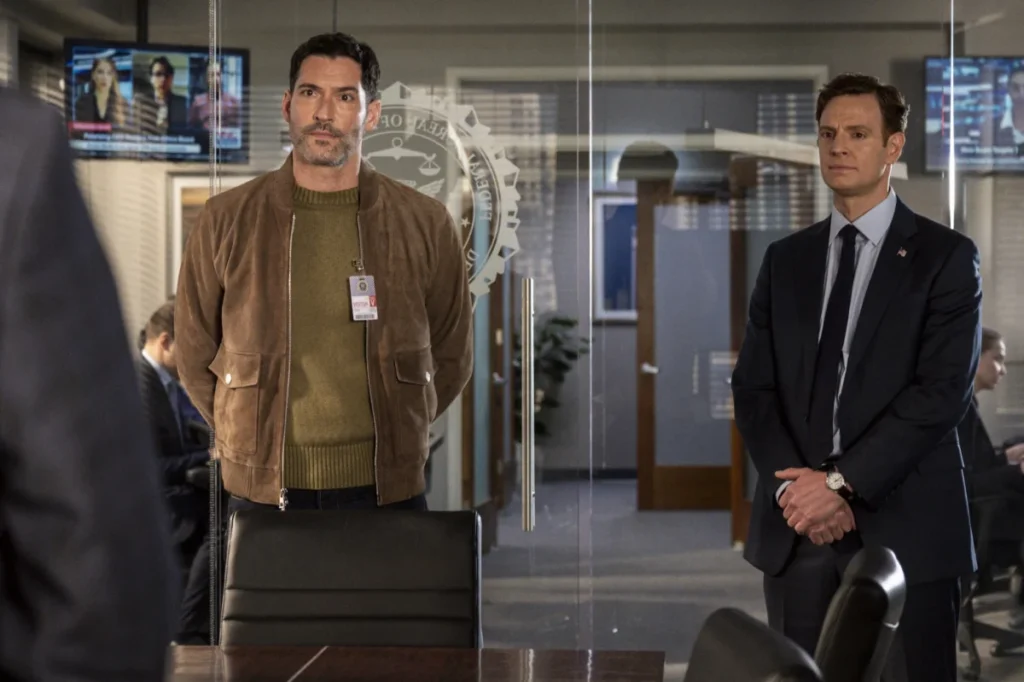

The season one finale of CBS’s spy drama CIA delivered a seismic shockwave, leaving viewers grappling with the unexpected resurrection of Toni (Angela Sarafyan) and the profound implications for the emotional core of the series. In an exclusive interview with TV Insider, showrunner Mike Weiss meticulously dissected the season’s dramatic conclusion, offering critical insights into the motivations behind Toni’s survival and her complicated future within the agency, as well as the evolving dynamics between lead operatives Colin (Tom Ellis) and Bill Goodman (Nick Gehlfuss). The revelations paint a picture of a series poised for a significant shift in its sophomore season, promising to delve deeper into the psychological toll of espionage and the blurred lines between duty, deception, and personal connection.
Toni’s Resurrection: A Calculated Gambit to Destabilize
The season one finale saw Colin, a seasoned intelligence officer, confronted with the undeniable reality that his former partner, Toni, whom he believed to be deceased, is very much alive. This revelation, coupled with Toni’s subsequent reappearance in CIA custody, serves as the central pivot point for the series’ future. Weiss confirmed that Toni’s survival was a deliberate narrative strategy, conceived from the outset to profoundly impact Colin’s character arc.
"It was my plan. Yeah, I had a secret plan from the beginning," Weiss revealed. "People were read in on the plan on a need-to-know basis. But yeah, I thought it’s a great way to take a veteran intelligence officer, Colin, and shake him to his core. A spy is only as good and as safe as his or her gut instincts can keep them."
The narrative established that Toni had been engaged in a clandestine operation to dismantle a mole network within Pyramid Security, a mission that unfortunately involved lethal methods. Her actions, while effective in rooting out internal threats, placed her at odds with agency protocols, ultimately leading to her recapture. The showrunner emphasized that Toni’s survival was not a mere plot twist but a strategic move to test the very foundations of Colin’s professional and personal life.
"The idea was the woman that he loved was murdered a year ago in Mindanao in the Philippines and he spent the last year on a self-directed top-secret mission to find out who killed her and why. And then when we reveal that she’s alive and she could have picked up a phone and called him at any point, I think he spins out and all of a sudden he can’t trust his instincts," Weiss explained. This destabilization, he added, was crucial for character development, forcing Colin to re-evaluate his perceived infallibility.
The Shifting Sands of Partnership: Bill Goodman’s Crucial Role
Amidst Colin’s personal turmoil, the finale also saw FBI Special Agent Bill Goodman, Colin’s new partner, solidifying his role within the fusion cell. Goodman, who had been offered an Assistant Special Agent in Charge (ASAC) position in Cleveland by Jubal (Jeremy Sisto), ultimately declined the promotion. This decision, Weiss suggested, underscores Goodman’s growing commitment to the unique operational environment of the CIA and his developing rapport with Colin.
"Lucky for him, he’s got a new partner in Bill Goodman who is there to stabilize him at a moment when he’s absolutely lost," Weiss stated, highlighting Goodman’s grounding influence. The dynamic between Colin and Bill is set to become a cornerstone of the series, with Weiss outlining a deliberate shift in focus for the upcoming season.
"Our goal for Season 2 is to shake up Bill," Weiss declared. "In Season 1, we shook Colin to the core, and in Season 2, we’re going to take Bill’s perfectly ordered, buttoned-up life where he wears a little American flag lapel pin every day and shake it up and see what he’s made of when that happens." This suggests a trajectory where Bill, who has been a stabilizing force, will now face his own profound challenges, mirroring the intense personal trials Colin endured in the first season. The showrunner hinted at a future where Colin will reciprocate the support Bill offered, albeit with his characteristic "tough love."

Toni’s Future: A Lingering Shadow and a Path to Redemption
Toni’s re-emergence presents a complex narrative challenge, particularly regarding her relationship with Colin. While the immediate aftermath of the finale sees Colin grappling with betrayal and a profound loss of trust, Weiss indicated that Toni is not merely a transient antagonist.
"I think he kind of said everything that he wanted to say to her into that bug that he finds in his apartment," Weiss mused, referring to a moment of clandestine confrontation. "I think that what he’d like to say to her going forward might be as simple as, ‘I don’t trust you and I’ll never trust you no matter what you do.’"
However, Weiss confirmed that Toni will be a recurring character in Season 2, a decision driven by the strength of Angela Sarafyan’s performance and the narrative potential she offers. "She now needs to prove herself to the CIA and then on a human level to Colin," he explained. This suggests a long-term arc focused on Toni’s attempt to regain trust, both professionally and personally, within the high-stakes world of intelligence. Her recurring status, while not a series regular initially, allows for flexibility in weaving her into various storylines, maximizing her impact without overwhelming the core ensemble.
Personal Lives Under Scrutiny: The Collateral Damage of Espionage
The finale also touched upon the personal lives of Colin and Bill, highlighting the inherent difficulties in maintaining relationships while operating in the clandestine world of intelligence. Colin’s honesty with Sarah (Sarah Diamond) marked a turning point, a forced reckoning with his true identity. Weiss acknowledged the possibility of Sarah re-entering Colin’s life, suggesting a potential for a more authentic connection now that she is privy to his complex reality.
"It’s television and maybe fate will place them in each other’s orbits again and this go around they’re going to be able to have a much more honest conversation about who they are," Weiss speculated. This opens the door for a mature exploration of love and partnership under extraordinary circumstances.
Bill’s relationship with Katie (Caroline Pluta) faces a more immediate threat. The showrunner pointed out the inherent unsustainability of Bill’s deception, particularly as their relationship progresses towards potential engagement. "She didn’t get engaged to an intelligence officer who has to keep big parts of his life secret from her. You wouldn’t blame her for saying, ‘That’s not what I signed up for.’" This foreshadows a significant conflict for Bill in Season 2, forcing him to confront the ethical compromises of his career and their impact on his personal life.
Expanding the World: A Deeper Dive into the CIA
With a green light for a 22-episode second season, up from 12 in the first, CIA is poised for significant expansion. Weiss indicated a desire to broaden the scope of the series, introducing a wider array of characters within the titular agency.
"We want to expand the world of the CIA," he stated. "There are a lot of desks and experts and analysts and intelligence officers that work in the building that we haven’t introduced you to yet. And we’d love to keep building out the world of the show as we move forward." This expansion suggests a richer tapestry of storylines and a more immersive portrayal of the intricate workings of a major intelligence organization. The increased episode count will allow for more nuanced character development and a deeper exploration of the multifaceted challenges faced by those operating in the shadows.
The confirmation of CIA Season 2, slated for Fall 2026 on Mondays at 9/8c on CBS, signals the network’s confidence in the series’ potential. The upcoming season promises to build upon the dramatic foundations laid in its freshman year, offering a compelling blend of high-stakes espionage, intricate character studies, and the enduring human cost of a life dedicated to national security. The narrative trajectory, as outlined by showrunner Mike Weiss, suggests a future where trust is a commodity as precious and as perilous as any intelligence gathered, and where the greatest threats may lie not in external enemies, but within the fractured psyches of those sworn to protect.