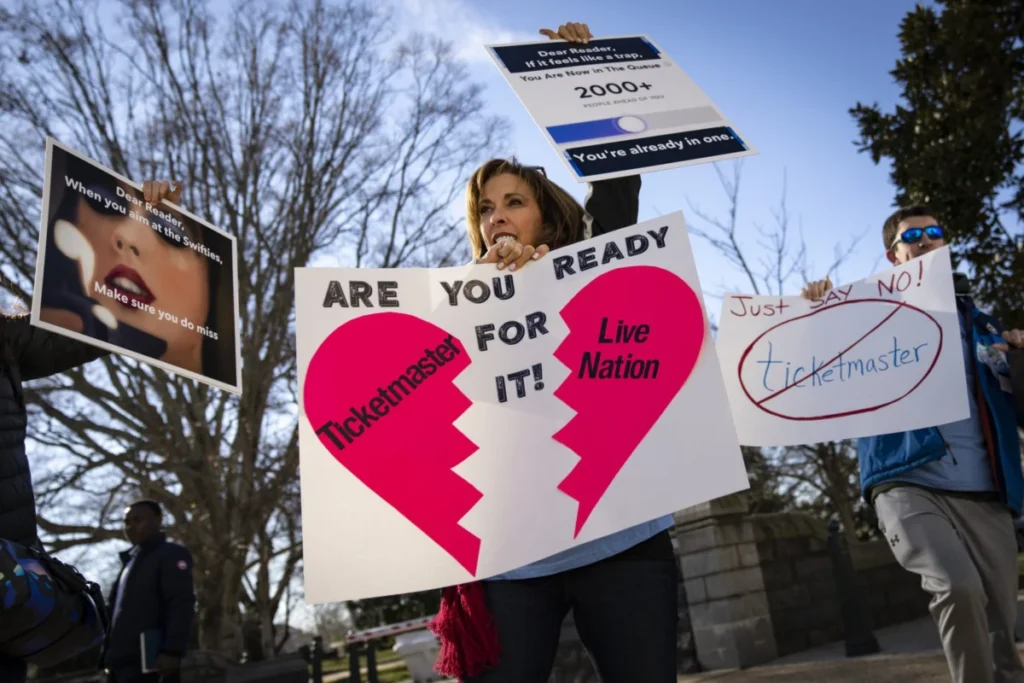

Congressional Democrats convened a critical "shadow hearing" on Monday, May 18th, to voice strong opposition to the federal government’s settlement agreement with Live Nation during the company’s antitrust trial. This independent proceeding, conducted without Republican participation due to their control of both chambers of Congress, brought together key stakeholders to dissect the implications of a deal that many believe undermined the pursuit of justice for consumers and artists. The hearing underscored the deep dissatisfaction among lawmakers and industry figures regarding the Department of Justice’s (DOJ) decision to settle with Live Nation on terms that many argue were lenient, particularly in light of the subsequent verdict by state attorneys general finding the company liable for monopolization.
The convened panel featured a range of voices deeply affected by Live Nation’s market dominance. California Attorney General Rob Bonta, who spearheaded the states’ successful antitrust case, was a central figure. He was joined by Roger Alford, a former DOJ lawyer who provided an insider’s perspective on the legal strategy. Representing the artistic community were Franz Nicolay, keyboardist for The Hold Steady, and indie promoter Jerry Mickelson, both of whom have firsthand experience with the challenges posed by Live Nation’s alleged monopolistic practices. Tom DeGeorge, owner of an independent music venue, rounded out the panel, offering insights into the pressures faced by smaller, grassroots operations within the live music ecosystem.
The DOJ’s Controversial Settlement and the States’ Vigorous Pursuit
The controversy stems from the DOJ’s abrupt decision in March to settle its antitrust lawsuit against Live Nation just days into the trial. This move surprised many observers, as the department had been a key plaintiff in the long-standing legal battle. The proposed settlement, designed to address Live Nation’s alleged monopolization of the live music industry across artist, venue, and ticketing sectors, would have mandated certain changes to the company’s exclusivity practices but crucially allowed it to retain ownership of Ticketmaster.
However, this federal settlement was met with widespread rejection by numerous state attorneys general. Undeterred, these states continued to prosecute the case independently. Their persistence culminated in a significant victory when a court found Live Nation liable for monopolizing key segments of the live music industry. This verdict directly contradicted the DOJ’s earlier settlement, highlighting a significant divergence in the federal government’s approach and the states’ commitment to a more stringent outcome.

Lawmakers Denounce the DOJ Settlement as a "Sweetheart Deal"
During the "shadow hearing," Democratic lawmakers did not mince words in their criticism of the DOJ’s settlement, particularly targeting the Trump administration’s appointees who oversaw its finalization. Senate Majority Leader Chuck Schumer (D-N.Y.) characterized the agreement as a "sweetheart deal," implying preferential treatment for Live Nation. Representative Jamie Raskin (D-Md.) went further, labeling it a "trivial and pathetic slap on the wrist." Senator Amy Klobuchar (D-Minn.), a vocal advocate for antitrust enforcement, described the settlement as "a complete sellout."
These criticisms were amplified by reports suggesting that Live Nation had engaged prominent Republican figures, including former White House counselor Kellyanne Conway and Mike Davis, to lobby for the DOJ settlement. This alleged influence peddling further fueled the perception that the agreement was more about political expediency than robust antitrust enforcement.
California AG Details DOJ’s "Betrayal"
California Attorney General Rob Bonta provided a detailed account of how the DOJ’s settlement unfolded from the states’ perspective. He testified that the DOJ "went quiet" midway through the trial, a stark departure from their years-long collaborative effort in pursuing the case against Live Nation. Bonta expressed a sense of betrayal, stating, "They burned all the trust." He elaborated, "They bailed. They left us hanging. We’re a team, and they left their teammates. They left us flat-footed for a moment, but we regrouped quickly… We were able to fight for more, and we got more." This testimony underscored the difficult position the states were placed in by the DOJ’s withdrawal and their subsequent independent efforts to secure a favorable verdict.
The Road Ahead: Remedies and Potential Breakup of Ticketmaster
The ultimate consequences for Live Nation’s alleged antitrust violations remain to be determined. Judge Arun Subramanian will preside over the decision regarding remedies. A crucial development is anticipated later this week with a major court brief expected from the states, wherein they are reportedly poised to argue for a forced sale of Ticketmaster. This potential divestiture represents a significant demand that could fundamentally alter the landscape of event ticketing.
Live Nation, however, has maintained a confident stance, asserting that the final outcome will "not be materially different than what is envisioned by the DOJ settlement." The company has also indicated its intention to appeal any rulings deemed unfavorable, maintaining that its market success is a testament to astute business practices rather than anticompetitive conduct.

Many of the lawmakers present at the hearing strongly advocated for a structural separation of Live Nation and Ticketmaster. Representative Raskin articulated the profound fear that Live Nation’s monopolistic power instills in artists. He revealed, "Many of the performers we asked to testify today at this event would not make themselves available for fear that Live Nation Entertainment would take away their livelihood." This statement highlights the chilling effect of market dominance on creative expression and professional careers.
Franz Nicolay, the sole artist to testify at the hearing, emphasized that the impact of Live Nation’s alleged practices extends beyond superstar artists. "The music industry obviously is always going to focus on the Taylor Swifts and Bruce Springsteens," Nicolay observed, "but the monopolistic forces that control the industry equally affect the broad popular music middle class." His testimony underscored the pervasive nature of the issue, affecting a wide spectrum of musicians and the broader live music economy.
The hearing served as a potent platform for lawmakers and industry advocates to voice their concerns and demand greater accountability from Live Nation. The ongoing legal proceedings and the impending decisions on remedies will be closely watched, with significant implications for the future of the live music industry, consumer ticketing practices, and the enforcement of antitrust laws in the digital age. Representatives for Live Nation and the DOJ did not immediately respond to requests for comment following the hearing.