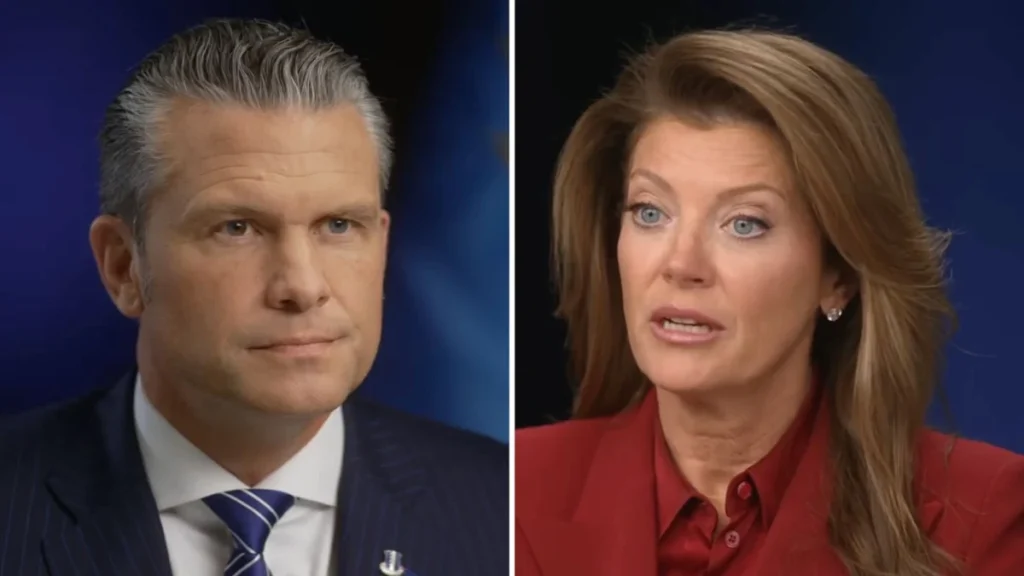

The long-standing investigative journalism program 60 Minutes returned for its 59th season on Sunday, September 13, 2026, but the broadcast immediately ignited a firestorm of criticism regarding its editorial independence and journalistic integrity. The centerpiece of the season premiere was a segment detailing the U.S. military’s high-stakes rescue mission of a stranded weapons systems officer in Iran. However, the resulting interview with Secretary of Defense Pete Hegseth has led to widespread allegations that the program served as a platform for political promotion rather than rigorous news gathering.
The Anatomy of the Segment
The report focused on the harrowing rescue of a U.S. F-15 crew member shot down over Iranian territory, a mission that has been heralded by the current administration as a triumph of modern military capability. Correspondent Norah O’Donnell conducted interviews with key figures involved in the operation, including General Dan Caine, Admiral Brad Cooper, and a surviving crew member referred to by the call sign "Bravo."
The most contentious portion of the segment involved the appearance of Secretary Pete Hegseth. According to reporting from CNN, Hegseth—a former Fox News host and staunch ally of the Trump administration—played an active, behind-the-scenes role in shaping the segment. Sources indicate that Hegseth exerted pressure on the Department of Defense to ensure the F-15 crew members participated in the interview, a move that critics suggest was designed to manufacture a heroic narrative surrounding his own leadership. While two crew members were initially invited, only one agreed to appear on camera.
Viewer Backlash and Accusations of Propaganda
Following the broadcast, social media platforms, particularly X (formerly Twitter), were flooded with commentary from viewers who characterized the interview as a "softball" session. Many long-time followers of the program expressed dismay at the lack of follow-up questions regarding the strategic implications of the mission or the circumstances surrounding the shoot-down.
Critics pointed to the absence of adversarial questioning—a hallmark of the Mike Wallace era of 60 Minutes—as evidence that the program has shifted away from its mandate to hold power to account. One viewer described the segment as "propaganda," suggesting that CBS News has effectively become a messaging arm for the administration. Conversely, a segment of the audience lauded the report as an inspiring portrayal of American military valor, highlighting the bravery of the rescue team and the tactical precision required to extract the downed airman from hostile territory.
A Backdrop of Institutional Turmoil
The controversy surrounding the season 59 premiere is not occurring in a vacuum. CBS News has undergone a period of intense organizational upheaval since late 2025. In May 2026, the network’s editor-in-chief, Bari Weiss, initiated a series of high-profile staff departures. The list of those dismissed included veteran producers Tanya Simon, Draggan Mihailovich, and Matthew Polevoy, alongside prominent correspondents Cecilia Vega and Sharyn Alfonsi.
The situation escalated when veteran correspondent Scott Pelley openly challenged the new editorial direction during a tense staff meeting. Pelley’s public dissent regarding the firing of his colleagues and the shifting editorial priorities ultimately led to his own departure from the program. These personnel changes have been widely viewed by media analysts as a strategic effort by the current leadership, appointed by Paramount CEO David Ellison, to pivot the network toward a more administration-friendly stance.
The Changing Landscape of Investigative Journalism
The criticism directed at 60 Minutes reflects a broader, ongoing debate about the role of legacy media in a polarized political climate. Investigative journalism, by its nature, requires a degree of friction between the reporter and the subject. When that friction is removed—either through intentional editorial choice or external pressure—the resulting product often loses its ability to function as a public watchdog.
Fact-based analysis of the current situation suggests that 60 Minutes is navigating a "credibility crisis." The program’s brand has historically been built on the premise that it asks the questions the public wants to know but cannot ask themselves. When a high-ranking government official like a Secretary of Defense is granted a platform to dictate the narrative of a military operation without being challenged on the strategic or political failures that may have preceded it, the value proposition of the journalism is significantly diminished.
Historical Context and Timeline of 60 Minutes
For nearly six decades, 60 Minutes has been the gold standard for American television news. Since its inception in 1968, it has survived changing political administrations, shifts in media consumption, and the rise of digital competition. However, the current period represents a unique challenge for the program.
- 1968: 60 Minutes debuts on CBS, establishing the magazine-style format that would define investigative broadcast journalism.
- October 2025: Paramount CEO David Ellison appoints Bari Weiss as editor-in-chief of CBS News, marking a significant change in the network’s editorial hierarchy.
- May 2026: A series of major staff cuts are implemented, leading to the removal of multiple producers and correspondents, signaling a shift in institutional direction.
- June 2026: Scott Pelley is dismissed following public opposition to the network’s new editorial policies.
- September 13, 2026: 60 Minutes premieres its 59th season, featuring the controversial interview with Secretary Pete Hegseth, sparking a national debate over journalistic ethics.
Implications for CBS News and the Administration
The immediate implication for CBS News is a potential erosion of trust among its core demographic. If the audience perceives the program as a vehicle for political PR, viewership—which has already been challenged by the transition to streaming services like Paramount+—may continue to decline.
For the Trump administration, the strategy of utilizing high-profile media platforms to highlight military successes is a well-established tactic. However, the backlash demonstrates that there is a limit to how much "controlled messaging" the public will accept from a program that historically prides itself on objectivity. The tension between the administration’s desire for favorable coverage and the public’s expectation of journalistic independence creates a precarious environment for all parties involved.
Conclusion: The Road Ahead
As the 59th season progresses, the scrutiny on 60 Minutes will likely intensify. The program remains a powerful cultural force, but its future hinges on its ability to reconcile its traditional mandate with the current editorial vision of its leadership. The reaction to the Hegseth interview serves as a warning that in the age of information transparency, viewers are increasingly adept at distinguishing between news reporting and curated content.
For the production team at 60 Minutes, the challenge is clear: they must demonstrate that they can regain the trust of their audience by returning to the rigorous, investigative standards that built the program’s reputation. Failure to do so may result in the program becoming a historical artifact of a bygone era of journalism, rather than the relevant, authoritative voice it once was. Whether this shift is a permanent transformation of the program’s DNA or a temporary deviation remains to be seen in the coming episodes of the season.