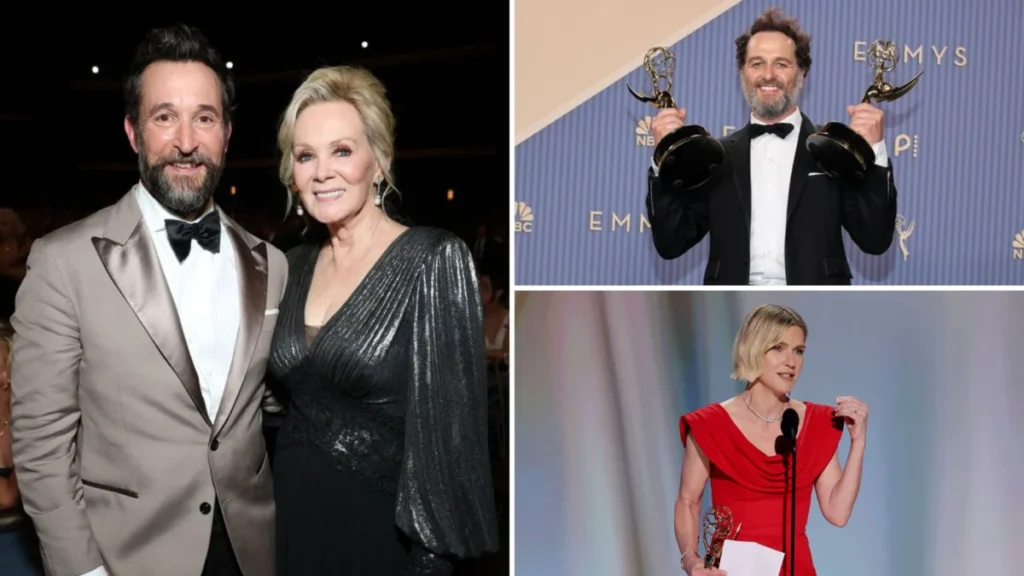

The 2026 Primetime Emmy Awards ceremony, held on September 14, served as a definitive marker for the evolution of the television industry, showcasing a dramatic shift in power toward new, innovative storytelling platforms and bold creative risks. Following the preliminary awards presented on September 6, the main event finalized a season characterized by high-stakes competition and a notable infusion of fresh talent across all genres. With Mariska Hargitay at the helm as host, the evening was marked by emotional tributes, surprising upsets, and the coronation of several breakout series that had captivated audiences throughout the year.
The broadcast, which aired on NBC and streamed on Peacock, concluded a months-long evaluation process by the Television Academy. The results not only honored established icons but also signaled a significant shift in audience engagement metrics, as streaming-exclusive content continued to dominate the major categories.
A Two-Stage Marathon: Analyzing the 2026 Emmy Timeline
The 2026 Emmy season was uniquely structured to build anticipation. The "Night 1" ceremony on September 6 set the stage, focusing on craft, guest performances, and technical achievements. Mariska Hargitay, who serves as a cornerstone of the television landscape via her long-running role on Law & Order: SVU, brought both levity and gravitas to the role of host, effectively bridging the gap between legacy television and the new wave of serialized content.

Early victories on September 6 provided a roadmap for the main ceremony. Shows such as The Pitt and DTF St. Louis, which performed exceptionally well during the early reveals, maintained their momentum through the main event. A poignant moment during these initial honors was the posthumous recognition of Rob Reiner for his work on The Bear, a testament to the profound impact of his final contributions to the medium.
Comedy: The Rise of the New Guard
The comedy category in 2026 proved to be one of the most volatile segments of the evening. The competition was fierce, featuring heavy hitters like Abbott Elementary, The Bear, and Hacks. However, it was the newcomer Widow’s Bay that emerged as the clear frontrunner, effectively sweeping the major categories. By securing the Outstanding Comedy Series award, Widow’s Bay established itself as the new standard for the genre, blending sharp social commentary with the kind of character-driven humor that critics and audiences alike have gravitated toward this year.
Matthew Rhys, whose performance in Widow’s Bay was widely praised for its range and subtlety, took home the statuette for Outstanding Lead Actor in a Comedy Series. In the female counterpart category, the perennial powerhouse Jean Smart continued her reign, winning Outstanding Lead Actress for her iconic role in Hacks. Her victory serves as a reminder of the enduring power of veteran performers in an industry increasingly obsessed with the "next big thing."
Supporting categories saw Stephen Root and Kate O’Flynn, both from Widow’s Bay, claim the top honors, further cementing the show’s dominance in the comedy sector. The writing and directing awards for the series, specifically for the episode "Welcome To Widow’s Bay!," underscored a cohesive creative vision that resonated with voters, balancing technical precision with heart.
Drama: The Heavyweight Battle for Prestige
The drama category was defined by the success of The Pitt, which solidified its position as the preeminent drama series of the year. Noah Wyle’s win for Outstanding Lead Actor in a Drama Series was widely viewed as a career-defining moment, highlighting his ability to anchor a complex, high-stakes medical drama with the emotional weight required by the Academy.
Rhea Seehorn, recognized for her transformative performance in Pluribus, took home the award for Outstanding Lead Actress in a Drama Series. Her victory is particularly notable given the crowded field of contenders, including veteran stars like Zendaya and Keri Russell. Seehorn’s win reflects a broader industry trend of rewarding actors who successfully bridge the gap between procedural drama and experimental narrative structures.
The supporting drama categories were split between a variety of high-profile projects. Tom Pelphrey’s win for Task provided a moment of recognition for the show’s gritty, realistic depiction of modern life, while Allison Janney, honored for her work in The Diplomat, proved once again why she remains one of the most respected figures in the acting community. The directorial and writing awards were spread among several shows, with Slow Horses winning for Directing and Pluribus taking home the Writing trophy, illustrating a balanced distribution of talent across the top-tier dramas.
Limited and Anthology Series: A New Era of Storytelling
The Limited or Anthology category in 2026 showcased the immense versatility of television as a short-form medium. DTF St. Louis emerged as the clear victor, winning for Outstanding Limited or Anthology Series, as well as sweeping directing and writing categories. This success highlights a growing appetite for stories that are tightly contained and character-rich, a format that often allows for more concentrated creative freedom.

Sally Field added another accolade to her storied career, winning Outstanding Lead Actress for her role in the television movie Remarkably Bright Creatures. Matthew Rhys, having already secured a comedy win, doubled his success by taking home the Lead Actor trophy in the limited series category for The Beast in Me, making him one of the most decorated performers of the 2026 cycle.
The Variety and Reality Shift
In the variety and reality categories, the 2026 Emmys reflected a transition in how viewers consume unscripted entertainment. The late-night landscape remains anchored by The Late Show With Stephen Colbert, which swept the variety program and writing categories, confirming that despite the fragmentation of the media landscape, traditional late-night talk shows still command significant cultural influence.
The live special category was captured by the Apple Music Super Bowl LX Halftime Show featuring Bad Bunny, a win that underscores the convergence of music, sports, and television as a unified, high-production-value event. Meanwhile, in the reality competition space, The Traitors continued its meteoric rise, winning Outstanding Reality Competition Program and earning Alan Cumming a win for Outstanding Host. This signifies a departure from traditional talent-based competitions toward the social-strategy and psychological-game formats that have surged in popularity over the past two years.
Industry Implications and Future Outlook
The 2026 Emmy results offer several key insights into the state of the television industry. First, the success of platforms like Apple TV and HBO in the major categories suggests that the "streaming wars" have entered a phase of quality-over-quantity. The winners of the night were characterized by high production budgets, auteur-driven scripts, and A-list talent, all of which point to a strategy aimed at creating "must-watch" cultural events.

Furthermore, the significant number of awards distributed to a diverse array of shows—rather than a single dominant series sweeping the entire board—suggests a healthy, competitive market where new shows have a genuine opportunity to break through. This decentralization of power is a positive sign for creatives, as it encourages experimentation and risk-taking.
The presence of veteran stars like Jean Smart, Sally Field, and Allison Janney, alongside rising talents and established character actors, underscores the industry’s commitment to multi-generational representation. The Academy’s choices in 2026 suggest that while the medium is constantly changing, the core elements of compelling storytelling—character development, sharp dialogue, and clear directorial vision—remain the primary drivers of success.
As the industry looks toward 2027, the trends established this year will likely dictate development cycles. We can expect to see more investment in limited series, a continued emphasis on high-concept reality formats, and an ongoing effort to merge live event television with streaming availability. The 2026 Emmy Awards have provided a clear snapshot of a medium in flux, yet one that is clearly finding its footing in a post-linear world. By honoring the works that defined the past year, the Academy has not only celebrated individual achievements but has also provided a roadmap for the creative trajectory of the television landscape for years to come.