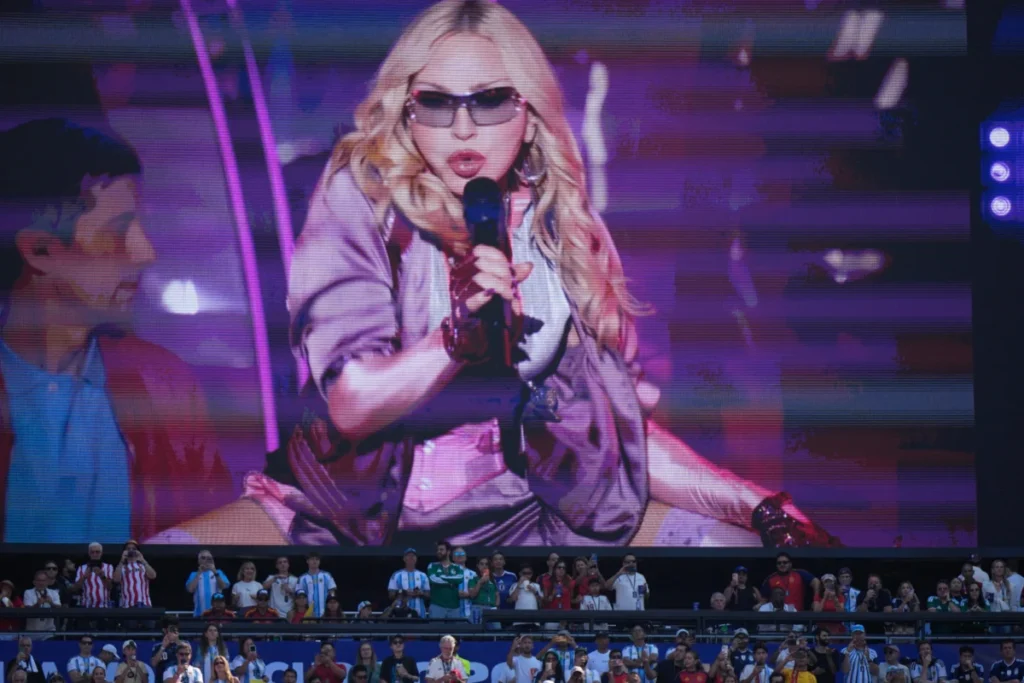

The highly anticipated World Cup 2026 final, held at the iconic New York New Jersey Stadium, made history not just on the pitch but also during an unprecedented half-time show that saw a convergence of global music, cinema, and cultural icons. For the first time in the tournament’s near-century-long history, FIFA introduced an elaborate, Super Bowl-esque entertainment spectacle, transforming the traditional interval into an 11-minute, star-studded performance featuring legendary artists Madonna, Shakira, and Justin Bieber, alongside K-pop sensation BTS, Nigerian superstar Burna Boy, and a surprise appearance by actor Jason Sudeikis as his beloved character, Ted Lasso. This groundbreaking event, curated by Coldplay frontman Chris Martin, aimed to elevate the World Cup experience to new heights, blending the thrill of football with the global appeal of popular culture, all while supporting the Fifa Global Citizen Education Fund.
The Dawn of a New Era: FIFA’s Strategic Shift
The decision to introduce a comprehensive half-time show for the World Cup final of 2026 marked a significant strategic pivot for FIFA. Traditionally, the half-time interval in football has been a brief period for player recuperation, tactical adjustments, and pundit analysis, typically lasting a maximum of 15 minutes as per FIFA regulations. However, the 2026 tournament, co-hosted by the United States, Canada, and Mexico – and notably the first to feature 48 teams – presented an opportune moment for the international governing body to embrace the entertainment model pioneered by American sports leagues, most famously the National Football League’s (NFL) Super Bowl. The Super Bowl half-time show has evolved into a global cultural phenomenon, attracting hundreds of millions of viewers worldwide, often surpassing the game itself in terms of cultural impact and media attention.
FIFA’s move was widely interpreted as an effort to broaden the World Cup’s appeal beyond traditional football audiences, tapping into the lucrative crossover market of music, film, and celebrity culture. The United States, with its extensive experience in staging large-scale entertainment events, served as an ideal backdrop for this inaugural spectacle. The final itself, a thrilling contest between football powerhouses Argentina and Spain, provided the perfect platform for this grand experiment, setting the stage for a new chapter in how major sporting events engage with their global audience. The extended 27-minute interval, a notable departure from standard FIFA rules, underscored the organization’s commitment to making this a memorable and impactful event, despite the potential for criticism from football purists.

A Star-Studded Spectacle: The Chronology of Performances
The half-time show was meticulously choreographed, unfolding as a vibrant tapestry of diverse musical genres and theatrical elements. The narrative of the 11-minute performance was carefully constructed to build momentum, transitioning seamlessly from one act to the next.
Madonna’s Grand Opening: Queen of Pop Kicks Off the Show
The spectacle ignited with an electrifying performance by the Queen of Pop, Madonna. Emerging from an "underground-like warehouse" set that pulsed with industrial energy, she commanded the stage surrounded by a dynamic ensemble of dancers and rollerskaters. The atmosphere was reminiscent of a clandestine rave, creating an immediate buzz. Madonna delivered a high-energy remix of her iconic 2000 track "Music," her voice resonating with the anthemic lyric, "Music makes the people come together." She also performed a segment of "Danceteria," further solidifying the nostalgic yet futuristic vibe.
The visual impact was amplified as Madonna, with characteristic flair, dramatically exited the warehouse set. She was not alone; joining her in a moment that sent a ripple of excitement through the stadium were Brazilian football legends Ronaldinho and Ronaldo. The trio then made a grand entrance onto the pitch, with Madonna resplendent in a striking pink corset, paired with knee-high purple boots and matching sunglasses, embodying her perennial status as a fashion and pop icon. Her presence alone set an incredibly high bar for the acts to follow, showcasing the blend of music, sport, and celebrity power.
The Muppets’ Unexpected Charm and Orchestral Grandeur
Following Madonna’s powerful opening, the show took an unexpected, delightful turn with the appearance of beloved Muppets characters, Kermit the Frog and Miss Piggy. This segment offered a charming contrast, showcasing the World Cup’s ambition to appeal to a broad, multi-generational audience. The Muppets, far from a simple cameo, delivered a surprisingly robust musical performance, covering The White Stripes’ enduring anthem "Seven Nation Army." Their rendition was elevated by the presence of a full orchestra, led by the esteemed Venezuelan conductor Gustavo Dudamel, known for his dynamic and expressive conducting style. Adding to the heartwarming spectacle was the PS22 Chorus, a group of primary school children whose innocent voices provided a poignant counterpoint to the orchestral might, creating a truly unique and memorable moment. This segment beautifully underscored the global and unifying power of music, even when delivered by puppets.

K-Pop Phenomenon BTS Takes the Stage
The global reach of the World Cup was further emphasized with the arrival of South Korean supergroup BTS. The seven-member boy band, renowned for their phenomenal global fanbase, emerged in matching vibrant red outfits, instantly recognizable and sparking a wave of excitement among their legions of fans worldwide. They performed their smash hit "Dynamite," a feel-good disco-pop track that exuded infectious energy. Their synchronized choreography and powerful stage presence showcased why BTS has become one of the most influential musical acts of the 21st century, demonstrating FIFA’s understanding of the diverse global music landscape and the immense power of K-Pop.
Ted Lasso’s Touchdown and Bieber’s Acoustic Moment
Adding a distinctly American and humorous touch, the stage was then claimed by Jason Sudeikis, reprising his Emmy-winning role as the affable football coach, Ted Lasso. The character, known for his optimistic outlook and folksy wisdom, resonated deeply with audiences globally through his hit TV comedy about an American coach managing a struggling English football team. Strolling along the side of the pitch, Lasso delivered a characteristic monologue: "I think we need some heart, someone who can bring the love. You thinking what I’m thinking?" With a dramatic pause, he then called out pop superstar Justin Bieber.
Bieber, appearing in a more understated fashion, took to the pitch to perform an acoustic version of his song "Everything Hallelujah." The stripped-down rendition allowed his vocals to shine, and he personalized the performance for the occasion by changing the closing lyrics to the resonating phrase: "It’s the World Cup, Hallelujah." Lasso’s encouragement, "Make us proud," served as a perfect introduction, linking the beloved fictional coach to a real-life global music icon, and creating a moment that was both earnest and deeply engaging.
Shakira and Burna Boy’s World Cup Anthem
The show then transitioned to a vibrant display of global rhythm with Colombian superstar Shakira and Nigerian singer Burna Boy. Appearing in striking yellow and pink outfits, they performed their collaborative World Cup anthem, "Dai Dai." The stage erupted with energy as they were joined by a cohort of dancers, all adorned in matching yellow outfits, their movements adding to the festive and celebratory atmosphere. Shakira, no stranger to World Cup anthems, brought her signature hips and infectious energy, while Burna Boy delivered his distinctive Afrobeats sound, creating a fusion of Latin and African rhythms that perfectly encapsulated the global spirit of the tournament. Their performance was a colorful and energetic showcase of diverse musical traditions uniting under the banner of football.

The Grand Finale: Unity and Hope
The extravagant half-time show culminated in a powerful message of unity and hope. Kermit the Frog and Miss Piggy reappeared on the pitch, once again joined by the PS22 Chorus. Together, they sang the heartfelt refrain, "We believe in love," a simple yet profound message resonating with the World Cup’s ideals of global camaraderie. In a fitting conclusion, Shakira rejoined the group, standing alongside Coldplay frontman Chris Martin, who was revealed to be the curator of the entire spectacular and had been subtly spotted within the crowd of singers throughout the finale. Martin’s presence underscored his guiding vision for the show, bringing together disparate elements into a cohesive and inspiring whole, ending the entertainment segment on a high note of collective harmony.
Pre-Match Extravaganza and Celebrity Attendance
The half-time show was merely one part of a larger celebrity-infused event surrounding the World Cup 2026 final. Before kick-off, a star-studded closing ceremony further amplified the glamour. Hollywood actor Tom Cruise, known for his blockbuster action films, made an appearance, alongside British pop sensation Robbie Williams and acclaimed American singer Jennifer Hudson, who delivered powerful vocal performances. The lineup also included Pussycat Dolls singer Nicole Scherzinger, renowned Italian singer-songwriter Laura Pausini, and popular streamer IShowSpeed, catering to a broad demographic. The energy was further fueled by performances from Post Malone and rapper Swae Lee, setting a high-octane tone for the day’s events.
The list of celebrities spotted in the stands was equally impressive, transforming the New York New Jersey Stadium into a veritable who’s who of global entertainment and sport. Among the notable attendees were "The Odyssey" actor Matt Damon, comedian Will Ferrell, "Dune" star Timothée Chalamet accompanied by his girlfriend, social media mogul Kylie Jenner. Football royalty was also present, with former England captain Sir David Beckham and his fashion designer wife Victoria Beckham adding to the star power, underscoring the World Cup’s unparalleled ability to draw A-list talent and attention.
Breaking Tradition: The Controversial Interval Length
While the half-time show was undeniably a dazzling spectacle, it did not escape criticism, particularly regarding its unprecedented length. The 27-minute interval significantly exceeded FIFA’s long-standing rule of a maximum 15-minute break between halves. This deviation sparked debate among pundits, players, and fans alike. Former England star Wayne Rooney, known for his forthright opinions, famously dismissed the show as "crap," reflecting a sentiment among some football purists who felt the extended break disrupted the flow of the game and prioritized entertainment over the sporting contest.

The extended interval forced a longer wait for players to return to the pitch and for tactical adjustments to be finalized, potentially impacting the rhythm and intensity of the second half. This move by FIFA signals a potential re-evaluation of its own regulations in pursuit of broader commercial and entertainment objectives. The precedent set in 2026 could lead to ongoing discussions about the balance between preserving the traditional integrity of the sport and embracing modern entertainment demands, particularly in a market as commercially driven as the United States.
Beyond Entertainment: The Philanthropic Dimension
Beyond the glitz and glamour, the World Cup half-time show was also staged in support of a significant philanthropic initiative: the Fifa Global Citizen Education Fund. This fund, established in partnership with Global Citizen, an international advocacy organization, aims to raise 100 million US dollars (approximately £75 million). The ambitious goal is to expand access to education and football for children in underserved communities around the world. By linking the high-profile entertainment spectacle to a charitable cause, FIFA aimed to leverage the immense global platform of the World Cup to generate substantial awareness and funding for critical social development programs.
The fund’s objectives align with FIFA’s broader commitment to social responsibility, recognizing football’s power as a tool for positive change. The integration of this philanthropic element underscored a dual purpose for the half-time show: not only to entertain and draw new audiences but also to serve as a powerful engine for global good, making the World Cup final an event with both cultural and humanitarian significance.
Analysis and Future Implications
The World Cup 2026 half-time show at the New York New Jersey Stadium represents a pivotal moment in the history of international football. By consciously emulating the highly successful Super Bowl model, FIFA has signaled a clear intent to transform the World Cup final into an even grander global event, one that transcends the boundaries of sport to become a cultural touchstone. This shift has several significant implications.

Firstly, the commercial potential is immense. The Super Bowl half-time show regularly commands astronomical advertising rates, and a successful World Cup equivalent could unlock vast new revenue streams through sponsorships, brand partnerships, and increased global viewership. The diverse lineup, featuring artists from K-Pop to Latin American pop, was clearly designed to maximize appeal across different continents and demographics, reflecting a strategic move to tap into previously underutilized markets.
Secondly, the event will likely spark ongoing debate about the essence of the World Cup. While purists may lament the encroachment of overt commercial entertainment into the sacred space of the beautiful game, proponents will argue that such spectacles are necessary to keep the tournament relevant and engaging for younger, digitally native audiences who expect multi-faceted entertainment. The global reach of the World Cup, already unparalleled in sports, is now positioned to grow even further, drawing in viewers who might tune in primarily for the music and celebrity appearances, and then stay for the football.
Finally, the 2026 show sets a new precedent for future World Cups. It is highly probable that similar half-time extravaganzas will become a permanent fixture, evolving with each tournament to reflect contemporary music trends and cultural moments. The challenge for FIFA will be to maintain a balance that respects the sport’s traditions while embracing the demands of modern global entertainment. The fusion of diverse cultural elements – from the iconic pop artistry of Madonna and Shakira to the global phenomenon of BTS, the charm of the Muppets, and the unique appeal of Ted Lasso – demonstrated an ambitious vision for a truly global, inclusive, and spectacular World Cup experience.
In conclusion, the World Cup 2026 final’s half-time show was more than just a series of performances; it was a landmark event that redefined the boundaries of sports entertainment. It ushered in a new era for FIFA, showcasing its commitment to evolving with global cultural trends, leveraging star power for both spectacle and philanthropy, and ultimately cementing the World Cup’s status not just as the pinnacle of football, but as an unparalleled global cultural phenomenon.