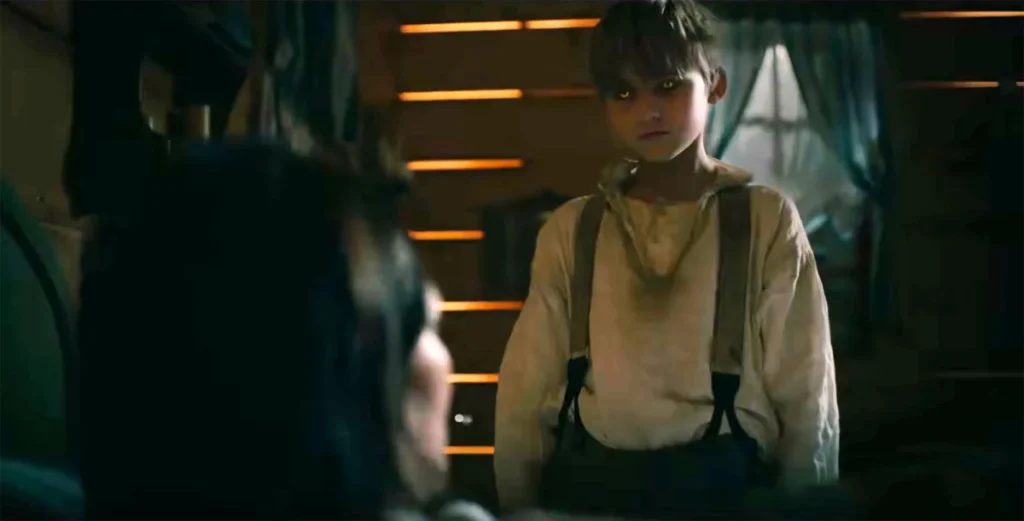

Samuel Goldwyn Films has unveiled the official trailer for the upcoming indie western horror film, The Wolf and the Lamb, slated for release later this month. The film, directed by newcomer Michael Schilf, ventures into the dark heart of a rural community gripped by mystery and escalating violence. Despite its imminent release, The Wolf and the Lamb has not previously been showcased at film festivals, indicating a direct-to-market strategy from its distributors.
The narrative centers on Jo Beckett, portrayed by Cassandra Scerbo, a dedicated schoolteacher whose life is shattered when her young son, Henry (Jaydon Clark), mysteriously disappears. The situation quickly escalates as Henry’s increasingly eerie behavior begins to sow seeds of paranoia and aggression throughout their isolated town. Jo’s desperate search for her son plunges her into a complex web of local folklore, pervasive fear, and dwindling faith. As she navigates hostility from her neighbors, encounters resistance from local authorities, and battles her own fracturing perception of reality, Jo is forced to confront malevolent forces that threaten to dismantle her fundamental beliefs.
The ensemble cast includes a range of notable actors. Alongside Scerbo and Clark, the film features Eric Nelson, Angus Macfadyen, Q’orianka Kilcher, Sammi Rotibi, Adrianne Palicki, Zach McGowan, and James Landry Hébert. The trailer suggests a significant tonal shift, transitioning from a traditional western setting to a more overtly supernatural and terrifying encounter, hinting at vampiric elements. This progression underscores the film’s exploration of hidden darkness within seemingly ordinary communities.

Genesis and Production of The Wolf and the Lamb
The Wolf and the Lamb marks the feature directorial debut for Michael Schilf, who also co-wrote the screenplay with Miah Smith. The story is credited to Schilf and Smith, suggesting a collaborative vision for the film’s unsettling narrative. The production was overseen by producers Nicholas Adam Clark, Chase Kuker, Jordan Kuker, Miah Smith, and Jordan Wagner. The decision to bypass the festival circuit and proceed directly to distribution suggests a calculated approach by the filmmakers and Samuel Goldwyn Films, potentially aiming to capitalize on current market trends or leverage the film’s genre appeal for a wider audience.
Release Strategy and Market Positioning
Samuel Goldwyn Films has announced that The Wolf and the Lamb will be available in select U.S. theaters and on Video on Demand (VOD) starting April 24, 2026. This dual release strategy is increasingly common for independent films, allowing for broader accessibility while catering to different viewing preferences. The film’s positioning as a western horror mystery places it within a popular genre space that often attracts dedicated fan bases. The horror genre, in particular, has demonstrated consistent resilience and profitability in the film market, with audiences often seeking innovative and unsettling narratives.
Thematic Depth and Genre Blending
The film’s premise delves into universal themes of maternal love, the search for truth, and the struggle against forces beyond comprehension. Jo Beckett’s journey is not merely a physical search for her son but also an internal exploration of her resilience and sanity in the face of overwhelming adversity. The integration of western elements with supernatural horror provides fertile ground for exploring the clash between old traditions and emerging, darker influences. The "maze of folklore, paranoia, and faith" suggests a narrative that will engage with the psychological impact of fear and superstition on a community.
The shift hinted at in the trailer, from a typical western to a "teethy vampire thriller," indicates a deliberate attempt to subvert audience expectations. This genre blending can create a unique viewing experience, drawing in fans of both westerns and supernatural horror. The film’s setting in a "rural town" amplifies the sense of isolation and vulnerability, where external threats can fester unchecked and internal conflicts can escalate rapidly. The "eerie behavior" of the son serves as a catalyst, exposing underlying tensions and fears that have been dormant within the community.

Supporting Data and Industry Context
The independent film market, particularly within the horror genre, has seen a surge in creative output and audience engagement in recent years. Films that successfully blend established genres or offer fresh perspectives on familiar tropes often find success. For example, the critical and commercial acclaim of films like The Witch (2015) and Midsommar (2019) demonstrated a strong audience appetite for atmospheric, character-driven horror rooted in folklore and psychological distress. The Wolf and the Lamb, with its focus on a mother’s desperate quest and the unraveling of a seemingly placid community, appears poised to tap into a similar vein of audience interest.
The VOD and select theatrical release strategy for independent films has become a standard practice, particularly since the widespread adoption of streaming services. This model allows distributors to reach a global audience without the significant financial risks associated with a wide theatrical rollout. For horror films, which often thrive on word-of-mouth and a dedicated online following, this approach can be particularly effective. The release date of April 24, 2026, places the film in a competitive spring release window, but its genre focus may allow it to carve out a niche.
Potential Implications and Audience Reception
The success of The Wolf and the Lamb will likely hinge on its ability to deliver a compelling narrative, strong performances, and effective horror elements. The film’s premise touches upon anxieties surrounding the loss of children, the erosion of trust within communities, and the confrontation with the unknown – themes that resonate deeply with audiences. The inclusion of a prominent cast, including actors like Adrianne Palicki and Zach McGowan, could attract a broader viewership.
The "teethy vampire thriller" element, if executed with originality and genuine scares, could be a significant draw. Vampire narratives continue to evolve, and filmmakers are constantly seeking new ways to reimagine these classic creatures. The western setting provides a unique backdrop, potentially offering a fresh take on vampire lore, far from the gothic castles and urban landscapes often associated with the genre.

Furthermore, the film’s exploration of folklore and paranoia suggests a thematic richness that could elevate it beyond a simple genre exercise. The idea of an entire town succumbing to a malevolent influence or participating in dark rituals offers ample opportunity for suspense and unsettling imagery. The "unraveling grip on reality" experienced by the protagonist is a classic horror trope that can be highly effective when paired with a strong performance and a well-crafted narrative.
Looking Ahead
As April 24, 2026, approaches, the film industry and horror enthusiasts will be watching to see how The Wolf and the Lamb performs. Its independent nature, combined with its ambitious genre fusion and intriguing premise, positions it as a potential breakout film. The trailer has generated initial buzz, and the subsequent reception will depend on the film’s execution of its narrative and its ability to deliver on the promise of a mysterious and terrifying western horror experience. The film’s success could also pave the way for further projects from director Michael Schilf and his creative team, solidifying their place in the independent film landscape. The decision to forgo festival premieres and opt for a direct release suggests a confidence in the film’s marketability and an eagerness to connect with audiences immediately. The coming weeks will reveal whether The Wolf and the Lamb lives up to its ominous title and delivers a chilling cinematic experience.