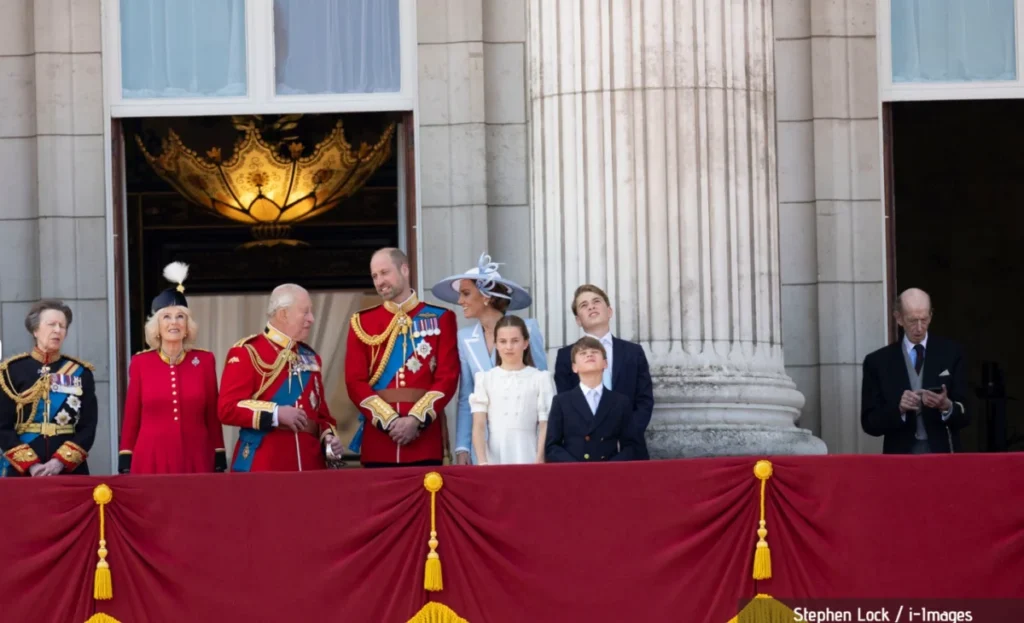

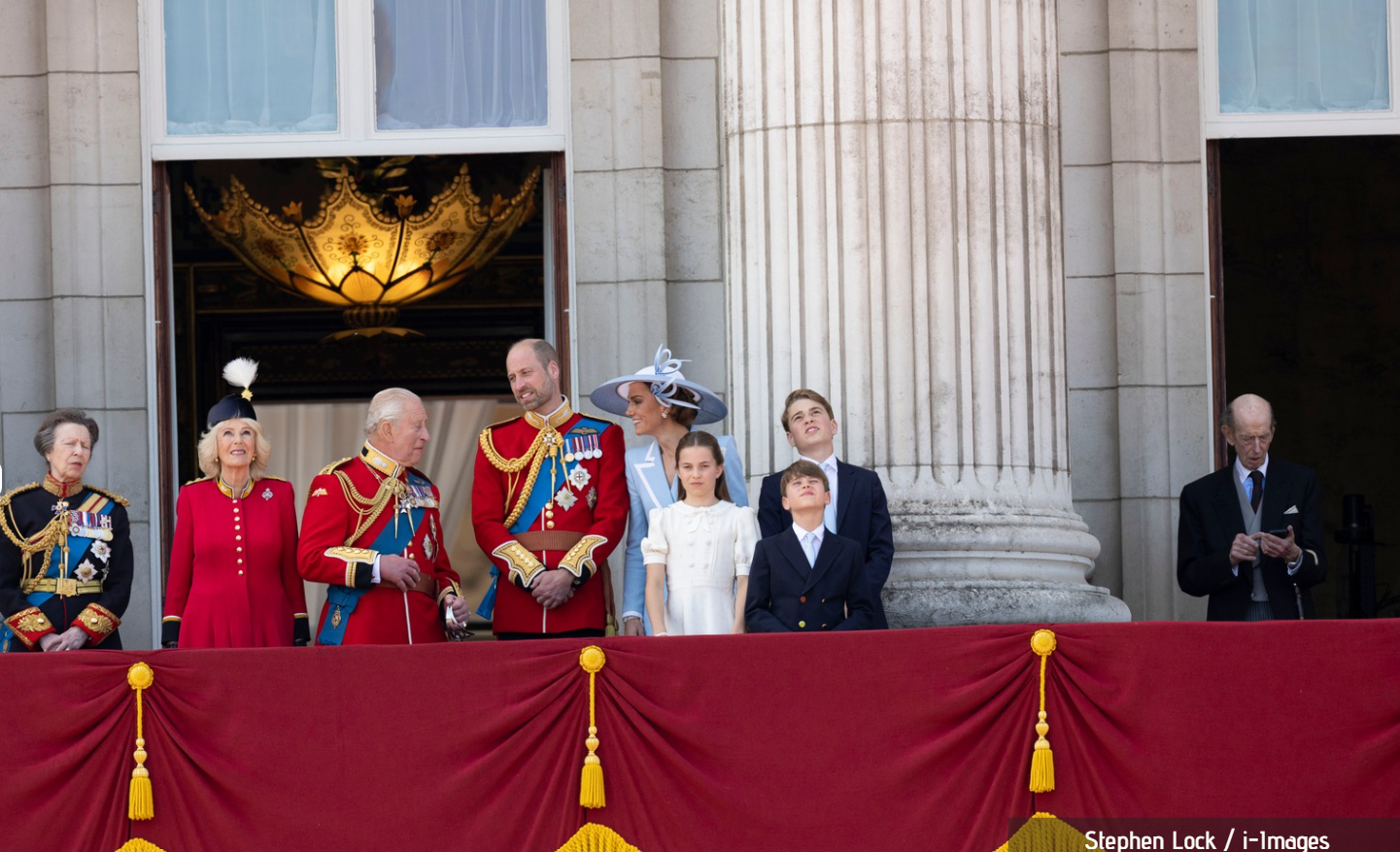
Royal enthusiasts observing the annual Trooping the Colour ceremony on Saturday were left with a palpable sense of emotion, predominantly stirred by the sight of the Duke of Kent, Prince Edward, positioned somewhat apart from the core group of senior royals during the iconic Buckingham Palace balcony appearance. The 90-year-old Duke, a distinguished figure and the longest-serving member of the Royal Family, joined King Charles III, Queen Camilla, the Prince and Princess of Wales, and other working royals for the traditional Royal Air Force flypast that punctuates the King’s official birthday parade.
However, a significant segment of the BBC’s viewership, meticulously tracking the event, noted the Duke of Kent’s placement at one extremity of the balcony, physically separated from the central gathering of the monarch and his immediate heirs. This observation quickly reverberated across social media platforms, where a wave of commentary expressed sadness and concern over the elderly royal’s apparent solitary position during a moment of national celebration and historical significance.
Public Reaction and Social Media Outcry
The digital sphere became a focal point for widespread expressions of empathy. Viewers articulated their feelings with poignant remarks, such as: "Aww, sad to see the Duke of Kent all by himself on the side." This sentiment was echoed by another viewer who questioned, "Why was the wonderful Duke of Kent right down one end of the balcony by himself? Couldn’t someone go and stand with him? I was in tears. He looked so alone." A third observer lamented, "The Duke of Kent is located at a considerable distance from the others on this balcony. Poor man, he is really kept apart."
These comments highlighted a collective concern that protocol or arrangement might have inadvertently led to the isolation of a respected royal elder. Many questioned the rationale behind his placement, with some suggesting that familial warmth and support should supersede rigid adherence to ceremonial seating plans, particularly for a royal who has dedicated decades of service to the Crown. The emotional resonance of these observations underscores the public’s deep affection and respect for the Duke of Kent and their desire to see him included and cherished within the family’s public moments.
The Duke of Kent: A Legacy of Service
Despite the viewer concerns, a closer examination of photographic evidence from the balcony appearance reveals that the Duke of Kent did, in fact, spend a portion of the flypast in conversation and proximity with other members of the extended Royal Family. Images show him standing alongside Sir Tim Laurence, the husband of Princess Anne, and his cousin, the Duke of Gloucester, Prince Richard, and his wife, the Duchess of Gloucester, Birgitte. This suggests that while his initial placement might have appeared solitary to some, he was not entirely isolated throughout the entire event.
Prince Edward, the Duke of Kent, holds a unique position within the British monarchy. As a first cousin to the late Queen Elizabeth II, he is a direct link to a past era of royal service and has been a steadfast presence at countless state occasions. He is widely recognized as one of the most respected members of the Royal Family and, until recently, was considered the oldest living working royal. His commitment to public duties commenced in the mid-1950s and has spanned over seven decades, during which he has undertaken a vast array of engagements, both domestically and internationally, representing the monarch and the nation with unwavering dedication.
While the demanding schedule of his earlier years has naturally moderated with age, the Duke of Kent continues to fulfill select public duties, demonstrating a sustained commitment to the institution. His presence at Trooping the Colour, even without participating in the preceding military parade, signifies his enduring connection to the ceremonial calendar and his importance as a symbol of continuity.
Trooping the Colour: A Timeless Tradition
Trooping the Colour, officially known as the King’s Birthday Parade, is a grand military spectacle held annually in June to celebrate the Sovereign’s official birthday. The tradition dates back over 260 years, originating in the 17th century when colours, or flags, were carried down the ranks of soldiers so that they could be recognised by their regiment. This practice was crucial for identification on the battlefield.
The modern ceremony involves a procession from Buckingham Palace along The Mall to Horse Guards Parade, where the Sovereign inspects the troops. This year’s event, held on Saturday, June 15th, 2024, marked King Charles III’s first official birthday parade since his accession to the throne following the passing of his mother, Queen Elizabeth II, in September 2022. The King, who has been undergoing treatment for an unspecified form of cancer, made a notable return to public duties for this significant occasion, riding in a carriage rather than on horseback, a departure from his usual practice due to his ongoing recovery.
The 2024 Balcony Line-up and Its Significance
The Buckingham Palace balcony appearance is undoubtedly one of the most anticipated moments of Trooping the Colour. It serves as a visual representation of the modern monarchy, showcasing the principal members of the Royal Family to the public and the world. This year’s line-up featured:
- King Charles III and Queen Camilla: Leading the family, embodying the current reign.
- The Prince and Princess of Wales, Prince George, Princess Charlotte, and Prince Louis: Representing the direct line of succession and the future of the monarchy. The presence of the younger Wales children, particularly Prince Louis, often garners significant public attention due to his animated expressions.
- The Duke and Duchess of Edinburgh, Prince Edward and Sophie: Increasingly prominent figures in royal duties, they represent a more modern face of the monarchy.
- Princess Anne and Sir Timothy Laurence: The Princess Royal, known for her stoic dedication, and her husband, are consistent attendees.
- The Duke of Kent, Prince Edward: A venerable figure, symbolizing continuity and historical ties.
- The Duke and Duchess of Gloucester, Prince Richard and Birgitte: Another steadfast couple who have long supported the Crown.
The composition of the balcony reflects the working members of the Royal Family and those designated to represent the institution on such high-profile occasions. The spacing and arrangement of individuals can be influenced by a complex interplay of protocol, familial relationships, and the desire to present a cohesive and dignified image.
Analysis of the Duke of Kent’s Placement
The concern over the Duke of Kent’s positioning, while understandable from a public perspective, might also be interpreted through the lens of established royal protocol and practical considerations. As the oldest member of the assembled group, and given his reduced public schedule, his placement might have been designed to ensure his comfort and ease of access, potentially away from the more crowded central area. Furthermore, the balcony, while appearing uniform, has various sections, and his position might have been strategically chosen to offer him a clear and unobstructed view of the proceedings, or to facilitate his departure if needed.
However, the emotional reaction from royal watchers cannot be dismissed. It speaks to a deep-seated desire to see senior royals, especially those who have served for decades, treated with the utmost visible respect and inclusion. The Duke of Kent’s long and dedicated service has earned him a unique place in the public’s affection, and any perceived slight, however unintentional, can resonate deeply. This sentiment also highlights the ongoing public discourse surrounding the Royal Family’s evolution, balancing tradition with a perceived need for greater warmth and accessibility.
The fact that the Duke of Kent was later seen interacting with other royals suggests that the initial impression of isolation was perhaps transient or a matter of a specific moment within the broader event. Nevertheless, the incident serves as a reminder of the intense scrutiny under which the Royal Family operates and how even seemingly minor details of public appearances can be interpreted and debated by a global audience.
The Red Arrows and the Conclusion of the Ceremony
The Trooping the Colour ceremony culminated with the iconic flypast by the Royal Air Force’s aerobatic display team, the Red Arrows. Their vibrant red, white, and blue trails painted across the sky, accompanied by the roar of the aircraft, elicited enthusiastic cheers from the crowds gathered along The Mall and outside Buckingham Palace. This dramatic finale provided a fitting and spectacular conclusion to the King’s official birthday celebrations.
While much of the public and media attention naturally gravitated towards the King’s personal milestone and the prominent presence of the Prince and Princess of Wales’s children, the focus on the Duke of Kent’s placement underscores the enduring fascination with every facet of the Royal Family’s public life. His long years of unwavering service have cemented his status as a beloved and respected figure, and his appearance, regardless of his exact positioning, remains a poignant reminder of the continuity and history embodied by the British monarchy. The public’s emotional response to his visible inclusion is a testament to his enduring legacy and the deep connection he shares with the nation.