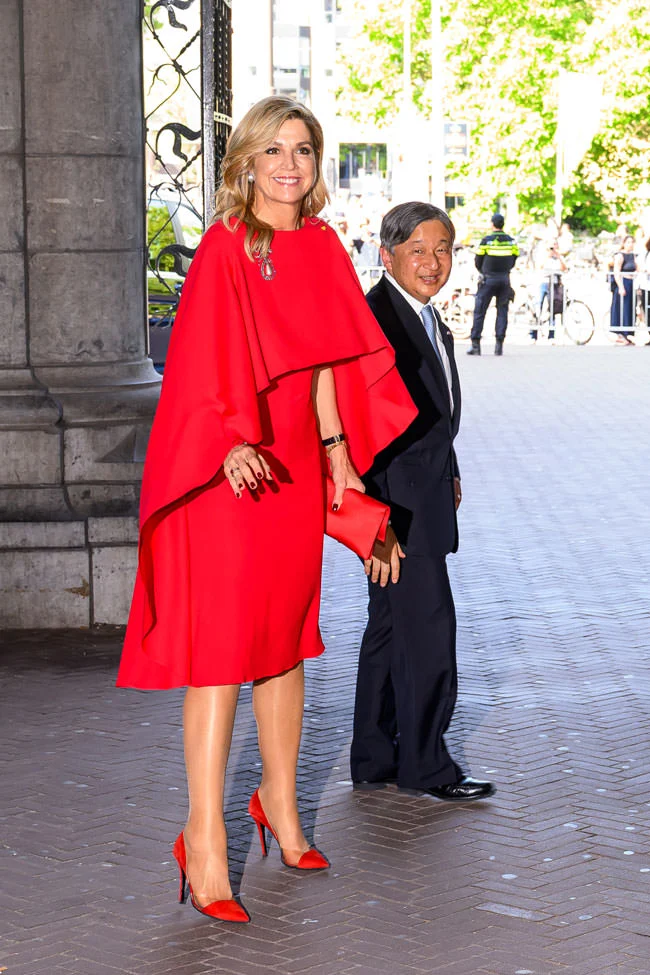

The recent diplomatic reception of the Japanese Imperial Family by the Dutch Royal House provided a significant platform for Queen Máxima to demonstrate her unique approach to contemporary royal style, blending traditional protocol with avant-garde fashion. Over a 48-hour period, the Queen engaged in a series of high-stakes events ranging from cultural tours at the Rijksmuseum to emotional visits at pediatric oncology centers, culminating in a grand state banquet at the Royal Palace in Amsterdam. This visit not only reinforced the 400-year diplomatic and economic bond between the Netherlands and Japan but also showcased the Queen’s strategic use of fashion as a tool of "soft power," supporting both established Belgian houses and innovative Dutch designers.
Diplomatic Context and Historical Significance
The visit of the Japanese royals to the Netherlands is rooted in a deep historical narrative that began in 1609 when the Dutch East India Company established a trading post in Hirado. For over two centuries, the Netherlands remained the only Western nation permitted to trade with Japan through the island of Dejima in Nagasaki. In the modern era, this relationship has evolved into a robust partnership centered on technology, agriculture, and international law. Queen Máxima, alongside King Willem-Alexander, has consistently used state visits to highlight these ties, often selecting attire that reflects a respect for the host or guest nation’s aesthetic while championing European craftsmanship.
The Rijksmuseum Engagement: A Masterclass in Monochromatic Power
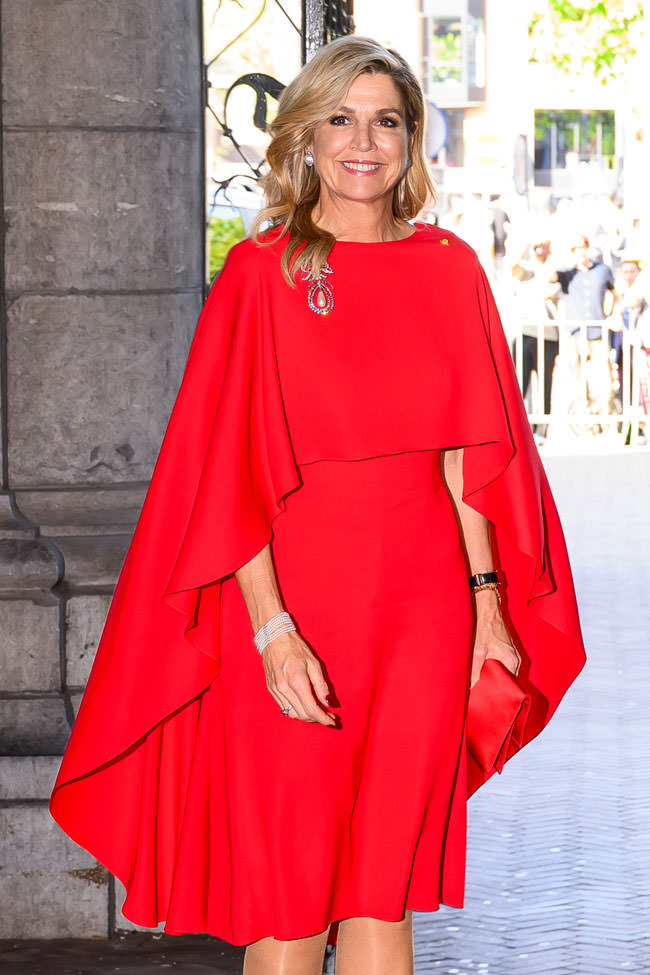
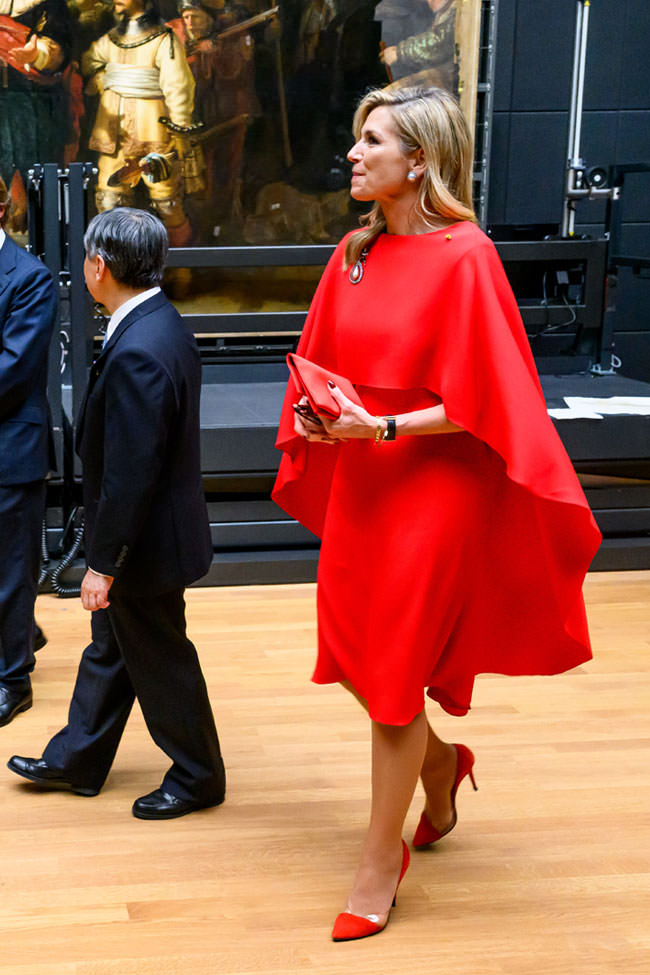
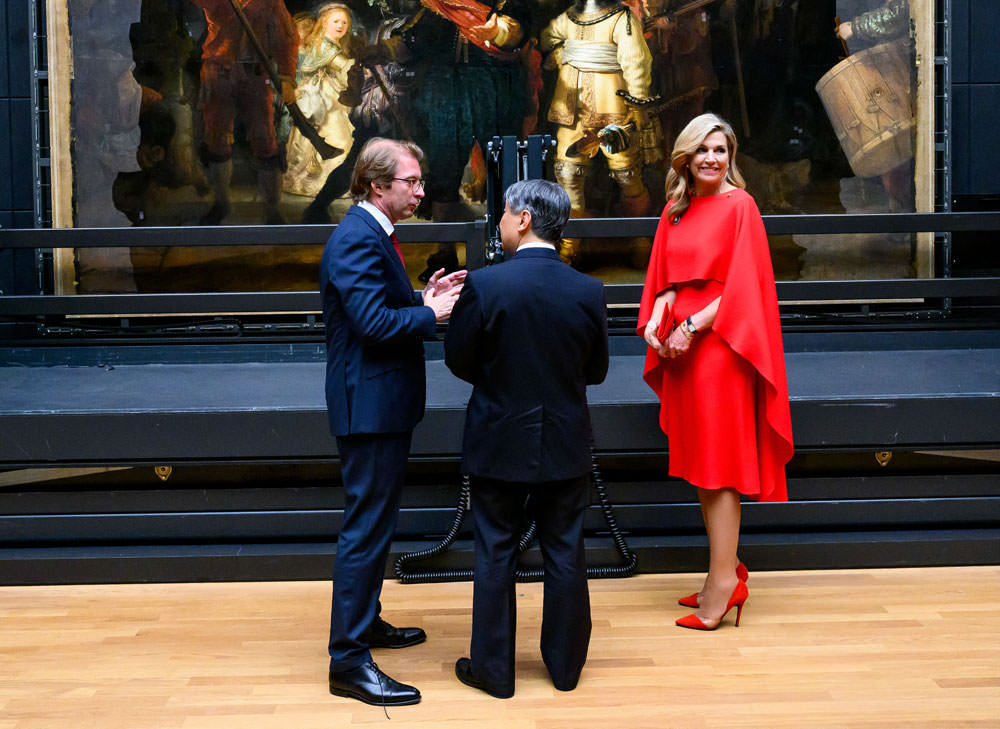
The first major appearance of the visit took place at the Rijksmuseum in Amsterdam, where Queen Máxima hosted the Japanese delegation amidst the world’s most celebrated collection of Dutch Golden Age paintings. For this occasion, the Queen opted for an ensemble by Natan, the Belgian couture house led by designer Edouard Vermeulen. Natan has long been a staple for the royal families of the Benelux region, known for its structured silhouettes and bold use of color.
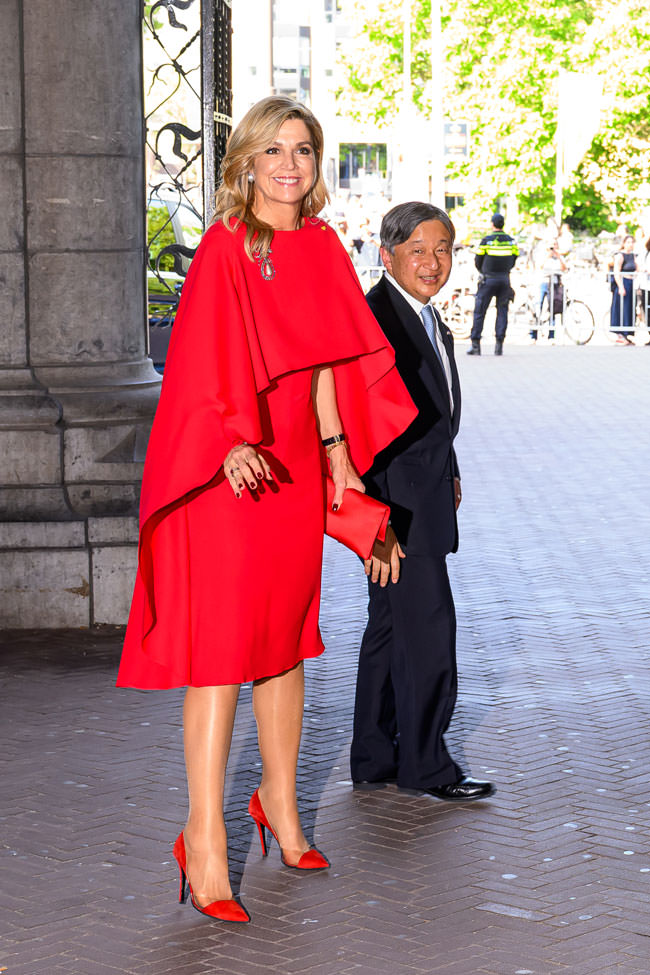
The outfit featured a monochromatic approach, a stylistic signature often employed by Queen Máxima to create a streamlined and authoritative presence. While fashion critics have occasionally questioned her preference for single-color dressing, the Rijksmuseum look was widely praised for its sophistication. The ensemble’s sharp tailoring complemented the grand architectural backdrop of the museum. However, the choice of footwear—a pair of heels featuring PVC or "plastic" elements—remains a point of contention among style observers. While these transparent details are a contemporary trend aimed at elongating the leg, some traditionalists argue they lack the formal gravitas typically expected of a queen consort during an official state visit. Nevertheless, the overall reception was positive, with analysts noting that the Queen appeared confident and culturally resonant.
Advocacy and Aesthetics at the Princess Máxima Center
The second day of the visit shifted focus toward the Queen’s philanthropic endeavors. Queen Máxima visited the Princess Máxima Center for Pediatric Oncology in Utrecht, an institution for which she serves as a patron. The center, which opened in 2018, represents a €100 million-plus investment in concentrated pediatric cancer research and care, aiming to increase the survival rate of children with cancer to over 90%.
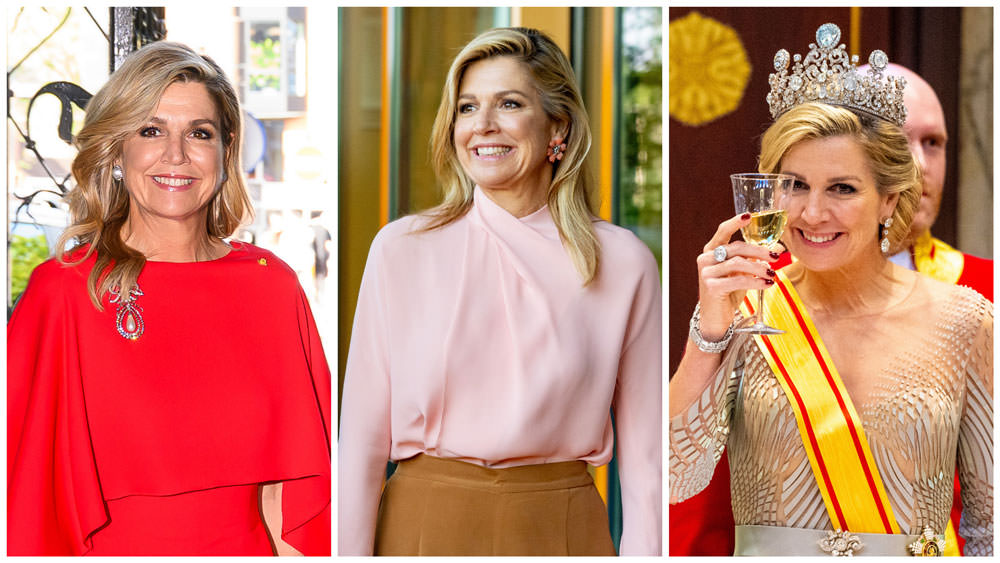
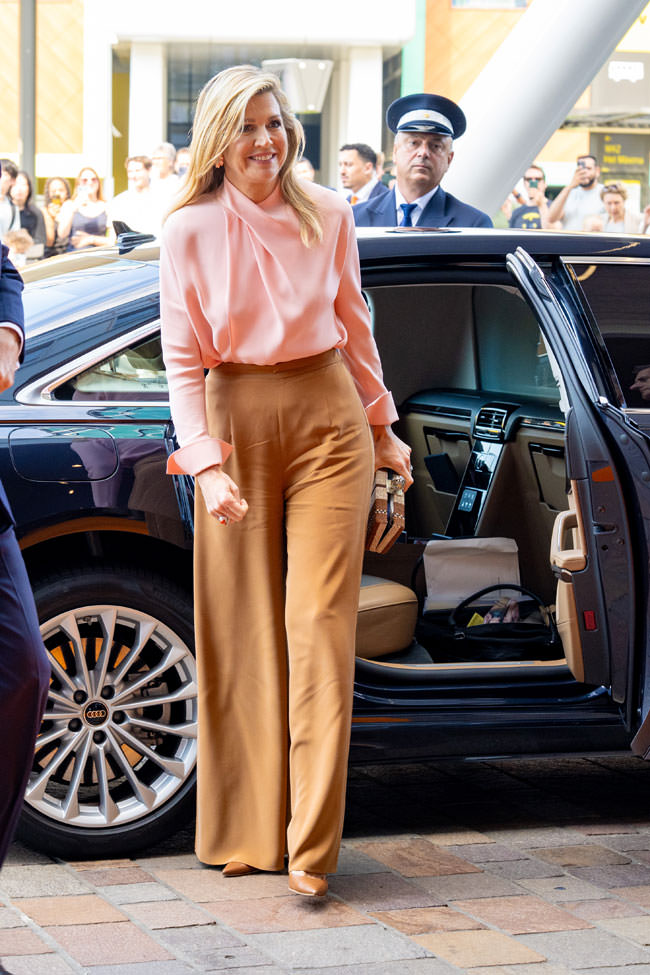
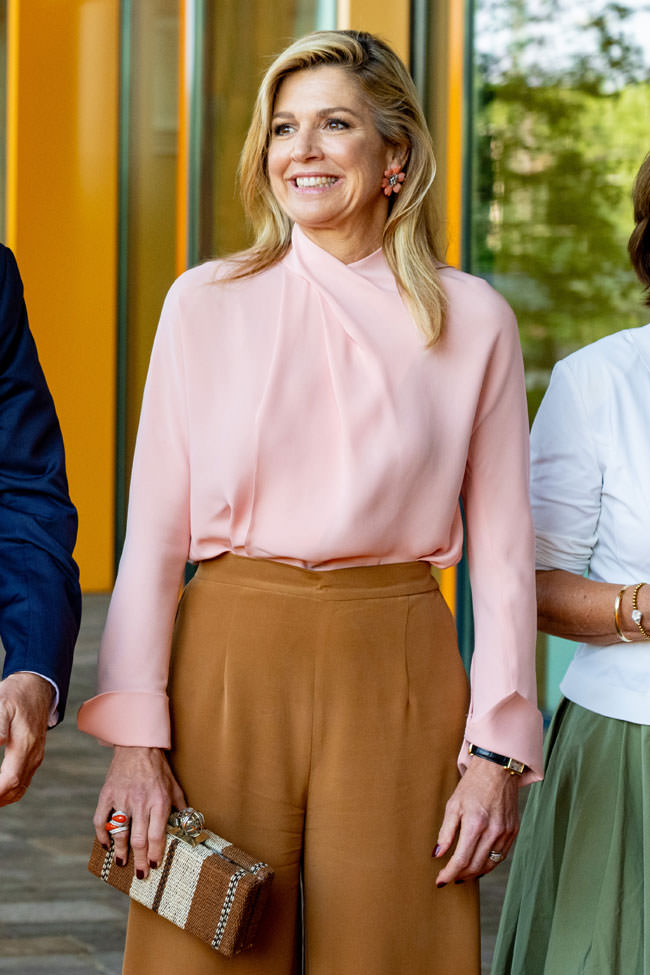
For this daytime engagement, the Queen again chose Natan, though the resulting look received a more tempered response. The ensemble consisted of a blouse and trousers in a color palette that some critics found discordant. The pairing of specific shades of warm and cool tones, combined with a unique neckline on the blouse, lacked the cohesive polish of her previous day’s attire. Fashion commentators suggested that the addition of a belt might have provided the necessary structure to unify the pieces. Despite these minor stylistic critiques, the Queen’s presence at the center emphasized the human element of the state visit, focusing on the shared international goal of advancing medical science for the benefit of children.
The State Banquet: Avant-Garde Innovation Meets Historic Splendor
The highlight of the visit’s fashion narrative occurred during the state banquet held in honor of the Japanese Imperial Family. In a bold departure from traditional lace and silk gowns, Queen Máxima chose a creation by Iris van Herpen. This choice was highly significant; Van Herpen is a world-renowned Dutch designer famous for her "Biomorphism" aesthetic and her pioneering use of 3D printing and laser-cutting technology in haute couture.
The gown was a modified, more modest version of Van Herpen’s signature style, yet it remained "racy" by royal standards due to its intricate use of sheer fabrics and illusion paneling. The dress featured organic, flowing lines that mimicked natural forms, a hallmark of Van Herpen’s work. The decision to wear a Dutch designer for the most formal event of the visit served as a powerful endorsement of the Netherlands’ position as a hub for creative innovation.
Perhaps the most praised aspect of this look was the synergy between the modern gown and the historic royal jewelry. The Queen paired the avant-garde dress with a historic tiara—often a centerpiece of the Dutch royal vaults—demonstrating that contemporary design can successfully coexist with centuries-old heritage. This juxtaposition of the "old world" and the "new world" mirrored the diplomatic theme of the visit: honoring a long history while looking toward a technologically advanced future.
Chronology of the State Visit
- Day 1, Morning: Official arrival of the Japanese Imperial Family at the Royal Palace, Amsterdam. Formal greeting by King Willem-Alexander and Queen Máxima.
- Day 1, Afternoon: Cultural tour of the Rijksmuseum. Queen Máxima debuts the monochromatic Natan ensemble. Discussions focus on Dutch-Japanese art history.
- Day 2, Morning: Visit to the Princess Máxima Center for Pediatric Oncology in Utrecht. Queen Máxima engages with medical staff and families, wearing the second Natan look.
- Day 2, Evening: State Banquet at the Royal Palace. The Queen appears in the Iris van Herpen gown and historic tiara. Keynote speeches emphasize the "Global Partnership" between the two nations.
Analysis of Royal Style and Soft Power
The fashion choices of Queen Máxima are rarely incidental. In the context of international diplomacy, clothing serves as a visual language. By choosing Natan, she acknowledges the regional craftsmanship of the Benelux union. By choosing Iris van Herpen, she promotes the Netherlands as a leader in global fashion and technological integration.
The state banquet gown, in particular, represents a calculated risk. Royal protocol often dictates safe, conservative choices to avoid overshadowing the diplomatic mission. However, Queen Máxima has consistently pushed these boundaries. Her embrace of Van Herpen’s "roots of rebirth" aesthetic signals a monarchy that is comfortable with modernity. Industry data suggests that "the Máxima effect" can significantly boost the profile of the designers she wears, particularly in the Asian and North American markets where royal fashion is closely monitored.
Broader Impact and Implications
The success of the Japanese visit, underscored by the Queen’s sartorial hits and misses, reinforces the Dutch monarchy’s role as a modern institution. The 48-hour event highlighted key sectors of Dutch excellence: art, healthcare, and high fashion.
From a journalistic perspective, the Queen’s style file from this visit serves as a record of a monarchy in transition—one that respects the heavy weight of its jewels but is not afraid to pair them with the transparent plastics of modern footwear or the 3D-printed filaments of high-tech couture. As the Netherlands continues to navigate its role within the European Union and its relationships with global powers like Japan, the Queen’s wardrobe will undoubtedly remain a focal point of its public-facing diplomacy.
The visit concluded with a reciprocal event hosted by the Japanese Imperial Family, marking the end of a successful chapter in Dutch-Japanese relations. While the fashion critiques of Natan’s color palettes and plastic shoes will continue in style circles, the overarching narrative remains one of a Queen who uses her platform to champion her country’s designers and its most vital social institutions.