
San Antonio, Texas – Mayor Gina Ortiz Jones of San Antonio has publicly called for the cancellation of Kanye West’s highly anticipated Fourth of July concert at the Alamodome, citing the artist’s history of hate speech and antisemitic remarks. The announcement comes as tickets for the event, scheduled to take place on the nation’s 250th birthday, remain available, with prices ranging significantly from $127.50 for standard upper-level seats to $1,461.25 for a premium "YE – Front Row Experience."
The controversy surrounding West’s booking has ignited a debate within the city, particularly given the Alamodome’s status as a publicly funded facility and the symbolic significance of the July 4th date. Mayor Ortiz Jones, a U.S. Air Force veteran, articulated her opposition to the concert in a strong statement on social media platform X (formerly Twitter) on Saturday night. "Military City USA should not host someone with a record of hate speech and antisemitic comments in a city-funded facility like our Alamodome – not ever, and certainly not on July 4th, our Nation’s 250th birthday," she declared. Her statement underscored the belief that "Standing up to antisemitism is exactly what it takes to achieve a more perfect Union."
A Troubled History and a Divisive Booking
Kanye West, who now goes by the mononym Ye, has been a recurring figure in public discourse for reasons extending beyond his musical achievements. His career has been punctuated by controversies, most notably a series of public statements made in late 2022 that were widely condemned as antisemitic and hateful. These remarks led to significant backlash, including the termination of lucrative partnerships with major brands like Adidas and Balenciaga, and widespread condemnation from various organizations and public figures.
The upcoming San Antonio concert is part of a broader international tour that has seen Ye perform in various global cities. His summer schedule includes dates in Tampa, Florida (June 26, 28), Tirana, Albania (July 11), Madrid, Spain (July 30), and Algarve, Portugal (August 7). The tour is slated to conclude with a return to the U.S. for homecoming shows in Chicago, Illinois, on September 3rd and 4th. This series of performances marks a notable return to extensive touring for the artist, who has not undertaken a full-scale tour in the current decade. While Ye has successfully held concerts in cities such as Mexico City, Los Angeles, and venues in Turkey, the Netherlands, and Georgia, other scheduled performances in England, Poland, and France have been canceled.
The Alamodome and its Capacity
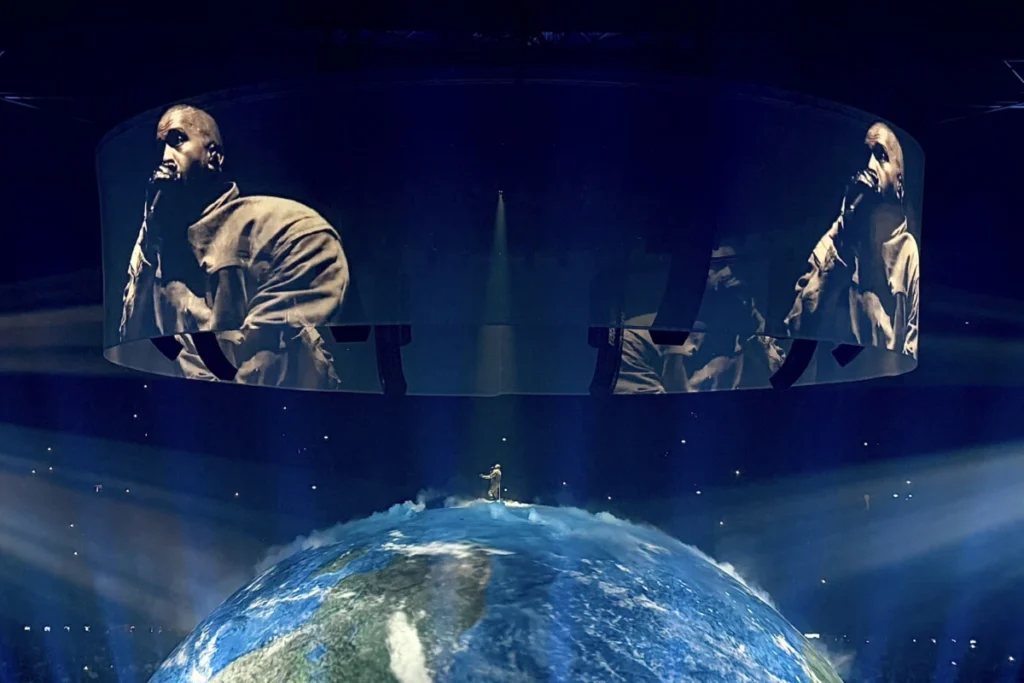
The Alamodome, a multi-purpose stadium in downtown San Antonio, boasts a substantial capacity, capable of accommodating over 70,000 spectators for in-the-round concert setups. Ye’s signature stage design, often featuring a distinctive globe-shaped structure, is well-suited for such large venues. The stadium’s ability to host major events underscores its importance to the city’s cultural and economic landscape. However, its public funding status has made it a focal point for discussions about the appropriateness of hosting artists with controversial public records.

Broader Political Reactions and Precedents
The call for cancellation in San Antonio is not an isolated incident. Earlier in June, Republican U.S. Senator Rick Scott of Florida also urged for the cancellation of Ye’s scheduled performances in Tampa. Senator Scott issued a statement on June 4th, condemning West’s "consistent antisemitic attacks" as an "affront to the values of the people of the Hillsborough community." He specifically cited instances where the artist "openly praised Nazis, called himself one, and slandered Jews across the world," and referenced a Super Bowl advertisement in 2025 that reportedly directed viewers to merchandise featuring swastikas. Scott emphasized that such remarks are "vile and a slap in the face to our state’s Jewish community," expressing concern that a taxpayer-supported venue would "subsidize an event led by an artist known for pushing this dangerous, hateful rhetoric." Florida, he noted, is home to one of the largest Jewish populations in the United States.
These reactions highlight a growing trend of public officials and community leaders scrutinizing the ethical implications of booking artists with histories of offensive public statements, especially in publicly funded venues. The debate often centers on balancing freedom of expression with the responsibility to uphold community values and protect vulnerable groups from hate speech.
Recent Artistic Output and Fan Engagement
In parallel with the unfolding controversy, Ye recently released a deluxe edition of his latest album, Bully. This expanded version includes updated mixes of the original tracks and introduces new songs, such as "OK" featuring Don Toliver and "Mission Control." This release signifies continued artistic activity from the rapper, even as his public appearances remain a subject of intense scrutiny. Ticket sales for the San Antonio concert continue through Ticketmaster, indicating ongoing demand from fans despite the vocal opposition from city leadership.
The Significance of July 4th
The scheduling of the concert on July 4th imbues the situation with additional layers of meaning. As the United States prepares to celebrate its 250th anniversary of independence, the choice of date for an event featuring an artist embroiled in controversies related to hate speech and antisemitism has amplified the concerns. Mayor Ortiz Jones’s specific mention of the "Nation’s 250th birthday" underscores the perceived incongruity of hosting such an event on a day meant to symbolize national unity and democratic ideals. The mayor’s framing of the issue as "Standing up to antisemitism is exactly what it takes to achieve a more perfect Union" connects the call for cancellation to broader aspirations for social justice and equality.
Potential Implications and Future Considerations
The decision of whether to proceed with the concert at the Alamodome will likely have significant implications for San Antonio. On one hand, canceling the event could alienate a segment of the fanbase and potentially lead to financial repercussions or legal challenges. On the other hand, proceeding with the concert despite the mayor’s opposition could be seen as a tacit endorsement of or indifference to the artist’s past conduct, potentially damaging the city’s reputation and alienating a considerable portion of its population.
This situation also raises broader questions for city officials and venue operators across the country. As artists continue to push boundaries with their public statements, venues and municipalities face increasing pressure to establish clear policies and guidelines for booking performers. The debate over censorship versus accountability, and the role of public spaces in reflecting or challenging societal norms, remains a complex and evolving issue in the entertainment landscape. The coming weeks will reveal whether San Antonio will follow the path of other cities that have previously canceled or seen Ye’s performances withdrawn, or if the concert will proceed, igniting further debate and potential protest.