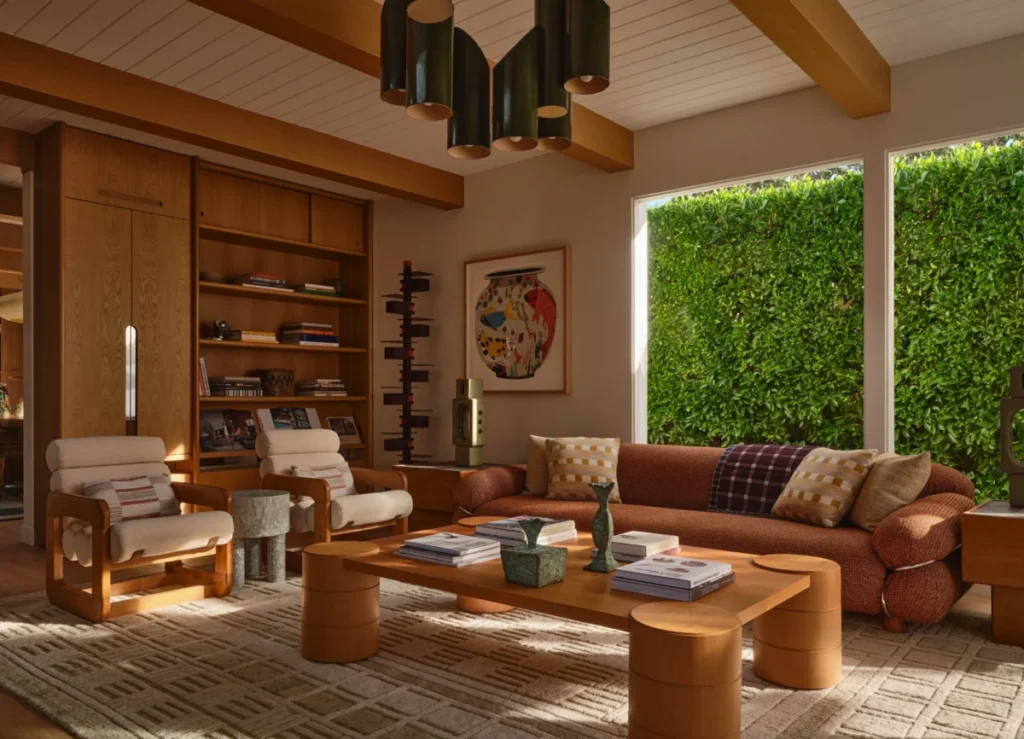

The transition of a coastal rental into a permanent family sanctuary represents a growing trend in the California real estate market, where the search for tranquility has redirected urban populations toward secluded seaside enclaves. In Carpinteria, California, a wood-paneled residence originally secured as a temporary pandemic-era escape has undergone a comprehensive transformation, evolving from a sterile postmodern shell into a sophisticated "retro surf house." This redesign, led by Los Angeles-based designer Nina Freudenberger, emphasizes materiality, custom millwork, and a curated selection of midcentury and contemporary furnishings that prioritize warmth and functional family living.

The Evolution of a Pandemic Escape
The narrative of the home began during the global health crisis of 2020, when the owners sought a reprieve from the density of city life. Carpinteria, located just south of Santa Barbara, is often referred to as home to "the world’s safest beach" and has long been a destination for those seeking a more understated alternative to the glamour of Malibu or Montecito. What began as a rental agreement soon shifted toward a permanent relocation as the unique energy of the neighborhood—characterized by a rare botanical mix of tropical flora, desert succulents, and towering Monterey cypresses—revealed itself as a "magical enclave."
The decision to acquire the 4,000-square-foot property necessitated a significant aesthetic overhaul. The existing structure was a product of postmodern architecture, defined by expansive white surfaces and a lack of visual texture. To bridge the gap between the building’s sterile origins and the owners’ vision of a relaxed, surf-inspired retreat, Freudenberger was tasked with injecting the space with a sense of history and organic comfort.

The "Retro Surf" Aesthetic: A Design Philosophy
The design directive, "retro surf house," was not merely an homage to the local coastal culture but a specific aesthetic framework that avoided the clichés of traditional nautical decor. Instead, Freudenberger leaned into the textures and palettes of the 1970s, a decade synonymous with the golden age of California surf culture. This approach utilized natural materials to create "visual warmth," a necessary counterpoint to the home’s original "white everywhere" interior.
Freudenberger, the author of Surf Shack: Laid-Back Living by the Water, is recognized for her ability to elevate coastal interiors without sacrificing the "easy living" ethos. For this project, she moved away from her typical light-handed use of color, encouraged by the homeowners to "just play." The resulting palette is a sophisticated arrangement of mossy greens, smoky blues, muted reds, and terra-cottas—colors that evoke a sense of nostalgia for a midcentury California landscape.

Materiality and Architectural Reconstruction
Central to the renovation was the extensive use of wood paneling, which serves as the home’s primary architectural anchor. Freudenberger envisioned covering nearly every room in white oak, a choice that fundamentally altered the acoustics and light quality of the interior. By wrapping the postmodern shell in natural timber, the design team created a cohesive environment that feels both grounded and expansive.
The architectural layout of the three-story home also played a pivotal role in the design strategy. With its various decks, terraces, and original porthole windows, the structure reminded Freudenberger of a yacht. This observation led to a design language inspired by ship building, characterized by high-detail built-ins and floating elements anchored to the walls. This "vessel" concept maximized the 4,000 square feet of space, providing abundant storage while maintaining the open-plan flow essential for a family with three young children and two pets.

The Ground Floor: Public Spaces and Sculptural Elements
The ground floor serves as the heart of the home, housing the living area, dining room, kitchen, and family room. Here, the "retro surf" theme is most evident in the custom millwork and tile selections.
The Living Room and Fireplace
A focal point of the main salon is the transformed fireplace. Moving away from the original minimalist design, Freudenberger installed floor-to-ceiling geometric tiles in deep bordeaux tones. This collaboration between Commune Design and Exquisite Surfaces created a statement piece that anchors the room. Surrounding the hearth are carefully selected pieces, including a Marcel Breuer lounge chair upholstered in a striped BDDW fabric and a bamboo floor lamp from Tennant, modeled after the parasols distributed at the Japanese Pavilion during the 1933 World’s Fair. These items underscore the designer’s commitment to making every piece feel "unusual and thoughtful."

The Kitchen and Dining Areas
The open kitchen features custom millwork produced by Main Street Workshop in Los Angeles. The cabinetry, finished in the same white oak as the walls, integrates seamlessly into the architecture. A minimalist island pendant by Lambert & Fils, featuring natural stone details, hangs over the kitchen island, while Neri & Hu stools from The Future Perfect provide seating. In the adjacent dining area, a custom table is paired with Augusto Savini for Pozzi chairs—vintage Italian pieces from the late 1960s that reinforce the retro-modernist dialogue.
The Third-Floor Retreat: A Study in Walnut
While the majority of the home is clad in white oak, the third-floor lounge and study utilize walnut paneling to create a "richer, moodier atmosphere." This space serves as a private office and sanctuary for the homeowner, offering panoramic views of the surrounding trees and the Pacific Ocean.

The lounge features a built-in corner sofa dressed in contrasting patterned fabrics: "Patch" from Sister by Studio Ashby and "Toro Sentado" from Kravet. A wet bar, featuring curved walnut shelving and earth-toned ceramic tiles, provides a functional element for evening relaxation. The intentional shift in wood species on the top floor marks the transition from the high-energy communal areas of the ground floor to a more contemplative, private zone.
Indoor-Outdoor Integration and the Carpinteria Lifestyle
A defining characteristic of the Carpinteria residence is its seamless connection to the outdoors. The homeowner noted that the back doors remain open almost constantly, allowing the family to live between the interior and the backyard.

The exterior spaces were maximized to include:
- A Grilling and Dining Area: Outfitted with barstools from Difane.
- A Firepit and Social Zone: Featuring a sofa from Restoration Hardware and slatted outdoor lounge chairs by Bertu Furniture.
- A Hot Tub: Positioned to take advantage of the lush, tropical-meets-desert landscaping.
This focus on the backyard reflects a broader shift in residential design toward "wellness architecture," where outdoor access is viewed as a critical component of daily health and family bonding.

Supporting Data and Real Estate Context
The renovation of this Carpinteria home mirrors a broader surge in high-end real estate activity in the Santa Barbara County coastal strip. According to regional market data, Carpinteria has seen a significant increase in median home values since 2020, as buyers from Los Angeles and San Francisco seek lower-density environments. The demand for "turnkey" properties with bespoke interiors—like those designed by Nina Freudenberger—has created a sub-market where architectural pedigree and interior design are as valuable as the square footage itself.
Furthermore, the "retro surf" aesthetic aligns with a global interior design trend known as "New Mediterranean" or "Warm Minimalism," which moves away from the cold, industrial aesthetics of the early 2010s in favor of artisanal textures, vintage find, and earth-toned palettes.

Broader Impact and Implications
The project serves as a case study for the successful adaptation of postmodern architecture. While the late-20th-century "white box" style can often feel dated or impersonal, the strategic application of millwork and color can revitalize these structures for contemporary use.
For the design community, Freudenberger’s work in Carpinteria highlights the importance of narrative-driven design. By viewing the house as a "ship" and the neighborhood as a "divinely led" enclave, the design team was able to create a home that feels deeply personal to the clients. The project demonstrates that even a temporary escape can become a permanent legacy when the design is attuned to the rhythms of family life and the specific character of the local landscape.

In conclusion, the transformation of this wood-paneled beach home stands as a testament to the power of materiality and thoughtful curation. By blending midcentury modernism with a laid-back coastal sensibility, Freudenberger has redefined what a "surf house" can be in the modern era—moving it beyond the beach and into the realm of high-end architectural art.