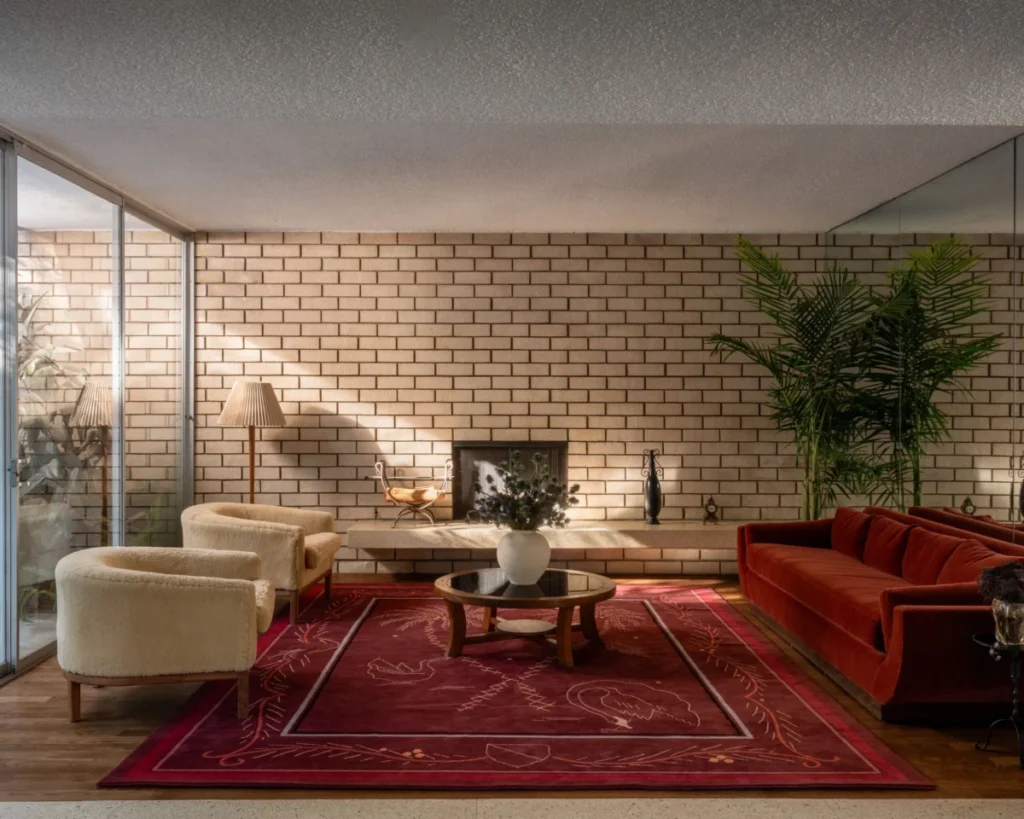

For years, the interior aesthetics of Reformation’s retail locations have served as a secondary draw for the brand’s loyal customer base. Shoppers frequently navigating the clothing racks in cities ranging from Los Angeles to New York have often found themselves pausing to admire the bespoke floor coverings that ground the showrooms. Until now, these artisanal pieces were strictly off-limits, serving as a permanent, exclusive fixture of the brand’s physical footprint. Today, that exclusivity ends as Reformation officially enters the home decor market through a collaboration with the French rugmaker Les Editions de Tapis, finally answering the recurring question from customers: “Where can we get them?”
The partnership introduces a capsule collection of nine limited-edition rugs, ranging in price from $1,000 to $5,000. Each piece is made-to-order, blending the specific, often whimsical design DNA of the clothing brand with the technical, old-world craftsmanship of a specialist European atelier.

The Genesis of the Collaboration
The relationship between Reformation and Thomas Coccimiglio, the founder of Les Editions de Tapis, is rooted in a shared commitment to high-end textile artistry. Coccimiglio, who spent over 15 years navigating the upper echelons of the international fashion industry—with tenures in London, Paris, and New York—brought a distinct sensibility to the project. During his time at luxury houses like Tory Burch, his professional focus shifted from garment construction to the intricacies of embroidery and textile design, eventually leading him toward interior architecture.
When the pandemic prompted a global shift in consumer behavior and professional priorities, Coccimiglio transitioned fully into the world of interiors. However, he maintained the "fashion-first" approach that has defined his career. "I approach a rug almost as I would a piece of embroidery on a garment," Coccimiglio has stated, highlighting the technical parallels between couture detailing and hand-knotted floor coverings.
Lauren Caris Cohan, Chief Creative Officer at Reformation, notes that Coccimiglio has been instrumental in shaping the brand’s physical identity for years. Reformation typically opens more than 15 new storefronts annually, and Coccimiglio has been responsible for creating custom motifs and colorways for each location. According to Cohan, he has always been "really precious" about his designs, refusing to replicate them for other clients, which ensured that every Reformation store felt like a singular, curated space.

Design Philosophy and Aesthetic Narrative
The new collection is not merely an adaptation of existing store rugs; it is a creative dialogue between the history of French design and the contemporary "LA attitude" that underpins the Reformation brand. The design process for the capsule collection involved a deep dive into thematic elements, including references to Marie Antoinette, the grace of swans, and a deliberate, high-contrast color palette of pinks and blues.
Coccimiglio describes the collection as a "Proustian madeleine"—a sensory trigger meant to evoke a sense of nostalgia for those who have spent time in Reformation’s physical spaces. By revisiting years of store designs, Coccimiglio has synthesized the brand’s aesthetic into distinct, iconic patterns.
The key pieces in the collection demonstrate this blend:

- The Chintz Rug: Featuring crossed palm trees—a motif sketched by Cohan—framed by trailing vines, herons, and swans.
- Swans Fans: A French blue foundation adorned with black-outlined swans and spiky fan palms.
- Le Chat: A minimalist, tongue-in-cheek design featuring a single striped cat traversing a broken black line across a field of soft lilac.
- Le Classique: Designed for the minimalist, this rug utilizes an ivory ground, oxblood borders, and a singular dot.
Craftsmanship and Production Standards
The logistical reality of producing high-end rugs involves a sophisticated supply chain that prioritizes material quality over mass-market efficiency. The rugs in this collection are hand-knotted using a combination of wool, silk, and linen. The choice of manufacturing location is deliberate and based on technical requirements: larger rugs are manufactured in India, where the wool is prized for its softness and suitability for expansive formats. Conversely, smaller, more ornate pieces are sourced from Nepal, utilizing dense Himalayan wool that yields a finish Coccimiglio likens to "jewelry."
From a retail perspective, the pricing strategy represents a departure from the "fast-fashion" stigma often associated with high-growth apparel brands. By positioning the rugs between $1,000 and $5,000, Reformation is targeting the "accessible luxury" segment. Cohan emphasizes that while lower-cost options exist, these rugs are engineered for durability and longevity, noting that the labor and material costs for Coccimiglio’s independent work are substantially higher than the current retail prices of this collaboration.
Market Implications and Strategic Positioning
Reformation’s move into home decor follows a broader industry trend of fashion houses diversifying their offerings to capture more of the "lifestyle" market. For a brand that has built its reputation on sustainability and a specific, curated visual identity, the introduction of a home line is a logical extension of its brand equity.

The campaign for the collection, shot at a historic midcentury residence in the Laurel Canyon enclave of Los Angeles—home to iconic architecture like Pierre Koenig’s Case Study House No. 21—positions these rugs as versatile enough for both modern West Coast homes and classic East Coast apartments. This geographic flexibility is central to the marketing narrative. Coccimiglio, who operates out of a 17th-century hôtel particulier in Dijon, France, views his work as a bridge between two worlds: European heritage and contemporary American culture.
A New Chapter for Retail Branding
The decision to release this collection, which launched alongside a 12-piece clothing campaign, suggests that Reformation is banking on the "total environment" experience. By allowing customers to bring the aesthetic of the retail store into their own homes, the brand is effectively deepening the emotional connection between the consumer and the label.
Data indicates that lifestyle-focused brand extensions can significantly increase customer lifetime value (CLV) by embedding the brand into the daily living environment of the user. For a brand that relies heavily on its digital storefront, the physical, tactile nature of a hand-knotted rug provides a grounded, permanent presence that a garment simply cannot offer.

As of November 9, the collection is available for purchase exclusively through the Reformation website. While the brand has not disclosed production volumes, the "made-to-order" nature of the rugs suggests a commitment to preventing overproduction, aligning with the company’s long-standing public focus on sustainable manufacturing practices.
Conclusion
The collaboration between Reformation and Les Editions de Tapis serves as a case study in how retail brands can leverage their physical interior design to build a secondary revenue stream. By treating the rugs not as mere decor, but as high-end textiles that reflect a specific brand DNA, the partnership manages to translate the "Reformation look" into a format that is both functional and collectible. Whether this marks the beginning of a permanent home division for the brand remains to be seen, but the initial response to the release signals a strong consumer appetite for the elevated, art-led interior aesthetic that Coccimiglio and Cohan have developed. As the brand continues to expand its physical footprint, the ability to purchase these pieces offers a unique, tangible connection to the brand’s identity that was, until this month, entirely inaccessible to the public.