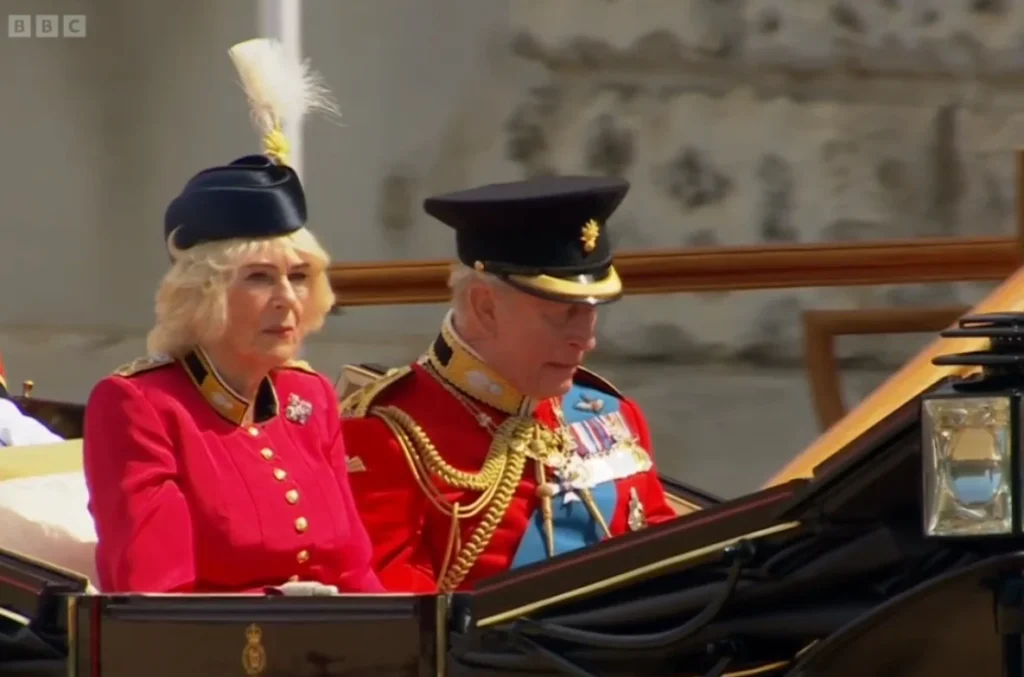

Queen Camilla paid a deeply personal and historically resonant tribute to her late mother-in-law, Queen Elizabeth II, at the King’s Birthday Parade, commonly known as Trooping the Colour. Demonstrating a profound connection to the enduring legacy of the monarchy and the military, Queen Camilla chose to wear the cherished Grenadier Guards brooch, a significant jewel gifted to the then Princess Elizabeth on her sixteenth birthday. This poignant sartorial choice served as a powerful symbol of continuity and remembrance amidst the grandeur of the annual ceremonial event held on Horse Guards Parade, where King Charles III, as Colonel-in-Chief of the Grenadier Guards, presided over the King’s Birthday Parade.
The historic Grenadier Guards brooch, a piece steeped in over eight decades of royal and military association, was originally presented to Princess Elizabeth in 1942. This significant gift marked a pivotal moment in her young life: her appointment as Colonel of the Grenadier Guards at the tender age of sixteen. The appointment itself followed the passing of Prince Arthur, Duke of Connaught, who had dedicated over three decades to serving as the regiment’s Colonel. In recognition of the young princess’s new and significant role, the Grenadier Guards commissioned a bespoke diamond brooch, meticulously designed to mirror the regiment’s distinctive badge. This exquisite piece of jewellery was then formally presented to her as a symbolic birthday gift, solidifying her early connection to one of the British Army’s most distinguished regiments.
The brooch itself is a testament to royal heraldry and military tradition. It features the cypher of King George VI, the reigning monarch at the time of its creation, encircling the renowned blue Garter of the Order of the Garter. Inscribed within this elegant band is the ancient and noble motto, "Honi soit qui mal y pense" (Evil be to him who evil thinks), a phrase that has been synonymous with the Order since its inception. Capping this intricate design is a miniature crown, signifying royal authority and the elevated status of the wearer.
This appointment at sixteen was far more than a symbolic gesture; it represented a crucial milestone in Princess Elizabeth’s burgeoning public life. Her initial meeting with the Grenadier Guards marked her first official audience, a formal introduction to military leadership. Subsequently, her inspection of the regiment on her sixteenth birthday itself constituted her first official public engagement, a clear indication of her future responsibilities and the trust placed in her by the nation and its armed forces. This early experience forged a lifelong and deep-seated connection between the future Queen and the Grenadier Guards, a bond that would endure throughout her reign.
One of the most iconic images of Princess Elizabeth’s youth captures this nascent connection. In a memorable portrait by the renowned photographer Cecil Beaton, the young princess is depicted wearing the distinctive uniform of the Grenadier Guards, with the very brooch adorning her person. Copies of this photograph were later distributed to members of the regiment, serving as a personal memento and a symbol of their shared allegiance, often presented as a Christmas gift. Her commitment to the regiment was further demonstrated as she returned to inspect them again on her eighteenth birthday in 1944, a significant occasion where she presented their Colour. Her involvement continued with a visit to the regiment shortly before the momentous D-Day landings in Normandy, highlighting their crucial role in the Second World War effort and her personal support for their mission.
Upon her accession to the throne in 1952, Queen Elizabeth II formally assumed the role of Colonel-in-Chief of the Grenadier Guards, a traditional position held by the Sovereign. This elevated her connection to the regiment to the highest level, cementing her patronage and leadership. Today, this esteemed role is held by King Charles III, continuing the unbroken chain of royal patronage. In a significant appointment in 2022, Queen Camilla herself was appointed Regimental Colonel of the Grenadier Guards, a role that has seen her become intimately involved with the regiment’s affairs and its ceremonial duties, including the annual Trooping the Colour.
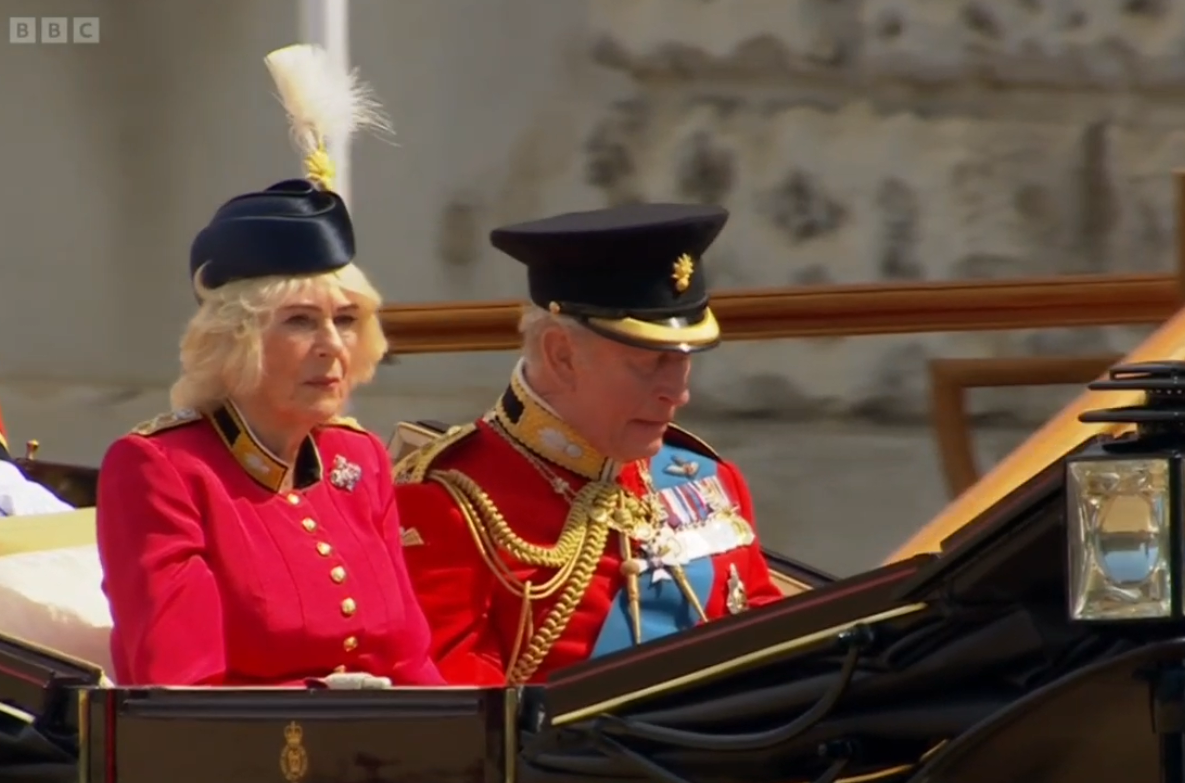
For this year’s Trooping the Colour, Queen Camilla’s ensemble was a meticulously chosen reflection of her regimental affiliation. She wore a striking red silk crepe dress designed by Fiona Clare, a clear nod to the regiment’s uniform colours. Complementing this, she sported a black Philip Treacy beret, elegantly adorned with the regiment’s distinctive plume and cap badge. However, it was the Grenadier Guards brooch, the very jewel gifted to a teenage Princess Elizabeth during the perilous years of the Second World War, that served as the most profound and touching element of her tribute.
More than eighty years after it was first bestowed upon the future Queen, this historical jewel once again occupied a place of prominence at one of the monarchy’s most significant ceremonial events. Its reappearance on Queen Camilla’s person at Trooping the Colour was not merely a fashion statement but a deeply symbolic act, resonating with the history of the monarchy, the enduring spirit of the Grenadier Guards, and the enduring memory of Queen Elizabeth II. It underscored the continuity of royal tradition and the personal connections that bind the Royal Family to the armed forces, ensuring that the legacy of the late Queen continues to be honoured in meaningful and tangible ways.
The Significance of Trooping the Colour
Trooping the Colour is an annual military ceremony performed by the Household Division to celebrate the Sovereign’s official birthday. The event is a spectacular display of British military precision, horsemanship, and pageantry, attracting vast crowds and global attention. It involves a ceremonial parade of regiments of the British Army, with the Sovereign traditionally taking the salute. The "trooping" of the Colour – the ceremonial carrying and displaying of the regiment’s flag – is a central element, symbolizing the regiment’s identity and history. This year’s event, held on June 15, 2024, marked King Charles III’s first official birthday parade as monarch, following his accession in September 2022. The ceremony is a vital demonstration of military readiness and a significant moment for public engagement with the Royal Family and the armed forces.
A Legacy of Service and Symbolism
The Grenadier Guards, established in 1656, are one of the oldest and most distinguished regiments in the British Army. Renowned for their impeccable ceremonial duties and their combat record, they have a long and proud history of service to the Crown. The appointment of Princess Elizabeth as Colonel at sixteen was an early recognition of her growing importance and her symbolic connection to the nation’s defence. Her subsequent lifelong patronage and the symbolic gifting of the brooch cemented this relationship, turning a formal appointment into a deeply personal bond.
The brooch itself is more than just a piece of jewellery; it is a tangible link to a pivotal period in British history and royal succession. Commissioned during wartime, it represented not only a celebration of a young princess’s future role but also a symbol of national resilience and hope. The fact that Queen Camilla, as the current Regimental Colonel, chose to wear it signifies a conscious effort to connect her own role with that of Queen Elizabeth II, honouring her predecessor’s dedication and ensuring that the historical narrative of the regiment and the monarchy continues to be told.
Broader Implications and Royal Continuity
Queen Camilla’s choice to wear the Grenadier Guards brooch at Trooping the Colour carries several layers of significance. Firstly, it reinforces her commitment to her role as Regimental Colonel and her dedication to the welfare and traditions of the Grenadier Guards. Secondly, it serves as a public and heartfelt acknowledgement of Queen Elizabeth II’s enduring legacy and her deep personal connection to the regiment. In a year that sees King Charles III celebrating his first official birthday parade as monarch, Queen Camilla’s tribute to his mother adds a layer of poignant remembrance and continuity to the proceedings.
This act highlights the strategic importance of symbolism within the monarchy. By choosing to wear a piece of jewellery with such a rich and personal history, Queen Camilla not only honours Queen Elizabeth II but also subtly reinforces the continuity of royal service and the enduring strength of the British Crown. It demonstrates that while the individuals in the royal roles may change, the traditions, the loyalties, and the symbolic connections remain vital. The brooch, therefore, becomes a powerful emblem of the past, present, and future of the British monarchy and its relationship with its armed forces. The careful selection of such an item for a prominent public occasion underscores the sophisticated way in which the Royal Family navigates tradition and remembrance, ensuring that historical narratives are woven into contemporary events, strengthening public understanding and appreciation of their multifaceted roles. The event, therefore, transcends a simple military parade, becoming a moment of profound historical reflection and personal tribute.