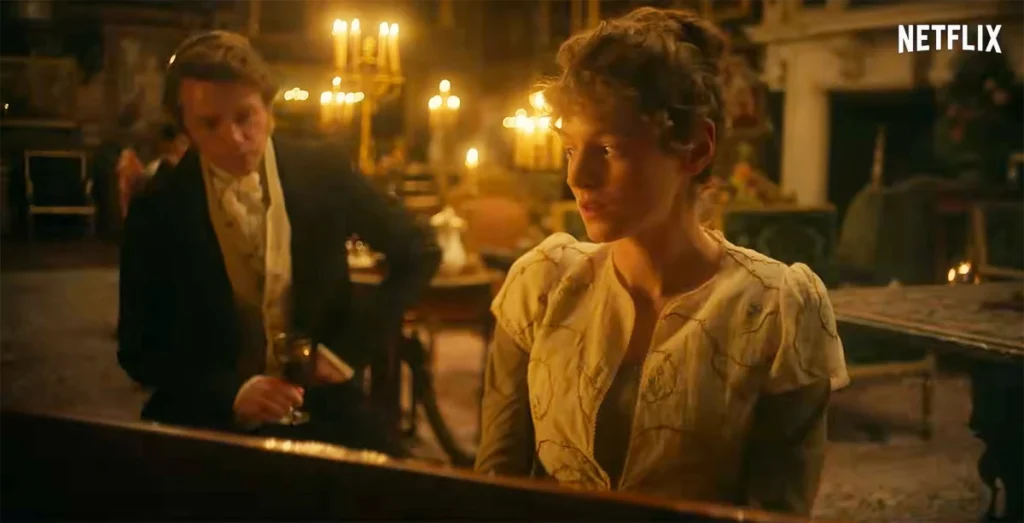

The literary landscape of the early nineteenth century continues to exert a powerful pull on contemporary television production, evidenced today by the official trailer release for Netflix’s upcoming six-part adaptation of Jane Austen’s landmark 1813 novel, Pride and Prejudice. Helmed by acclaimed Welsh director Euros Lyn and written by creator and executive producer Dolly Alderton, the high-profile mini-series is scheduled for a worldwide streaming release on December 3, 2026. This fresh interpretation of Austen’s beloved classic brings a star-studded British ensemble to the screen, led by Emma Corrin as the sharp-witted Elizabeth Bennet and Jack Lowden as the brooding, wealthy landowner Fitzwilliam Darcy.
The newly debuted footage highlights the collision of rigid societal expectations, family scandal, and sudden romance that defines the original text. With a runtime spanning six distinct episodes, this serialized approach aims to afford the narrative greater depth than standard feature-film adaptations, allowing the complex evolution from hasty first impressions to profound affection to unfold with literary fidelity.

A Stellar Cast and Creative Lineup
Netflix has assembled a formidable roster of talent both in front of and behind the camera for this ambitious venture. Alongside Emma Corrin and Jack Lowden, the production features Academy Award winner Olivia Colman and veteran actor Rufus Sewell as Mr. and Mrs. Bennet, anchoring the frantic matriarchal ambitions and patriarchal bemusement that drive the family’s quest for secure marriages.
The broader Bennet household is rounded out by Freya Mavor as the gentle Jane, Rhea Norwood as the impulsive Lydia, alongside Siena Kelly, Hopey Parish, and Hollie Avery stepping into the roles of Mary and Kitty. The extended ensemble boasts notable industry figures, including Daryl McCormack as the amiable Mr. Bingley, Louis Partridge as the charming yet duplicitous Mr. Wickham, Jamie Demetriou as the sycophantic clergyman Mr. Collins, and Fiona Shaw—who concurrently maintains a presence in the Jane Austen cinematic ecosystem through the recently released feature Sense & Sensibility.
Behind the scenes, the creative engine is spearheaded by writer and executive producer Dolly Alderton, best known for Everything I Know About Love. Directing duties are managed by Euros Lyn, whose versatile television and film credits include Dream Horse, The Radleys, Heartstopper, and Wayward. Produced by Lisa Osborne for Lookout Point and the BBC, the series also benefits from executive production oversight provided by Laura Lankester, Will Johnston, Louise Mutter, Dolly Alderton, Euros Lyn, and lead star Emma Corrin.

The Timeless Appeal of Austen’s Masterpiece
In statements accompanying the trailer release, the creative team emphasized the enduring relevance of Austen’s themes. Writer and executive producer Dolly Alderton addressed the psychological realism that has kept readers returning to the text for over two centuries.
"Pride and Prejudice is such a timeless story because of the emotions in the book; they are as pertinent now as they were in 1812," Alderton noted. She pointed to universal human anxieties that transcend the rigid class structures of Regency-era England: the embarrassment of one’s family, the dread of social obsolescence, concerns over the safety and security of future generations, and the acute mortification of misjudging others or being misjudged. "We go to that book to see our hearts reflected in it," she added.
The narrative framework retains the classic inciting incident immortalized by generations of readers: "It is a truth universally acknowledged…" When wealthy bachelors take up residence in the neighborhood, the five Bennet sisters face intense societal and familial pressure to secure financial stability and social standing through marriage. While Jane falls quickly for the amiable Mr. Bingley, Elizabeth finds herself constantly at loggerheads with his exceedingly proud friend, Mr. Darcy. Unanticipated encounters, structural prejudices, and looming family scandals ultimately force Elizabeth to reevaluate her initial judgments and confront the true nature of love.

Background Context and the 2026 Austen Renaissance
The arrival of Netflix’s Pride and Prejudice mini-series in late 2026 marks a significant cultural moment for fans of Jane Austen, coinciding with a broader resurgence of adaptations of her work. The current theatrical release of Georgia Oakley’s praised Sense & Sensibility film has created a parallel wave of enthusiasm, positioning 2026 as a banner year for classic literary translations onto the screen.
Adapting Pride and Prejudice is a storied tradition in film and television history. The property has seen numerous iterations, most famously the 1995 BBC television mini-series starring Colin Firth and Jennifer Ehle—which cemented the text’s potential for serialized television—and Joe Wright’s acclaimed 2005 feature film starring Keira Knightley and Matthew Macfadyen. By opting for a six-part mini-series format rather than a feature film, Netflix and Lookout Point have chosen a structural approach that mirrors the pacing of serialized prestige television, granting filmmakers the necessary breathing room to explore secondary subplots, domestic nuances, and character internalities that often get condensed in feature-length adaptations.
Industry Implications and Streaming Strategy
The strategic placement of a high-end literary adaptation in December places Netflix in prime position for the lucrative year-end viewing market. Prestige period dramas traditionally perform exceptionally well during the winter holiday season, appealing to multi-generational audiences seeking sophisticated, comforting narrative escapism.

Furthermore, the involvement of the BBC alongside Lookout Point underscores a continuing trend of international co-productions and partnerships that leverage British creative infrastructure for global streaming distribution. By utilizing proven talent like Emma Corrin—who gained widespread acclaim for portraying Princess Diana in The Crown—and established dramatic actors like Jack Lowden, Netflix aims to capture both traditional PBS/BBC period drama enthusiasts and younger demographic cohorts drawn to contemporary casting and stylistic vigor.
As the countdown to December 3, 2026, begins, the official trailer has successfully ignited discussion across literary and entertainment circles. Whether this ambitious six-part retelling can carve out a unique space alongside its monumental predecessors remains to be seen, but the fusion of Dolly Alderton’s sharp thematic insight with Euros Lyn’s directorial vision suggests a faithful yet thoroughly modern exploration of manners, money, and matrimony.