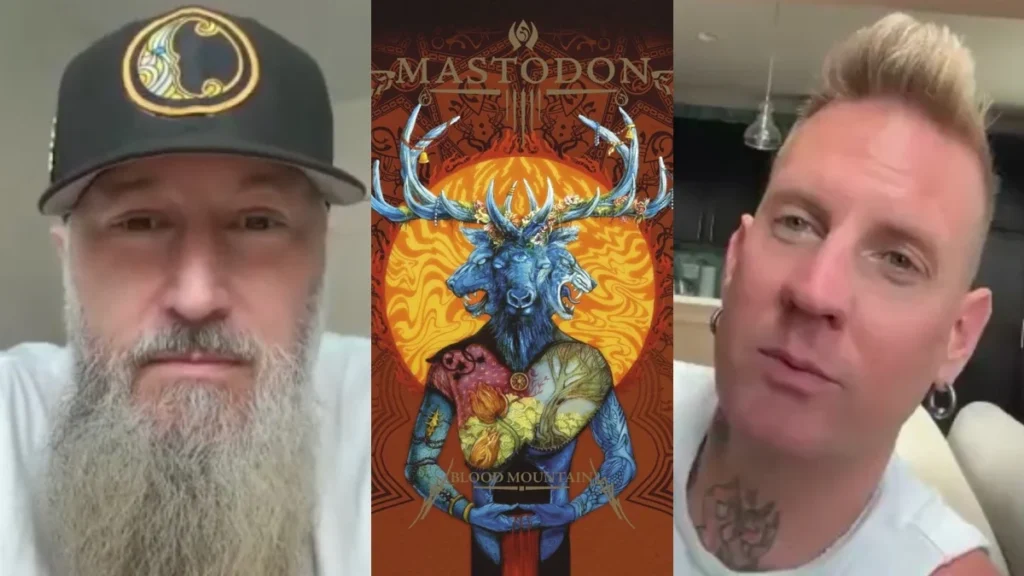

September 12, 2026, marks the twentieth anniversary of the release of Blood Mountain, the third studio album by the progressive metal quartet Mastodon. Released in 2006, the record served as a pivotal turning point for the Atlanta-based band, signaling their transition from underground sludge metal darlings to a major-label powerhouse. To commemorate the two-decade milestone, bassist Troy Sanders and drummer Brann Dailor spoke exclusively with Consequence, offering an intimate look at the recording sessions, the pressure of the major-label debut, and the lasting legacy of a project that fundamentally reshaped the landscape of heavy music in the mid-2000s.
The Genesis of a Modern Classic
In the years leading up to 2006, Mastodon had established a formidable reputation with their first two full-length albums, Remission (2002) and Leviathan (2004). While Leviathan—a concept album based on Herman Melville’s Moby-Dick—garnered significant critical acclaim, it was the signing to Warner Bros./Reprise that signaled a shift in the industry’s perception of the band. Blood Mountain was the first product of this new partnership, carrying with it the high-stakes expectations associated with a major-label debut.
The recording process took place in Seattle, Washington, under the guidance of producer Matt Bayles. The choice of location and producer was strategic, aiming to capture the raw, expansive energy that had become the band’s signature. However, the internal atmosphere of the studio was reportedly characterized by a mixture of artistic ambition and the youthful hedonism often associated with touring bands in the early stages of their ascent.
Chronology of the Blood Mountain Era
The lead-up to the album’s release was marked by an intense period of creative experimentation. By late 2005, the band had already begun conceptualizing the narrative arc of the album. Unlike the seafaring thematic focus of Leviathan, Blood Mountain explored the journey of a character attempting to reach the summit of a mountain while battling the elements and internal demons.
- Late 2005: The band concludes touring for Leviathan and enters pre-production.
- Early 2006: Sessions commence in Seattle. The band embraces a more complex, technical approach to their songwriting.
- September 12, 2006: Blood Mountain is released globally to widespread critical acclaim.
- Late 2006 – 2007: The band embarks on an extensive world tour, cementing their status as a premier live act.
- September 2026: The band celebrates the 20th anniversary, reflecting on the record’s enduring influence.
Behind the Scenes: The Seattle Sessions
Reflecting on the recording process, Troy Sanders highlighted the palpable tension between the pressure of the major-label environment and the band’s desire to remain true to their creative vision. "I remember being nervous that this was a major label debut with Warner Bros.," Sanders stated. "But at the same time, I remember having too much of a good time with my bandmates. Brann was playing drums like a madman. Brent Hinds was writing some of the most bizarre and awesome music ever written. Bill Kelliher was crushing it."
The sessions were not without their extracurricular distractions. Brann Dailor recalled a specific cultural fixture in Seattle that left a lasting impression on the band. "Recording in Seattle was so awesome, but this time behind the studio they had recently opened a Belgian beer bar, and they had over 100 beers on tap," Dailor noted. "I remember Brent being like, ‘We’re gonna try every single one of the beers on tap, all 100,’ and by God, we did it. We were a little bit Mötley Crüe ’82 back then."
Technical Analysis and Musical Significance
From a musicological perspective, Blood Mountain represented an evolution in the band’s technical proficiency. The album introduced a greater reliance on odd time signatures, complex polyrhythms, and a more layered vocal approach, with Sanders, Dailor, and Hinds sharing vocal duties more prominently than on previous efforts.
Tracks such as "Crystal Skull," "Colony of Birchmen," and "The Wolf Is Loose" became benchmarks for the progressive metal genre. The inclusion of guest musicians, including Josh Homme of Queens of the Stone Age and Cedric Bixler-Zavala of The Mars Volta, further signaled the band’s desire to transcend the stylistic boundaries of traditional heavy metal. This "wildly adventurous" spirit, as Dailor describes it, allowed the band to appeal to a broader demographic, bridging the gap between extreme metal purists and fans of alternative rock.
Broader Impact and Industry Implications
The commercial and critical success of Blood Mountain provided a roadmap for other heavy metal acts looking to navigate the transition from independent to major-label status without compromising their creative integrity. By maintaining their idiosyncratic style while benefiting from the increased distribution and marketing reach of a major label, Mastodon proved that extreme music could achieve commercial viability on a larger scale.
The record also solidified the band’s identity as a concept-driven group. Each of their albums began to be viewed as a cohesive narrative experience, a trend that would continue throughout their discography. Data from music analytics platforms suggests that Blood Mountain remains one of the most frequently revisited albums in the band’s catalog, with "Colony of Birchmen" consistently ranking among their top streamed tracks two decades later.
Legacy and Continued Evolution
Twenty years later, the significance of Blood Mountain cannot be overstated. It stands as a testament to the band’s ability to balance technical complexity with accessibility—a hallmark of their subsequent career. The album paved the way for future masterpieces such as Crack the Skye (2009) and their most recent offering, Marrow Deep (2026).
As Mastodon prepares for their upcoming North American headlining tour, the themes explored on Blood Mountain continue to resonate. The transition from the "madman" energy of their early days to the seasoned, professional approach they employ today reflects a natural maturation. However, the core elements that defined their sound in 2006—the interplay between the instruments, the ambitious storytelling, and the refusal to conform to genre tropes—remain intact.
When asked to summarize the album’s place in their career, Dailor remains unequivocal. "I still love Blood Mountain to this day. I think it’s wildly adventurous, like an album about a mountain should be."
The Road Ahead
The anniversary serves as more than just a nostalgic exercise; it acts as a bridge between the band’s past and their current trajectory. With the release of Marrow Deep, Mastodon continues to demonstrate their relevance in a shifting musical landscape. The tour, which kicks off this fall with support from Deafheaven and Alcest, is expected to feature a setlist that honors their long history while showcasing the technical evolution of their latest work.
For fans who have followed the band since their early days in Atlanta to those who discovered them through the success of their major-label tenure, Blood Mountain remains a cornerstone of 21st-century metal. It is a record that, much like the peak it is named after, continues to stand tall, challenging the listener to navigate its dense, beautiful, and sometimes treacherous terrain. As the band looks toward the future, the lessons learned during those intense, beer-fueled weeks in Seattle remain the bedrock upon which their enduring career is built.