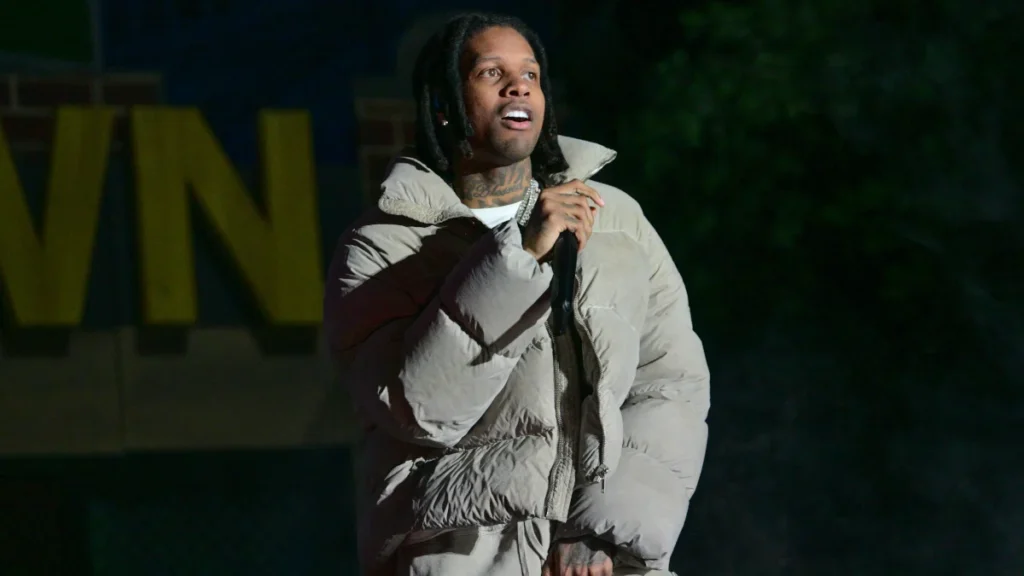

A federal jury in Los Angeles has reached a definitive verdict in the high-stakes trial of Grammy-winning rapper Lil Durk, acquitting the artist of all charges related to an alleged murder-for-hire plot. The decision, delivered in mid-September 2026, marks the conclusion of a legal saga that has cast a long shadow over the hip-hop industry for nearly six years. Durk Devontay Banks, known professionally as Lil Durk, has consistently maintained his innocence since federal prosecutors first leveled accusations against him in October 2024, alleging he orchestrated a retaliatory assassination attempt.
The acquittal brings to an end a complex criminal proceeding that intertwined the personal tragedies of the Chicago rap scene with federal law enforcement’s crackdown on alleged racketeering and violent conspiracies within hip-hop circles. Despite the favorable verdict, the 33-year-old artist continues to navigate a turbulent period, as he remains embroiled in separate civil litigation and ongoing racketeering allegations.
The Origins of the Conflict: A Timeline of Tragedy
To understand the scope of the federal indictment, one must look back to the early stages of a violent feud that ignited in November 2020. The catalyst for the government’s theory of the case was the fatal shooting of Dayvon Daquan Bennett, known to the world as King Von, a rising star in the hip-hop community and a foundational member of Banks’ "Only the Family" (OTF) collective.
On November 6, 2020, a confrontation occurred outside a nightclub in Atlanta, Georgia, involving King Von and his associates and the entourage of rapper Quando Rondo. The altercation escalated rapidly into a shootout. When the gunfire subsided, two individuals had been killed, including King Von. While investigators initially detained individuals associated with Quando Rondo, local authorities eventually declined to bring charges, concluding that the incident occurred under circumstances of self-defense.
For the federal prosecution, this event was not merely a tragic loss of life; it was the genesis of a years-long, organized campaign for retribution. Prosecutors argued that in the years following the Atlanta incident, Banks utilized his financial resources and the infrastructure of his record label to coordinate a sophisticated effort to track and eliminate Quando Rondo.
The Federal Indictment and the Los Angeles Incident
The core of the federal case centered on an event that transpired in August 2022. According to the indictment filed by the U.S. Attorney’s Office, Banks allegedly authorized the use of OTF-related financial assets to facilitate travel for a group of associates to Los Angeles, where they reportedly tracked the movements of Quando Rondo.
Prosecutors alleged that on the day of the incident, the targeted group located Quando Rondo at a gas station. A violent confrontation ensued, resulting in the death of Saviay’a Robinson, a cousin of Quando Rondo. While Quando Rondo himself escaped the encounter unharmed, the incident triggered an extensive multi-agency investigation that culminated in the arrests of Kavon London Grant, Deandre Dontrell Wilson, Keith Jones, David Brian Lindsey, and Asa Houston.
The government’s strategy relied heavily on digital forensics and the testimony of key cooperators. Prosecutors presented evidence suggesting that credit cards associated with Banks and his record label were used to secure the logistics for the travel. The indictment alleged that Banks had incentivized the act by offering both financial compensation and professional musical opportunities to those who carried out the task.
Trial Dynamics: A Battle of Credibility
The trial, which commenced in August 2026, served as a courtroom theater where the defense and prosecution presented diametrically opposed narratives regarding the rapper’s role in the violence.
The prosecution’s case leaned heavily on the testimony of co-defendants who had entered into plea agreements with the government. Among those who took the stand were Kavon London Grant, Keith Jones, and Kacey Hester—also known as OTF Jam. Assistant U.S. Attorney Ian Yanniello argued during his closing statement that the evidence demonstrated a clear hierarchy, with Banks sitting at the apex as the "mastermind" who utilized his influence to project power through violence.
The defense team, led by high-profile attorneys Brian Steel and Drew Findling, mounted a vigorous challenge to the government’s reliance on these witnesses. They framed the cooperating witnesses as individuals desperate to secure reduced sentences, labeling their testimony as inherently unreliable and motivated by self-preservation rather than a commitment to the truth. By dismantling the credibility of these key government witnesses, the defense successfully introduced enough reasonable doubt to persuade the jury that the government had failed to meet its burden of proof.
Data and Legal Context: The Broader Impact
The acquittal of Lil Durk represents a significant setback for federal prosecutors who have increasingly utilized the Racketeer Influenced and Corrupt Organizations (RICO) Act and conspiracy statutes to target hip-hop collectives. In recent years, the intersection of street culture and the music industry has become a focal point for federal investigators, who argue that record labels can sometimes function as fronts for criminal enterprises.
The statistics surrounding this case highlight the intensity of the federal focus. The investigation involved cross-jurisdictional cooperation between Atlanta, Los Angeles, and federal authorities, spanning several years of digital surveillance and financial auditing. The sheer scale of the trial, featuring multiple defendants and dozens of witnesses, underscored the government’s intent to set a precedent regarding the accountability of prominent figures in the music industry.
However, the verdict also highlights the inherent difficulties in securing convictions in cases predicated on the testimony of co-defendants who have their own criminal exposure. As defense attorney Brian Steel effectively demonstrated, the jury’s task was not to determine whether the atmosphere surrounding the music label was contentious, but whether the government could prove beyond a reasonable doubt that Banks specifically directed the violence in Los Angeles.
Future Challenges: The Road Ahead
While the "not guilty" verdict is a monumental victory for Banks, his legal challenges are far from over. The acquittal does not nullify other pending legal matters. Banks remains the subject of a civil lawsuit related to a separate death, and he continues to face charges in a broader, ongoing racketeering case.
Legal analysts suggest that while this specific victory provides momentum for his defense, the accumulation of various legal pressures—both civil and criminal—will require a sustained and costly legal strategy. The civil lawsuit, in particular, may offer a different evidentiary standard, as the burden of proof in civil proceedings is generally "a preponderance of the evidence," which is lower than the "beyond a reasonable doubt" standard required in criminal court.
Furthermore, the trial has placed an intense spotlight on the internal operations of OTF and similar organizations. Industry experts have observed that the fallout from this trial may lead to increased scrutiny of contractual and financial relationships within the music industry. As the public and the industry process the result, the question remains how Banks will navigate the transition back to his professional career while managing the weight of the remaining litigation.
Conclusion
The acquittal of Lil Durk in the Los Angeles murder-for-hire trial is a watershed moment in the intersection of criminal justice and the entertainment industry. It highlights the complexities of federal conspiracy prosecutions and the critical role of witness credibility in high-stakes litigation. As the legal system moves toward addressing the remaining racketeering and civil allegations, the outcome of this trial will likely be cited in future discussions regarding the government’s approach to prosecuting public figures within the music community. For now, the verdict stands as a testament to the defense’s success in isolating the rapper from the specific actions of his associates, effectively ending a chapter of the proceedings that had threatened the artist’s liberty for the better part of a decade.