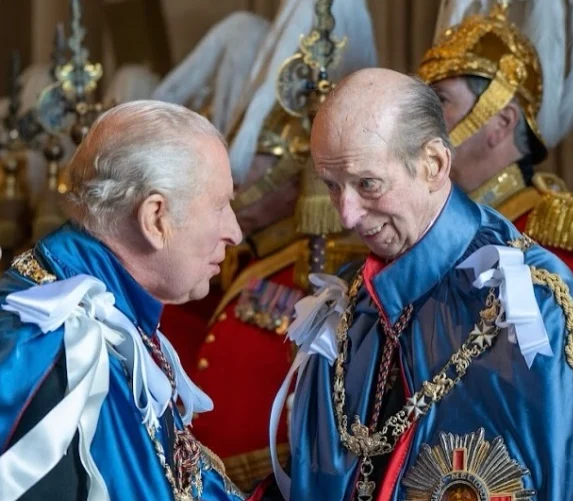

King Charles III has marked a significant milestone in his early reign by presiding over his first service as Sovereign of the Most Distinguished Order of St. Michael and St. George. The historic occasion, held at the magnificent St. Paul’s Cathedral, saw the King supported by one of his most steadfast royal relatives, Prince Edward, Duke of Kent, who holds the esteemed position of Grand Master of the Order. This ceremony represents another key first for the monarch as he continues to embrace his constitutional and ceremonial duties.
A Royal Milestone at St. Paul’s Cathedral
The King, appearing in the distinctive and resplendent blue mantle of the Order, took his place as the head of this ancient chivalric institution. The Order of St. Michael and St. George, founded in 1818 by King George IV, serves to recognise individuals who have rendered distinguished service to the Crown overseas in a non-military capacity. Its ranks comprise Knights and Dames Grand Cross, Knights and Dames Commander, and Companions, with strict limitations on the number of members in each grade, reflecting the exclusivity and prestige associated with the honours.
The presence of the Duke of Kent, a ninety-year-old royal who has dedicated over seven decades to public service, alongside the King, underscored a sense of continuity and familial support within the monarchy. The Duke, as Grand Master, holds the second most senior position within the Order, appointed by the reigning monarch. His long-standing tenure in this role, having assumed it in 1967 under the patronage of Queen Elizabeth II, highlights his deep commitment and understanding of the Order’s traditions and objectives.
The Order of St. Michael and St. George: A Historical Perspective
The genesis of the Order of St. Michael and St. George is intrinsically linked to Britain’s historical influence and colonial presence. Initially established to honour individuals who served in or were connected to the Ionian Islands and Malta, the Order’s scope evolved significantly over time. A pivotal revision occurred in 1868, during the reign of Queen Victoria, following the cession of the Ionian Islands to Greece. This recalibration transformed the Order into a broader recognition for distinguished service abroad in non-military capacities, a mandate it continues to fulfil to this day.
The regalia associated with the highest rank, Knights and Dames Grand Cross, are particularly elaborate. These include a striking blue mantle lined with scarlet silk, and collars fashioned from gold. The collars are adorned with intricate designs featuring English lions and Maltese Crosses, interspersed with the cyphers "SM" and "SG," representing Saint Michael and Saint George, the Order’s patron saints. At the centre of the collar are depictions of the winged lions of St. Mark, symbolizing Venice, and seven arrows, representing the Ionian Islands, a nod to the Order’s original purpose.
The current structure of the Order is designed to maintain its exclusivity. There are 125 Knights and Dames Grand Cross, 375 Knights and Dames Commander, and a maximum of 1,750 Companions. This tiered system allows for a broad spectrum of recognition, from the most senior appointments to those honouring significant contributions at a broader level.
A Reign of Firsts and Enduring Royal Service
While King Charles III officially ascended to the position of Sovereign of the Order upon his accession to the throne in September 2022, this recent service at St. Paul’s marks his first attendance at the annual service in this capacity. This occasion, therefore, represents another significant "first" for the new monarch, demonstrating his active engagement with the historic institutions that form a cornerstone of the British constitution and monarchy.
The Duke of Kent’s consistent presence and dedication to royal duties are well-documented. For over seventy years, he has undertaken a vast array of public engagements, embodying a spirit of unwavering service. His recent appearance alongside King Charles and other members of the Royal Family at Buckingham Palace for events commemorating the centenary of Queen Elizabeth II’s birth further illustrates his enduring connection and commitment. At that event, he joined his younger sister, Princess Alexandra, in a tea party that honoured not only the late Queen but also others born in the same significant year.
Queen Elizabeth II held a particularly warm and enduring friendship with the Duke of Kent. Their close bond was evident in his frequent presence at key royal events. Notably, after Prince Philip retired from public life, the Queen often requested the Duke of Kent’s company at Trooping the Colour. In 2022, during the Queen’s Platinum Jubilee year, the Duke stood beside her on the balcony of Buckingham Palace as she took the salute, a poignant symbol of shared service and deep mutual respect. Despite reaching the age of ninety in October 2025, the Duke of Kent continues to fulfil his public duties with remarkable dedication.
The Significance of the Grand Master’s Role
The role of Grand Master within the Order of St. Michael and St. George is a position of considerable importance and influence. Appointed by the Sovereign, the Grand Master acts as the chief executive of the Order, overseeing its administration and representing its interests. Prince Edward’s appointment by Queen Elizabeth II in 1967 was a testament to her confidence in his ability to uphold the Order’s traditions and values. His nearly six-decade tenure as Grand Master has provided a stable and experienced leadership, guiding the Order through periods of significant global change.
The Grand Master’s involvement in the Sovereign’s first service is particularly symbolic. It signifies a seamless transition of leadership and a clear indication that the Order will continue to operate under the established protocols and with the support of its most senior members. The Duke of Kent’s continued active participation, even at his advanced age, underscores the importance he places on his responsibilities and his dedication to the institution.
Implications and Future Outlook
King Charles III’s assumption of the Sovereign role within the Order of St. Michael and St. George, and his first presided service, carry several implications. Firstly, it reinforces the continuity of the British monarchy and its deep-rooted traditions. The King is not merely a figurehead but an active participant in the ceremonial and constitutional fabric of the nation. Secondly, it highlights the enduring relevance of chivalric orders in contemporary society, serving as a means to recognize and celebrate exceptional service and dedication beyond traditional military honours.
The King’s engagement with the Order also signals his commitment to maintaining and fostering relationships with individuals who have made significant contributions to the United Kingdom and the Commonwealth. The Order’s focus on non-military service overseas is particularly relevant in an increasingly interconnected world, where diplomatic, humanitarian, and cultural achievements are crucial for international relations.
The presence of the Duke of Kent, a highly respected figure within the Royal Family and a veteran of royal service, alongside the King, offers a visual representation of intergenerational continuity. It suggests a collaborative approach to royal duties, where the experience of older generations informs and supports the leadership of the new monarch. This dynamic is crucial for ensuring the monarchy’s relevance and appeal across different age groups and demographics.
Furthermore, the choice of St. Paul’s Cathedral as the venue for the service is itself significant. As a national landmark and a site of major state and royal occasions, its grandeur and historical resonance lend considerable weight to the ceremony, underscoring the importance of the Order and its recipients.
Looking ahead, King Charles III’s leadership of the Order of St. Michael and St. George will undoubtedly shape its future direction. His personal interests and priorities, particularly his long-standing advocacy for environmental causes and community engagement, may subtly influence how the Order’s achievements are recognized and celebrated. However, the fundamental principles of honouring distinguished overseas service in a non-military capacity are expected to remain at the core of its mission.
The successful conclusion of this first service as Sovereign for King Charles III, with the steadfast support of the Duke of Kent, marks a positive step in his new chapter as monarch. It demonstrates his readiness to embrace his ceremonial duties with gravitas and a clear understanding of the historical significance of the institutions he now leads. The event serves as a reminder of the enduring power of tradition, service, and familial bonds within the British monarchy.