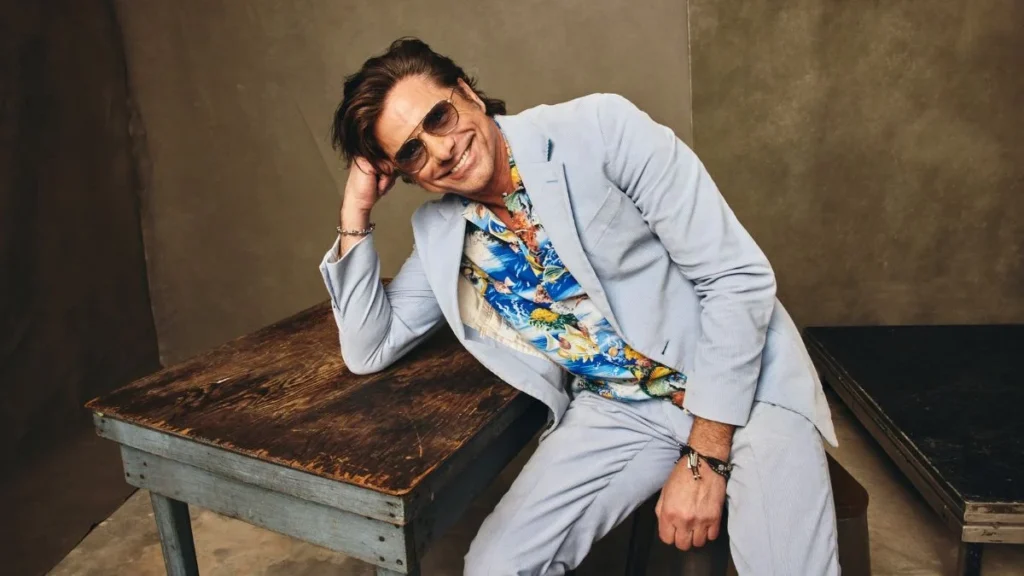

The landscape of classic rock touring is facing a period of profound uncertainty as the legendary group The Beach Boys navigates a transition marked by the ongoing health struggles of frontman Mike Love. In a development that signals a potential shift in the group’s operational future, actor and long-time musical collaborator John Stamos has announced the formation of a new entity, California Sound. This group is slated to replace The Beach Boys for high-profile performances at EPCOT’s International Food & Wine Festival on November 11th and 12th, casting a spotlight on the logistical and legal complexities currently surrounding the band’s legacy.
The Shift at EPCOT: A Change in Programming
The scheduled appearances at Disney World’s America Gardens Theatre were originally marketed under the moniker The Beach Boys featuring John Stamos. However, the recent pivot to the banner of John Stamos and the California Sound highlights the fragility of the current touring model. Disney officials confirmed the change in programming, though specific details regarding the composition of the backing band remain under wraps.
For Stamos, this marks the latest chapter in a relationship with The Beach Boys that has spanned more than four decades. Since his first appearance with the band in the mid-1980s, the actor has served as a consistent, if peripheral, fixture in their live shows, often providing percussion and guitar support. This transition to a front-facing role suggests a pivot point where the music—the quintessentially American "California Sound"—may need to be decoupled from the legal entity of The Beach Boys itself.
Chronology of a Declining Tour Schedule
The decision to rebrand the EPCOT performances follows a series of disruptions that have plagued the band’s 2026 touring cycle. The following timeline outlines the progression of these events:
- Early 2026: The Beach Boys announce an extensive touring schedule, banking on the enduring popularity of their hits to anchor the festival circuit.
- Summer 2026: Reports begin to surface regarding the fatigue and physical toll of the road on 85-year-old Mike Love.
- September 2026: Several dates are quietly removed from the band’s itinerary as the group struggles to maintain a consistent touring cadence.
- October 2026: John Stamos publicly addresses the situation, confirming that Mike Love is grappling with "serious health challenges."
- Mid-October 2026: Following a Nashville performance, Love issues a statement confirming he is prioritizing rehabilitation and health recovery.
- Late October 2026: Disney officially announces the transition from The Beach Boys to John Stamos and the California Sound for the November festival dates.
The Legal Framework of a Legacy
The complexity of this situation is deeply rooted in the legal structure governing the band’s identity. Since 1998, Mike Love has held the exclusive license to tour under the name "The Beach Boys." This legal arrangement was a byproduct of long-standing internal litigation and licensing agreements that granted Love control over the brand in the touring market.
Because the trademark is tied specifically to Love’s involvement, the musicians who have spent years in his touring ensemble—many of whom are consummate professionals with deep knowledge of the band’s catalog—cannot legally perform as "The Beach Boys" in his absence. This creates a functional vacuum. If Love is unable to return to the stage permanently, the current touring band is effectively prohibited from using the name, forcing organizers to either cancel shows or find creative alternatives like the California Sound initiative.
Fact-Based Analysis of the Transition
From an industry perspective, the emergence of the California Sound serves as a litmus test for the "tribute-versus-legacy" model. In the modern era of classic rock, many bands have opted for variations of their names to allow for continued performance even as original members retire or pass away. However, The Beach Boys are unique due to the litigious history and rigid licensing of their brand.
The California Sound name is neutral enough to avoid copyright infringement while signaling to the audience exactly what they should expect: the iconic harmonies and surf-rock arrangements synonymous with the band’s 1960s output. If the November shows at EPCOT are met with critical and commercial success, this could provide a blueprint for a post-Love touring operation. By shedding the legal baggage of the "Beach Boys" trademark, the ensemble could theoretically continue to perform the music for a new generation of fans without the constraints imposed by the existing licensing agreement.
Official Responses and Industry Context
While representatives for the band have remained cautious, the sentiment from the camp is one of concern for Love’s well-being. "We hope he’ll be doing what he loves for years to come, but we don’t know what the future holds," Stamos stated during his October press comments. This reflects a reality faced by many legacy acts whose primary vocalists are now in their mid-80s.
Industry analysts suggest that the model of the "California Sound" could be the only viable path forward for the material. In the current concert market, where nostalgic appeal drives high ticket sales for festivals like EPCOT’s "Eat to the Beat" series, the audience is often more interested in the songs than the specific personnel on stage. If the music remains authentic to the source material, the transition from a branded entity to a thematic ensemble is often accepted by the general public.
The Broader Impact on the Canon
The Beach Boys represent a cornerstone of 20th-century American music, influencing generations of artists from the Beatles to contemporary indie-pop groups. Their 25 essential albums, including the masterpiece Pet Sounds, have ensured their longevity in the cultural consciousness. However, the current health crisis forces a difficult question: how does a legacy survive when the primary gatekeeper is no longer able to hold the keys?
The transition at EPCOT is not merely a scheduling change; it is a symptom of a larger industry shift. As the pioneers of the 1960s reach their twilight years, the music industry is grappling with how to preserve the performance experience. Whether it is through digital avatars, as seen with ABBA’s "Voyage," or through the formation of legacy ensembles like the California Sound, the intent remains the same: the preservation of a sound that defined an era.
Future Implications
As the November 11th date approaches, all eyes will be on how the audience receives the California Sound. If the experiment succeeds, it may lead to a permanent restructuring of how the music is presented. It also raises questions about whether other members of the Beach Boys’ extended circle might be invited to join the project. The potential for a rotating cast of musicians, led by a recognizable figure like Stamos, could offer a sustainable, albeit different, version of the group.
Conversely, if the audience reaction is tepid, it may indicate that the brand power of "The Beach Boys" is so inextricably linked to the name and the specific presence of its remaining core member that it cannot be successfully replicated.
Ultimately, the situation serves as a stark reminder of the finite nature of touring careers. For now, the focus remains on Mike Love’s recovery. His own statements, noting his dedication to "full energy into rehab," suggest a desire to return. Yet, the existence of the California Sound provides a necessary insurance policy for promoters and fans alike, ensuring that the music of the California coast continues to resonate in the venues where it has been a staple for decades.
As the music industry continues to evolve, the case of the California Sound will likely be cited as a pivotal moment in the management of classic rock legacies. It is a transition from a band governed by the iron-clad licensing of the past to a more fluid, perhaps more fragile, future—one where the music is the only thing that truly matters.