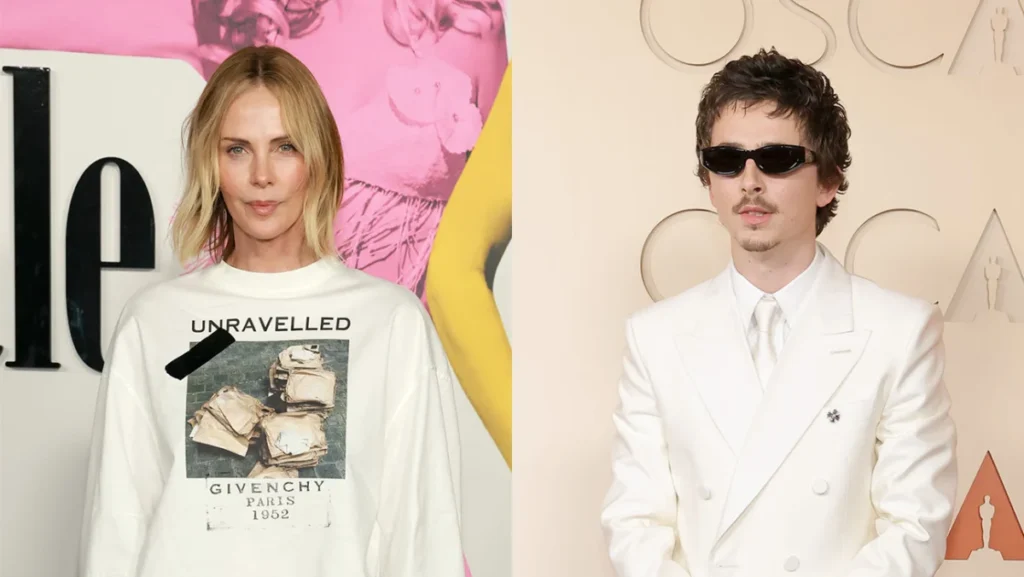

Charlize Theron, the acclaimed Academy Award-winning actress, has delivered a scathing critique of Timothée Chalamet’s earlier comments regarding the perceived relevance of ballet and opera, labeling them "very reckless." Speaking in a recent interview with The New York Times, Theron passionately defended the profound artistic merit and rigorous demands of these traditional art forms, drawing upon her own extensive background in dance to underscore her points. Her strong rebuke has reignited a wider discussion within the entertainment industry and cultural circles about the value, challenges, and future of live performing arts in an increasingly digital and celebrity-driven landscape.
Charlize Theron’s Vehement Defense of Performing Arts
During her interview, published Saturday, April 18, 2026, Theron delved into the formidable physical and mental discipline inherent in dance, a discipline she intimately understands from her formative years. "Dance is probably one of the hardest things I ever did. Dancers are superheroes. What they put their bodies through in complete silence," the star of Mad Max: Fury Road asserted. This powerful statement prompted the reporter to jokingly interject, "Sorry, Timothée Chalamet," directly referencing the actor’s prior controversial remarks.
Theron’s response was swift and unequivocal. "Oh, boy, I hope I run into him one day," she retorted, her tone reflecting a deep-seated conviction. "That was a very reckless comment on an art form, two art forms, that we need to lift up constantly because, yes, they do have a hard time." She further elaborated on the unique and irreplaceable nature of live performance in an era increasingly dominated by technological advancements. "But in 10 years, AI is going to be able to do Timothée’s job, but it will not be able to replace a person on a stage dancing live. And we shouldn’t [expletive] on other art forms." Her comments not only serve as a defense of ballet and opera but also as a broader call for solidarity and respect across diverse artistic disciplines.
The actress elaborated on the profound impact dance had on her own life, detailing the extreme sacrifices and resilience it demanded. "Dance taught me discipline. It taught structure. It taught hard work. It taught me to be tough. It’s borderline abusive," she continued, painting a vivid picture of the relentless pursuit of perfection. "There were several times that I had blood infections from blisters that just never healed. And you don’t get a day off. I’m literally talking about bleeding through your shoes. And that’s something that you have to practice every single day, the mindset of just, you don’t give up, there’s no other option, you keep going." This personal account offers a compelling counter-narrative to any suggestion that these art forms lack rigor or relevance.
The Genesis of the Controversy: Chalamet’s Initial Remarks
The controversy originated in February 2026, when Timothée Chalamet, known for his roles in critically acclaimed films such as Dune and Call Me By Your Name, participated in a joint town hall discussion hosted by Variety and CNN, alongside fellow actor Matthew McConaughey. During the conversation, Chalamet was posed a question regarding the contemporary audience’s interest in slower-paced cinematic narratives.
His response, intended to convey a desire to engage with art forms that resonate broadly, unfortunately, veered into territory that many found dismissive of established performing arts. Chalamet stated that he would not want to be involved in an art form that "no one cares about," explicitly citing ballet and opera as examples. "I don’t want to be working in ballet or opera where it’s like, ‘Hey! Keep this thing alive, even though no one cares about this anymore,’" Chalamet remarked, accompanied by a laugh. He then added, seemingly as an afterthought, "All respect to the ballet and opera people out there… I just lost 14 cents in viewership. I’m taking shots for no reason." While perhaps intended as a lighthearted, self-deprecating comment, the core sentiment was widely interpreted as undermining the cultural significance and the dedicated communities surrounding these art forms.
Immediate Repercussions and Industry Outcry
Chalamet’s remarks quickly ignited a firestorm of criticism across social media platforms and within the professional performing arts communities. Representatives from numerous opera companies, ballet troupes, and cultural institutions swiftly voiced their disapproval, defending the vitality and continued relevance of their respective art forms. Many pointed to robust attendance figures, innovative programming, and the immense talent and dedication of artists and staff who work tirelessly to bring these performances to life.
The backlash was not confined to direct industry stakeholders. Several prominent figures within the broader entertainment and arts world also publicly expressed their disappointment or disagreement with Chalamet’s comments. The incident even transcended initial social media furor to become a comedic highlight at the 2026 Academy Awards ceremony, held just weeks after Chalamet’s initial remarks. Host Conan O’Brien, renowned for his sharp wit, playfully roasted Chalamet during the telecast. "I’m told there are concerns about attacks from both the opera and ballet community," O’Brien quipped, before turning to Chalamet in the audience and adding, "They’re just mad you left out jazz." This moment underscored how widely the controversy had permeated public consciousness and professional discourse.
The Enduring Power and Challenges of Ballet and Opera
Theron’s spirited defense and Chalamet’s contentious comments highlight an ongoing, multifaceted discussion about the state and perception of traditional performing arts. Ballet and opera, with roots stretching back centuries, have historically been cornerstones of cultural expression, combining music, drama, movement, and visual artistry to create immersive and profound experiences.
Despite their rich heritage, these art forms, particularly in Western societies, face contemporary challenges. Audience demographics for opera and ballet tend to skew older, and institutions continually grapple with attracting younger audiences and ensuring financial sustainability. According to a 2022 report by the National Endowment for the Arts (NEA), while engagement in arts and culture remains significant, participation in live classical music, opera, and ballet has seen fluctuations. For instance, approximately 3-4% of U.S. adults attend opera or ballet annually, a figure that, while stable, presents a continuous imperative for outreach and innovation. Funding models often rely on a combination of ticket sales, private philanthropy, and, in some countries, public subsidies, all of which are subject to economic shifts and changing priorities.
However, dismissing these art forms as irrelevant overlooks their persistent vitality and ongoing evolution. Opera companies worldwide are experimenting with new works, digital technologies, and accessible formats to engage broader audiences. Ballet, too, continues to innovate, with choreographers pushing boundaries while honoring classical traditions. The physical artistry required of a ballet dancer, for instance, is often compared to that of an elite athlete, demanding years of intensive training, extreme flexibility, strength, endurance, and an almost superhuman tolerance for pain. Similarly, opera singers undergo rigorous vocal training for a decade or more, developing the capacity to project their voices unamplified over a full orchestra for hours.
The Physical and Mental Rigors of Dance
Charlize Theron’s personal narrative provides a poignant insight into the extraordinary demands placed upon dancers. Her description of "bleeding through your shoes" and enduring blood infections from unhealed blisters is not an exaggeration but a testament to the daily realities faced by professional ballet dancers. The discipline begins in early childhood, often before formal schooling, requiring hours of practice daily, six or seven days a week, often into adulthood. This relentless regimen builds not only unparalleled physical prowess but also immense mental fortitude.
The silent suffering Theron refers to is characteristic of a profession where injury is common, yet often concealed, due to intense competition and the pressure to perform. Dancers frequently contend with stress fractures, tendonitis, sprains, and chronic pain, pushing their bodies to the absolute limits of human capability. Beyond the physical, the mental discipline—the constant self-critique, the unwavering focus, the ability to perform flawlessly under immense pressure—is equally profound. Theron’s experience underscores that the beauty and grace seen on stage are the culmination of unimaginable toil and sacrifice, a reality often invisible to casual observers.
AI and the Future of Live Performance
Theron’s astute observation about the potential for artificial intelligence to replicate an actor’s job in film while remaining unable to replace a live dancer or opera singer touches upon a crucial contemporary debate. As AI rapidly advances, its capabilities in generating content, from scripts to visual effects, are expanding. The film industry, in particular, is already grappling with the implications of AI on screenwriting, acting, and post-production, as evidenced by recent labor disputes where AI was a key negotiation point.
However, the essence of live performance — the ephemeral, unrepeatable moment of human connection between artist and audience, the raw energy of a body moving or a voice soaring in real-time, the inherent risk and vulnerability of a live act — remains uniquely human. While AI can synthesize images, sounds, and even create digital avatars, it cannot replicate the live, physical presence and emotional immediacy that define ballet and opera. The imperfections, the sweat, the palpable effort, and the shared communal experience of a live audience reacting to an unmediated human performance are qualities that current AI technology, and perhaps any future AI, fundamentally cannot replicate. Theron’s point serves as a powerful reminder of the enduring value of human artistry in an increasingly automated world.
Silence from the Chalamet Camp
In the wake of Charlize Theron’s strong comments, The Hollywood Reporter attempted to reach out to Timothée Chalamet’s representatives for a response or clarification regarding his original statements. However, as of the time of publication, no comment had been received from Chalamet’s team. This silence leaves his initial remarks to stand without further context or apology, potentially prolonging the conversation and allowing Theron’s rebuttal to resonate more strongly within the public discourse. The lack of an official statement from Chalamet’s side has been noted by many as a missed opportunity to address the concerns raised by the arts community and perhaps offer a more nuanced perspective on his earlier comments.
Broader Implications for Arts Discourse
The exchange between Theron and Chalamet is more than just a celebrity spat; it reflects a broader cultural dialogue about the perceived value of different art forms, generational perspectives on tradition versus modernity, and the influence of celebrity opinions on public perception. Theron, representing a generation that often understands the profound dedication required for traditional arts, advocates for their preservation and respect. Chalamet, a prominent voice of a younger generation, inadvertently highlighted the challenges these arts face in competing for attention in a fast-paced, digital media environment.
This incident underscores the critical need for continuous advocacy and education regarding the performing arts. It serves as a reminder that while some art forms may not command the same mass media attention as blockbuster films, their cultural significance, historical depth, and the immense human effort they embody remain invaluable. The conversation initiated by Chalamet and amplified by Theron highlights the ongoing tension between popular appeal and artistic integrity, urging a more nuanced appreciation for the diverse tapestry of human creative expression. The future relevance of ballet and opera, like all art forms, depends on continuous engagement, innovation, and, critically, the outspoken support of influential voices who understand their irreplaceable value.